
Heat Pump Installation in Ohio
Homes in Ohio are older than in 43 of the other 49 states.
Tell us about the job
Takes about a minute. No obligation.
- 23°Fwinter overnight low where people live
- 8 monthsof heat, October through May
- 82°Fsummer afternoon high where people live
- 3 monthsof cooling, June through August
Electricity in Ohio costs more than in most states and a heat pump runs on it all year
- Western counties need about 32% more cooling than eastern ones
- Winter nights average 23°F where people live
- Summer afternoons average 82°F where people live
- Heat runs October through May
- Cooling runs June through August
- 818 winter storms from 2015 to 2024


Half of Ohio's homes were built in 1970 or earlier

Gas heats most homes in Ohio, 64.0% of them. That's furnaces burning gas, with the home either skipping air conditioning or running a separate central AC unit alongside it. A heat pump replaces both at once, heating and cooling from the same outdoor unit.
Switching from gas to a heat pump changes what runs the heat side of your home. Gas comes from a line into your house. A heat pump runs on the electricity already feeding your panel. The contractor sizing the job needs to know what your panel can carry before anything else.
Your heat pump works more months than it rests
Heat here splits eight months to three, October through May on one side and June through August on the other. That's the opposite of what a heat pump is best known for. The compressor spends most of its year heating, not cooling, and it has to keep working down into nights that average 23°F across December, January and February. That's colder than most of the country sees. None of that is heavy load, though. The wind and hail that come through Ohio hit the roof and siding, not the heat pump sitting at ground level. A system here isn't working against the kind of strain that wears out equipment early. What it needs is to hold up over a lot of months at moderate demand, which is a different thing to size for than a few months of hard heat or hard cold. You don't need the highest-efficiency unit on the lot. You need one built to run reliably for eight months of heating and keep up on the coldest nights.
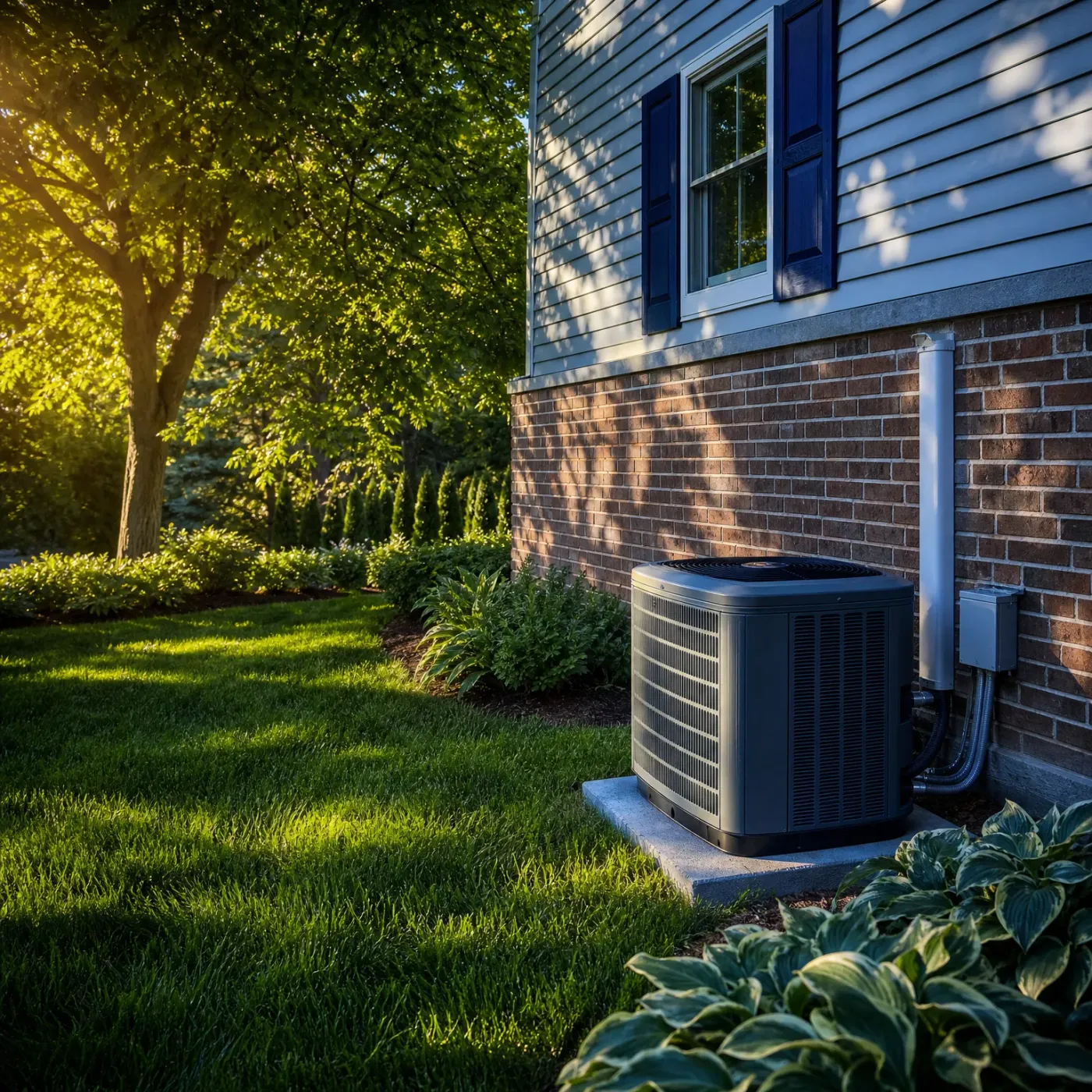
3 months of cooling, June through August
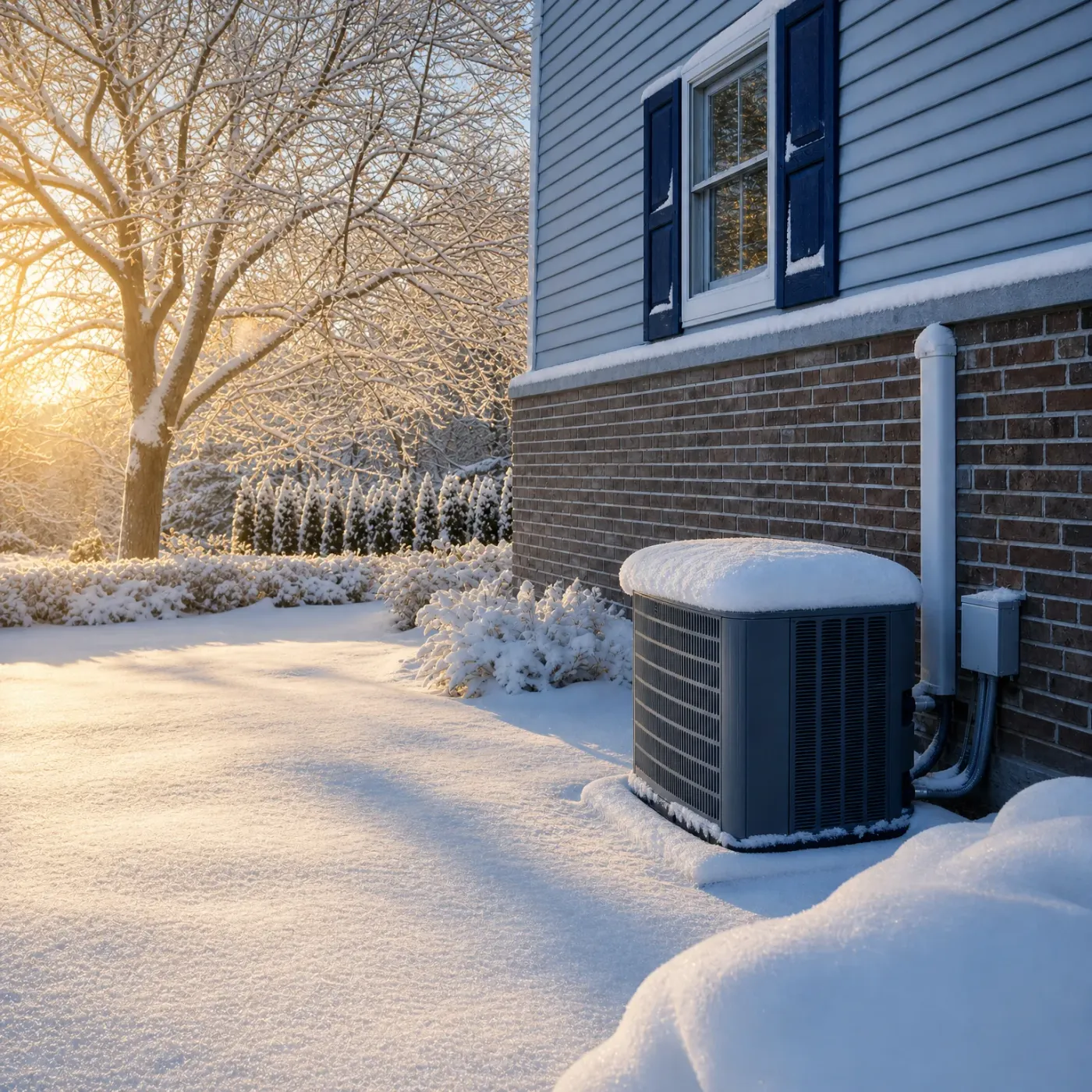
8 months of heat, October through May
Ohio splits east to west on cooling. Homes across the western counties need about 32% more cooling over a year than homes across the eastern counties. Hamilton County needs about twice the cooling that Geauga County does, the lowest in the state. A heat pump sized for a home outside Cincinnati is answering a different question than one sized for the northeast corner.
Heating runs the other way, north to south. Homes across the northern counties need more heat over a year than homes across the southern counties. Geauga County needs about 34% more heat than Lawrence County, the lowest in the state. So the counties with the least cooling to do, up in the northeast, are the same ones asking the most of the heating side.
That split matters more here than it would elsewhere, because heating is most of what this machine does in Ohio. A heat pump going into a Geauga County home is doing serious winter work with barely any summer load to balance it. One going into Hamilton County carries more cooling than most of the state ever asks for, on top of a shorter but still real stretch of cold months.
None of this is about which system holds up better. Ohio sees damaging wind and hail more than most other states, but that load falls on the roof and siding, not the outdoor unit sitting at ground level. What changes from county to county is the mix of heating and cooling the unit has to be sized for, not how rough its surroundings are.
What does a heat pump in Ohio face?
How hot do summer afternoons get?
82°Faverage afternoon high where people live
Alaska66°F
Arizona101°F
How cold do winter nights get?
23°Faverage overnight low where people live
North Dakota4°F
Hawaii65°F
How many months does the heat run?
8 monthsof heating a year
Hawaii0 months
Alaska12 months
What does electricity cost?
15.99¢per kWh (kilowatt hours, the unit on an electric bill), what homes paid in 2024
North Dakota11.51¢
Hawaii42.86¢
How often do storms hit?
178severe weather events per county from 2015 to 2024
Alaska5
Wyoming1,057
How many homes lost power for a day or more?
18%of homes in 2024
Arizona7%
Maine54%
Sizing a heat pump right
A heat pump that's too big cycles on, satisfies the thermostat fast, and shuts off before it's pulled the humidity out of the air. The house ends up feeling cool but damp. One that's too small never catches up when the temperature drops, and it leans on backup heat strips more than it should instead of the compressor carrying the load on its own. Getting the size right starts with a load calculation, not a guess based on square footage. A contractor working this out looks at how much heat the house loses through its walls, windows, attic and foundation, and how much heat it gains in warm weather through those same paths. Window count and orientation matter. So does insulation, and how much air leaks in and out. Houses the same size can need different equipment because one holds heat better than the other. The outdoor unit and the indoor coil get matched to that number together, not picked separately. Ductwork gets checked too, because a heat pump moving the right amount of heat still won't condition the house evenly if the ducts can't carry the air it needs to move.
What happens to the old system
Whatever is coming out, the old equipment doesn't just disappear from the project. If there's a furnace being replaced, it has to come out of the line before the new air handler or coil goes in, and the gas line feeding it needs to be capped off properly, not just shut at the valve. An old central AC unit outside gets disconnected and hauled off, along with its line set if that line set isn't being reused. Refrigerant in that old system has to be recovered first. It's not legal to just cut the lines and let it vent, and a contractor doing the job right will capture it before anything gets unhooked. If the old system was a heat pump, the same recovery step applies to its refrigerant too. Whatever gets pulled out, electrical connections feeding the old equipment get disconnected at the panel or disconnect box, not just left capped at the unit. None of this is the hard part of the install. It's the part that has to happen cleanly before the new unit can go in.
What actually sets the price
What a heat pump costs to put in depends on more than the outdoor unit itself. The compressor size matters, but so does whether the existing ductwork can carry the airflow it needs to every room as is, or needs sealing or resizing first. A panel near its limit changes the job too. A heat pump draws continuous power in a way a gas furnace never did, and if the circuit feeding the outdoor unit needs upgrading, that work sits outside the equipment swap. Backup heat strips built into the air handler add cost over a system without them, but skipping them only works if the compressor alone can carry the house through its coldest stretch. What has to come out matters as well. A gas line has to be capped properly, not just shut at the valve, and refrigerant in any old outdoor unit has to be recovered rather than vented off. Homes the same size can land on different jobs once the ductwork, the panel and what has to be removed first all get accounted for.
Electricity costs more here than in most states, and a heat pump runs on it all year.
Tell us about the job
Takes about a minute. No obligation.
Fill out the form once and a contractor licensed in Ohio calls to size the job.