A mowed lawn bordered by a tall trimmed hedge, with single-story houses and large leafy trees under an overcast sky.

Heat Pump Installation in Fremont, OH

Tell us about the job

Takes about a minute. No obligation.

New system or replacementHeat PumpSandusky County, OH
Step 1 of 2

What ZIP code is the job in?

Electricity here runs 15.99 cents a kilowatthour

Ohio homes paid that rate in 2024, and a heat pump runs on electricity for most of the year, not just in winter. That rate sits behind every kilowatt the unit draws, so its efficiency matters more here than in a state with cheaper power.

The efficiency rating is what you're buying

Two heat pumps can heat and cool the same house, but one pulls less power doing it. At Fremont's rate, that difference shows up on the bill every month the system runs, not just once at installation.

8 months
October through May, your system heats
3 months
June through August, it cools
23°F
the average winter night it heats against
82°F
the average summer afternoon it cools against
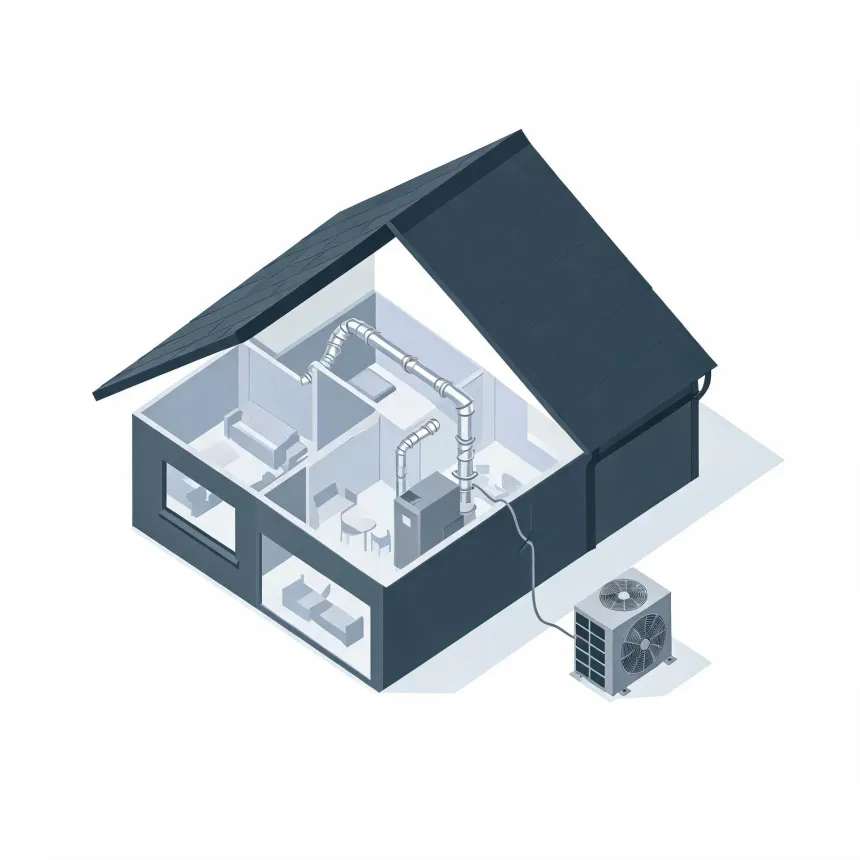
Isometric illustration of a cutaway house showing interior rooms with furniture, a furnace and ductwork, connected by a line to an outdoor condenser unit on the ground outside.
Your system heats October through May and cools June through August.

NOAA nClimDiv, 1991–2020 normals

Half the homes in Sandusky County were built in 1960 or earlier.

A heat pump going into a house that old has to match ductwork and a layout nobody designed around it.

Fremont weather won't wear a system out, so pick it for fit, not toughness

47 damaging wind events from 2015 to 2024
18 hail events from 2015 to 2024
Winter nights average 23°F
Get it in by SeptemberSeptember is the month before the heat starts. Once it does, this system runs eight months a year here.

Fremont sits in climate zone 5A, a cool zone where heating carries the bigger share of the year's work. Any split-system heat pump installed here has to clear federal minimums of 14.3 SEER2 for cooling and 7.5 HSPF2 for heating. That floor applies everywhere, not just here, but it decides which models a contractor can bring to this job. A system that clears the minimum by a wide margin may cost more going in, and a federal tax credit is available to offset that for a system that qualifies.

Most homes here already heat with gas, and that shapes this job

Close to 6 in 10 homes in Sandusky County heat with utility gas. That's more than electricity and LP gas put together. Most houses already have a furnace doing the heating. That's why a heat pump going in alongside one is such a common setup. The furnace takes over once it gets cold enough that it does the job better. Worth settling which path this is before a contractor draws up the job.

Find a contractor
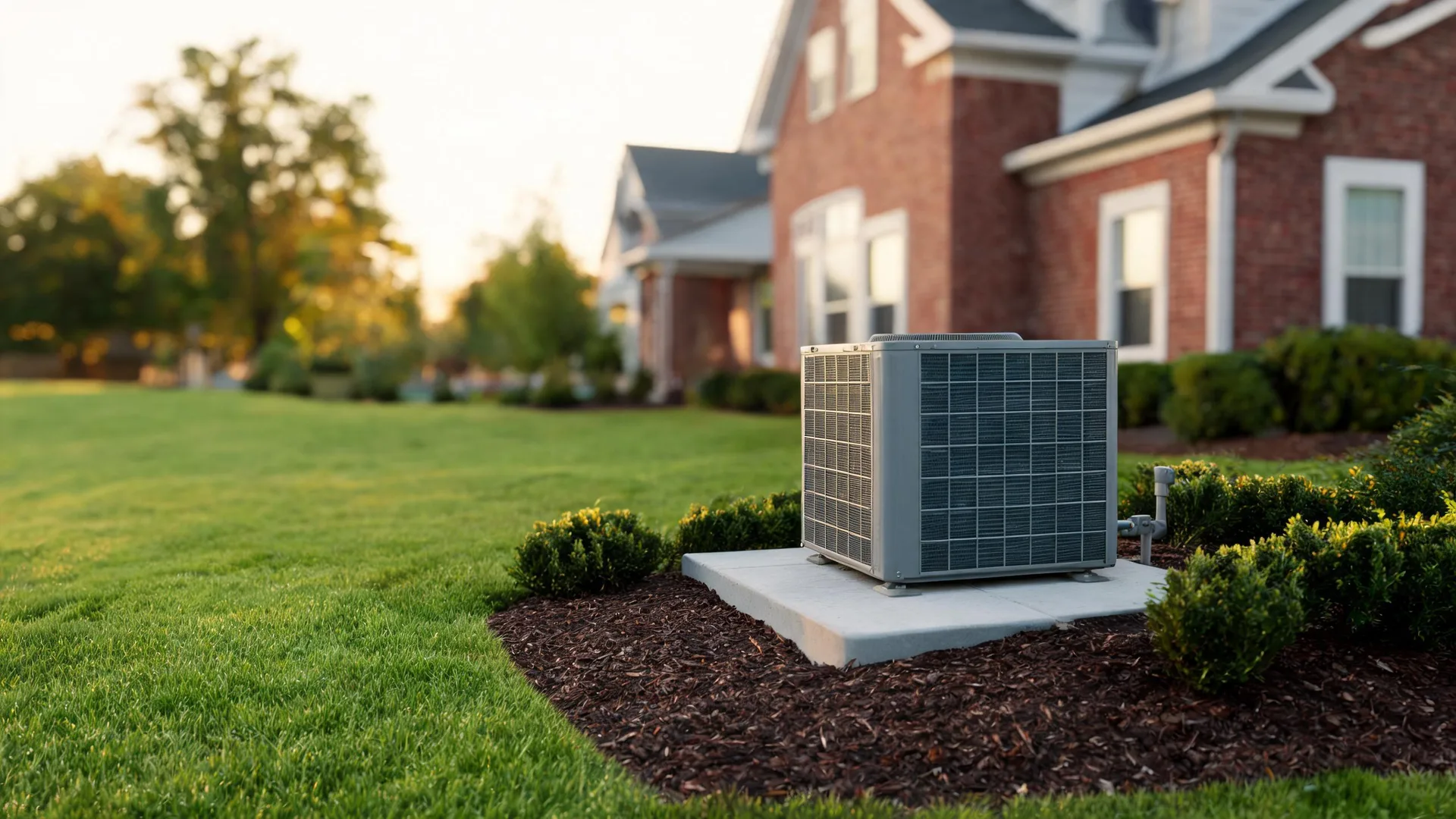
A gray outdoor HVAC unit mounted on a concrete pad beside a house with gray lap siding and a stone foundation.

The ductwork came with the house, not with the new system

A contractor sizing this job will start by measuring what's already there, the duct runs, the returns, where the indoor unit can actually go. That layout came with the house, not with the new system, and a heat pump needs it to move more air than the furnace it's replacing did. If the ducts are too narrow or too few, that gets fixed before the heat pump goes in, not after. It's worth asking any contractor to walk the ductwork before they quote equipment.

A bigger unit isn't a safer bet

A heat pump sized too big for the house short cycles. It runs in short bursts instead of settling into one long steady stretch. The indoor coil never gets enough runtime to pull moisture out of the air, so the house feels cool but damp. The compressor wears faster too. Starts and stops strain it more than just running steady for a while.

The number comes from the house, not the catalog

A contractor works out the load room by room. That means adding up the walls, the windows, the insulation, and the air leaking in and out. It's not about matching whatever size is already out there. That math points to a capacity, and the equipment gets picked to match it. No rounding up for a margin that just feels safe.

When contractors quote different equipment, ask for the capacity at a low outdoor temperature, not just the rated capacity at a mild one. A heat pump loses capacity as the air outside gets colder, and units that look alike on paper can fall off at different rates once it actually gets cold. Ask where the balance point sits, the temperature below which the heat pump can no longer carry the full load on its own and the backup heat has to help. Ask what that backup heat is, since some systems use electric resistance strip heat and others lean on the furnace already in place. Ask for the sound rating too, since an outdoor unit running for long stretches is worth hearing about before it is sitting outside the house. None of this shows up on the price alone, and it is what tells you whether the unit on paper will actually carry this house.

Installation day starts with the outdoor unit and the indoor coil, set in place before anyone connects a wire. The line set gets run between them, copper tubing that carries refrigerant back and forth, and that line gets evacuated with a vacuum pump to pull out air and moisture before any refrigerant goes in. A leak in that line or a poor vacuum shows up months later as lost capacity, so this step takes the time it takes. The electrical work comes next, a dedicated circuit sized to the unit, disconnects at both the indoor and outdoor units so either can be serviced without killing power to the rest of the house. Once it's wired and charged, the contractor runs the system through its paces, checking refrigerant pressures against the manufacturer's chart and measuring the temperature drop across the indoor coil. That last check is the one that matters most. It's how you know the unit is actually moving the heat it's rated to move, not just running.