






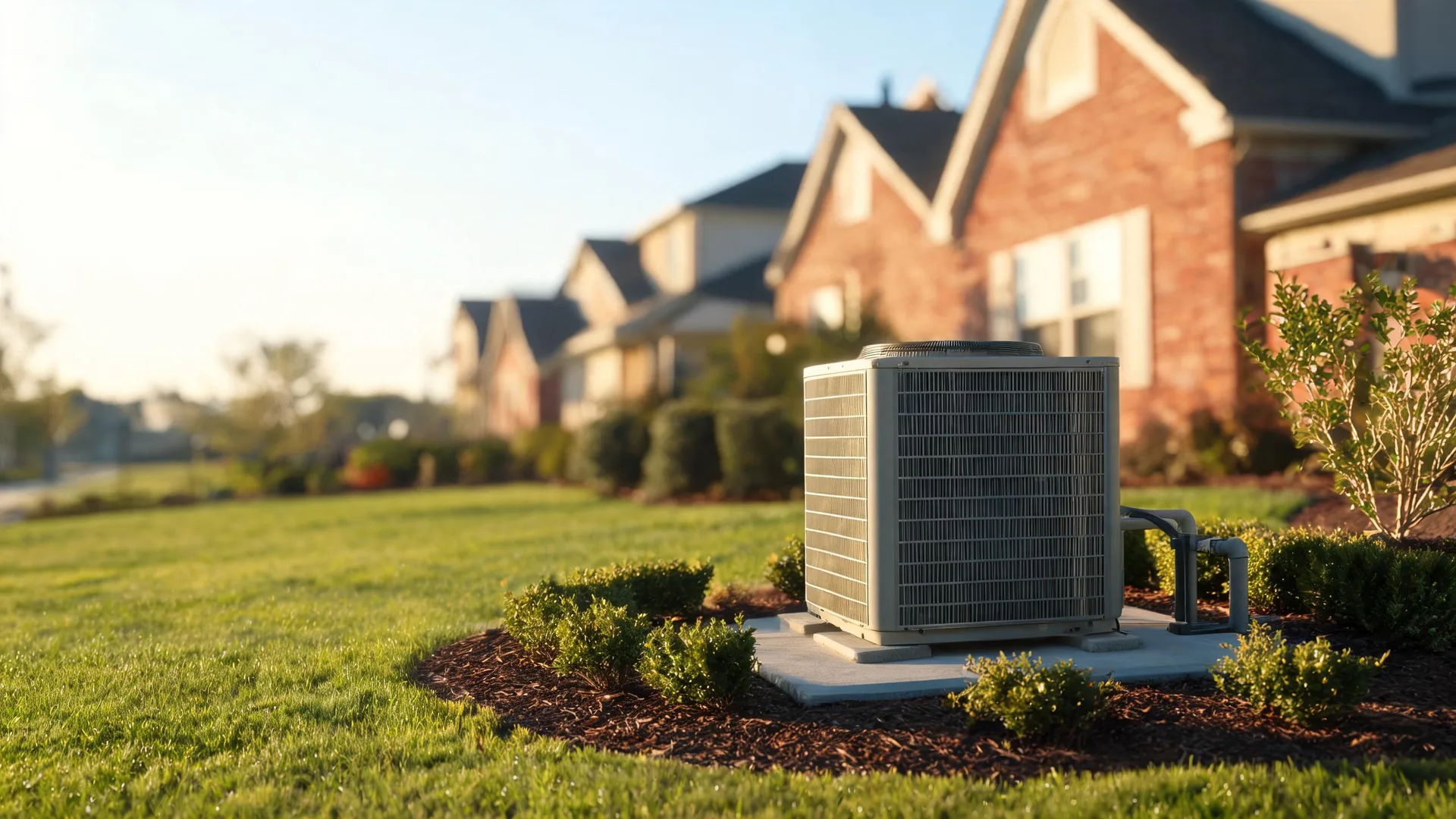
An outdoor heat pump unit mounted on a concrete pad in front of a two-story suburban house.

Heat Pump Installation in Brunswick, OH

Tell us about the job

Takes about a minute. No obligation.

New system or replacementHeat PumpMedina County, OH
Step 1 of 2

What ZIP code is the job in?

Ohio homes paid 15.99 cents per kilowatthour in 2024, above what most of the country pays. A heat pump moves heat instead of burning fuel or resisting current for it, so it gets more warmth out of every kilowatthour than baseboard or furnace-strip heat ever will. That difference matters more here than in a state with cheap power, because every cent on the rate gets multiplied by every kilowatthour the system draws. A furnace burns gas to make heat. A heat pump just moves heat that already exists, and that gap in how the two work is what shows up on your bill, month after month, not just once at installation.

8 months
October through May, your system heats
3 months
June through August, it cools
22°F
the average winter night it heats against
81°F
the average summer afternoon it cools against
Isometric line illustration of a cutaway house showing interior rooms with furniture, a furnace or air handler with overhead ductwork, and an outdoor condenser unit connected by lines outside the wall.
Your system heats October through May and cools June through August.

NOAA nClimDiv, 1991–2020 normals

Heat pumps in Brunswick run October through May. That's about eight months a year.

Get the new system in before September. That way the install happens while the old one's still working, not after it dies on you in October.

Most homes here already burn gas, which is what a heat pump replaces

72.7% of homes heat with gas
64 damaging wind events from 2015 to 2024
13 hail events from 2015 to 2024
A heat pump here has an easier job than mostMedina County's average winter low is 22°F. That's cold enough that the heating runs steady all winter. But it's nowhere near the coldest climates a heat pump has to work in.

The old furnace or AC gets disconnected and hauled off once the new heat pump and air handler are in and running. If the furnace burned gas, the gas line feeding it gets capped. No open connection left behind. The condensate line and electrical whip get reused or replaced, depending on condition. The old outdoor condenser comes off the pad so the new unit can go in its place. None of this is something a homeowner has to handle or schedule separately. It's part of the same job, usually done the same day the new system goes in.

Choose the system that makes the rate work for you

The rate on your bill is fixed at 15.99 cents a kilowatthour. What's not fixed is which machine turns that rate into heat. A heat pump moves heat instead of burning gas or resisting current. That gets more warmth out of every kilowatthour. That difference shows up on every bill the system runs, not just the day it's installed.

Find a contractor
A gray heat pump condenser unit mounted on a concrete pad against the gray lap-siding exterior wall of a house.

Built for steady work, not extremes

The time-lapse runs day into night because that's what a heat pump does here, year after year. It's not fighting subzero air most of the time it runs. At 22°F average overnight low, the load it's working against stays moderate, not extreme. That's a workload a well-built mid-efficiency system handles fine for years. You don't need to pay for the top efficiency tier on the market to get a system that holds up here. What matters more is picking a unit sized right for the house and keeping up with the filter and the coil.

Ask for the heat loss calculation, not a guess off the old system's size

A contractor sizes a heat pump by figuring out how much heat the house actually loses through the walls, windows, and roof. Not by matching whatever tonnage the old furnace or AC happened to be. Equipment sized off a guess runs longer than it should, or it short-cycles. Either way it wears out faster than a unit matched to the house.
Ask where the backup heat comes from and when it kicks in

Every heat pump needs a second heat source for the coldest stretches. Usually that's electric resistance strips in the air handler, or the old furnace left in place for backup. Ask what temperature triggers it, and whether it's set to run only when the heat pump can't keep up on its own. A backup that kicks in too early drives the power bill up, and there's no obvious reason why.

Sizing a heat pump starts with a room-by-room heat loss calculation, called a Manual J. It looks at how much heat escapes through the walls, windows, attic, and floor in that specific house. A unit sized too big will short-cycle. It shuts off before it finishes a full heating or cooling cycle, and that leaves the air clammy in summer and wears on the compressor faster than it should. A unit sized too small runs constantly and leans on the backup heat strips more than it needs to. The right size also affects how evenly the house heats. An oversized unit blasts the nearest room to temperature and shuts off before the heat spreads through the rest of the duct run. None of this comes from matching the tonnage of the old furnace or AC. That old unit may have been sized wrong from the start. A contractor who skips the calculation and just quotes a size off the equipment being replaced is guessing, not sizing.

The equipment is one line on the quote. It's not the whole cost. Ductwork drives a lot of it. A heat pump moves a different volume of air than a furnace did. If the existing ducts are undersized or leaky, they may need sealing or rework before the new system can push enough air through the house. Where the condenser sits matters too. A straight pad swap costs less than a run that needs a new electrical circuit or a line set through finished walls. Backup heat strips in the air handler mean tying into the home's electrical panel. A panel with no spare capacity adds a step most people don't see coming. Labor gets priced on the hours a job takes, not just the size of the unit. A duct layout that needs rework takes longer to get right than one that doesn't.