





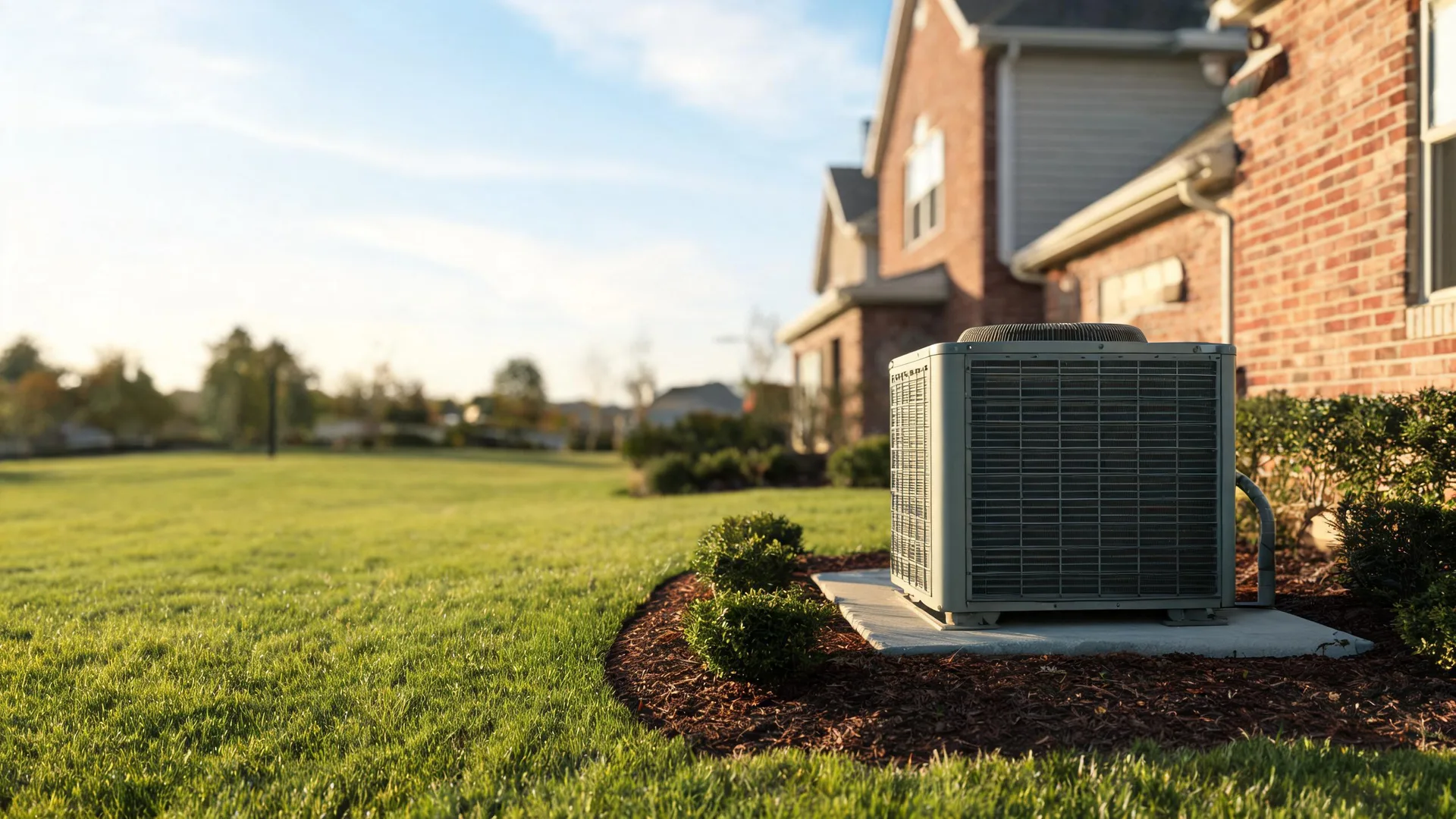
An outdoor heat pump unit mounted on a concrete pad in front of a two-story suburban house with a landscaped lawn.

Heat Pump Installation in Beavercreek, OH

Tell us about the job

Takes about a minute. No obligation.

New system or replacementHeat PumpGreene County, OH
Step 1 of 2

What ZIP code is the job in?

Electricity in Greene County averaged 15.86 cents per kilowatt-hour in 2025. A heat pump runs on electricity for both heating and cooling, so that rate follows it year round, not just when the weather turns hot. Summers here add their own load. The dew point averages 63°F across June, July and August, and air that heavy means the system is pulling moisture out of the air, not just cooling it down. A unit that handles that poorly runs longer to do the same job. At this rate per kilowatt-hour, those extra hours are what show up on the bill.

8 months
October through May, your system heats
3 months
June through August, it cools
24°F
the average winter night it heats against
83°F
the average summer afternoon it cools against
Isometric illustration of a cutaway single-family house showing interior ductwork and an air handler, with an outdoor condenser unit connected by lines along the exterior wall.
Your system heats October through May and cools June through August.

NOAA nClimDiv, 1991–2020 normals

Most homes in Greene County heat with gas.

A heat pump paired with that existing gas furnace gives this house a second system to lean on when it's cold.

Eight months of heat, three of cooling: get it in before October

Cooling runs June through August
Heat runs October through May
Climate zone 4A

Greene County falls in climate zone 4A, which asks real work of a system in both directions, humid summers and cold winters alike. Any split-system heat pump installed here, if manufactured from 2023 on, has to clear federal minimums: 14.3 Btu of heat moved per watt-hour of electricity over the summer, 7.5 Btu per watt-hour over the winter. That floor narrows what can legally go into this house. It doesn't tell you which unit above that floor is worth paying for, only that nothing below it is on the table. A system that just clears the minimum and one that clears it by a wide margin can carry very different costs once you're running it through a full year here, summer humidity and winter cold both.

The unit you choose here sets the bill you'll pay for years

The rate per kilowatt-hour applies to this system every time it runs, all year. The efficiency you choose at installation is what you're paying for on every bill after. Ask about the SEER2 and HSPF2 numbers for any unit under consideration, not just whether it clears the federal minimum.

Find a contractor
A gray heat pump outdoor unit mounted on a concrete pad next to a residential house with lap siding and stone accents.

The unit is only part of what you're paying for

Installation cost comes down to what the contractor has to do to make the unit work in this house, not just the unit sitting in the yard. A straightforward swap, same spot, same line set, same electrical, costs less because there's less to touch. Add a dual-fuel setup, where the heat pump works alongside the gas furnace and a control board decides which one runs based on outdoor temperature, and there's more wiring and more setup to get those two systems talking to each other correctly. Ductwork matters too. A heat pump moves a different volume of air than a furnace alone, and if the existing ducts weren't sized for that, modifying them adds labor the unit price doesn't include. Where the outdoor unit sits and how far the refrigerant lines have to run between it and the indoor coil also changes what the job takes. None of this shows up on the sticker. It shows up in the labor.

Ask what the load calculation found, not just the tonnage

A heat pump sized off square footage alone is a guess. A contractor should walk the house, check the windows and insulation, and run a load calculation before naming a size. Two houses the same size can need different units depending on what's in the walls and how much glass faces the sun. If nobody mentions doing this math, ask why.
Ask how it performs at low outdoor temperatures

Every heat pump loses capacity as the air outside gets colder, but not all of them lose it the same way. Some hold most of their output down to very low temperatures before backup heat has to step in. Others fall off earlier and lean on the heat strips more often. The spec sheet lists capacity at specific outdoor temperatures, not just one number for the whole unit, so ask to see it at the cold end, not just the rating at mild conditions.

Taking out the old system is its own job, separate from putting in the new one. If the house is moving from a straight gas furnace to a heat pump, the old furnace comes out, and depending on the setup, the ductwork gets checked for whether it can handle the heat pump's airflow, since the two don't always move air the same way. If there's an old air conditioner being replaced alongside it, the outdoor unit and its line set come out too, and the refrigerant in that line set has to be recovered properly, not vented. Any electrical built for the old equipment gets reviewed as well, since a heat pump's power needs can differ from what a gas furnace or a straight AC used. None of this is optional cleanup. It's part of making sure the new unit isn't fighting leftover infrastructure built for a different machine.

Installation day starts before anyone touches the old equipment, with a walkthrough to confirm what was found in the load calculation still holds. Once that's settled, the outdoor unit gets set on a pad or bracket and the indoor coil goes in, usually tied into the existing ductwork or air handler. The line set connecting the two gets run, brazed, and pressure tested for leaks before any refrigerant goes in, since a joint that leaks slowly can take months to show up as lost capacity. The electrical hookup comes next, tying the unit into its own circuit with the disconnect box mounted nearby. Once it's powered on, a tech checks refrigerant charge, airflow across the coil, and static pressure in the ducts, because a unit that's wired and charged correctly can still underperform if the ductwork can't move enough air through it. The whole thing gets run in both heating and cooling mode before anyone calls it finished, since a system that heats fine on a mild day can still reveal a problem once it's asked to cool.