Electricity here runs 16.04 cents a kilowatt-hour
That is higher than what most counties in the country pay. A heat pump runs on electricity for both heating and cooling, so that rate applies every time it cycles on, winter or summer.
Takes about a minute. No obligation.
That is higher than what most counties in the country pay. A heat pump runs on electricity for both heating and cooling, so that rate applies every time it cycles on, winter or summer.
With power priced the way it is here, a heat pump that uses less electricity to move the same heat will show it on the bill. The installation is the only point where that efficiency gets built in.
NOAA nClimDiv, 1991–2020 normals
Heat pumps in Kent run eight months of heat and three months of cooling, with barely a break between them.
Get a new system in before September, and it's running on your terms instead of on a cold morning.




Portage County falls in climate zone 5A, a cool zone where the code assumes heating does most of the work over the year. Any split-system heat pump installed here, if manufactured from 2023 on, has to clear federal minimums before it can go in: at least 14.3 Btu of heat moved per watt-hour over the summer, and at least 7.5 Btu per watt-hour over the winter. Those numbers set the floor, not the ceiling. A federal tax credit is available on top of that for systems that qualify, which narrows the cost gap between meeting the minimum and going above it.
The rate decided above is set at the meter. What gets decided at installation is how much of it this system actually uses, winter and summer, for as long as it runs. A tax credit is available on qualifying systems, which narrows what the better choice costs up front.
Find a contractorThe house takes the brunt of what this climate throws at it. The heat pump itself gets a steadier job than you'd think. Zone 5A means it leans on heating most of the year, and heating here is even, grinding work, not the kind of spiking demand that wears a system down fast. It isn't fighting extreme cold snaps or straining against the worst of summer humidity the way systems do further south. That's a more even load over the years. Less strain on the equipment means a repair is usually worth making rather than a sign to replace it. When a heat pump here does act up, age or a dirty filter is a more likely reason than the system being worked past what it's built for. None of that is a reason to cut corners on the install. It means you don't need the highest-efficiency model on the lot. You need one sized right and put in correctly for the load it will actually carry.
A heat pump carries two ratings, not one. One covers cooling, the other covers heating. They're tested separately because moving heat out of a house and pulling heat in from cold outside air are different jobs for the compressor. A unit can be strong on one rating and average on the other, so the cooling number alone doesn't tell you what it costs to heat with.
That number comes from a lab test on a correctly charged system with clean coils and proper airflow. Low refrigerant charge, a coil caked with dust, or ductwork that's too small for the unit all pull real performance below what the label promises. The rating is the ceiling the equipment can reach, not a guarantee of what it will do once it's installed and running in a house.
Two systems with the same rating on paper can land very differently once they're in a house. Ask what size unit the contractor is proposing and how they landed on it. Sizing should come from a load calculation done on this house, not a guess based on the old equipment or a rule of thumb per square foot. A unit too big cycles on and off instead of running steady, which wears the compressor and leaves the air clammy. One too small runs constantly and still can't keep up on the coldest or hottest days. Ask too what happens to the ductwork, since a heat pump moves a different volume of air than a furnace and old ducts sized for gas heat don't always carry it well. And ask what backup heat the system uses when outdoor temperatures drop low enough that the heat pump alone can't keep pace, because that answer affects how the system behaves on the hardest days of winter.
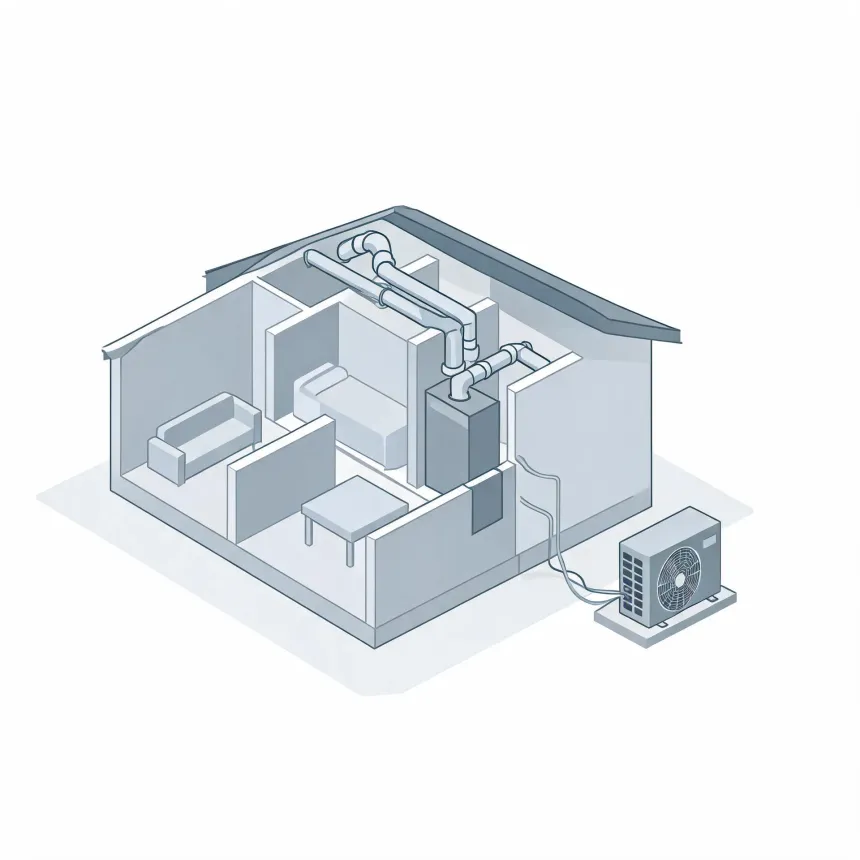
Installation day starts with the old equipment coming out, indoor and outdoor units both, along with the line set if it's not being reused. The contractor sets the new outdoor unit on a pad, mounts or sets the indoor air handler or coil, and runs new refrigerant lines between them if needed. Those lines get connected, pressure tested, and pulled into a vacuum to clear out air and moisture before any refrigerant goes in, since either one left in the lines can damage the compressor down the road. The system gets charged to the exact weight the manufacturer specs, not just until the pressure looks right. Electrical work comes next: a dedicated circuit, a disconnect box outside, and low-voltage wiring to the thermostat. Once it's powered up, the contractor checks airflow at the vents, confirms the charge, and runs the system in both heating and cooling before calling it done.