





A row of dark-clad single-story cottages with gabled roofs behind trimmed hedges, with a mown lawn in the foreground and large leafy trees under an overcast sky.

Heat Pump Installation in Troy, OH

Tell us about the job

Takes about a minute. No obligation.

New system or replacementHeat PumpMiami County, OH
Step 1 of 2

What ZIP code is the job in?

Gas heats 57.8% of homes in Miami County, more than any other fuel. Electricity comes in second at 27.9%, with propane and oil making up the rest. A heat pump going into a gas furnace home usually gets paired with that furnace rather than replacing it, switching over to the furnace only when it gets too cold outside for the heat pump to keep up on its own. That setup, a dual fuel system, lets the contractor size the heat pump for summer cooling without asking it to carry the whole winter alone. If your home heats with electricity now, the install looks different, since the heat pump may need to handle more of the cold months by itself or alongside backup electric heat.

8 months
October through May, your system heats
3 months
June through August, it cools
23°F
the average winter night it heats against
83°F
the average summer afternoon it cools against
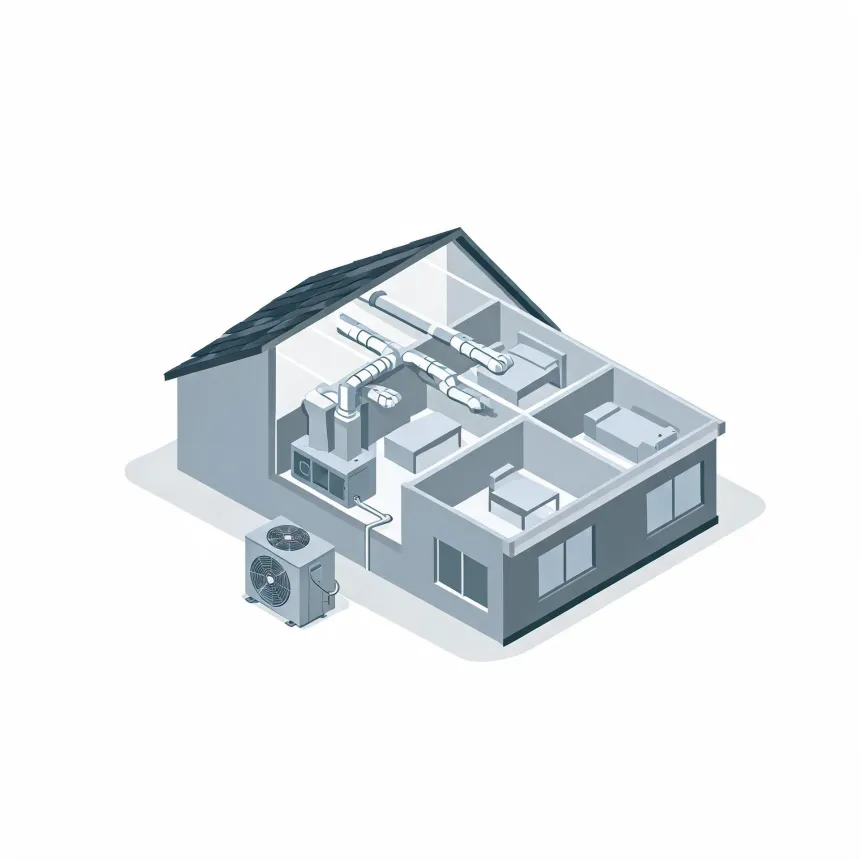
Isometric grayscale illustration of a cutaway house showing interior rooms, ceiling ductwork connected to an indoor air handler, and an outdoor condenser unit beside the exterior wall.
Your system heats October through May and cools June through August.

NOAA nClimDiv, 1991–2020 normals

Troy homes run heat pumps on electricity, at 14.69 cents a kilowatt-hour.

A standard size, correctly matched to the home, keeps that cost in line without paying for capacity nobody needs.

Half these homes were built in 1971 or earlier, and a heat pump install has to work with the house that's already there

Half the homes here were built by 1971
Climate zone 5A
Power here costs 14.69 cents per kilowatt-hour
An Easier Job Than Most PlacesDew points here average 63°F through summer, nowhere near the muggiest parts of the country

Heat here runs October through May, about eight months of the year, so a heat pump going in has almost no slack season to hide a bad installation. Cooling only runs June through August. That makes September the month to get this done, right before heat season starts and while contractors aren't backed up with no-heat emergency calls. Overnight lows average 23°F across December, January and February, so the dual fuel setup has to be sized and the switchover point set correctly before that cold arrives, not during it. Installing in September means any adjustments happen on a mild day, not at midnight in January.

Any Heat Pump Going In Here Has to Clear a Winter Test

Miami County sits in climate zone 5A, where heating is the bigger job for a heat pump to do. Every split-system heat pump built since January 2023 has to meet a federal floor for that: at least 7.5 Btu of heat delivered per watt-hour of electricity over the winter, and 14.3 for cooling. That floor narrows down what a contractor can put in, and installing now means the unit going in is matched to this winter's demand before it has to prove it.

Find a contractor
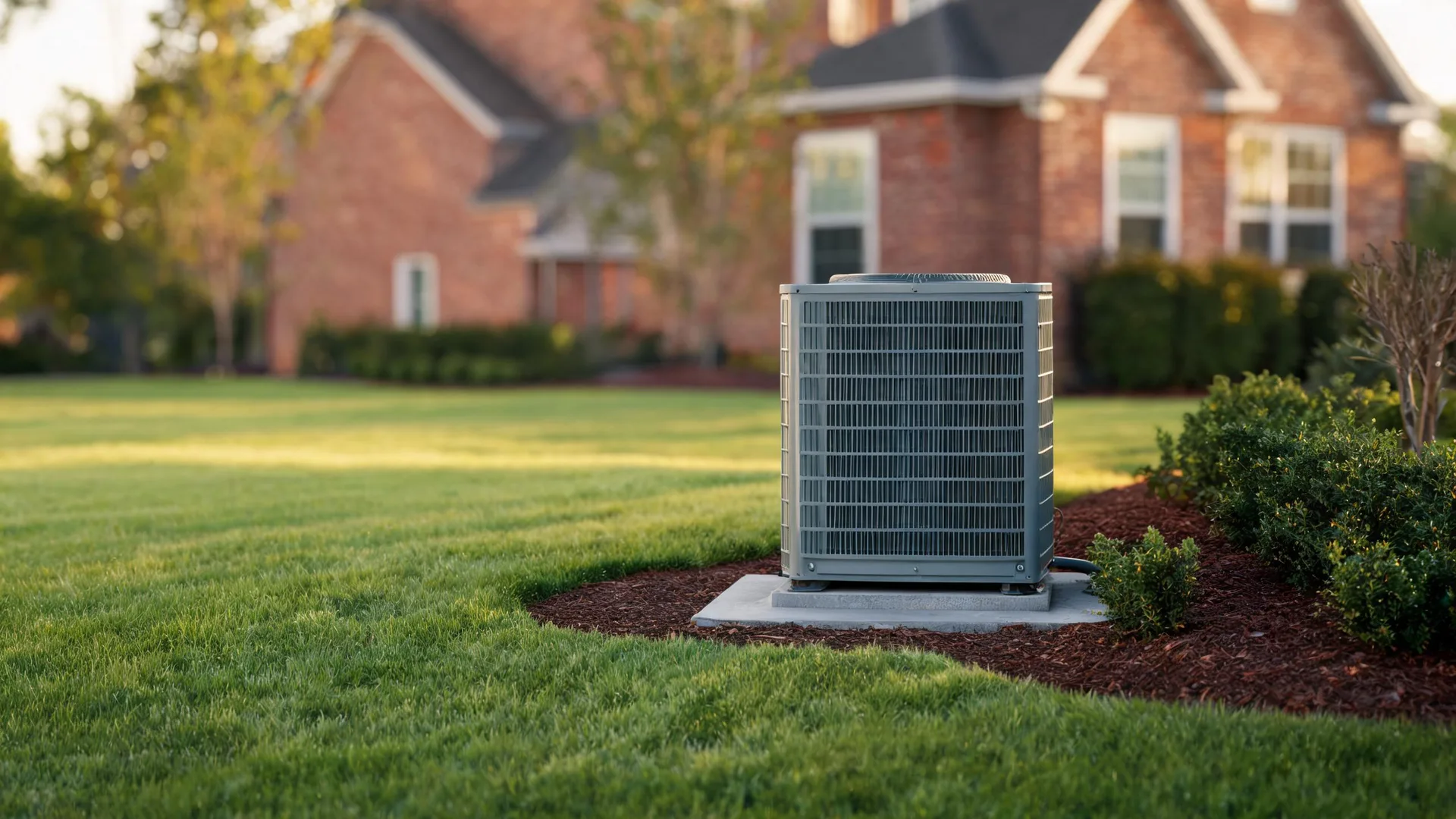
A dark gray heat pump unit mounted on a concrete pad next to a house with gray siding and a stone veneer wall.

A System That Isn't Pushed Hard

The dew point number already tells you the compressor isn't working as hard here as it would further south. Over years of run time, that difference adds up: fewer hours at peak output, less strain on the parts that wear. When a heat pump has trouble here, it's more often age or a skipped filter than the system being run into the ground. That's worth knowing when you're picking equipment. A mid-range unit, correctly sized for the home, can hold up fine here without paying for the top efficiency tier on the market.

Sizing Drives the Cost, Not the Brand Name

A heat pump has to be matched to the house, room by room, not picked off a chart by square footage alone. That means a load calculation before anything gets quoted: checking windows, insulation, ductwork, how the house holds heat. Skipping that step is how a contractor ends up installing a unit that's too big or too small, and either one costs the homeowner later even if the install itself was cheaper.
The Ductwork Decides a Lot

If the ducts already in place are undersized, leaky, or routed for a furnace that doesn't move air the same way a heat pump does, that work has to happen before the outdoor unit ever gets set. Sealing joints, adding returns, sometimes replacing a run outright. A straightforward swap onto ducts that are already in good shape is a different job than one where the ductwork has to be fixed first, and the condition of what's already there is often the biggest variable in the whole install.

Whatever is getting replaced doesn't need to come out before the new equipment goes in. A contractor typically sets the new outdoor unit, runs new line set if the old one isn't rated for the refrigerant going in, and only then disconnects what's there. If this is a straight swap on an existing air conditioner, the old condenser gets drained of refrigerant by law before it's hauled off, never vented to the air. An old furnace staying on for backup heat in a dual fuel setup usually just gets left alone, tied into the new system's controls rather than pulled out. Whatever does come out, condenser, coil, furnace, gets scrapped for the metal and refrigerant, not reused. None of this should mean a gap with no heat or cooling while the work gets done.

A load calculation has to account for what the house is actually doing with its heat, and in a home built around 1971 or earlier that's often less than a newer build. Older windows, older insulation, a furnace and ducts sized for a different era of construction standards. None of that shows up on a square footage chart. A contractor measuring for this job needs to check what's actually in the walls and attic here, not assume it matches a home built last decade. If your house still has its original ductwork, that's worth flagging before the quote gets written, since a heat pump moves air differently than the furnace it's replacing. Getting the load calculation right the first time means the unit going in is sized for this house, not an average one.