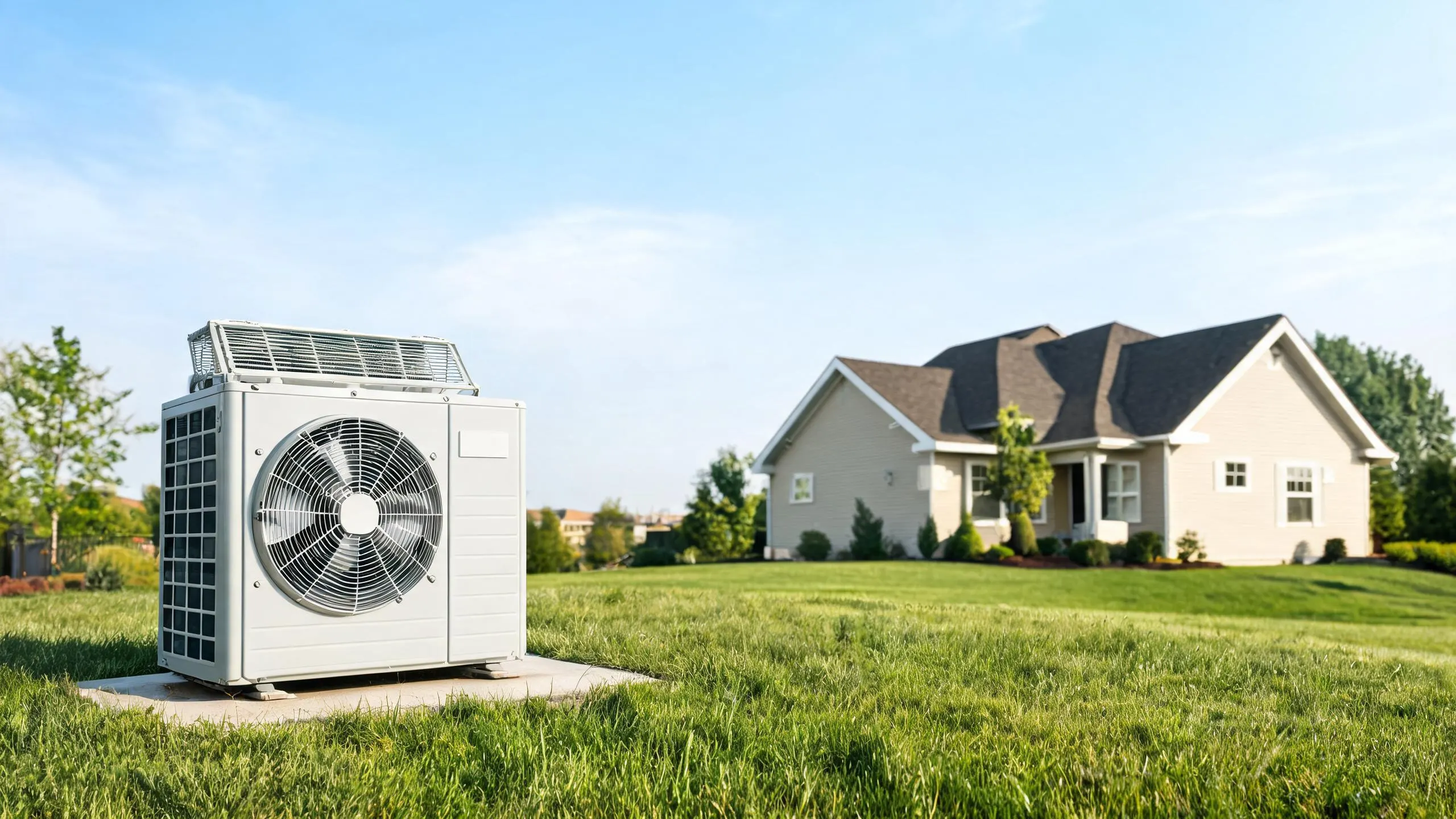






An outdoor air conditioning condenser unit mounted on a concrete pad in front of a single-story suburban house.

Heat Pump Installation in Portsmouth, OH

Tell us about the job

Takes about a minute. No obligation.

New system or replacementHeat PumpScioto County, OH
Step 1 of 2

What ZIP code is the job in?

Electricity in Scioto County runs 18.87 cents per kilowatt-hour on average, higher than most of the country pays. A heat pump here is moving heat nearly every month of the year, so that rate hits every single bill. Two systems with the same price tag can land on very different numbers once you're paying to run them at that rate. The difference shows up most in how the compressor is built and how well it holds its rated output in real conditions, not just on the spec sheet. Where power costs this much, that gap between a system that runs well and one that merely runs is worth knowing before you buy.

7 months
October through April, your system heats
4 months
June through September, it cools
26°F
the average winter night it heats against
85°F
the average summer afternoon it cools against
Isometric grayscale illustration of a cutaway house showing interior rooms, ducted air handler and duct runs, connected by pipes to an outdoor condenser unit beside the building.
Your system heats October through April and cools June through September.

NOAA nClimDiv, 1991–2020 normals

Heat here runs October through April, seven months of the year.

Get a heat pump installed before September and it's ready for that first cold night, not fighting to keep up.

Wind and ice test this system more than heat ever will

114 damaging wind events from 2015 to 2024
13 winter storms from 2015 to 2024
Winter nights average 26°F
Most Homes Here Already Run on ElectricElectricity heats 40.3% of homes in Scioto County, more than gas, propane and oil combined.

Scioto County sits in climate zone 4A, a mixed zone under the 2021 energy code that asks real work of a system in both directions. Every split-system heat pump installed here has to meet the federal minimum: at least 14.3 Btu of cooling removed for every watt-hour it uses over the summer, and at least 7.5 Btu of heat delivered per watt-hour over the winter. That floor applies to any heat pump manufactured from 2023 on, so a contractor can't legally put in something that falls short of it. Where power costs what it does here, a system that clears that bar by a wide margin is worth more than one that just meets it. There's also a federal tax credit for heat pumps that qualify as high efficiency, worth asking about when you're comparing models.

Decide this before the install, not after

That gap between a system that runs well and one that merely runs isn't something to sort out after it's installed. Decide it now, while you're still comparing models and before anything is set in place.

Find a contractor
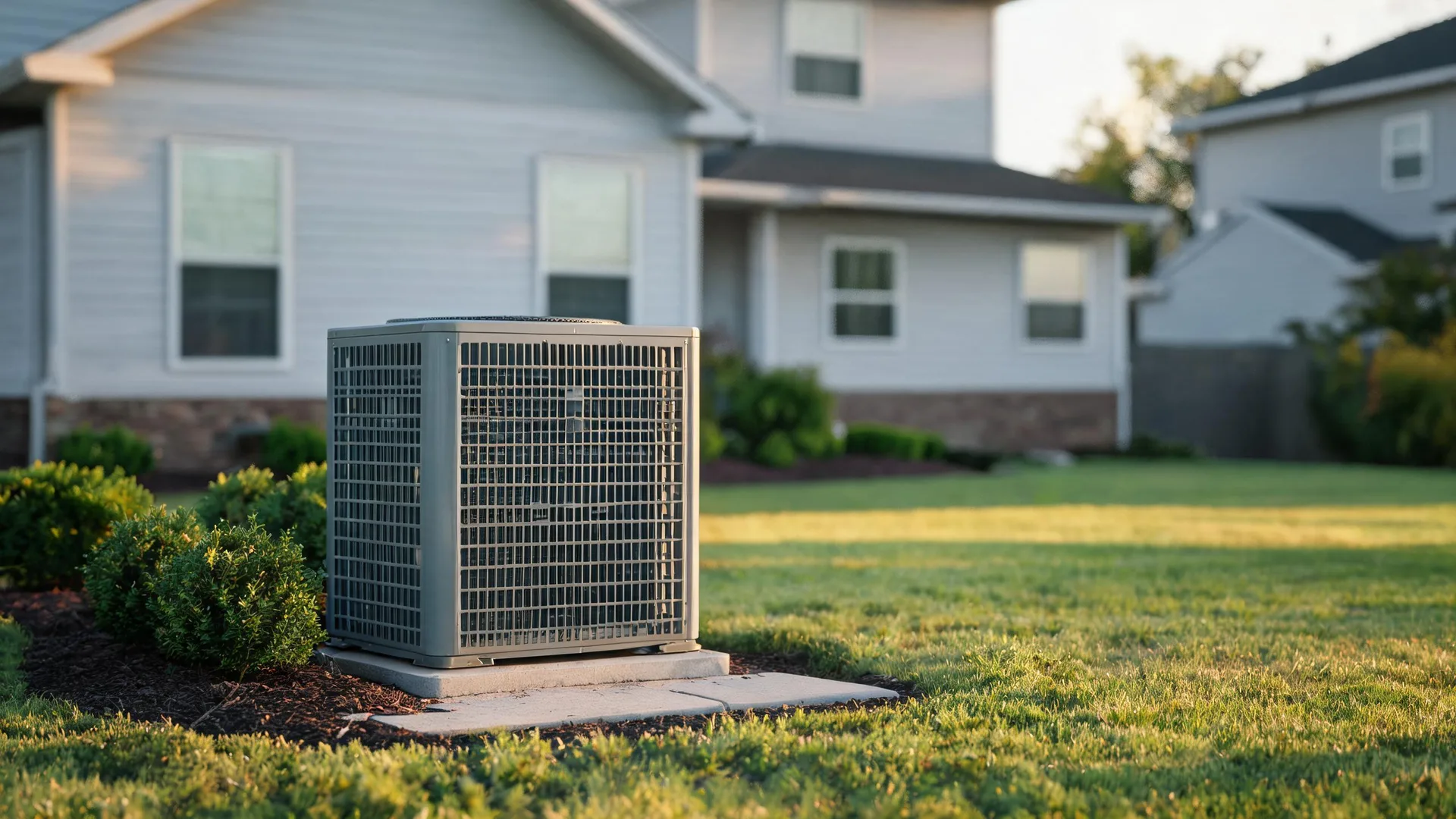
A dark gray heat pump unit mounted on a concrete pad next to a house with gray siding and a stone veneer wall.

An Older House Needs a System Sized to Fit It

Half the homes in Scioto County were built in 1968 or earlier. A house that age was almost never built with ductwork sized for a heat pump, or with one in mind at all. That doesn't rule anything out, but it does mean the install isn't just picking a unit and setting it down. Whoever sizes this one needs to look at what the house actually has to work with, not just the square footage.

Ask for the Manual J, not a guess

A contractor should size a heat pump by calculating the actual heat loss and heat gain of the house, room by room. This is called a load calculation. Sizing off square footage alone, or matching whatever was there before, skips the parts of the house that actually drive the number: how much glass it has, how the attic is insulated, which way rooms face. A system sized wrong in either direction costs more to run, whether it's too small and struggles or too big and cycles on and off without fully drying the air or settling into a steady output.
Ask how it performs at low temperatures, not just at rest

Every heat pump has a rated output measured under controlled conditions, but what matters is how much heat it still delivers as the outdoor temperature drops. Look for the manufacturer's capacity chart at low temperatures, not just the headline number. Some compressors hold most of their output down to very cold air. Others fall off hard and lean on backup heat strips to make up the difference, which costs more to run every time they kick in. Two units with the same rated capacity can behave very differently once it's actually cold outside.

Installation cost comes down to more than the equipment sitting outside. The ductwork has to be inspected and sometimes modified, because a heat pump moves a different volume of air than whatever heated the house before, and leaky or undersized ducts waste capacity no matter how good the unit is. The refrigerant lines have to be set to the right length and properly sized for the system, not just reused because they're already in the wall. Electrical work is part of it too: a heat pump draws power the old equipment may not have been wired for, so the breaker panel and disconnect often need attention before the unit ever gets set. Placement matters as well. The outdoor unit needs clearance for airflow and drainage, away from anything that traps snow or blocks the coil. None of this shows up on a spec sheet, but all of it decides whether the system installed matches the system on paper.

Half the homes here were built in 1968 or earlier, so a lot of installs aren't straightforward swaps. Before anyone quotes a price, ask whether they're running a load calculation on the house you actually have or pricing off the square footage. Ask what happens to the existing ductwork if it was sized for an old furnace rather than a heat pump. If the answer skips straight to a unit and a number, that's a sign they haven't looked closely enough to size it right. Getting this part right the first time matters more here than in a newer house, because there's more that could've been built without a heat pump in mind.