Storms come through often
Hamilton County recorded 271 severe weather events between 2015 and 2024. That includes 169 damaging wind events, 79 hail events and 4 tornadoes. Winter storms with heavy snow or ice hit the county 16 times in that span.
Takes about a minute. No obligation.
Hamilton County recorded 271 severe weather events between 2015 and 2024. That includes 169 damaging wind events, 79 hail events and 4 tornadoes. Winter storms with heavy snow or ice hit the county 16 times in that span.
Almost one in five Ohio households went at least 24 hours without power in 2024. A heat pump depends on electricity to heat and cool your home, so where the outdoor unit sits and what backs it up during an outage are part of the installation, not an afterthought.

NOAA nClimDiv, 1991–2020 normals
Hamilton County sees heavy wind, hail and winter storms most years.
A heat pump installed here has to hold up to weather most systems never face.




May is worth marking on the calendar if a heat pump is going in before summer. Once June hits, cooling runs for about four months straight, and a new install competes with every other homeowner whose system just failed in the heat. The same goes for September ahead of a heat pump that needs to carry you through winter here, since heat runs October through April, seven months of the year, longer than almost anything else the system does. Overnight lows average 25°F across December, January and February, so a heat pump going in before that stretch needs its settings and any backup heat source checked while there's time to do it right. Installing ahead of the season means the contractor can take the time a storm or a breakdown won't allow.
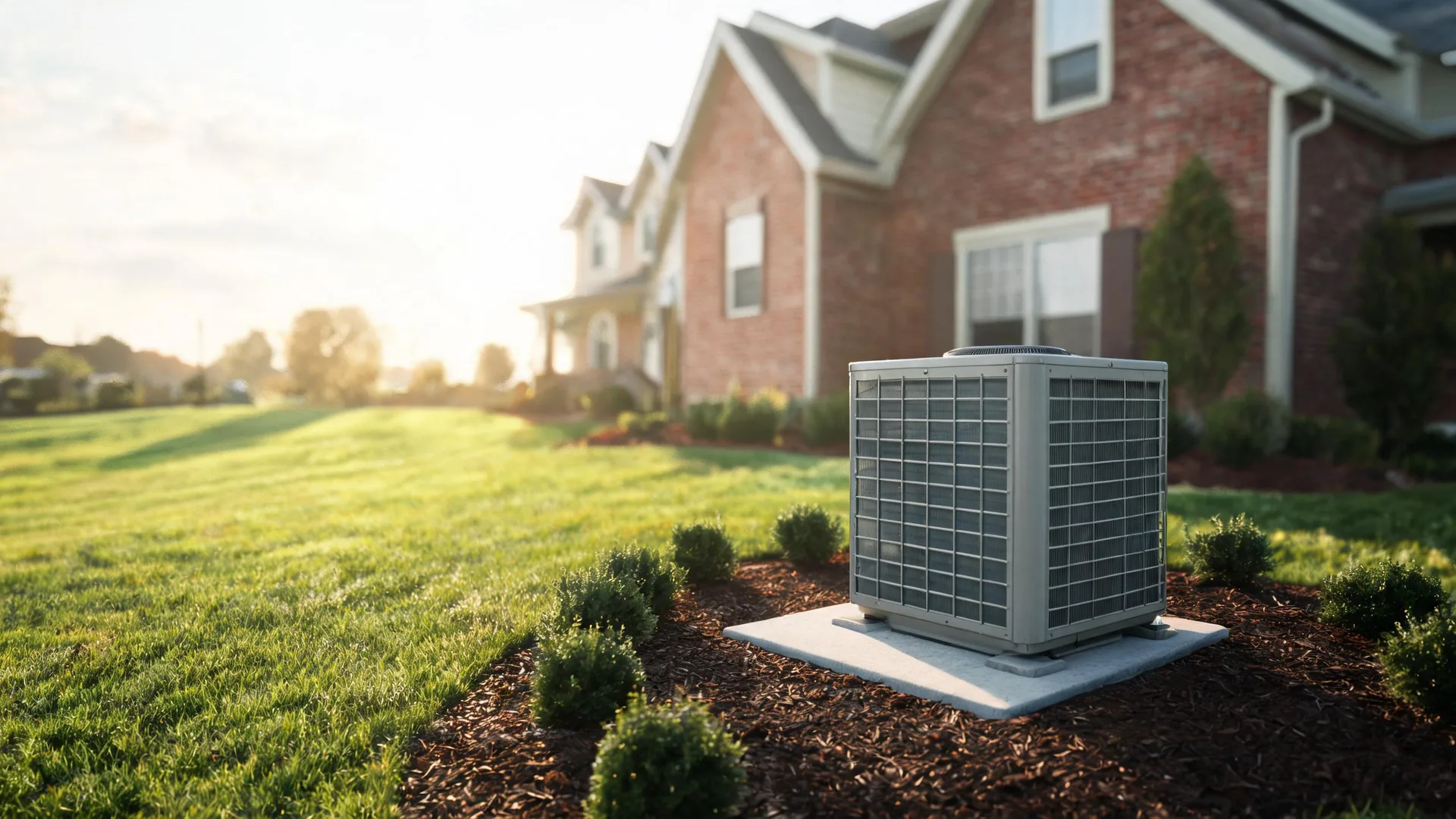
Plan the outdoor unit's spot with weather in mind: clear of falling limbs, away from the downspout where ice builds up, up on a stand if the yard floods. Ask what backup heat looks like if the power drops in a winter storm. A gas furnace paired with the heat pump can cover that gap. Settle this during the install, while there's time to plan it, not after a storm has already cut the power.
Find a contractor
This machine is going to run for years in whatever house it goes into. In a house built 1963 or earlier, that means years of running through a panel and ductwork that were sized for something else, maybe decades ago. The install has to work with what's actually there, not a guess at it. Ask the contractor to check the panel and the ducts before the unit goes in, so the fit is right from day one instead of something to work around later.
A furnace or straight AC coming out means disconnecting gas lines or electrical whips, capping what needs capping, and removing refrigerant from the old lines if a coil is involved. A licensed contractor handles the gas and refrigerant parts because both need to be done a specific way, not because the job is hard to picture.
Ductwork, a thermostat wire, even an existing gas furnace used as backup heat can often carry over into the new setup instead of getting torn out. The contractor should tell you during the walkthrough what gets reused and what doesn't, so you know going in which parts of the old system are actually leaving and which aren't.
The yellow EnergyGuide label on a heat pump shows two numbers, one for cooling and one for heating. The cooling number tells you how much heat the unit can move out of your house per unit of electricity it draws, averaged over a whole season of weather instead of one perfect day. The heating number works the same way but matters more here, since a heat pump has to pull heat out of cold outside air, and that gets harder the lower the temperature drops. A higher rating on either number means less electricity for the same amount of comfort, but the rating assumes the unit is sized right and installed right. An oversized unit short cycles, turning on and off instead of running steady, and that wastes the efficiency the label promised. The rating also assumes clean coils, a clear filter and ductwork that isn't leaking air into a crawlspace or attic, so the number on the label is a ceiling, not a guarantee.
Electricity in Hamilton County averaged 16.82 cents per kilowatt-hour in 2025, higher than in most US counties. A heat pump runs on electricity for both heating and cooling, so that rate applies to it every month of the year, not just in summer. The EnergyGuide rating matters more here because of that rate, since a less efficient unit draws more power at a price that's already above average. Sizing and installation affect how much of that rating you actually get, which is why the unit and the install both factor into what it costs to run. A contractor who sizes the system to the house, rather than rounding up, is working in your favor on every bill that follows.