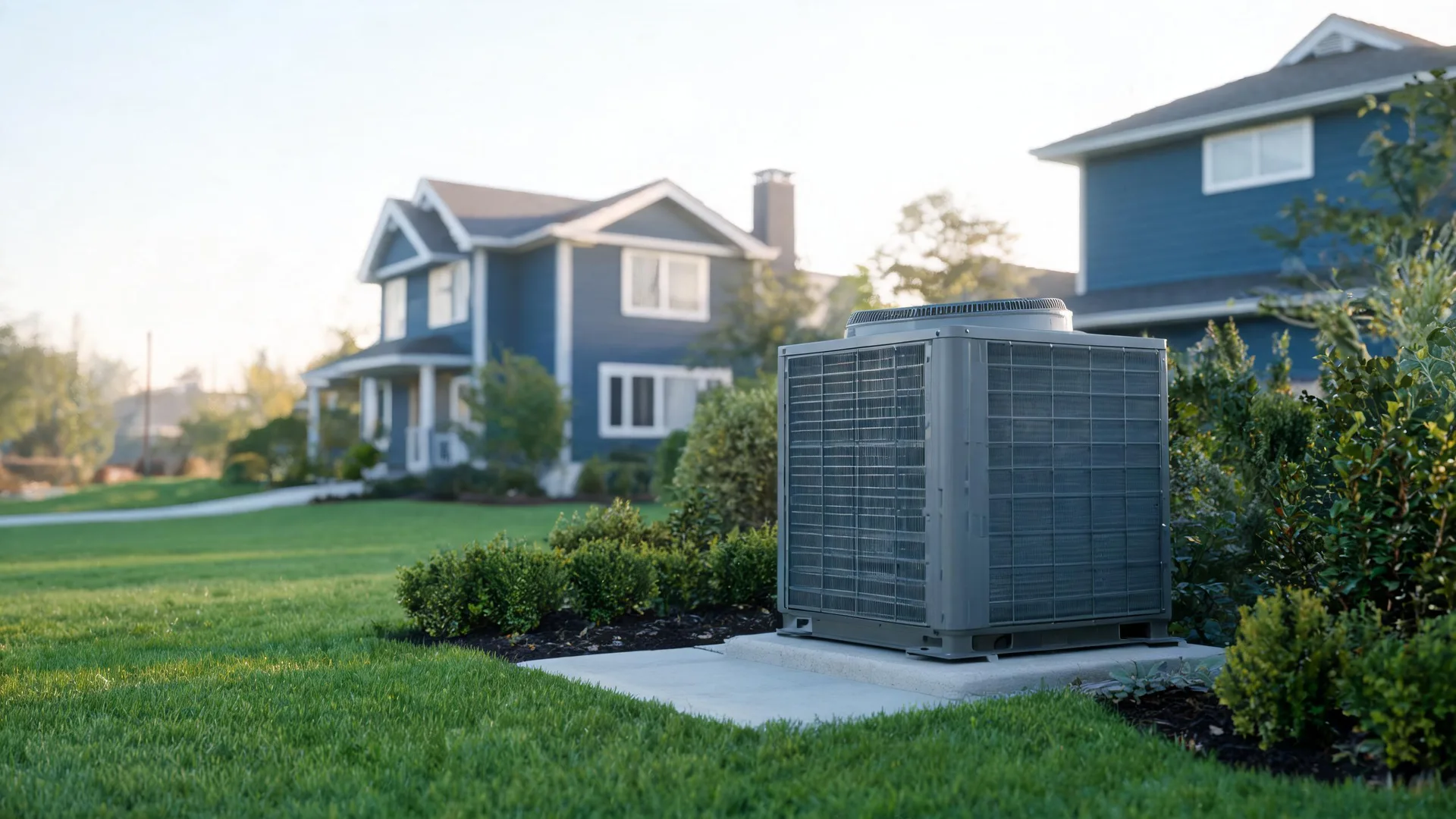
Summit County sees its share of storms
Summit County logged 188 severe weather events between 2015 and 2024, including 133 cases of damaging wind, 38 hail events and 5 tornadoes. Winter added 12 more, from heavy snow to ice.
Takes about a minute. No obligation.
Summit County logged 188 severe weather events between 2015 and 2024, including 133 cases of damaging wind, 38 hail events and 5 tornadoes. Winter added 12 more, from heavy snow to ice.
Close to 18% of Ohio households were without power for a day or more in 2024. A heat pump depends on that power, for heat as much as for cooling, so an outage here is worth planning around.
NOAA nClimDiv, 1991–2020 normals
Electricity in Summit County runs 15.84 cents per kilowatt-hour.
A heat pump that's sized and installed right earns that rate back on every bill it runs.



May is worth marking on the calendar. Heat here doesn't start until October, but a new heat pump is worth having in place before the June heat arrives, since the same system handles both. Scheduling the install in May means it's done and tested before the first hot stretch, instead of getting picked after a breakdown on the worst week of summer. It also means whoever installs it isn't rushing between emergency calls. A system put in on your own timeline gets a proper check of the refrigerant charge and airflow before it has to work. Wait until the heat is already on, and you're choosing a system under pressure instead of choosing it right.
Installing now means the outdoor unit's placement and protection get decided before a storm makes the choice for you. It also means a plan for heat and hot water is already in place if the power goes out. Once the system is in, that part is settled.
Find a contractor
A heat pump here spends most of the year at part load. Zone 5A puts the bigger demand on heating, but the unit is sized to cover the coldest stretch, so it's loafing along under that most of the time it runs. Hard runs, the kind that wear a compressor down, come from extreme heat or extreme cold pushing the system to its limit, and neither happens here as often as in places built for one season or the other. That doesn't mean nothing wears out. A unit that's sat through enough winters and summers still needs its filter changed, its coil cleaned, its refrigerant charge checked. When something does go wrong on a system that hasn't been run hard, it's usually a part that aged out or got neglected, not one that burned out from overwork. That's worth knowing when a repair comes up: it's more often worth fixing than replacing outright.
Every heat pump loses capacity as the outdoor air gets colder, and they don't all handle it the same way. Some lean on a backup heat strip sooner than others, which costs more to run. Ask where the unit's output falls off and what kicks in to cover the gap. A contractor who can answer that has actually run the numbers on your house, not just quoted a model.
A heat pump is only as good as the setup behind it. Ask who checks the refrigerant charge after installation, who's on call if the compressor trips out, and whether parts for that system are easy to get or special order. A good price on equipment that nobody nearby knows how to work on isn't a good deal once something needs attention.
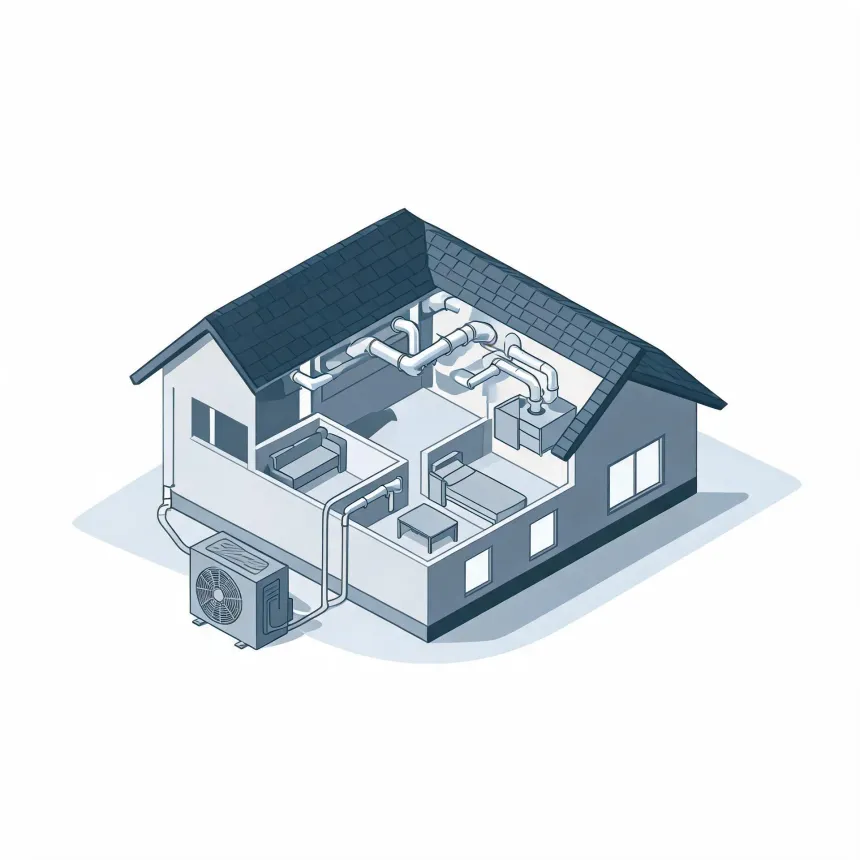
What a heat pump installation costs comes down to more than the outdoor unit sitting on its pad. The size has to match the house: too small and it struggles on the coldest days, too big and it cycles on and off without ever running long enough to dehumidify properly. That sizing comes from a load calculation, not a guess based on the old system. Ductwork matters just as much. If the existing ducts are undersized or leaky, they need work before the new system can deliver what it's rated for, and that's labor the equipment price doesn't include. Line set length, electrical capacity at the panel, and whether a backup heat strip needs its own circuit all add work that varies house to house. A contractor who walks the attic and the crawlspace before quoting a number is pricing the job in front of them, not a generic one.
Gas heats 82.8% of homes in Summit County, electricity itself only 13.9%. That's not a case against a heat pump. It's the reason most installs here are a heat pump working alongside the gas furnace already in the house, instead of a whole new heating system going in. The furnace stays as backup for the coldest days, and the ductwork it already uses is what the heat pump needs too. That's less new equipment and less new wiring than a house starting from electric baseboard or no ducts at all.