





A illuminated two-story red brick house on a quiet residential street at dusk, flanked by mature trees under a deep blue evening sky.

Heat Pump Installation in Sandusky, OH

Tell us about the job

Takes about a minute. No obligation.

New system or replacementHeat PumpErie County, OH
Step 1 of 2

What ZIP code is the job in?

Ohio homes paid 15.99 cents per kilowatthour for electricity in 2024. A heat pump runs on that electricity every time the compressor kicks on. That rate applies to every kilowatt it pulls, so the efficiency rating on the unit decides what shows up on the bill each month. Two heat pumps can heat the same house to the same temperature and still cost different amounts to run. One just gets more heat out of each kilowatt than the other. Getting the size right for the house matters too. A unit too big or too small for the space ends up working harder than it should.

8 months
October through May, your system heats
3 months
June through August, it cools
23°F
the average winter night it heats against
81°F
the average summer afternoon it cools against
Isometric illustration of a cutaway single-story house showing interior ductwork, an indoor air handler and simple furniture, connected by lines to an outdoor condenser unit beside the building.
Your system heats October through May and cools June through August.

NOAA nClimDiv, 1991–2020 normals

In Erie County, 64.2% of homes heat with utility gas. That's more than every other fuel put together.

So when you're pricing a heat pump for a Sandusky home, a gas furnace is still the thing to compare it against.

Half the homes here were built before a heat pump would've even been part of the plan

Half the homes here were built by 1968
59 damaging wind events from 2015 to 2024
11 hail events from 2015 to 2024

Erie County is in climate zone 5A. That's a cool zone, so a heat pump here leans on its heating side more than its cooling side. Any split-system heat pump installed now has to hit a federal minimum of 14.3 SEER2 for cooling and 7.5 HSPF2 for heating. That's the same minimum a unit has to meet in a warmer state, even though one here does more heating work over the year. On top of that, a qualifying heat pump can also get a federal tax credit.

A reliable match for this house beats the top-shelf model

The heat pump doesn't feel the wind, hail or snow hitting Erie County. What it feels is the compressor cycling on and off, night after night, with lows averaging 23°F through December, January and February. That's steady work, not a shock it has to survive. A unit built for winter nights here, sized right for the house, holds up well. And when something does go wrong, a repair is usually the right call, not a reason to replace the whole system. The highest efficiency number on the shelf doesn't matter much. What matters is a unit that fits this house.

Find a contractor
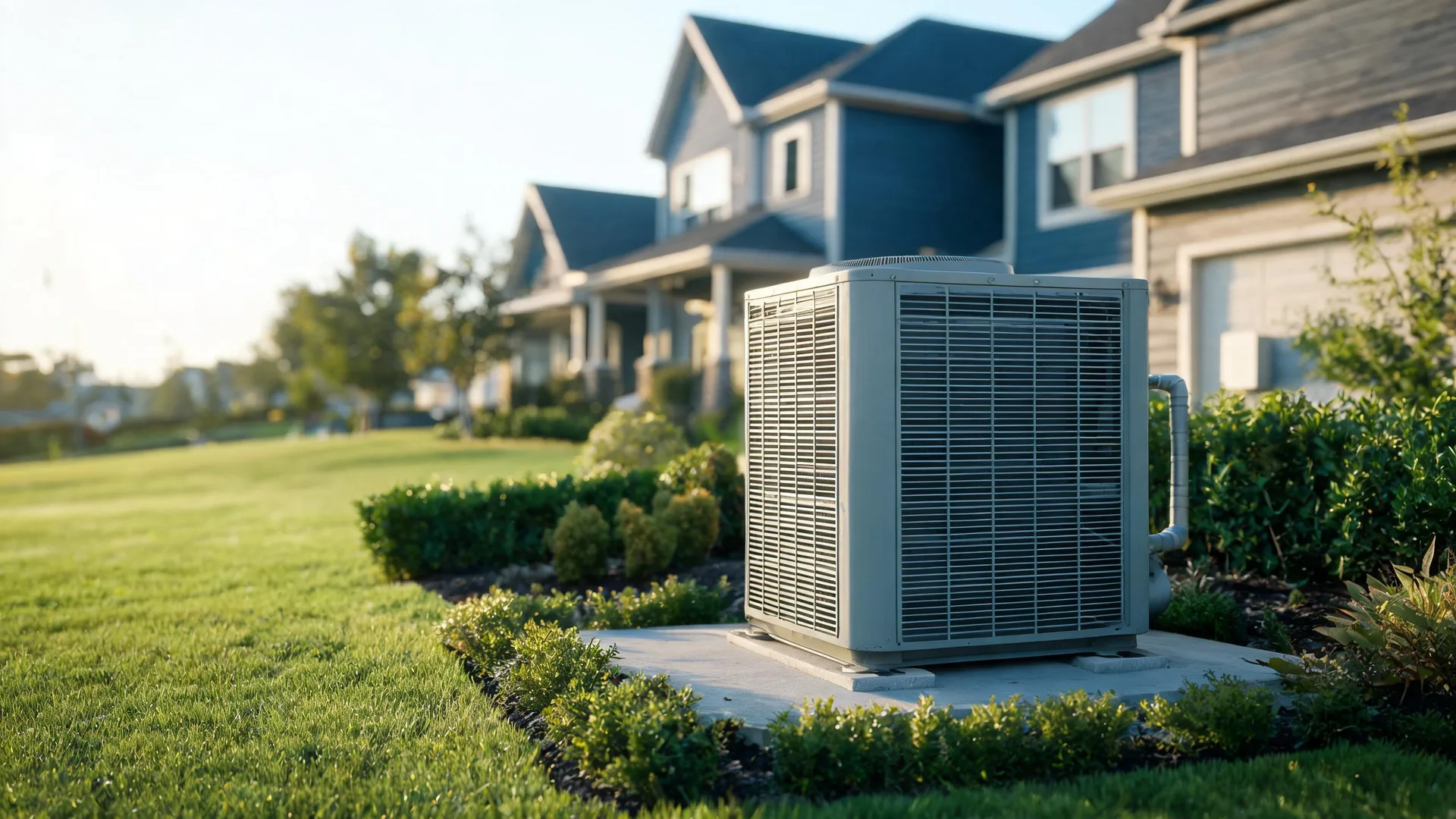
A residential heat pump outdoor unit mounted on a concrete pad next to a house with gray vinyl siding.

The unit is one line on the invoice, not the whole number

Ductwork usually swings the cost more than anything else. If the ducts in the house are already sized right and pass a pressure check, they get reused, and the job stays close to a straight equipment swap. If they're leaky, undersized, or routed badly, they need rework before the new coil goes in. That's labor on top of the unit itself. Line length matters too. A condenser set far from the indoor coil means more refrigerant line, more holes through walls or floors, more time brazing and testing those joints. Electrical can add to the number as well. Some panels have room for a new circuit, some don't, and a panel upgrade is a different job than running a breaker to a spot that's already got space. Backup heat costs extra too, whether that's a heat strip in the air handler or keeping a gas furnace around for the coldest nights. None of that shows up on the price tag of the unit. All of it shows up in the install.

Ask what the unit can still put out at low outdoor temperatures

A heat pump's rated output is measured at a mild outdoor temperature, not a cold one. Every heat pump loses capacity as the air outside gets colder, and that rate of loss is different for every unit. Ask for the capacity at a low outdoor temperature, not just the number on the label. Ask where the balance point sits too. That's the temperature below which the unit needs backup heat to keep the house warm.
Ask how the size was worked out, not what size it is

A ton number by itself doesn't say whether it fits the house. Ask what got measured to arrive at that number. Square footage, windows, insulation, layout, all of it changes the load a house puts on a heat pump. A unit sized too big short-cycles, turning on and off more than it should. A unit sized too small runs constantly and still falls behind on the coldest nights.

The old furnace or AC has to come out before the new heat pump goes in. That's its own piece of work. A gas furnace gets disconnected from the gas line, not just unplugged, and the line gets capped off safely. An old condenser gets disconnected from its electrical circuit and hauled off the outdoor pad. If the home is keeping its ductwork, get that checked before the new equipment is set. A heat pump moves a different volume of air than what was running through those ducts before. And the refrigerant in the old AC can't just get vented into the air. It has to be recovered into a tank and handled separately from the equipment.

The outdoor unit and the indoor coil go in first, before anyone touches the thermostat. The outdoor unit sits on a pad, gets leveled, and connects to the house with a refrigerant line set and an electrical whip. The indoor coil usually goes on top of or next to the furnace or air handler, wherever the lines can reach the existing ductwork easiest. Once both are in place, the lines get connected. Then the system gets pressure tested for leaks and pulled into a vacuum to clear out air and moisture before any refrigerant goes in. Skip that vacuum step and leftover moisture turns to acid over time. A contractor won't rush past it. After that comes the refrigerant charge, the thermostat wiring, and a startup check that runs the system in both heating and cooling before the job is called done.