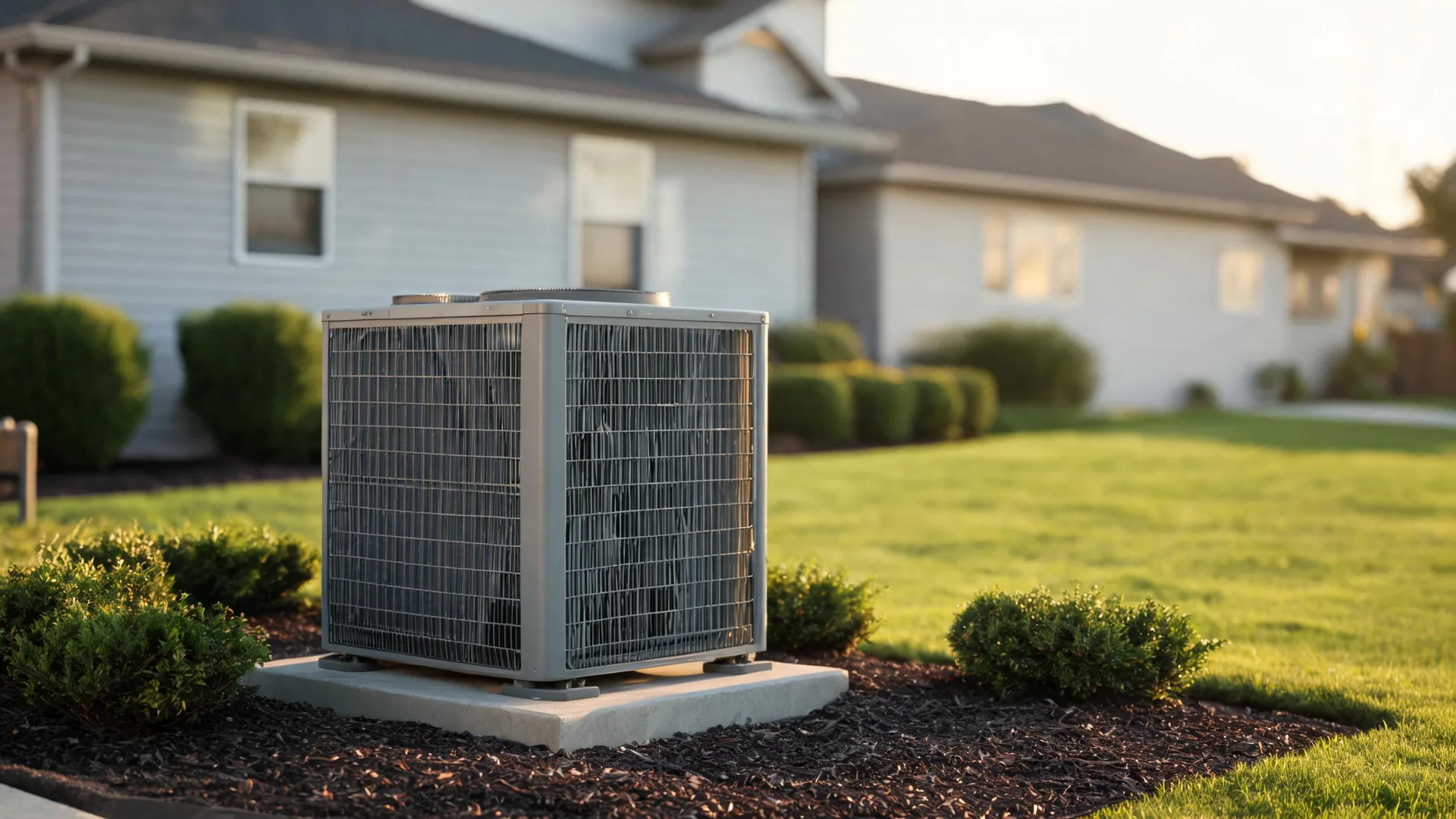
Electricity here runs 19.30 cents per kilowatt-hour
Washington County pays more for power than most US counties. A heat pump runs on electricity for both heating and cooling, so that rate applies to the system year round.
Takes about a minute. No obligation.
Washington County pays more for power than most US counties. A heat pump runs on electricity for both heating and cooling, so that rate applies to the system year round.
When the rate per kilowatt-hour is already high, how little the heat pump needs to do its job matters more here than in a place with cheap power. The same system uses the same electricity either way. What differs is how much of it gets wasted.

NOAA nClimDiv, 1991–2020 normals
Gas heats 68 percent of homes in Washington County.
Most heat pump installs here add cooling and backup heat to a gas furnace already in place, rather than replacing the whole system.




Washington County sits in climate zone 4A, which the energy code treats as mixed: real heat to move in summer, real cold to fight off in winter. Any split-system heat pump installed here now has to meet the federal minimum for that kind of system, 14.3 for cooling and 7.5 for heating, the ratio of heat it moves against the electricity it burns doing it. That floor is the same one every state uses, but it matters more where power already costs what it does here. A unit that just clears the minimum will run, and it will cost more to run than one built past it. Some systems installed now also qualify for a federal tax credit, worth checking against what's actually going into your house.
Power costs more here, so an efficient system pays you back on every bill.
Find a contractorHalf the homes in Washington County were built in 1973 or earlier. A heat pump going into a house that age is going into ductwork and a layout built for a different kind of system, not for what's sold today. It can still work well. But it has to be sized and set up for the house that's there, not just swapped in because that's what the last system was.
A full install means disconnecting the old system, not just setting a new one next to it. The refrigerant lines get recovered, not vented. Any old refrigerant has to be captured and handled properly, never released into the air. If the old unit ran on an older refrigerant, the lines and pad usually can't just carry over to the new system.
If ductwork already runs through the house, a contractor checks it before assuming it can just hook up to the new heat pump. Ducts sized for an old furnace or old AC don't always move the right amount of air for a heat pump. Sealing and sizing get checked at install, not after the system is already running and the house feels wrong.
Sizing a heat pump starts with a load calculation, not a tape measure around the old unit. A contractor works out how much heat the house loses in winter and gains in summer, room by room, using the square footage, the windows, the insulation, and the ceiling height. That number tells you the capacity the system needs, nothing more. Oversize it and the unit short cycles, running in quick bursts that cool or heat the air but never run long enough to pull moisture out or settle into a steady temperature. Undersize it and it runs constantly, struggling to catch up on the coldest or hottest days, and the backup heat ends up carrying more of the load than it should. Either mistake shows up in how the house feels and in how hard the system has to work to get there.
A load calculation already tells a contractor what the house needs. In a house from 1973 or earlier, it also matters what's already there to work with. Ductwork that age may run through fewer returns than a modern design calls for, or supply runs sized for a furnace running hot, dry air rather than the steadier, cooler air a heat pump puts out. None of that rules out a heat pump. It just means the install has to account for the house, not just the square footage. Ask what the contractor found when they looked at the ducts, not just what size unit they're putting in.