A nighttime street view of several illuminated two-story red brick homes with front porches, flanked by a large tree.

Heat Pump Installation in Salem, OH

Tell us about the job

Takes about a minute. No obligation.

New system or replacementHeat PumpColumbiana County, OH
Step 1 of 2

What ZIP code is the job in?

Electricity here runs 15.99 cents per kilowatt-hour

Ohio homes paid that rate in 2024, and a heat pump runs on electricity for both heating and cooling. There's no gas side to split the bill. Every kilowatt the unit draws gets charged at that rate, all year.


The efficiency rating decides what Salem homes pay to run it

Two heat pumps can heat and cool a house to the same comfort and still pull different amounts of power doing it. At 15.99 cents a kilowatt-hour, that gap doesn't stay small. It shows up on every bill the system produces, for as long as it runs.

8 months
October through May, your system heats
3 months
June through August, it cools
22°F
the average winter night it heats against
81°F
the average summer afternoon it cools against
Isometric cutaway illustration of a single-story house showing interior rooms with ductwork, an indoor air handler unit, and an outdoor condenser unit connected by lines along the exterior wall.
Your system heats October through May and cools June through August.

NOAA nClimDiv, 1991–2020 normals

Salem winters average 22°F overnight. A heat pump has to work at that temp, but zone 5A can see colder than that.

A heat pump sized and installed right carries a Salem winter for years without strain. Spend the money on a solid install, not the highest efficiency number on the shelf.

Gas heats most of this county, so a heat pump here is usually replacing something, not matching a neighbor's setup

52.4% of homes heat with gas
128 damaging wind events from 2015 to 2024
15 hail events from 2015 to 2024
Built for a different furnaceHalf the homes in Columbiana County were built in 1964 or earlier. That furnace was sized for a different house.

September is the month to get a heat pump installed. Heat starts running here in October. Put it in before then, and there's time to size it right and test it against real weather before the cold hits. Wait for the first cold snap, and the install happens under pressure, with whatever unit is sitting on the shelf, not the one that actually fits the house. Heat runs here from October through May, eight months on that system. An install done calmly in September is the one that holds up those eight months without issue.

A Salem heat pump has to clear a higher bar, and a credit helps cover it

Any heat pump going into a Columbiana County home has to hit at least 14.3 SEER2 for cooling and 7.5 HSPF2 for heating. That's the federal minimum here, because zone 5A winters put more strain on the machine than warmer places see. The good news is a heat pump bought now also qualifies for a federal tax credit. That credit helps offset the cost of meeting the higher standard.

Find a contractor
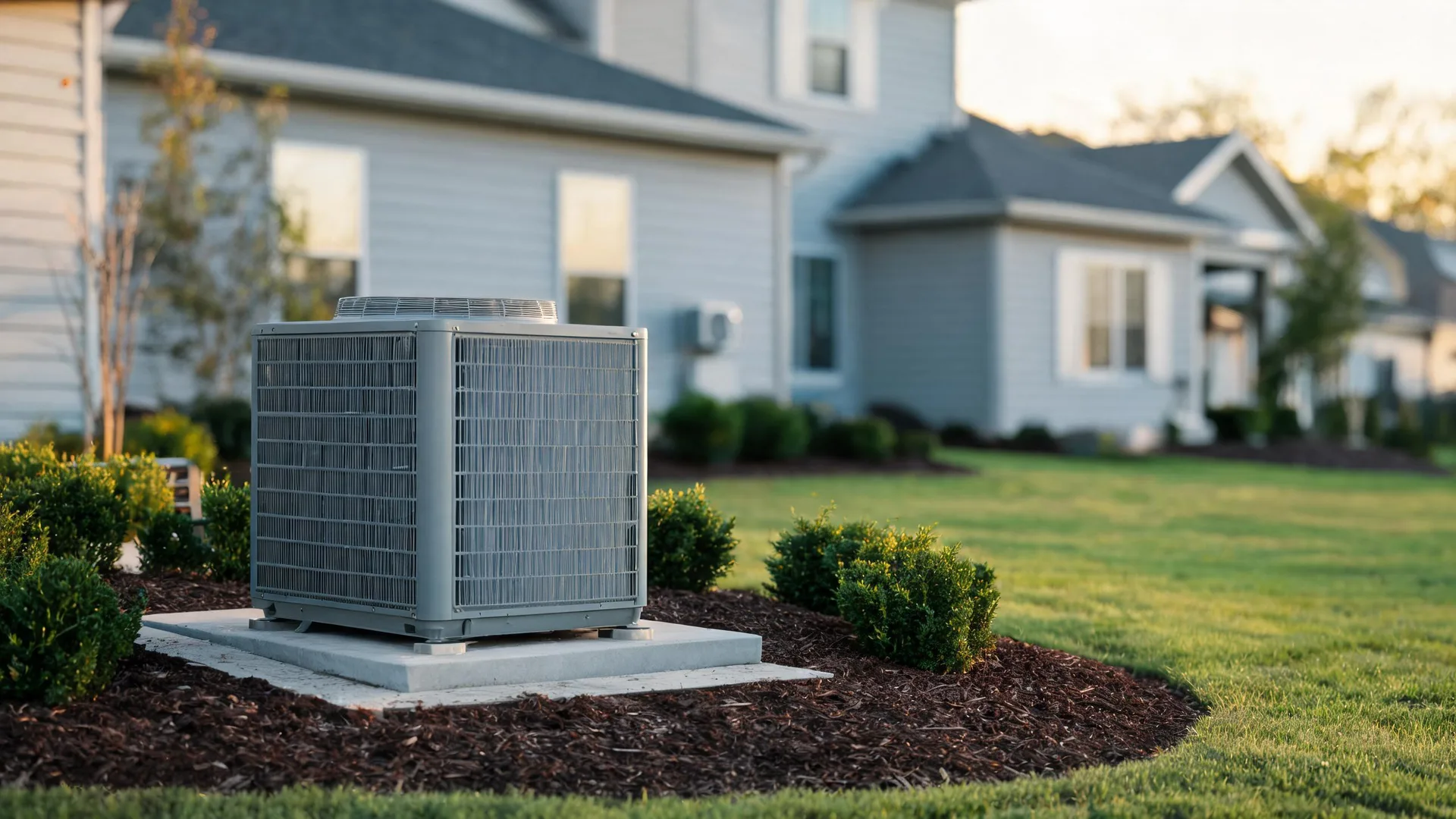
A gray outdoor HVAC unit mounted on a concrete pad beside a house with gray lap siding and a stone foundation.

The price is the install, not just the box

The unit itself is one line on the invoice. The rest is what it takes to get it running right in this house. Sizing has to match the square footage and the layout, not just swap in whatever matches the old equipment. That takes a load calculation, not a guess. A heat pump that's too big short cycles. It turns on and off before it ever settles into a steady run. One that's too small runs flat out on the coldest nights and still falls behind. Electrical work adds to the job too. A heat pump draws differently than a furnace did, so the panel or the disconnect may need upgrading to carry that load safely. Where the outdoor unit sits matters as well. It needs clearance to pull in air and a clear path for the line set running to the indoor coil. None of that shows up in a brochure price. All of it decides whether the system matches the house it's going into.

The old furnace comes out, not just the thermostat

When a heat pump replaces a furnace, the furnace gets disconnected from the gas line, the flue gets capped or removed, and the unit gets hauled out, along with the old outdoor condenser if there was central air. A gas line that's not feeding anything anymore still needs to be capped off properly. Shutting the valve isn't enough.

The ductwork usually stays, the equipment at both ends changes

Most of the time the same ducts that carried warm air from the furnace will carry it from the heat pump. No need to tear into walls or ceilings. What changes is the air handler or coil hooked to those ducts. A heat pump moves a different volume of air than a furnace did, so the system has to be matched to it.

The rating on the label is a ratio, not a guarantee. SEER2 measures how much cooling the unit produces for the electricity it draws over a season of typical use, and HSPF2 does the same for heating. A higher number means less power spent for the same comfort, but only if the system is matched to the house and installed so it can actually run the way it was tested to run. A good unit set up wrong will never hit the number on its own sticker. Airflow, duct condition, and how the refrigerant charge was set all affect what the equipment actually pulls from the panel, no matter what rating it shipped with. That's why homes with the same model installed can still see different bills.

Installation day starts with the old equipment coming out and new lines going in, not with flipping a switch. The outdoor unit gets set on a pad, leveled, and hooked to the line set running to the indoor coil. Those lines get pulled down with a vacuum pump first, to clear out air and moisture before any refrigerant goes in. Leave either one behind and it wrecks the system's efficiency, then eventually the compressor. Once the charge goes in, it gets checked against the manufacturer's numbers for that day's outdoor temperature, not just a gauge reading that looks close enough. Electrical connections get tied in and tested. The thermostat gets wired and set up for a heat pump, not a furnace. Then the whole system runs a full cycle in both heating and cooling before anyone calls the job done. A unit that's never been tested under real conditions is a unit nobody's actually confirmed works.