Electricity here runs 17.58 cents a kilowatt-hour
Franklin County pays more for power than most US counties. A heat pump runs on electricity for both heating and cooling, so that rate applies to the system year round.
Takes about a minute. No obligation.
Franklin County pays more for power than most US counties. A heat pump runs on electricity for both heating and cooling, so that rate applies to the system year round.
Two heat pumps can heat and cool the same house and use different amounts of power doing it. At this rate, the difference between an efficient unit and a weak one shows up on every bill, not just a few.
NOAA nClimDiv, 1991–2020 normals
Summer dew points in Franklin County average 62°F across June, July and August, and the county sees real wind and hail most years.
A heat pump installed here runs under that load every year, so it needs sizing and a build that match the job.



Franklin County sees real storms. Weather data puts 268 severe weather events in the county between 2015 and 2024, including 174 damaging wind events, 79 hail events and 8 tornadoes. Winter adds its own risk, with 6 separate heavy snow and ice events over that same stretch. An outdoor heat pump unit sits outside through all of it, exposed to hail and wind-blown debris in a way a furnace never is. Power loss is its own problem, since a heat pump needs electricity to run in both directions, for heat and for cooling. Close to a fifth of Ohio households went at least 24 hours without power in 2024. Where the outdoor unit goes, how it's protected, and what backup options exist for an outage are worth working out before installation, not after one.
The rate you pay for power applies every time this system runs, all year. Picking the installer who sizes it right and sets it up to run efficiently is what keeps that rate from working against you.
Find a contractorThis unit doesn't get a season off. It runs through the sticky stretch of summer, then switches over and carries the heat all winter, so sizing it right matters more here than in a milder spot. A system sized off a guess runs longer than it should trying to catch up, and that extra runtime wears on the parts inside with every year it's installed. There's no slow month where a mistake in sizing goes unnoticed.
An oversized heat pump cools the air fast, then shuts off before it pulls the moisture out of the room. That leaves the space feeling clammy even though the thermostat says the target temperature is met. It also cycles on and off more than it should, and every start draws a jolt of current the compressor has to absorb.
A contractor works out heat pump size from a room by room load calculation, which looks at window area, insulation, ceiling height and air leakage, not just the square footage of the house. Matching the replacement to whatever was installed last time just repeats the last installer's guess, good or bad.
The old equipment doesn't just get unplugged and hauled off. Refrigerant has to come out first, and it has to be recovered into a tank rather than vented, since releasing it into the air is against the law. Once that's done, the line set gets disconnected, the electrical whip is capped or removed, and the old unit is unbolted from its pad. Indoors, the old air handler or coil comes out too, since most installs replace both sides of the system rather than mixing an old coil with a new outdoor unit. A contractor hauls the equipment away as part of the job. If the old line set or pad is staying in place, it's worth asking whether it's in good enough shape to reuse, since a new system paired with old, undersized line set won't run the way it's rated to.
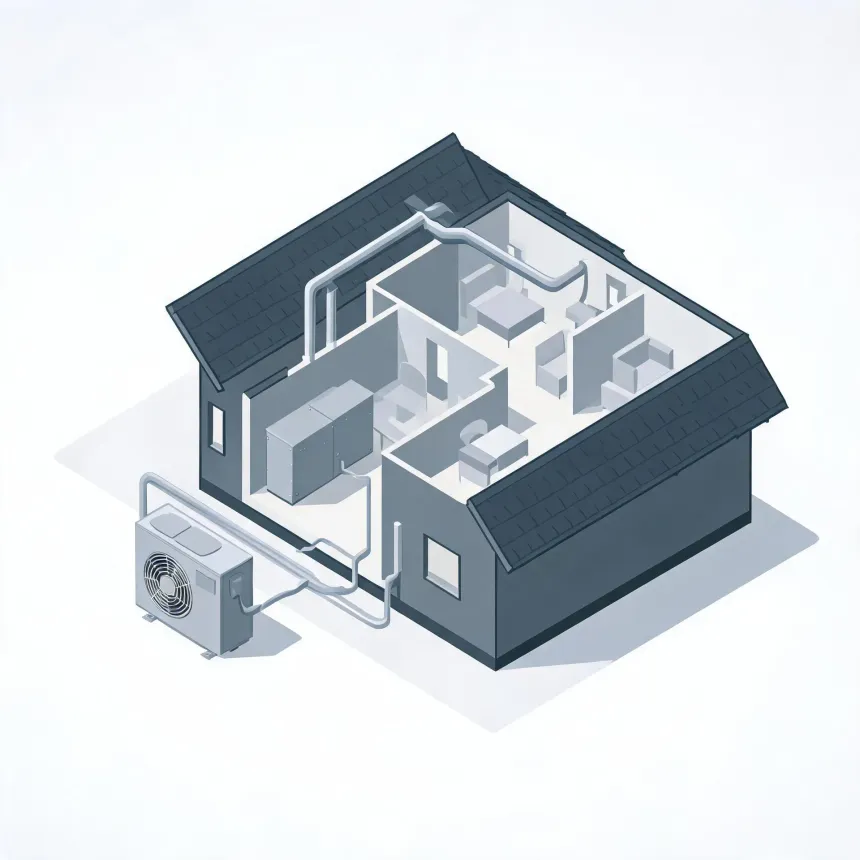
Most houses in Franklin County heat with gas, 66.9% of them. The rest run on electric heat, including whatever homes already have a heat pump. That gas majority is worth knowing because it means central air paired with a gas furnace is the setup a lot of homes here were built around, and a heat pump installation changes that pattern rather than following it. It takes over both jobs, heating and cooling, on one electric system instead of splitting the work between a gas furnace and a separate AC unit. None of that makes it the wrong move. It just means the ductwork, the electrical panel and the thermostat are being asked to work with a different kind of system than the one most homes around them have.