Electricity here runs 16.16 cents a kilowatt-hour
That is higher than what most US counties pay. A heat pump runs on electricity for both heat and cooling, so that rate applies to the machine year round, not just in summer.
Takes about a minute. No obligation.
That is higher than what most US counties pay. A heat pump runs on electricity for both heat and cooling, so that rate applies to the machine year round, not just in summer.
When the rate per kilowatt-hour is already high, a heat pump that uses less power to move the same heat shows up directly on the bill. In a place with cheap power, the difference between a good unit and a poor one barely registers. Here it doesn't disappear.

NOAA nClimDiv, 1991–2020 normals
Gas heats most homes in Warren County, over half of them.
A heat pump here usually means adding it alongside the furnace, not replacing it outright.



Warren County sees more rough weather than most places. Between 2015 and 2024 the county recorded 190 severe weather events, including 142 damaging wind events, 25 hail events, and 9 tornadoes. A heat pump's outdoor unit sits outside year round, taking whatever comes through, so wind and hail are part of what it has to handle. Winter storms hit too, 14 of them in that same stretch, and when one knocks out power, a furnace with electric ignition and a heat pump both stop until it comes back. Power going out matters here. Statewide, 18% of Ohio households lost power for a day or more in 2024.
Power here costs more than most places pay, and a heat pump runs on it year round, for heat and for cooling both. The unit you pick decides how much of that rate turns into heat in your house. That's worth sorting out while you're choosing the system, not after it's installed.
Find a contractorInstallation price moves with what the job actually involves, not just the equipment sitting in the truck. Sizing the unit to the house takes a proper load calculation, not a guess based on the old system. Ductwork gets inspected before anything goes in, and if it's leaky or sized wrong for a heat pump's airflow, that gets fixed or it undercuts everything else. Where the outdoor unit sits, how far the lines run to the indoor coil, whether the electrical panel can take the new circuit, all of that is labor before the system ever turns on. A heat pump paired with a furnace also needs controls that hand off between the two correctly, which is more setup than a single system. None of this is padding. It's the work that decides whether the unit runs the way it's rated to for as long as it's supposed to.
A heat pump has to be matched to the house through a room by room load calculation, not swapped in at whatever size the last system happened to be. That calculation looks at windows, insulation, ceiling height, and how the rooms are laid out. Skip it and the new unit inherits a guess instead of a number that fits.
A heat pump that's too big cycles on and off instead of running steady, which wears the compressor and leaves rooms clammy because it never runs long enough to pull moisture out of the air. One that's too small runs constantly and still can't keep up when the temperature swings hard. Either way the house ends up harder to keep comfortable than if the size had been worked out right from the start.
Warren County falls under zone 4A in the 2021 energy code, a mixed climate that asks real work of both the heating side and the cooling side. That classification sets a floor for any split-system heat pump installed here. Federal rules require units made from 2023 onward to deliver at least 14.3 Btu of cooling for every watt-hour they use over the summer, and at least 7.5 Btu of heat for every watt-hour over the winter. Those are minimums, not targets, so anything sold for installation here has to clear them before it's even an option. That narrows the field before you start comparing brands or features.
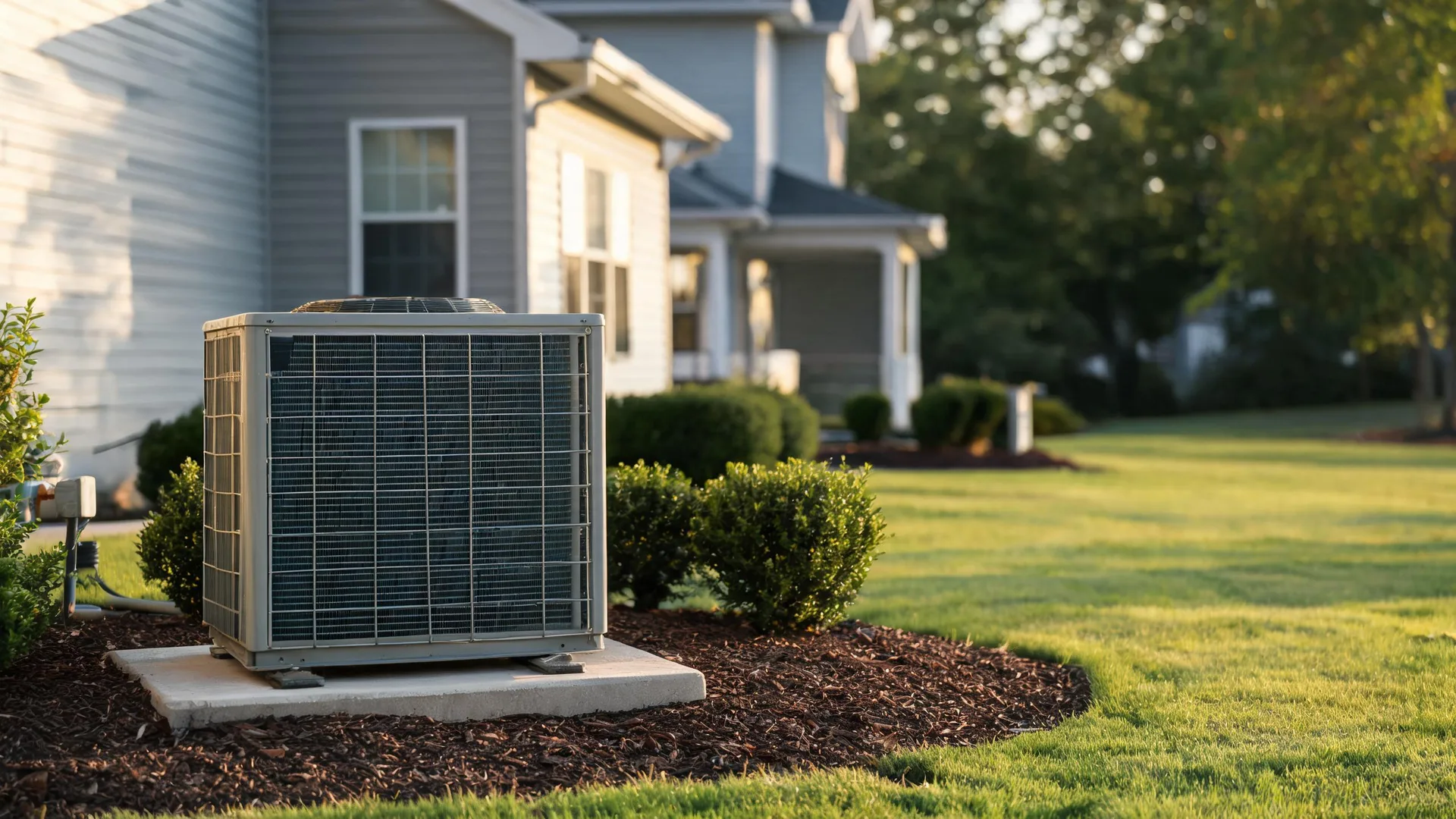
Think about where the outdoor unit goes before it goes in. It sits outside all year, so a spot away from roof runoff and falling limbs matters more here than it would somewhere calmer. Ask the contractor about a surge protector for it too, since wind is what takes down power lines in this county most often. For the inside, a heat pump paired with a furnace already gives you a backup for heat when the power holds but the compressor doesn't, or vice versa. Hot water is its own question. If a storm knocks the power out, ask what happens to your system then, and whether anything about the install can make that recovery simpler.