





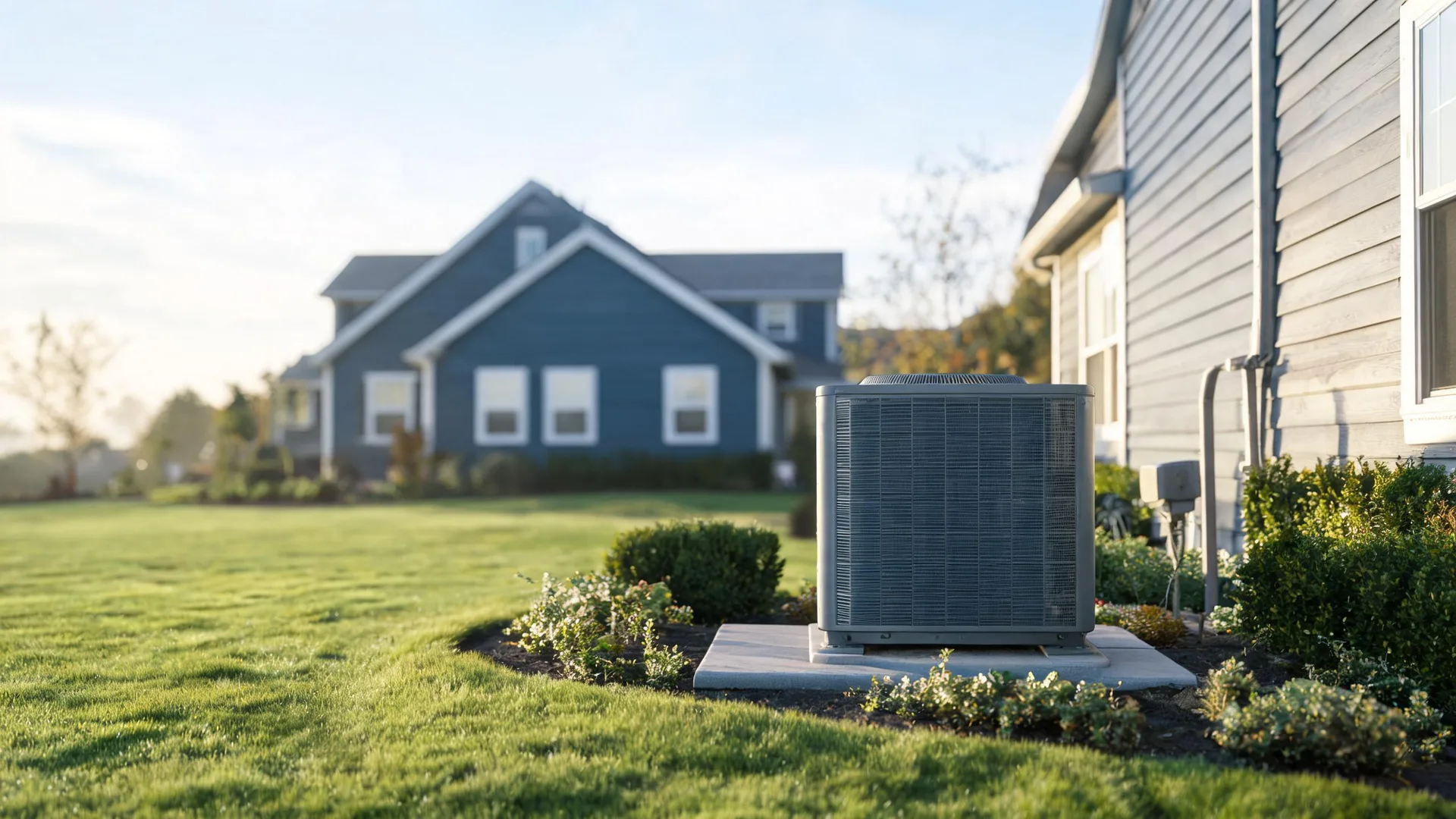
An outdoor HVAC condenser unit on a concrete pad in front of a two-story suburban house.

Heat Pump Installation in Marion, OH

Tell us about the job

Takes about a minute. No obligation.

New system or replacementHeat PumpMarion County, OH
Step 1 of 2

What ZIP code is the job in?

Electricity in Ohio ran 15.99 cents per kilowatthour in 2024, higher than a lot of the country pays. A heat pump does not burn gas to make heat, it moves heat using electricity, so that rate applies to it year round, for cooling and for heat. At that price, a few points of efficiency matter more here than somewhere power is cheap. Two systems priced the same can land on very different bills once that rate gets applied over a year of running. That difference is worth asking about before deciding which one goes in.

8 months
October through May, your system heats
3 months
June through August, it cools
22°F
the average winter night it heats against
82°F
the average summer afternoon it cools against
Isometric illustration of a cutaway single-story house showing interior ductwork, an indoor air handler and simple furniture, connected by lines to an outdoor condenser unit beside the building.
Your system heats October through May and cools June through August.

NOAA nClimDiv, 1991–2020 normals

Marion County nights drop to about 22°F in winter. Cold, but not brutal. Summers don't push a heat pump hard either.

A heat pump sized right for a moderate load holds up fine here. No need to pay extra for the top efficiency tier.

Half these homes were built in 1963 or earlier, and a new heat pump has to work with what's already there

Half the homes here were built by 1963
39 damaging wind events from 2015 to 2024
Winter nights average 22°F

Ask about that rate difference before signing anything, not after. Get the HSPF2 rating on every option in the quote, not just the price. A unit that costs more upfront can still end up cheaper to run once Ohio's electricity rate gets applied to a full season of use. The federal tax credit mentioned above only applies to the more efficient models, and that can close some of the gap before the first bill even shows up. Get the HSPF2 number next to the install price on every quote, before choosing between them.

Here, a heat pump means switching fuels, not just swapping equipment

Most homes in Marion County heat with gas, 61.2% of them. A heat pump runs on electricity. So putting one in isn't a like-for-like swap, it's a switch in the main fuel the house runs on. That changes how it gets sized and planned, separate from whatever furnace is sitting next to it.

Find a contractor
A residential heat pump outdoor unit mounted on a concrete pad next to a house with gray vinyl siding.

September sits between the two seasons, and that makes it the month to use

Heat runs October through May here. That's eight months. Cooling covers June through August. September sits in between, the stretch when the old system isn't doing much of anything. That's the month to size and install a new one. A heat pump going in during September gets tested on cooling first, in weather mild enough to catch a problem before the house needs it for heat. Wait past September, and the first job that heat pump does is carry the house through an Ohio winter.

A load calculation, not a square footage chart

The right size for a heat pump comes from a room by room load calculation, often called a Manual J. It weighs the walls, the windows, the insulation, and how much of each wall faces the sun, then adds that up into a heating and cooling number for the house. Square footage alone skips all of that, which is why homes of the same size can call for different equipment.
Oversized cools fast and dehumidifies poorly

A heat pump that's too big for the load shuts off again as soon as it hits the thermostat setting. That short run time means it never pulls much moisture out of the air, so the house can feel cool but still clammy. A correctly sized system runs longer at a lower output and takes the humidity down along with the temperature.

The load calculation sets the size, and size is most of what sets the price. A bigger heat pump costs more outright. If the ductwork has to grow or get reworked to carry that extra air, that work can cost more than the equipment itself. The outdoor unit and the indoor coil need to be matched to work well together. A matched set usually costs less in the long run than it does to install. The line sets, those are the refrigerant lines running between the indoor and outdoor units, sometimes need to be replaced instead of reused. That's especially true if the new system runs a different refrigerant than the old one. Electrical work adds its own cost. A heat pump pulls more power than a gas furnace did, so the breaker panel may need an upgrade to carry that load. That's a separate job from the install itself. None of this shows up on a price list until someone's actually looked at the house.

Install day starts outside. The old outdoor unit comes out first. The refrigerant inside it has to be recovered properly, not vented into the air. After that, the line set either gets run new or the old one gets pressure tested, to make sure it holds without leaking. Inside, the new coil goes in next to the furnace or air handler. That means cutting into the existing ductwork and sealing it back up tight after. Electrical work usually happens somewhere in the middle of the day, since the outdoor unit needs its own circuit run out to the pad. Only after all that is the system charged with refrigerant and run through its first cycle. That way, anything wrong with the work shows up that day, not months later.