





Three lit brick homes on a tree-lined residential street photographed at dusk.

Heat Pump Installation in Toledo, OH

Tell us about the job

Takes about a minute. No obligation.

New system or replacementHeat PumpLucas County, OH
Step 1 of 2

What ZIP code is the job in?

Electricity in Lucas County runs 16.51 cents per kilowatt-hour on average, higher than in most US counties. A heat pump runs on electricity alone, so that rate applies to every hour it runs, not just a few months of the year. The summer side of the job is lighter here than people expect. Dew points average 61°F across June, July and August, which is muggy but not extreme, so the system isn't fighting the heaviest air it could see. What that means is the efficiency of the unit you install carries more weight on the bill than the climate does. Two systems that cool and heat a house the same way can land far apart on cost, just from how much power each one pulls to do it.

8 months
October through May, your system heats
3 months
June through August, it cools
22°F
the average winter night it heats against
83°F
the average summer afternoon it cools against
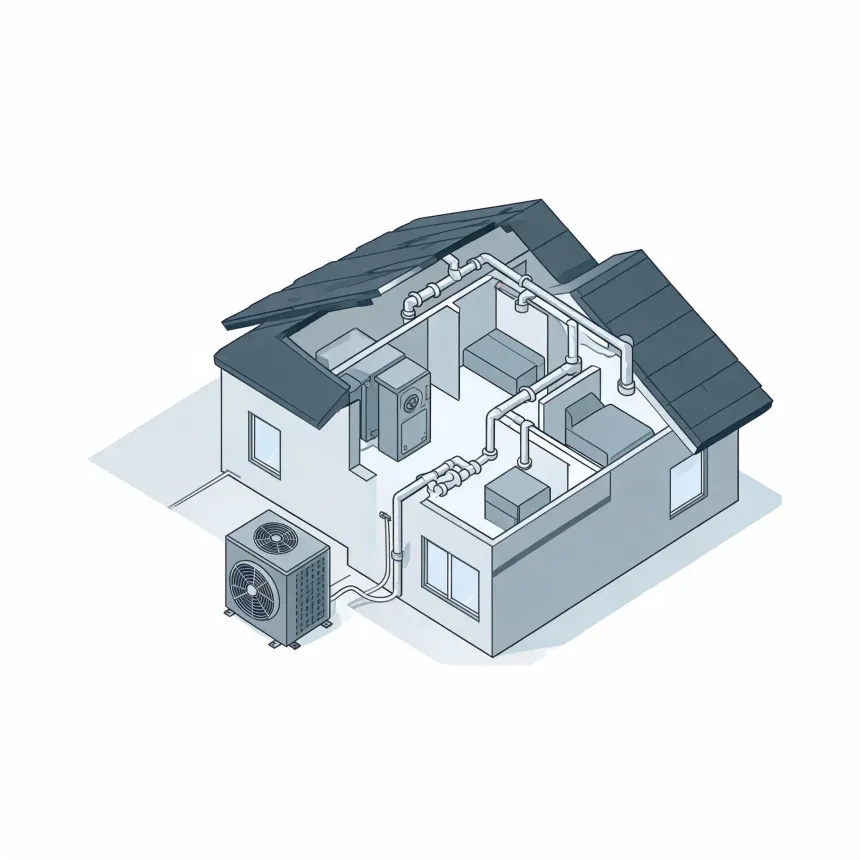
Isometric grayscale illustration of a cutaway two-story house showing interior ductwork, an indoor air handler unit, and an outdoor condenser unit on a pad beside the building.
Your system heats October through May and cools June through August.

NOAA nClimDiv, 1991–2020 normals

Heat here runs October through May.

Install before September and the switch happens on your timeline, not during the first cold snap.

Half these homes were built in 1963 or earlier. Your heat pump has to work with the house you've got.

Half the homes here were built by 1963
Climate zone 5A
Power here costs 16.51 cents per kilowatt-hour

Lucas County falls into zone 5A under the 2021 energy code, a cool zone where the heating load outweighs the cooling load. Any split-system heat pump installed here has to meet the federal minimum for that climate: at least 14.3 Btu of cooling for every watt-hour it draws over the summer, and at least 7.5 Btu of heating for every watt-hour over the winter, if it was built on or after January 1, 2023. That floor narrows what a contractor can offer you. It doesn't tell you which system to buy, only that whatever goes in has to clear that bar before it's legal to install.

What you install decides what it costs you to run

Power here costs more than in most places, and a heat pump runs on it for every hour it works, all year. Two systems built for this climate can still pull very different amounts of power to do the same job. Ask what each one draws before you decide which goes in.

Find a contractor
A man in a cap, dark shirt and tan pants carries a worn canvas tool bag up concrete steps toward a dark blue front door with a sidelight window and a large planter beside it.
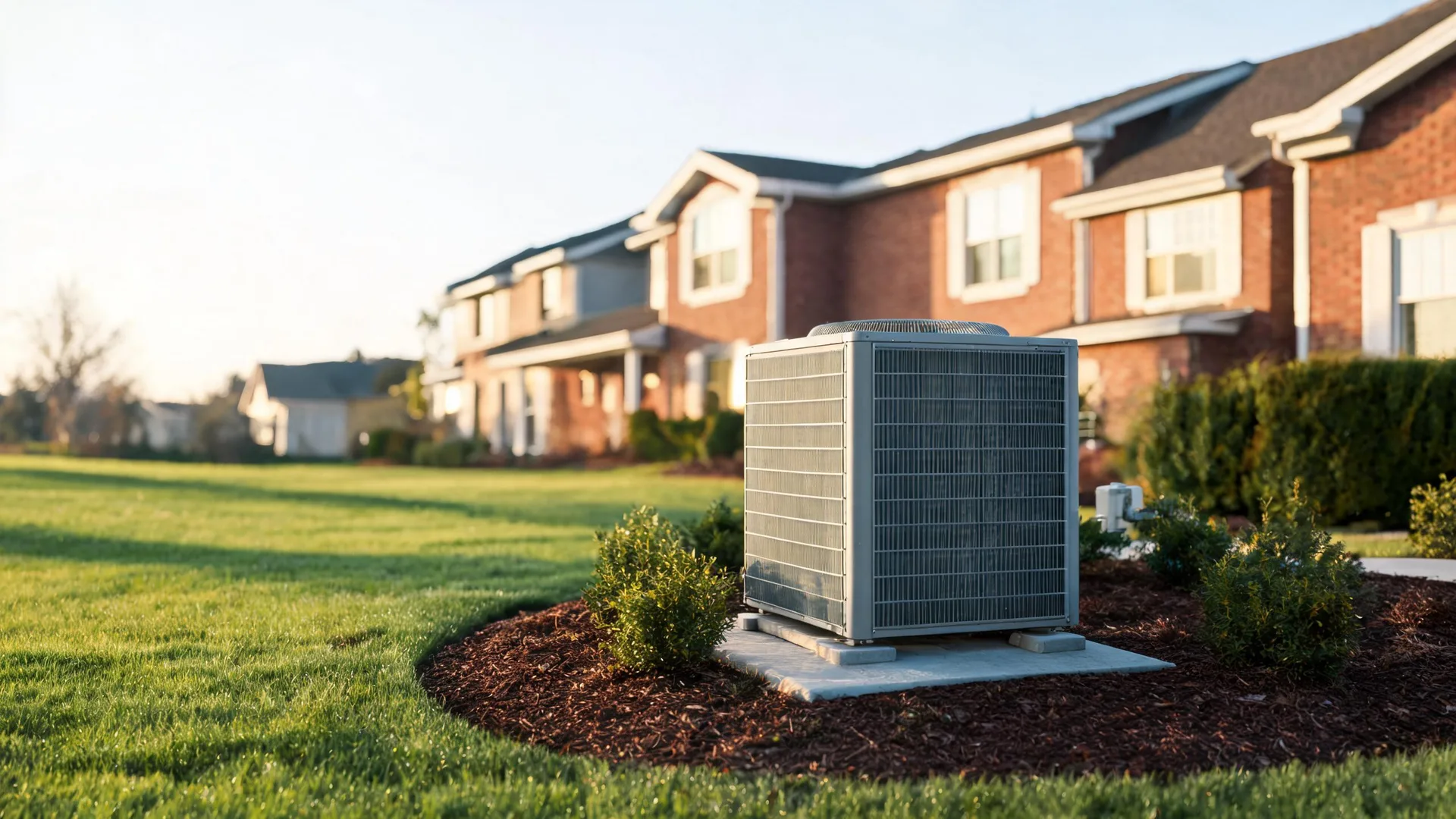
A gray outdoor HVAC unit mounted on a concrete pad beside a house with gray lap siding and a stone foundation.

Sized for the house you have

If your house is one of the half built in 1963 or earlier, ask the contractor to size the heat pump off a load calculation, not a square footage chart. A system sized by square footage alone can end up too big or too small for a house that age, and either way you pay for it in how long the unit runs to hold a temperature. The load calculation accounts for the house you actually have. That's the number to ask for before anyone quotes equipment.

Ask for the rated output at low temperatures

A heat pump's capacity drops as the air outside gets colder, and every unit has a chart showing how much heating it can still deliver at low temperatures. Two systems with the same nameplate rating can perform very differently once it's cold out. Ask to see that chart before you compare anything else, because it tells you whether the system will carry the house on its own or lean hard on backup heat.
Ask how backup heat is handled

When a heat pump can't keep up on its own, something else has to pick up the load, usually strip heat or a furnace working alongside it. That backup source is almost always less efficient to run. Ask how often the system is expected to call for it and what triggers that switch. A unit that leans on backup heat constantly is going to cost more to run than one sized and controlled to avoid it.

The efficiency rating on the label, the SEER2 and HSPF2 numbers, tells you how much heating or cooling a system delivers for the power it draws. A higher number means it does the same job while pulling less electricity. That's it. It doesn't tell you how big a system you need, and a high rating on an oversized or undersized unit still leaves you with a system that runs longer than it should, cycles too often, or can't hold a temperature. The rating describes the equipment, not the install. Two units with the same rating can still land at different costs depending on ductwork, the refrigerant charge, and how well the contractor sets it up. Treat the label as one part of the comparison, not the whole answer.

Three out of four homes in Lucas County heat with gas. A heat pump replaces that setup with one system that handles both heating and cooling, running on electricity instead. Most homeowners switching from gas keep a furnace in place as backup for the coldest stretches, since gas can carry a heating load that a heat pump alone sometimes can't once temperatures drop far enough. That pairing is common enough here that contractors are used to setting it up and sizing both pieces to work together. If your home already has gas heat, ask whether the furnace stays in the system or gets replaced entirely, because that decision changes what the install involves and what the system leans on when it's coldest.