





A illuminated two-story red brick house on a quiet residential street at dusk, flanked by mature trees under a deep blue evening sky.

Heat Pump Installation in Chardon, OH

Tell us about the job

Takes about a minute. No obligation.

New system or replacementHeat PumpGeauga County, OH
Step 1 of 2

What ZIP code is the job in?

Electricity in Ohio ran 15.99 cents per kilowatthour in 2024. A heat pump moves heat instead of burning fuel to make it, so every one of those cents goes further. It also cools the house in summer, so it's drawing power most of the year, not just a few months. A higher efficiency rating means less power pulled for the same heat. That gap shows up on the bill every month. Two systems can heat and cool a house to the same temperature and cost very different amounts to run. Worth asking what rating a contractor is quoting, not just the price of the install.

8 months
October through May, your system heats
3 months
June through August, it cools
21°F
the average winter night it heats against
80°F
the average summer afternoon it cools against
Isometric line illustration of a cutaway single-story house showing interior rooms, ceiling ductwork, an indoor air handler unit, and an outdoor condenser connected by a line set.
Your system heats October through May and cools June through August.

NOAA nClimDiv, 1991–2020 normals

Gas heats 60.5% of homes in Geauga County.

Swapping a gas furnace for a heat pump in Chardon still isn't the usual move around here.

Storms hit this county hard. But the heat pump's own job stays easy

103 damaging wind events from 2015 to 2024
14 hail events from 2015 to 2024
18 winter storms from 2015 to 2024

September is the month to get a heat pump installed in Chardon, before heat season opens in October. Sizing the unit, setting the refrigerant charge, checking the airflow all takes time, time a contractor can give you now that gets harder to find once the first cold night hits. May sits in the same spot ahead of June, before the cooling months start. Either month puts the install on your schedule, done once and done right, instead of squeezed in after the weather has already turned.

Any heat pump installed here has to clear a higher bar than most of the country sets

Zone 5A sets a floor, not a ceiling. Every split-system heat pump sold here has to clear 14.3 SEER2 and 7.5 HSPF2, so the question for your house is how far above that floor to go, since Chardon asks more of the heating side than most places get asked. A federal tax credit is available for qualifying equipment, which changes the math on choosing higher than minimum.

Find a contractor
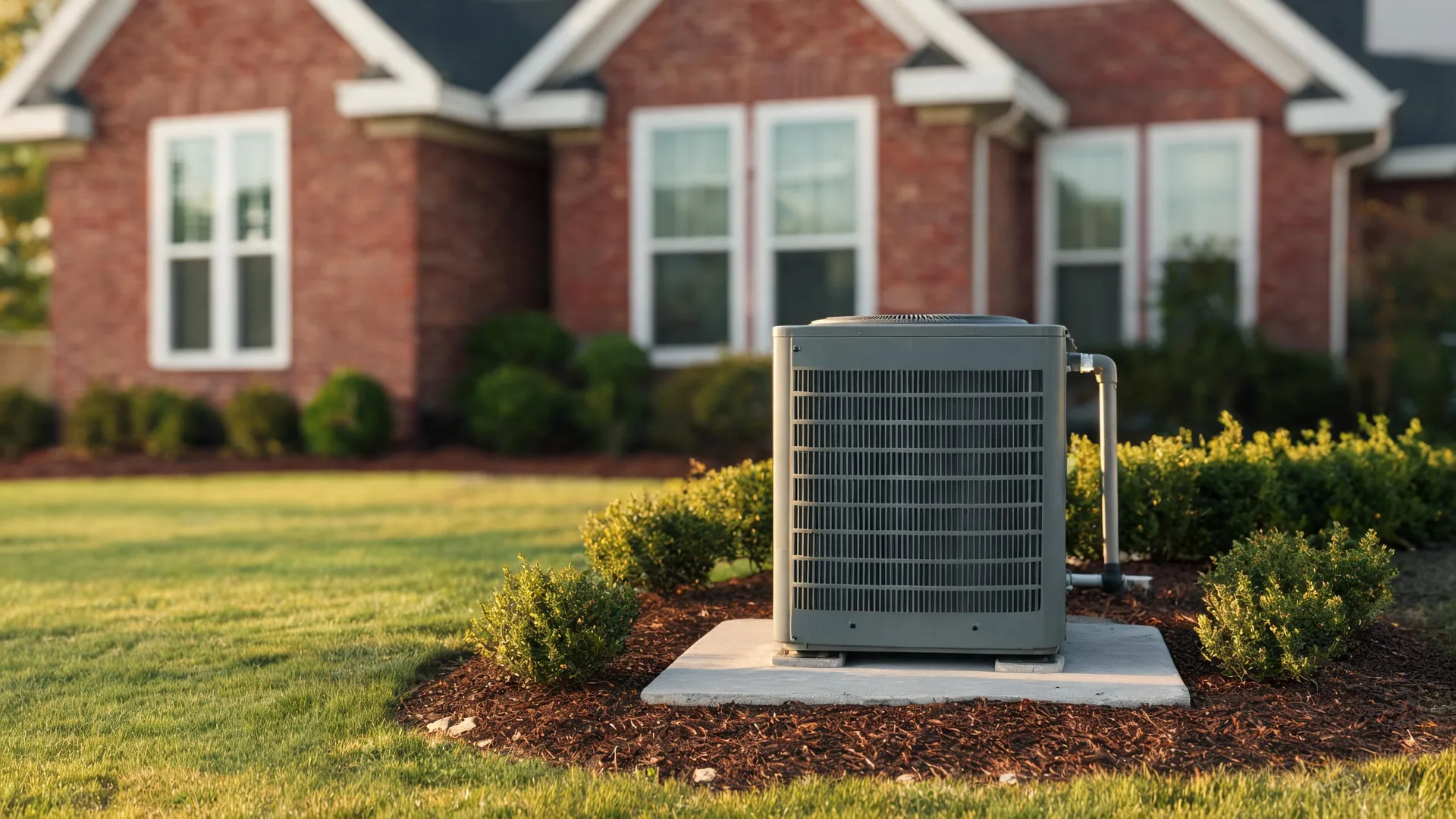
A residential heat pump outdoor unit mounted on a concrete pad next to a house with gray vinyl siding.

The label is a lab result, and the install decides if you get it

The rating on the label comes from a lab test. It's not a promise about your power bill. SEER2 covers cooling, HSPF2 covers heating. Both measure heat moved against power drawn, averaged over a season instead of any one day. A higher-rated unit moves the same heat while pulling less power. But that number only holds up if the rest of the install matches it. A higher rating usually means a variable-speed or multi-stage compressor, the kind that holds steady output instead of blasting on and shutting off. Put in a mismatched coil, an undersized line set, or ductwork that can't move enough air, and real performance drops below what's printed on the label. Ask whether the number quoted is for the outdoor unit alone, or for the matched system as it'll actually sit in the house.

The old furnace or AC comes out

Whatever's getting replaced gets disconnected and hauled off, refrigerant lines and all. The old outdoor pad goes too, unless it's getting reused. Pulling a gas furnace means capping the gas line properly, since nothing's feeding off it anymore.
Refrigerant has to be recovered, not vented

If the old system had refrigerant in it, that can't just get released into the air. It gets pulled out with a recovery machine first, kept separate from the rest of the teardown. That has to happen before the old lines or outdoor unit come apart.

Sizing a heat pump starts with a load calculation, not a tape measure around the old unit. A contractor works through the square footage, the windows, the insulation, and the ceiling height room by room, because a house loses heat at a different rate in every part of it. Too big and the unit short cycles, reaching the thermostat's setting fast and shutting off before it has run long enough to pull moisture out of the air, so the house feels clammy even at the right temperature. Too small and it runs flat out on the coldest days and still falls behind, leaning on backup heat strips more than it should. Neither problem shows up on the spec sheet. It shows up in how the house actually feels that first winter. Ask whether the contractor is running that calculation or just matching the new system to the tonnage of the one coming out.

Install day starts outside. The condenser goes on a new pad or bracket, and the line set runs between it and the air handler or indoor coil. Those lines get brazed, not just connected, then pressure tested to make sure the joints hold before any charge goes in. Next the system gets pulled down with a vacuum pump, to clear out moisture and air. Leave either one behind and it sits in the refrigerant and causes trouble down the road. Only after that does the refrigerant go in, weighed to match what the manufacturer specifies for that line length. Not just added until the gauges look about right. On the electrical side, that means a new circuit or disconnect sized for the unit, and a thermostat that can actually run a heat pump's stages and talk to the backup heat, if there is any. Before anyone packs up, the system should run in both heating and cooling. Someone needs to check the temperature split at the vents and the pressures on the gauges. Not just a glance to see if it turns on.