Electricity here runs 17.60 cents a kilowatt-hour
That is higher than what most US counties pay, and a heat pump runs on electricity for most of the year. The rate alone makes efficiency worth more here than it would in a cheaper state.
Takes about a minute. No obligation.
That is higher than what most US counties pay, and a heat pump runs on electricity for most of the year. The rate alone makes efficiency worth more here than it would in a cheaper state.
Two heat pumps can heat and cool the same house and use different amounts of power doing it. In a county paying this much per kilowatt-hour, that difference shows up on the bill every month, not just the ones with extreme weather.

NOAA nClimDiv, 1991–2020 normals
A heat pump installed in October is going in during the first month homes here run heat.
Get it in before September ends and it's running on your timeline, not because the old one quit on a cold morning.




Wayne County falls under zone 5A in the 2021 energy code, a cool zone where the heating load is bigger than the cooling load. Any split-system heat pump installed here has to clear a federal floor set in 2023: at least 14.3 Btu of cooling for every watt-hour it draws, and at least 7.5 Btu of heat for every watt-hour in winter. Those numbers set the floor, not the ceiling. A contractor sizing a system for this county is already working within that minimum, and units above it exist. Given what power costs here, the gap between a system that barely clears the floor and one that clears it by a wide margin is worth asking about before you decide.
That rate is not going to change. What changes is which heat pump you put against it. Ask what efficiency rating the contractor is quoting and how far above the federal floor it sits. That number is what decides your bill, not the brand or the price tag.
Find a contractorA heat pump here runs through cold winters and sticky summers, but the county itself is not hard on the equipment. No major wind or hail event is common enough to plan around, and the load is what the federal floor already assumes, nothing more. So the question at install is not which system can take a beating. It is which one is built to run for years without much asked of it. Ask about the compressor and what the warranty covers before you ask about the top efficiency tier. A heat pump here is more likely to fail from a bad install or a skipped service than from the work it does. Put the money into getting it sized and installed right.
A heat pump carries a cooling rating and a separate heating rating. One tells you what it costs to run the air conditioning side, the other what it costs to run the heat. A unit can be strong on one and average on the other, so look at both before you compare two quotes side by side.
That number on the label is measured in a lab with the system running the way it was built to run. A dirty outdoor coil, a duct system that's too small for the unit, or a refrigerant charge that's off will all pull real performance below what the label promises. The rating is only worth what the installation behind it lives up to.
When you're comparing quotes, ask what happens to heating capacity as the temperature drops. Every heat pump loses some ability to pull heat from outside air as it gets colder, but how much it loses varies a lot between models. Some hold onto most of their capacity well into cold weather. Others fall off fast and lean hard on backup heat strips to make up the difference, which costs more to run than the compressor doing the work. Ask for the capacity at a low outdoor temperature, not just the rating at mild conditions. Ask too how the system defrosts itself, since a unit that defrosts often or runs a long defrost cycle is spending more of its time not heating your house.
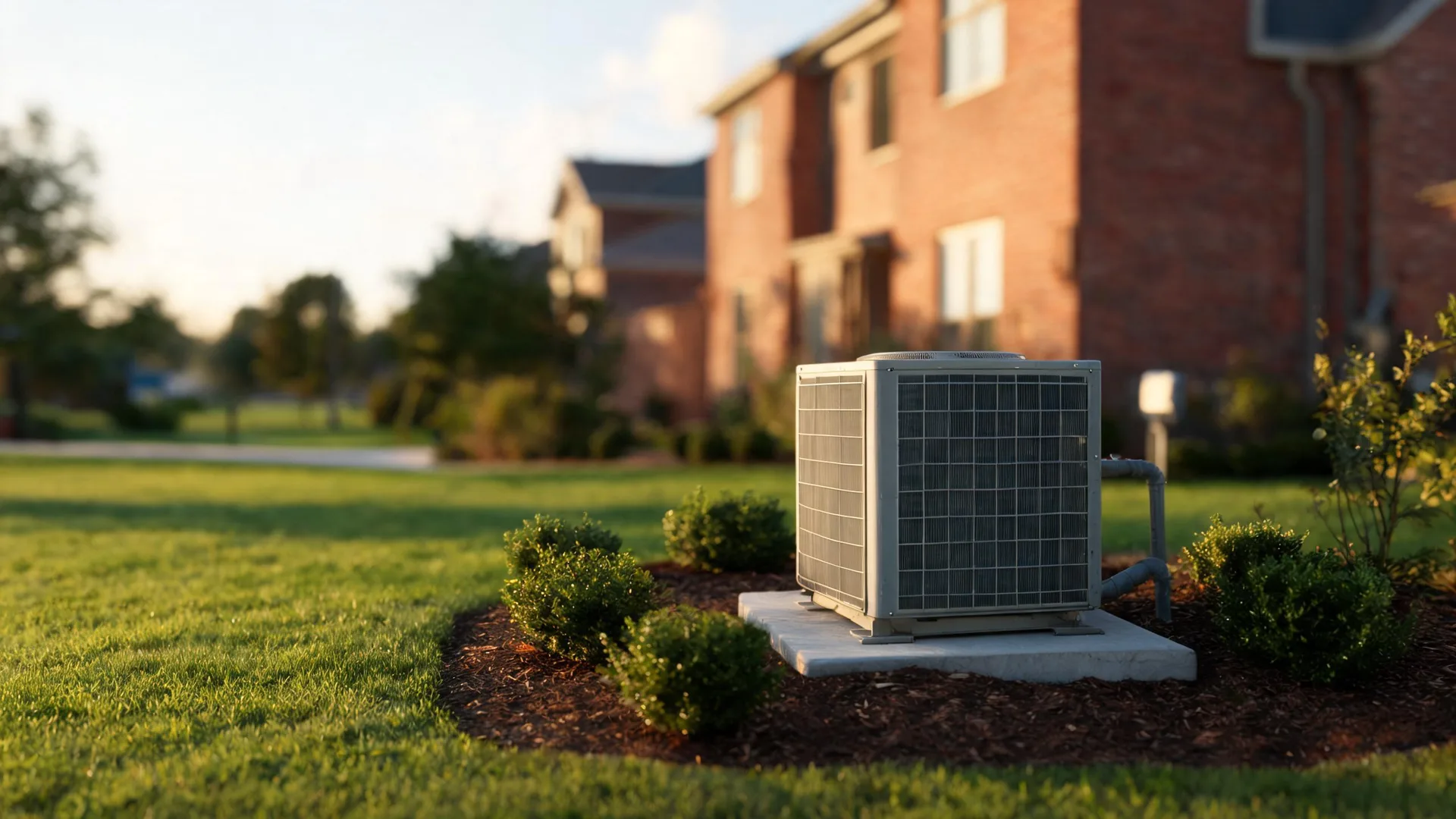
Install day starts outside. The outdoor unit gets set on a pad, leveled, and the line set run between it and the indoor coil. If there's existing ductwork, a contractor will check whether it can handle the airflow this system needs before assuming it's reusable. The lines get connected, then pulled down to a vacuum to clear out air and moisture before any refrigerant goes in. That step matters more than it sounds like. Moisture left in the lines turns to acid over time and wears on the compressor from day one. Once the system's charged to spec and the electrical work is tied in, it gets run through its paces: heating mode, cooling mode, defrost cycle, so any problem shows up on install day instead of the first cold night.