





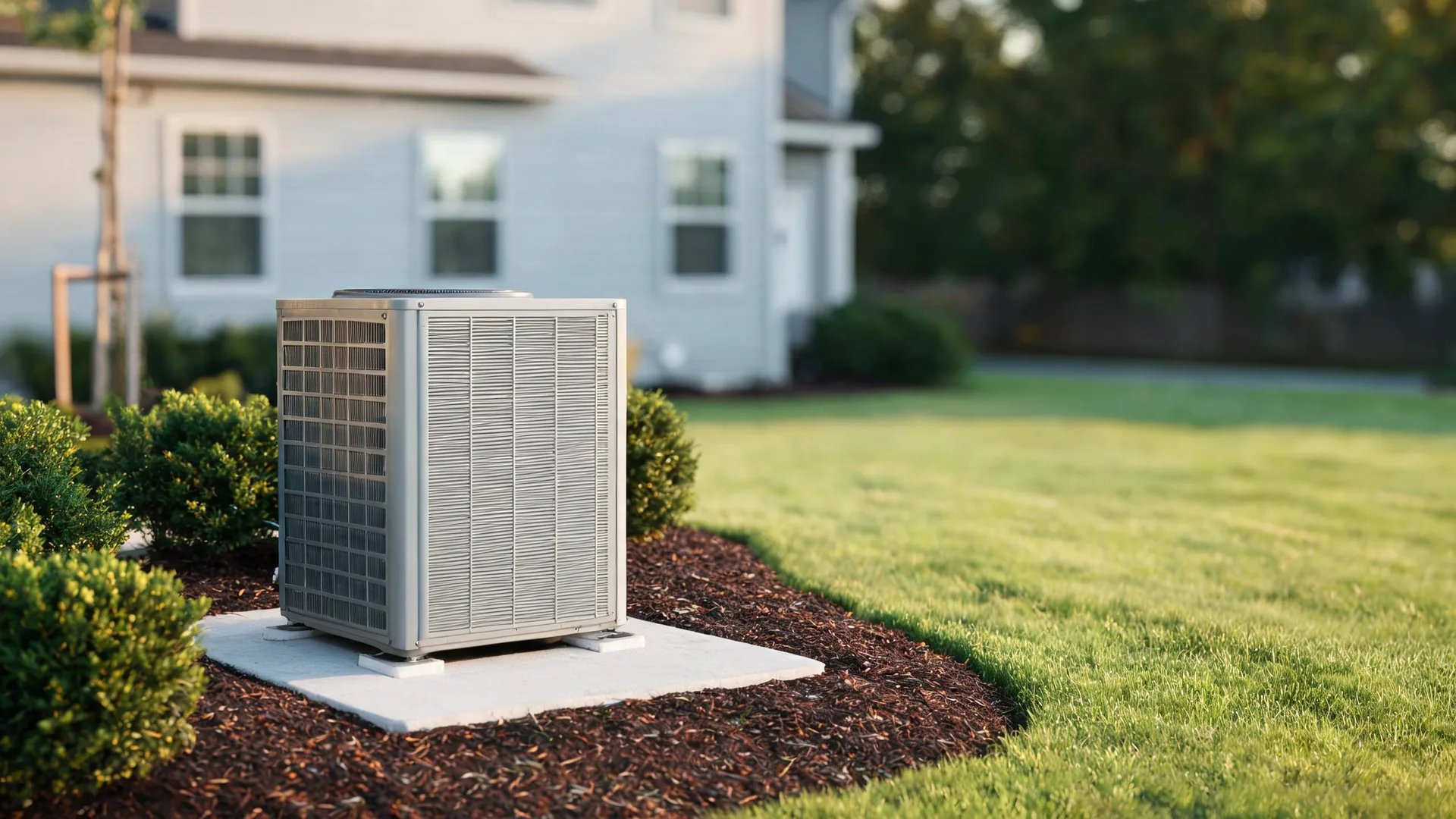
An outdoor heat pump unit mounted on a concrete pad in front of a two-story suburban house with a landscaped lawn.

Heat Pump Installation in Dayton, OH

Tell us about the job

Takes about a minute. No obligation.

New system or replacementHeat PumpMontgomery County, OH
Step 1 of 2

What ZIP code is the job in?

Montgomery County saw 267 severe weather events between 2015 and 2024. Most of that was wind, 188 events, with 60 hail events and 10 tornadoes mixed in. Hail dents a condenser cabinet and bends its fins. A tornado or straight-line wind can put a tree branch through it. Statewide, 18% of Ohio households lost power for a day or more in 2024, and a heat pump does nothing for heat or hot water while the power is out. Where the outdoor unit sits and what backs it up matter as much as the equipment itself.

8 months
October through May, your system heats
4 months
June through September, it cools
24°F
the average winter night it heats against
84°F
the average summer afternoon it cools against
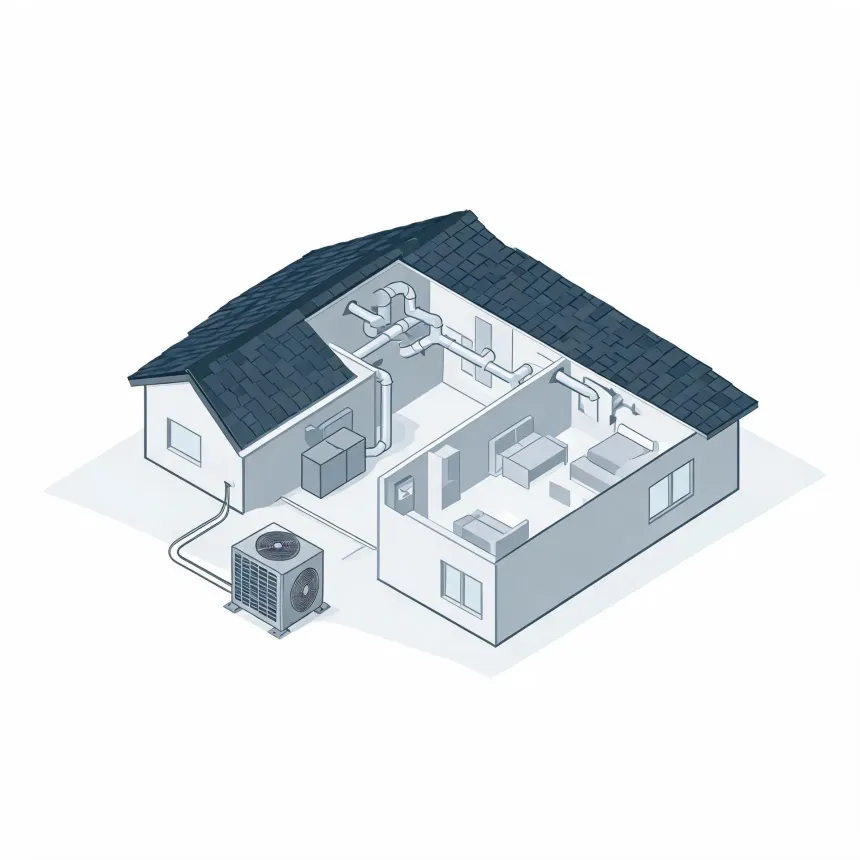
Isometric cutaway illustration of a single-story house showing interior rooms, ceiling ductwork, an indoor air handler, and an outdoor condenser unit connected by lines on the ground.
Your system heats October through May and cools June through September.

NOAA nClimDiv, 1991–2020 normals

Gas heats 63.3% of homes in Montgomery County.

Most installs here are a heat pump added alongside the existing gas furnace, not a system standing alone.

Power here runs 15.91 cents a kilowatt-hour, June through September

Power here costs 15.91 cents per kilowatt-hour
Climate zone 5A
Cooling runs June through September
Get It In Before the Season Needs ItHeat runs October through May here, so September is the month to have it ready.

A heat pump here earns its keep both directions, pulling heat out of the house all summer and pulling it from the outside air all winter. Summer humidity drives that cooling side hard. The dew point averages 64°F across June, July and August, which is the heavy, sticky air that makes a system run long hours just to keep the house feeling dry. Winter adds the other half of the job, since this is a cold climate where heating is the bigger load over the year. A unit sized for a mild climate or an easy summer will fall short here in both seasons. Get the sizing and the installation right the first time, because a unit running this hard has no slack for a bad fit.

Decide Now Where It Sits and What Backs It Up

Where the installer puts the outdoor unit, and what you have in place for an outage, are decisions you make once, at install. A spot away from branch fall and a pad that keeps it clear of runoff cost nothing extra to choose now. If backup power matters to you, this is the point to talk about it, before the system is in the ground and the choice is harder to change.

Find a contractor
A gray air-source heat pump mounted on a concrete pad next to a house with gray vinyl siding, surrounded by gravel and flanked by green shrubs and white hydrangea flowers.

Built in 1966 or Earlier, Installed for Today

Half the homes in Montgomery County were built in 1966 or earlier. A house that age wasn't built with a heat pump in mind. Whatever ductwork or electrical panel it has now may have been changed more than once over the years to suit whatever heating system came before this one. None of that rules out a heat pump. It means the install has to fit the house as it actually is, not as a newer house would be. An installer who checks the panel, the duct runs and the space around the house before quoting the job is doing that part right.

The Old Unit Doesn't Stay

A heat pump install takes out the old outdoor unit and, if there was one, the old indoor coil. Refrigerant gets recovered from the lines before anything is disconnected, since it can't legally be vented to the air. The old pad or slab usually stays unless it's cracked or too small for the new unit.
The Furnace Usually Stays Too

When a heat pump goes in alongside an existing furnace, the furnace isn't removed. It gets wired to work with the new system, switching off to let the heat pump run and stepping in when outdoor temperatures drop too low for the heat pump to keep up on its own.

Comparing heat pumps means comparing the whole system, not just the outdoor unit. Two units can carry the same tonnage and still behave differently once it's cold outside. Ask what the unit can still put out at low outdoor temperatures, because that number tells you how much the backup heat has to carry on the coldest days. Ask whether it's a single-stage, two-stage, or variable-speed compressor. A variable-speed unit adjusts its output to match the load instead of just switching on and off, which matters most on the mild days that make up most of the year. Ask what the manufacturer's warranty actually covers, parts alone or parts and labor, and for how long. Ask how the installer plans to set up the controls between the heat pump and the backup heat, since a poorly set switchover point means the backup runs more than it needs to, or the heat pump keeps struggling past the point where it should hand off.

Montgomery County sits in climate zone 5A, a cool zone where heating carries more of the year's load than cooling does. Every split-system heat pump built since the start of 2023 has to clear the same federal floor here: at least 14.3 Btu of cooling for every watt-hour it draws over the summer, and at least 7.5 Btu of heating for every watt-hour over the winter. That's not a target some units hit and others miss. It's the minimum a unit has to meet just to be sold, and it's what narrows which units an installer can legally put in your house. A system that meets it also qualifies for a federal tax credit. Ask the installer which units on the quote sit right at that floor and which clear it by more, since the ones that clear it by more are the ones that carry the winter load without leaning as hard on backup heat.