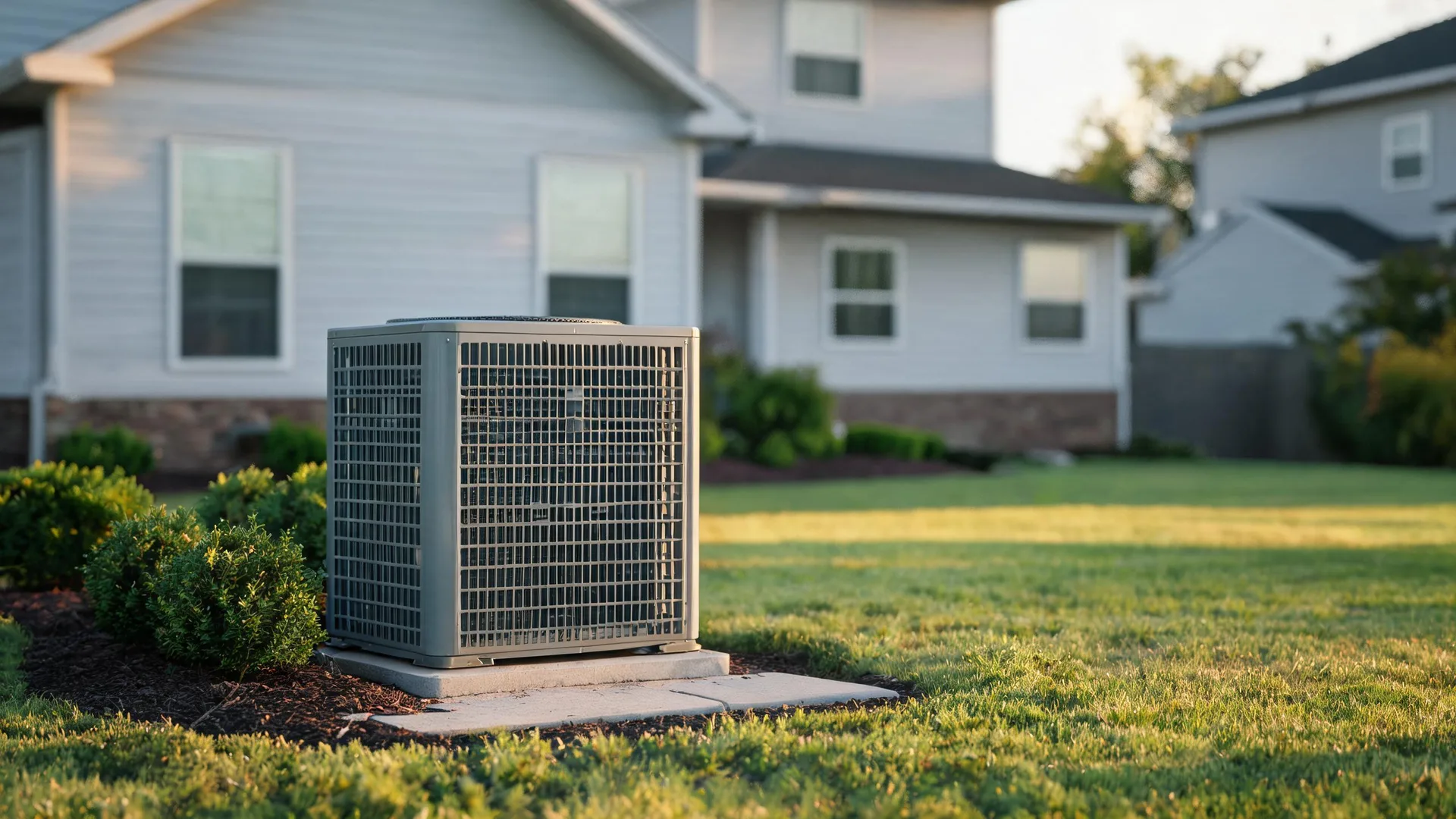
Electricity here runs 16.54 cents a kilowatt-hour
Wood County power costs more than in most US counties. A heat pump runs on electricity for both heating and cooling, so that rate applies to the machine every month it works.
Takes about a minute. No obligation.
Wood County power costs more than in most US counties. A heat pump runs on electricity for both heating and cooling, so that rate applies to the machine every month it works.
When the rate per kilowatt-hour is already high, the difference between a system that runs efficiently and one that doesn't shows up directly on the bill. The install you choose sets that in from day one.

NOAA nClimDiv, 1991–2020 normals
Wood County doesn't put a heat pump through hard freezes or long heat waves the way some places do.
A system that isn't straining every day has less to go wrong, so a well-matched, reliable unit will serve this house fine.



Wood County falls under zone 5A in the 2021 energy code, a cool, fairly humid zone where the heating load is bigger than the cooling load over the year. Any split-system heat pump installed here has to meet the federal minimums that took effect in 2023: at least 14.3 Btu of cooling delivered for every watt-hour it draws, and at least 7.5 Btu of heat for every watt-hour in winter. Those numbers set the floor. A contractor sizing a system for this county is working within them, not around them, and that limits what models make sense to install here in the first place.
Power here already costs more than it does in most places. That rate doesn't change once the heat pump is in. What changes is how much of it the system needs to do its job, and that gets decided at installation, not after.
Find a contractor
Wind is the bigger risk to equipment here than workload. Wood County saw damaging wind 79 times between 2015 and 2024, and 23 hail events in the same stretch. That's what an outdoor unit sits through year to year, not constant strain from extreme heat or cold. For the install, that argues for a unit set on a solid pad, secured, and placed where debris isn't blowing straight into the coil. You're not paying for a system built to outrun hard freezes or long heat waves, since this county doesn't put it through that. Put the money into a correct install instead: good refrigerant charge, proper airflow, a reliable model sized right for the house.
A heat pump that's too big for the house will short cycle, kicking on, satisfying the thermostat fast, then shutting off again before it finishes a full heating or cooling cycle. That short run time means it never gets to pull the moisture out of the air properly in summer, and in winter it wears out its starts and stops faster than a system that runs longer, steadier cycles. Oversizing feels like it should mean more comfort. It usually means less.
Sizing comes from a room by room load calculation that looks at the house itself: window area, insulation, ceiling height, air leakage, the direction rooms face. It has nothing to do with the square footage of the old system or what a neighbor's house runs. A contractor who sizes off the existing equipment or a square footage chart is guessing. One who runs the calculation on this house is giving you a number you can hold them to.
Taking out the old system is straightforward work. A split system disconnects at the refrigerant lines, the electrical whip, and the ductwork or air handler connection, and the outdoor unit comes off its pad. If the old refrigerant is a type that's been phased out, it has to be recovered into a tank rather than vented, and that recovery is required by law regardless of what's in the lines. Any old refrigerant, oil, and the unit itself gets hauled off rather than left behind. What's underneath matters too: the pad, the electrical disconnect, and the line set get inspected, and a contractor will tell you plainly whether any of it is reusable or whether it needs to be replaced along with the unit. Reusing a line set that's the wrong diameter for the new system, or skimping on a flush, causes problems long after the install is done.
Most houses in Wood County heat with gas, 64.6% of them. That changes what a heat pump install usually looks like here. Rather than replacing the furnace outright, a lot of these installs add a heat pump alongside the gas furnace already in place, splitting the work between the two. The heat pump handles the milder months, and the furnace takes over when it gets too cold for the heat pump to run efficiently. That's a dual fuel setup, and it's common enough here that a contractor should walk you through it as an option, not just quote a straight replacement. If your home is one of the 23.0% already heating with electricity, a heat pump can take over the whole job instead.