




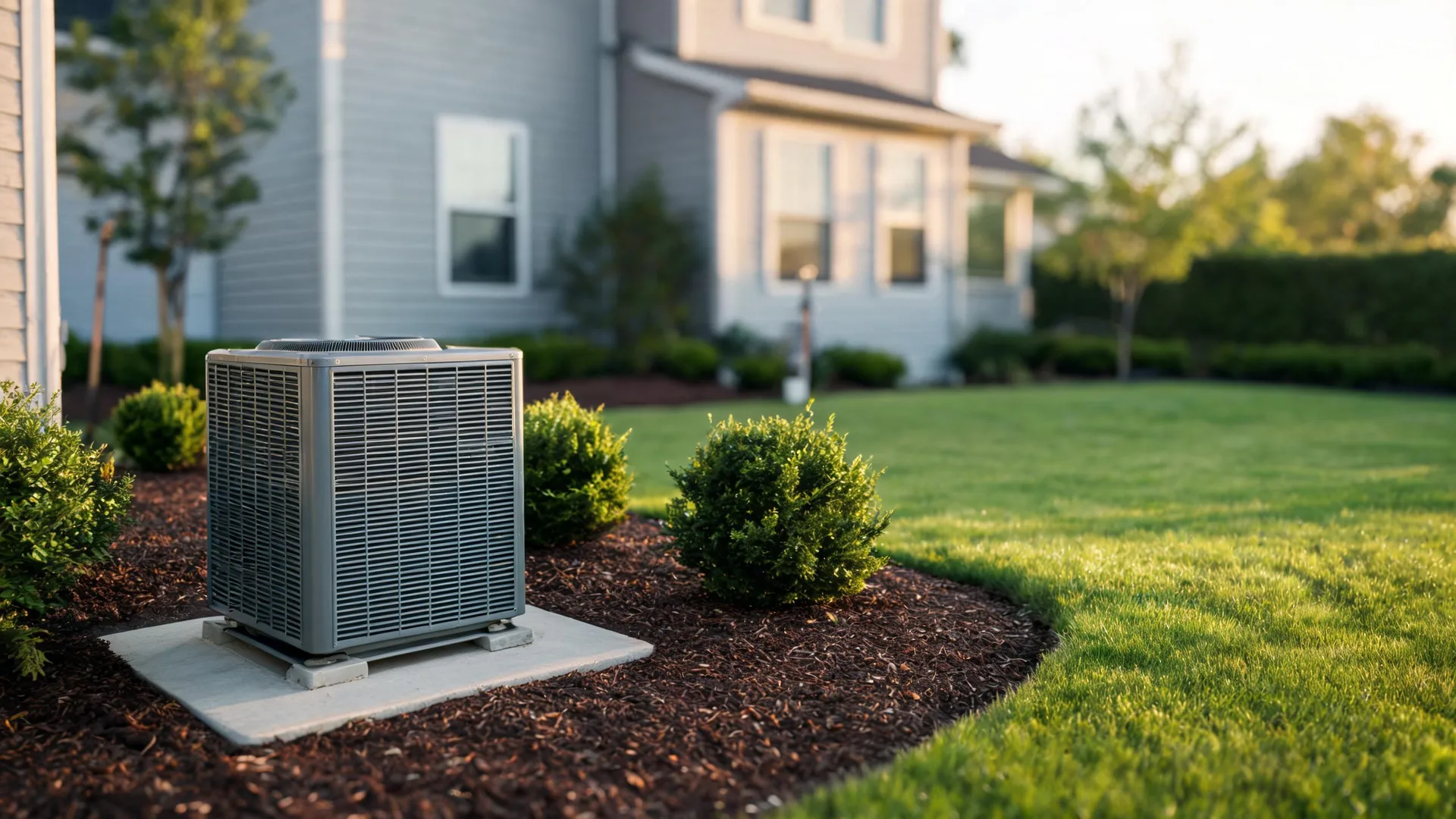
An outdoor heat pump unit mounted on a concrete pad in front of a two-story suburban house.

Heat Pump Installation in Youngstown, OH

Tell us about the job

Takes about a minute. No obligation.

New system or replacementHeat PumpMahoning County, OH
Step 1 of 2

What ZIP code is the job in?

Electricity in Ohio ran 15.99 cents per kilowatthour in 2024. A heat pump moves heat instead of burning something to make it, so it gets more warmth out of every kilowatthour than baseboard or resistance heat. That gap matters more here than somewhere with cheap power, because every inefficient hour shows up on the bill at that rate. The size of the unit and how well it's installed decide whether it earns back that rate or just fights it.

8 months
October through May, your system heats
3 months
June through August, it cools
21°F
the average winter night it heats against
81°F
the average summer afternoon it cools against
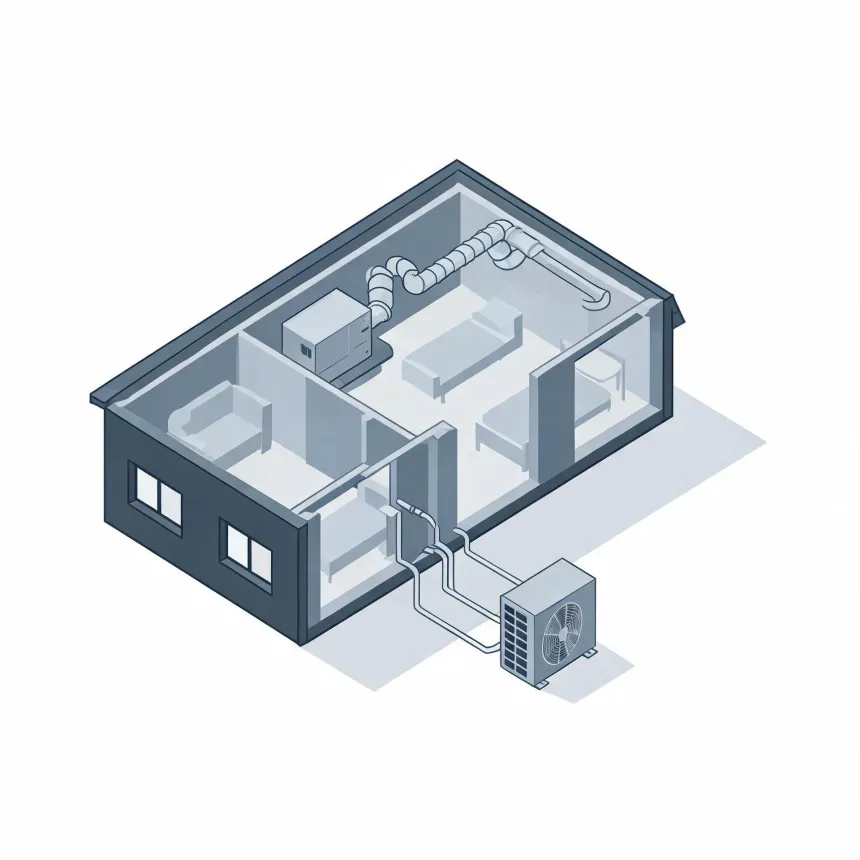
Isometric cutaway illustration of a small house showing interior rooms with furniture, an indoor air handler with flexible ducting, and refrigerant lines running to an outdoor condenser unit beside the building.
Your system heats October through May and cools June through August.

NOAA nClimDiv, 1991–2020 normals

Half the homes in Mahoning County were built in 1963 or earlier.

A heat pump sized for a newer house won't keep up in an older one. The install has to match the house that's actually there.

Eight months of heat means the install date decides whether you're warm in October

Cooling runs June through August
Heat runs October through May
Climate zone 5A

Mahoning County sits in climate zone 5A, a cool zone where the energy code assumes heating carries most of the load. Any split-system heat pump installed here has to clear the federal minimum for that kind of unit, 14.3 SEER2 for cooling and 7.5 HSPF2 for heating. That floor applies to every heat pump manufactured from 2023 on, so it limits what a contractor can put in your house, not just what gets recommended. A federal tax credit is available for heat pumps that qualify, on top of whatever the efficiency rating itself does for your bill.

A heat pump here works less, so it can be simpler

Winters here average 21°F. Heating carries most of the load, but nothing about this climate grinds a heat pump down fast. The strain comes from storms and neglect, not from running through extreme heat or extreme cold day after day. So the system doesn't need to be the highest-efficiency model on the lot. It needs to be sized right for the house and installed well.

Find a contractor
A white mini-split heat pump outdoor unit mounted on a concrete pad beside a gray-sided house, surrounded by gravel and green shrubs.

It has years to prove itself, so get the install right

A heat pump here can run for years without ever seeing the kind of load that wears one out early. When one does break down early, it's usually not the machine's fault. It's a bad install. Wrong size unit, a return duct that's too small, a contractor who skipped a step. So when comparing bids, weight the installer and the sizing more than the brand name on the box.

The load calculation sets the price before anyone picks a unit

Before sizing equipment, a contractor has to figure out how much heat the house loses on a cold day. That means square footage, window area, insulation, how the rooms connect. Skip that step and the house ends up paying for capacity it doesn't need, or stuck with a unit that runs nonstop and still can't keep up. Getting this right takes time, and that time shows up in the quote. It should.
What's already in the walls changes the job

If the ductwork is undersized, leaky, or routed poorly, that has to get fixed before a heat pump goes in. Otherwise the new equipment just inherits the old problem. Sometimes the electrical panel needs an upgrade too, to handle the circuit a heat pump draws. A house with none of these issues costs less to convert. One that needs duct work or panel work alongside the swap costs more.

When comparing bids, ask each contractor what size unit they're proposing. Ask if that number came from a load calculation or just a guess based on the old equipment. Ask about the balance point, the outside temperature where the heat pump alone can't keep up and backup heat has to kick in. Ask what that backup heat is. Ask about the compressor's turndown, whether it can run at low speed on a mild day or only at full blast. A unit that can't throttle down will short cycle and wear out faster. Ask what's included for the ductwork and the electrical, not just the outdoor unit and the air handler. And get the manufacturer's warranty terms in writing. Labor and parts are often covered separately, for different lengths of time.

Replacing a furnace or an old heat pump doesn't mean tearing everything out. The ductwork, the thermostat wiring, sometimes the electrical whip to the outdoor pad, that can all stay if it's already a good fit. Just the equipment itself gets swapped. The old outdoor unit comes off, the refrigerant gets recovered, not vented, and the unit gets hauled away. If a furnace is coming out, it gets disconnected from the gas line and the flue gets capped properly. An open flue or an uncapped gas line is dangerous, and that doesn't get left for later. If the old setup was an AC paired with a furnace, a new heat pump takes over both jobs. That old outdoor unit goes, and so does the furnace's job of cooling, though the furnace itself sometimes stays on as backup heat instead of getting pulled out. What doesn't get reused is anything already undersized or failing. A return duct that's been choking airflow for years doesn't get a pass just because it made it through on the old system.