Electricity here runs 15.99 cents a kilowatt-hour
Ohio homes paid that rate on average in 2024. A heat pump runs on electricity for both heating and cooling, so that rate applies to this system every month of the year, not just in summer.
Takes about a minute. No obligation.
Ohio homes paid that rate on average in 2024. A heat pump runs on electricity for both heating and cooling, so that rate applies to this system every month of the year, not just in summer.
Two heat pumps can heat the same house and use different amounts of electricity to do it. At this rate per kilowatt-hour, that difference shows up on the bill for as long as the system runs.

NOAA nClimDiv, 1991–2020 normals
The rating on the label is measured at one mild outdoor temperature, not the cold snap that actually tests a heat pump.
Ask for the capacity at a low outdoor temperature, since that number tells you what the system still puts out when the house needs it most.



Most houses in Fairfield County heat with gas, 59.8% of them. Another 29.2% run on straight electric heat, and that changes things when a heat pump comes into the picture. Coming from gas, the heat pump takes over a job the furnace used to handle alone. The furnace can often stay put as backup for the coldest days. Coming from electric resistance heat, a heat pump works differently. It moves warmth instead of generating it directly. Either way, the installer needs to know which setup is already in the house. That's what decides the sizing and the install.
Heat in this area runs October through May. That's eight months. September is the window before that starts. Install it in September, and there's time to work out any kinks before the system has to heat the house all winter. Install it after October, and that same work happens while the house already needs the heat on.
Find a contractorWinter nights here average 24°F in December, January and February. Cold enough to run the heat, but not cold enough to push a heat pump to its limit night after night. Wind and hail show up in the storm record for this county too, but that's roof and siding trouble, not a heating and cooling problem. What wears out a heat pump is how hard and how often it runs, and a mild winter low just doesn't ask that much of it. Size the system right for the house, keep up with basic maintenance, and it's got a good shot at running its full lifespan here without strain.
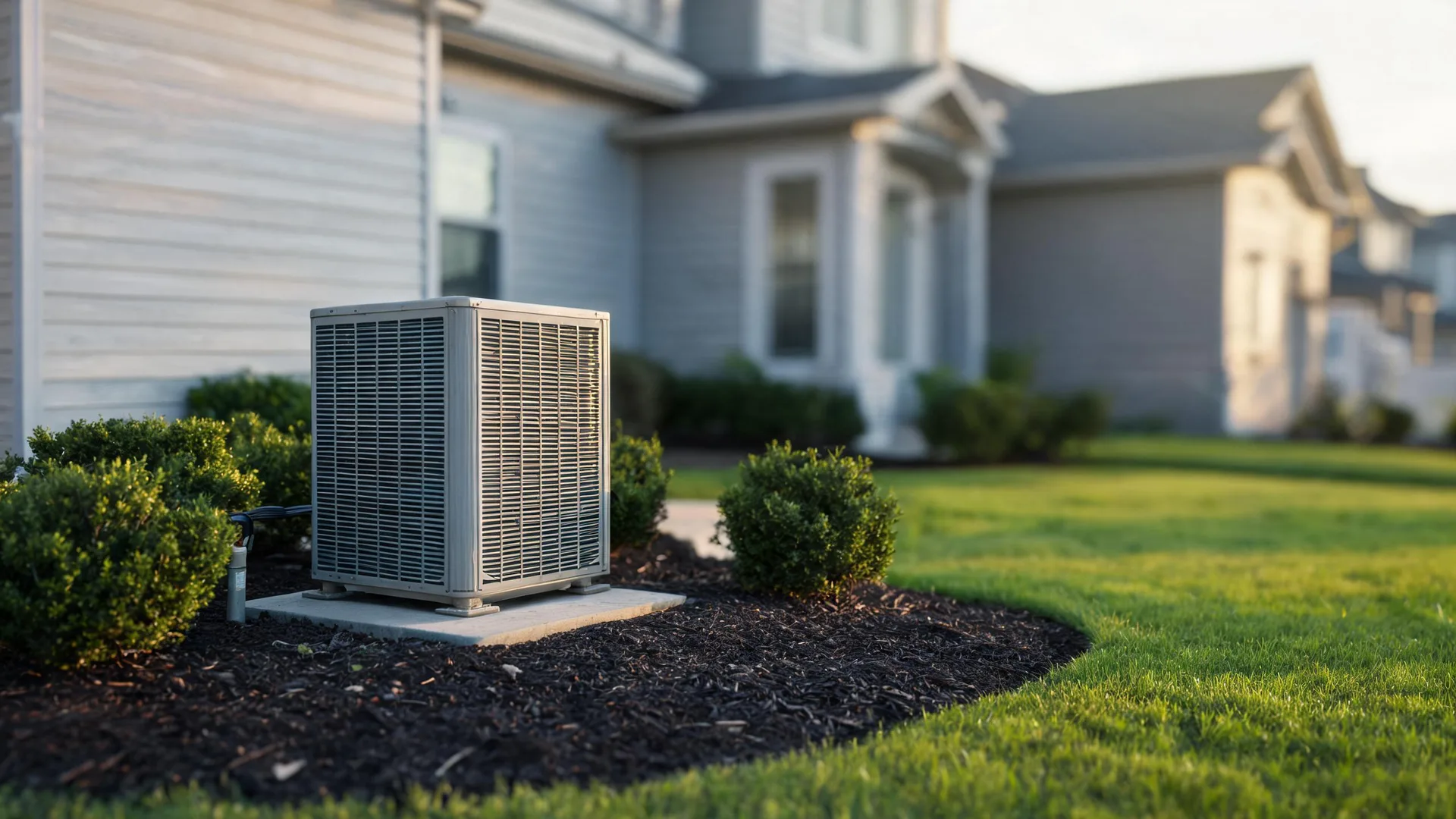
Whoever installs the heat pump disconnects the old outdoor unit, the refrigerant lines running to it, and the electrical whip feeding it. That unit gets hauled off. The pad it sat on either gets reused or comes out too, depending on where the new unit lands.
When a furnace sticks around to back up a heat pump, it doesn't just sit next to it unconnected. They share ductwork and need a control setup that decides which one runs and when it hands off to the other. That's wiring and a thermostat built for dual fuel, not separate systems left to guess.
Sizing a heat pump starts with a load calculation, not a tape measure around the old unit. That means figuring out how much heat the house actually loses on a cold day, based on square footage, insulation, windows, and how much of each wall is exposed versus shared with another room. Bigger isn't safer here. Oversize it and the system short cycles. It runs just long enough to satisfy the thermostat, then shuts off before it's dehumidified the air or settled into a steady run. Undersize it and it runs flat out on the coldest days and still falls short, leaning hard on backup heat to cover the gap. The unit that's sized right runs longer, steadier cycles and does the job without either problem.
Install day starts with the old equipment coming out and new lines going in. But most of the day goes to things that don't show from the yard. The refrigerant lines get run or reused, pressure tested, then pulled down to a vacuum to clear out moisture and air before any refrigerant goes in. A line with moisture left in it corrodes from the inside. So this step isn't optional. It's what decides whether the system lasts. The electrical whip gets sized to the new unit, not just hooked back up to what was there before. A heat pump can draw differently than the old condenser did. Once it's wired and charged, the system gets run through both modes, heating and cooling, checking the temperature split at the vents to confirm it's moving the right amount of heat. The thermostat gets programmed last, after the system has proven it runs the way it should.