






Three illuminated two-story brick houses on a tree-lined residential street photographed at twilight, with warm window light and landscape uplighting visible against a deep blue evening sky.

Heat Pump Installation in Newark, OH

Tell us about the job

Takes about a minute. No obligation.

New system or replacementHeat PumpLicking County, OH
Step 1 of 2

What ZIP code is the job in?

Ohio homes paid 15.99 cents per kilowatt-hour in 2024. A heat pump runs on electricity for both heating and cooling, so that rate hits every month, not just the cold ones. The efficiency rating on the unit decides how much electricity it takes to do the same job. Two systems can run the same number of hours and still leave different bills. Picking a higher-efficiency system at installation is the one chance to set that cost for as long as the system's in the house.

8 months
October through May, your system heats
3 months
June through August, it cools
22°F
the average winter night it heats against
82°F
the average summer afternoon it cools against
Isometric cutaway illustration of a single-story house showing interior ductwork, an indoor air handler, and an outdoor condenser unit connected by lines along the exterior wall.
Your system heats October through May and cools June through August.

NOAA nClimDiv, 1991–2020 normals

Licking County logged 133 damaging wind events and 33 hail events over the past decade.

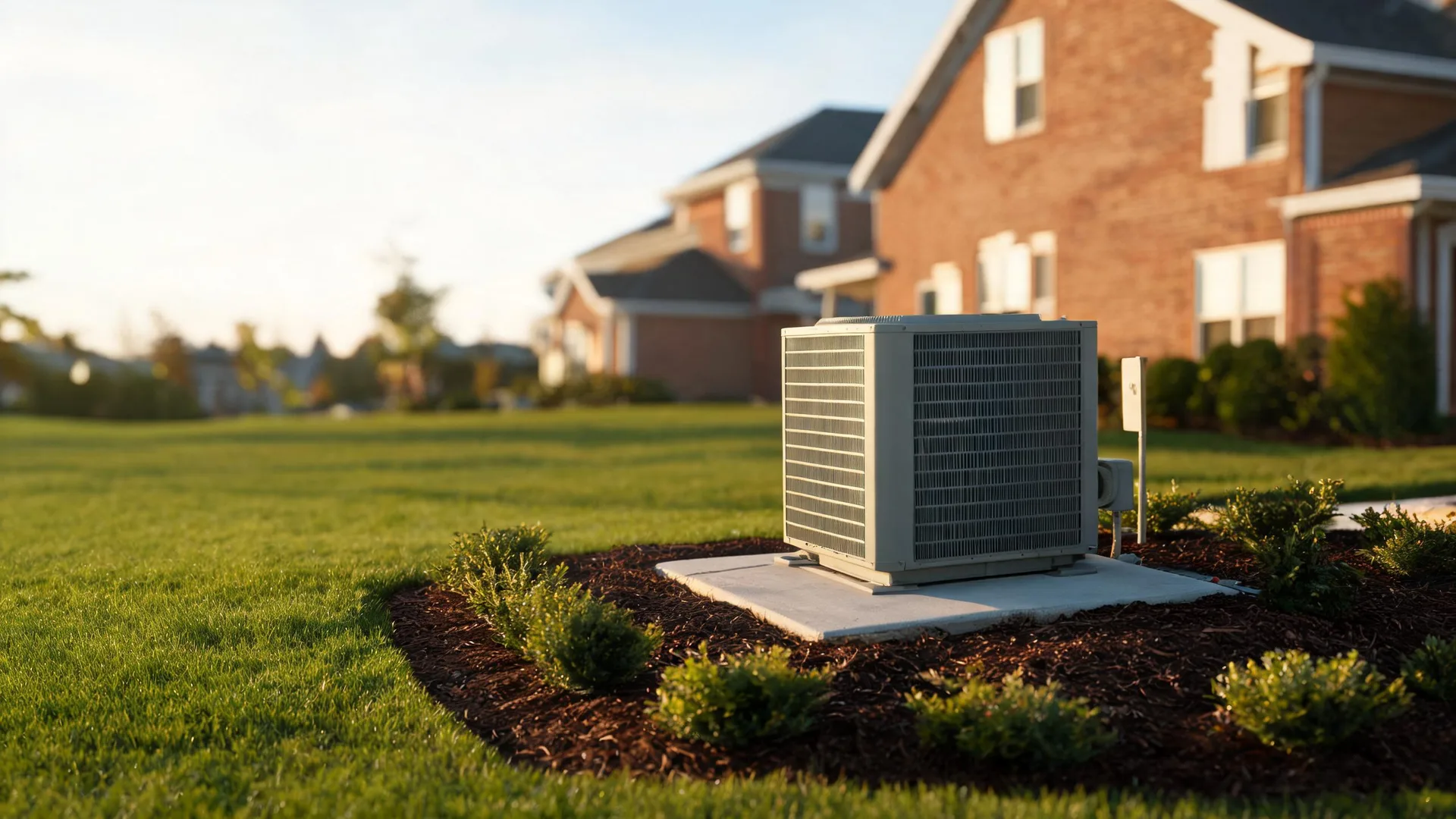
Your outdoor unit sits outside through all of that, so where it goes and what shields it matters as much as the model you pick.

Newark winters are cold, not cruel, to a heat pump

133 damaging wind events from 2015 to 2024
33 hail events from 2015 to 2024
8 winter storms from 2015 to 2024
Install before September, not after the first cold nightHeat runs here from October through May. Get the new system in by September, before the first cold night shows up. It'll be ready and broken in before it has to work.

Gas heats 65.4% of homes in Licking County, more than every other fuel combined. Swapping a gas furnace for a heat pump isn't like swapping it for another furnace. The heat pump has to carry the whole heating load by itself, with no furnace backing it up. That changes what size unit the home needs, and it changes whether the existing ductwork can move enough air for it. Electric heat is a distant second here at 21.6%, and those homes are closer to a straight swap. Ask the contractor which situation applies before comparing quotes.

The minimum for this zone is set. What you install still isn't

Zone 5A sets the minimum. Any new split-system heat pump has to hit at least 14.3 SEER2 for cooling and 7.5 HSPF2 for heating. That's a federal rule, not a suggestion, and it already rules out the cheaper units on the market. There's a federal tax credit available for a qualifying heat pump, and that helps cover part of the cost of meeting the standard.

Find a contractor
A gray heat pump condenser unit mounted on a concrete pad against the gray lap-siding exterior wall of a house.

A long running season, not a hard one

Overnight lows here average around 22°F. That's not brutal cold. A heat pump pulling heat out of air that cold is working a moderate load, not a hard one. Size the system right and buy something reliable, and it'll last for years. No need to pay extra for the highest efficiency rating on the shelf.

Bigger isn't a safety margin, it's a problem

A heat pump that's too big satisfies the thermostat fast, then shuts off before it pulls the moisture out of the air. The house feels clammy in summer even though the temperature looks right. And the system short cycles instead of running the long, steady stretches it's built for. Undersized is just as bad. It runs flat out on the coldest nights and still can't catch up.
The load gets calculated, not guessed from the old unit

Sizing comes from a room by room load calculation. It looks at square footage, window area, insulation, and air leakage. That number is what the new system gets matched to, not the size of the furnace or heat pump being replaced. Get that right and the ductwork and controls work the way they're supposed to.

SEER2 tells you how much cooling a unit delivers per unit of electricity it draws, and HSPF2 does the same for heating. A higher number means the compressor is doing more work per watt, not that the unit heats or cools faster. Separate systems can bring your house to the same temperature at the same speed and still pull different amounts of power doing it, and that gap is what the rating is telling you. It's measured under fixed lab conditions, so it's a way to compare one unit against another, not a promise of what you'll see on your own meter. A unit with a higher rating usually costs more up front, and that's the real tradeoff you're weighing, not just a number on a sticker.

Installation starts with the outdoor unit and indoor coil, but most of the day goes to what connects them. The crew sets the new outdoor pad or bracket, runs refrigerant line sets, and ties the indoor unit into either the existing ductwork or a new air handler, depending on what the load calculation called for. Old refrigerant lines usually get replaced rather than reused, since the oil inside them doesn't mix with what a new system runs on. Once everything's connected, the system gets charged with refrigerant to the exact weight the manufacturer specifies, not just until it feels cold at the vents. Airflow gets checked, the charge gets verified, and the thermostat controls get set so the heat pump and any backup heat work together instead of fighting each other. A system that skips that last step might still run, but it won't run the way it was designed to.