






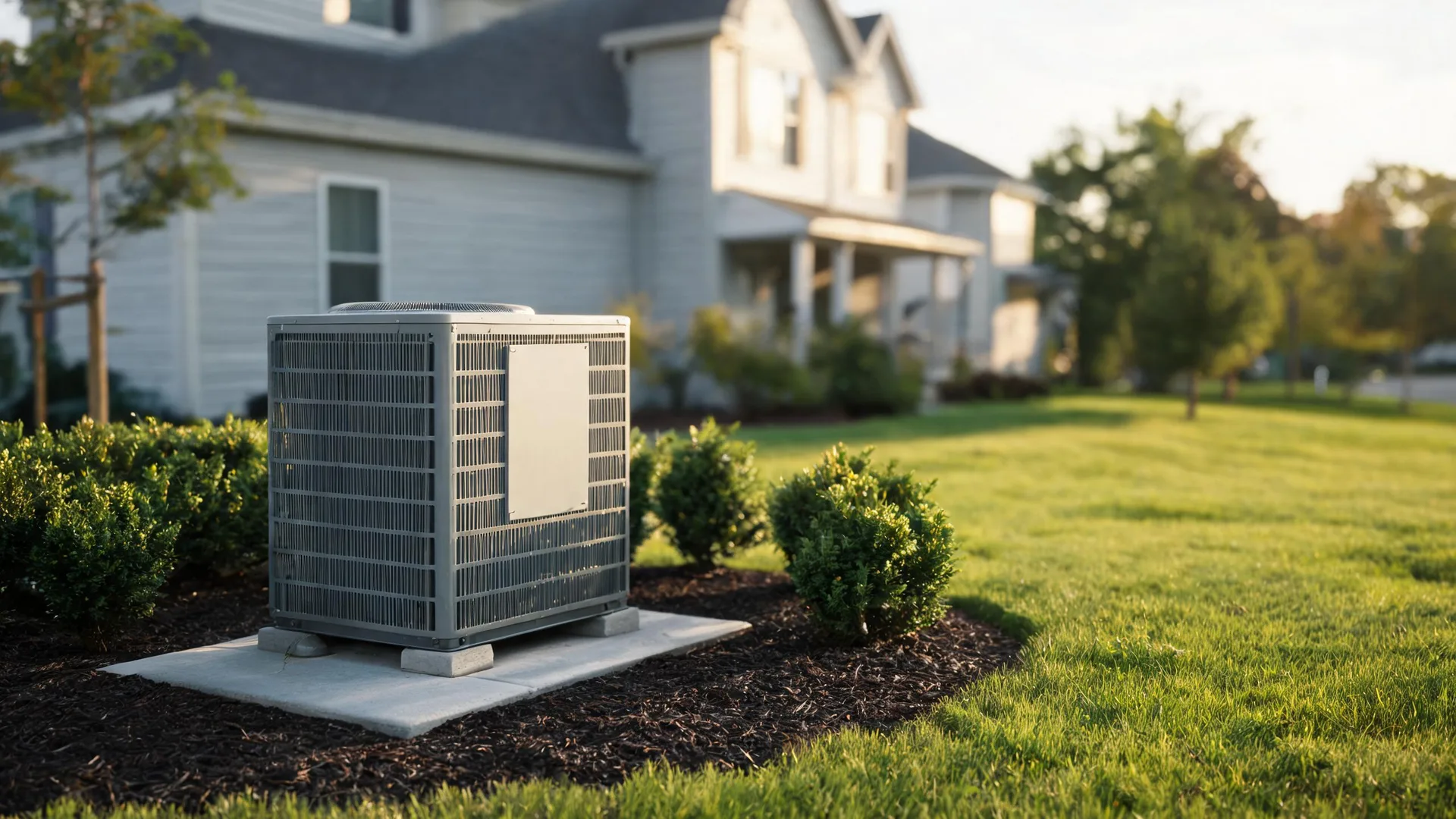
A large outdoor air-conditioning unit mounted beside a vinyl-sided house, surrounded by mulched garden beds and green shrubs.

Heat Pump Installation in Lima, OH

Tell us about the job

Takes about a minute. No obligation.

New system or replacementHeat PumpAllen County, OH
Step 1 of 2

What ZIP code is the job in?

Electricity in Ohio ran 15.99 cents per kilowatthour in 2024. A heat pump moves heat instead of burning gas for it, so it gets more out of every kilowatthour than straight electric heat does. But efficiency ratings vary a lot between models, and at that rate the difference between a middling unit and a strong one shows up on your bill every month, not just in winter. Lima gets cold enough that your heat pump will lean on its backup heat some days, and that backup costs more to run than the heat pump itself. Sizing the system right for your house, and setting up the backup to kick in only when it has to, is what keeps that cost down.

8 months
October through May, your system heats
3 months
June through August, it cools
22°F
the average winter night it heats against
82°F
the average summer afternoon it cools against
Isometric cutaway illustration of a small house showing interior rooms with furniture, an indoor air handler with flexible ducting, and refrigerant lines running to an outdoor condenser unit beside the building.
Your system heats October through May and cools June through August.

NOAA nClimDiv, 1991–2020 normals

Heat here runs October through May, so September is the last easy month to get a heat pump in.

Scheduling the install before September means the crew isn't rushing to beat the first cold night, and you're not without heat while they work.

Winters here are cold, not brutal, so a dependable heat pump matters more than a top-efficiency one

39 damaging wind events from 2015 to 2024
15 hail events from 2015 to 2024
Winter nights average 22°F

Most homes in Allen County heat with utility gas, 63.5% of them. Electricity is a distant second at 23.6%, and that number includes homes already running heat pumps or straight electric furnaces. So a lot of the ductwork and electrical panels a heat pump installer runs into here were built around a gas furnace, not an all-electric system. That doesn't rule anything out, but it's worth asking whether your panel has the capacity for a heat pump's electrical load, and whether the ducts were sized for gas heat or for this. If your home already runs on electric heat, you're in the smaller group here, and a heat pump still gets more out of each kilowatthour than the resistance heat it would replace.

Your new heat pump has to work with the house you have

Half the homes in Allen County were built in 1966 or earlier. A heat pump that's sized and set up for a newer house won't necessarily suit the ducts and the panel you actually have. Getting the sizing right for your house is what makes the system work the way it's supposed to.

Find a contractor
A man in a cap, dark shirt and tan work pants walks up stone steps toward a dark blue front door, carrying a canvas tool bag, with a potted shrub beside the entry.
A white mini-split heat pump outdoor unit mounted on a concrete pad beside a gray-sided house, surrounded by gravel and green shrubs.

Size it for your house, not your house's age

A load calculation is what gets this right. It looks at your square footage, your windows, your insulation, and your ducts, not just a chart based on the home's age. Ask whoever bids the job to walk through that calculation with you rather than quote a size off the system you're replacing. If your ducts were set up for a gas furnace, that same calculation tells the installer whether they'll move enough air for a heat pump or need some changes first.

The old furnace or AC doesn't just get hauled off

Whoever installs the heat pump has to disconnect the old equipment properly. If gas furnace is coming out, the gas line gets capped off safely. If there's an old condenser outside, the refrigerant in it has to be recovered, not vented, before the unit is removed. That's a legal requirement, not a courtesy.
What's already in the attic or basement may stay put

A heat pump often uses the same indoor air handler location and the same ductwork as what it's replacing, so not everything gets pulled out. Sometimes the old furnace gets left in place to serve as backup heat alongside the new system, wired to kick in only when the heat pump can't keep up on its own. Whether that makes sense depends on the condition of that old equipment, not just on keeping options open.

A load calculation gives the installer a number, but the equipment on the market comes in steps, not a perfect match for that number. Pick a heat pump too big and it short cycles, running a few minutes at a time, satisfying the thermostat before it's pulled the moisture out of the air. That leaves rooms feeling clammy even when the temperature reads fine. Pick one too small and it runs constantly on the coldest days, leaning on backup heat more than it should. The size also has to match the air handler and ductwork moving air through the house, since a heat pump that moves more air than those ducts were built for just means noise and wasted output. None of that shows up on a spec sheet. It comes from someone actually working through the calculation for your house, not reading a number off the unit you're replacing.

Installation day starts with the outdoor unit going in on a pad, leveled, with refrigerant lines run to the indoor coil. If that coil is replacing one already sitting above the furnace or air handler, the crew ties into the ductwork that's already there. Electrical work usually means a new circuit out to the outdoor unit, after checking the panel can carry it. The lines get pressure tested for leaks before any refrigerant goes in. Finding a leak after the system is charged means pulling that charge back out to fix it, so testing comes first. Once the system is charged to the manufacturer's spec, the crew checks airflow at the vents, sets up the thermostat, and confirms the backup heat only kicks in when the heat pump actually needs the help.