Electricity here costs more than most places
Lake County homes paid 15.98 cents per kilowatt-hour in 2025. Most US counties pay less. A heat pump runs on electricity, so that rate applies to every hour it runs.
Takes about a minute. No obligation.
Lake County homes paid 15.98 cents per kilowatt-hour in 2025. Most US counties pay less. A heat pump runs on electricity, so that rate applies to every hour it runs.
Two heat pumps can heat and cool the same house and use different amounts of power doing it. At this rate per kilowatt-hour, that difference shows up on the bill every month, not just in a brochure.
NOAA nClimDiv, 1991–2020 normals
Half the homes in Lake County were built in 1972 or earlier.
An older home can need more from a heat pump than its ductwork or electrical panel was set up for, so installing one here starts with checking what the house can take.



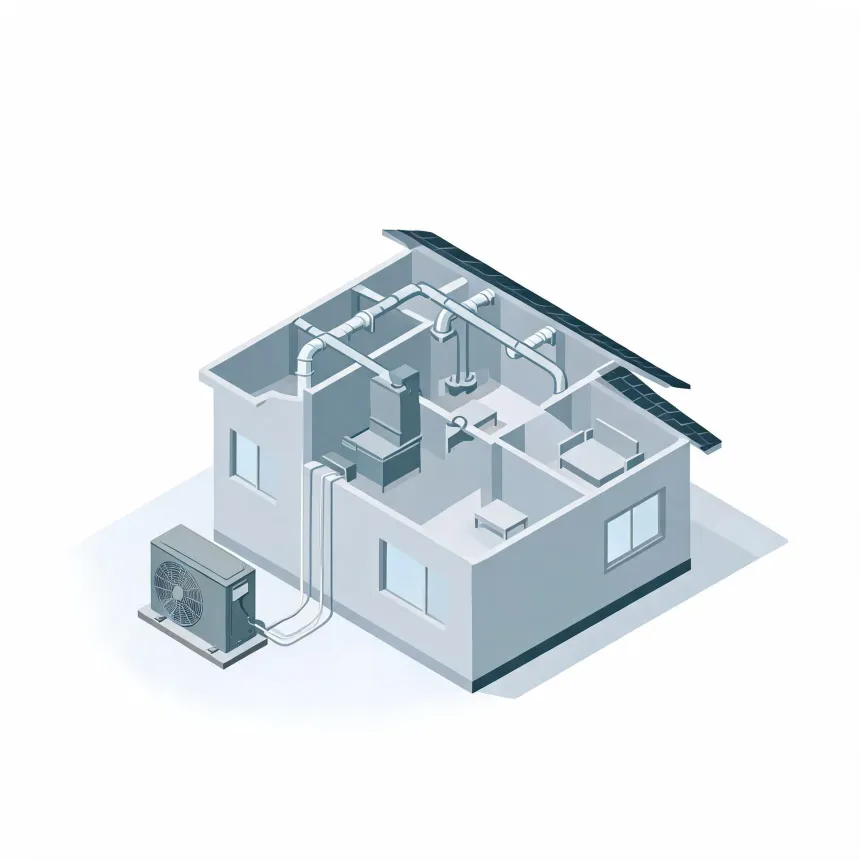
Most houses in Lake County heat with gas, about eight in ten. A heat pump replacing a gas furnace isn't a straight swap the way a new furnace would be. It heats and cools from the same outdoor unit, and the ductwork already in the house has to move air for both jobs. Some gas furnaces are paired with central air, so the ducts may already be sized for cooling loads. Others never had air conditioning added, and that changes what the installer has to check before putting a heat pump in.
Two installers can quote different equipment for the same house, and the efficiency rating is part of what you're paying for every month after. Ask what rating each quote includes before you decide, not after the first bill comes.
Find a contractor
A heat pump here runs for heat most of the year and for cooling only in summer, and the cooling side is the light part of its job. The dew point in Lake County averages 60 degrees across June, July and August, lower than most of the country sees. Air that isn't holding much moisture is easier to cool, so the system isn't straining against heavy, wet air the way one in a more humid state would. The heating side runs longer, but it's steady work, not hard work, since a heat pump sized right for the house moves heat rather than fighting extremes. A unit worked this way tends to show its age before it shows damage. When something does go wrong, it's usually worth fixing rather than replacing, because the parts haven't been run past what they're built for.
A contractor works out heat loss and heat gain room by room, looking at window area, insulation, ceiling height and what faces the sun. Two houses the same size can need different sized units once that math is done. Skipping this step and sizing off the old equipment just carries forward whatever mistake was already there.
A heat pump too big for the house cools the air fast and shuts off before it pulls the moisture out, so the house feels clammy even at the right temperature. One too small runs constantly and can't keep up when it's coldest or hottest outside, leaning hard on backup heat strips that cost more to run than the compressor. Either way the house is less comfortable than a correctly sized unit working less hard.
Two systems can carry the same efficiency rating and still perform differently once installed. Ask what the rated output is at low outdoor temperatures, not just at the standard test point, since that number tells you how the unit behaves on the coldest nights rather than in mild weather. Ask what the sound rating is for the outdoor unit, especially if it sits near a bedroom window or a neighbor's fence. Ask whether the quote includes a line set and refrigerant charge matched to the actual distance between indoor and outdoor units, since a mismatched charge wears on the compressor long before anything looks wrong. Ask what backup heat the system uses when the compressor can't keep up, and how it decides to turn that backup on. A quote that answers these without hesitation is coming from someone who sized the job, not just priced the equipment.
Lake County falls in climate zone 5A, a cool zone where the furnace or heat pump does more work than the air conditioner over a year. Any split-system heat pump sold new has to clear a federal floor to be installed anywhere: at least 14.3 Btu of cooling for every watt-hour it draws, and at least 7.5 Btu of heat for every watt-hour on the heating side. That heating number is the one that matters more here, since this zone leans on it longer than most. A unit that just clears the minimum will run, but it's drawing more power to do the same job than one rated higher. In a zone where heating carries the bigger share of the year, that gap is the one worth asking about before you buy.