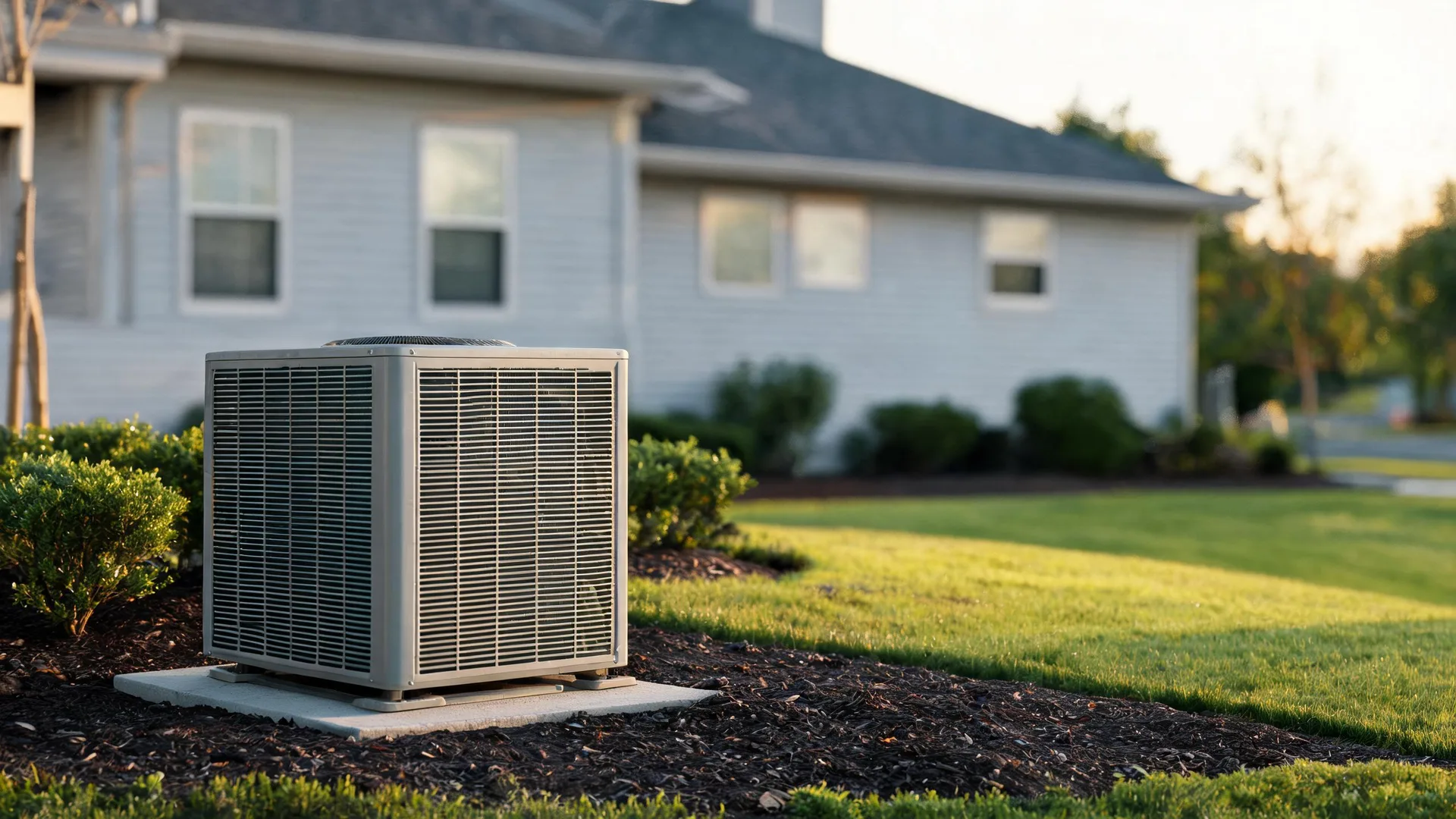
Electricity here runs 18.55 cents a kilowatt-hour
Belmont County pays more for power than most US counties. A heat pump runs on electricity for both heating and cooling, so that rate applies to the system year round, not just in summer.
Takes about a minute. No obligation.
Belmont County pays more for power than most US counties. A heat pump runs on electricity for both heating and cooling, so that rate applies to the system year round, not just in summer.
When the rate per kilowatt-hour is already high, a unit that uses less power to do the same job keeps the difference off every bill it generates. The install decision carries more weight in a place like this than it would somewhere with cheaper power.
NOAA nClimDiv, 1991–2020 normals
Gas heats close to half the homes in Belmont County.
Most heat pump installs here work alongside a gas furnace instead of replacing it outright.




Belmont County sits in zone 5A under the 2021 energy code, a cool zone where heating carries more of the load than cooling does. Any split-system heat pump installed here, if built from 2023 onward, has to clear a federal floor: at least 14.3 Btu of heat moved per watt-hour over the summer, and at least 7.5 Btu per watt-hour over the winter. That floor narrows what a contractor can offer you. It also sets the baseline you're comparing against when a quote lists a higher number. On top of that, a federal tax credit is available for qualifying heat pump installs, separate from whatever the unit costs to run.
The rate you pay per kilowatt-hour applies to this install before it applies to a single bill. Ask what efficiency number the quoted unit actually carries, and check it against the federal floor it has to clear. The difference between a unit that just clears that floor and one built past it is the number that follows you home every month.
Find a contractor
Sizing a heat pump means working out two numbers for the house: how fast it loses heat in winter and how fast it gains heat in summer. A contractor works that out room by room, counting windows, walls, and ceiling area, not by looking at what's already sitting outside. Too big and the unit short cycles, switching on and off before it ever runs long enough to pull moisture out of the air or settle into a steady heat. Too small and it runs constantly without ever catching up on the coldest or hottest days. Either mistake shows up as uneven temperatures room to room, and either one wears the compressor down faster than running it at the load it was built for. The right size isn't the biggest unit that fits the budget or the same tonnage as what came out. It's the one matched to the load calculation for that specific house.
The efficiency rating compares heat moved against power used. It is not a measure of how big a unit is or how fast it heats a room. Two units can heat the same house at the same speed, and still use different amounts of electricity to do it, because one moves heat more efficiently than the other. The rating is printed for both the cooling side and the heating side separately, since a heat pump has to earn that number twice.
The number on the label is measured new, under controlled conditions. A dirty coil, a low refrigerant charge, or a filter that never gets changed all make the compressor work harder to move the same amount of heat. None of that shows up as a new sticker on the unit. It shows up as a system that no longer runs the way its rating promised, which is why upkeep matters as much as the number did on install day.
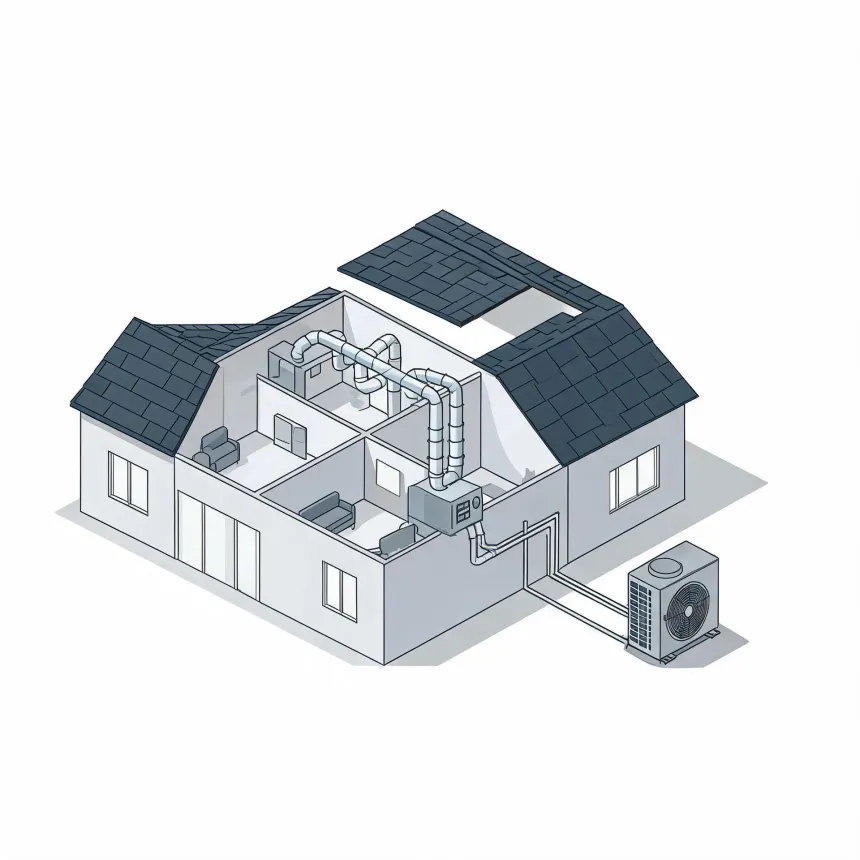
A heat pump's installed cost comes down to more than the box itself. Sizing takes real work: a contractor has to calculate the heat loss and heat gain for the house, room by room, not just match the old system's size. Get that wrong and you pay for it twice, once at install and again every month after. Ductwork matters just as much. If the existing ducts are undersized or leaky, a straight swap won't deliver the comfort the new unit is rated for, and bringing them up to spec adds to the job. Line sets, electrical capacity at the panel, and where the outdoor unit can actually sit all factor in before anyone quotes a number. A contractor who skips that work and just quotes a box is quoting the wrong job.
Half the homes in this county were built in 1965 or earlier. A house that age almost never has the exact heat loss and heat gain numbers its current system was sized against, and a lot have been added onto or had windows replaced since. That's the room-by-room load calculation that matters here, not the size of the unit coming out. Ask the contractor to show you that number for your house, not just the number stamped on the old equipment. If the ductwork was sized for a furnace decades ago, say so up front, since that changes what the new unit can actually deliver.