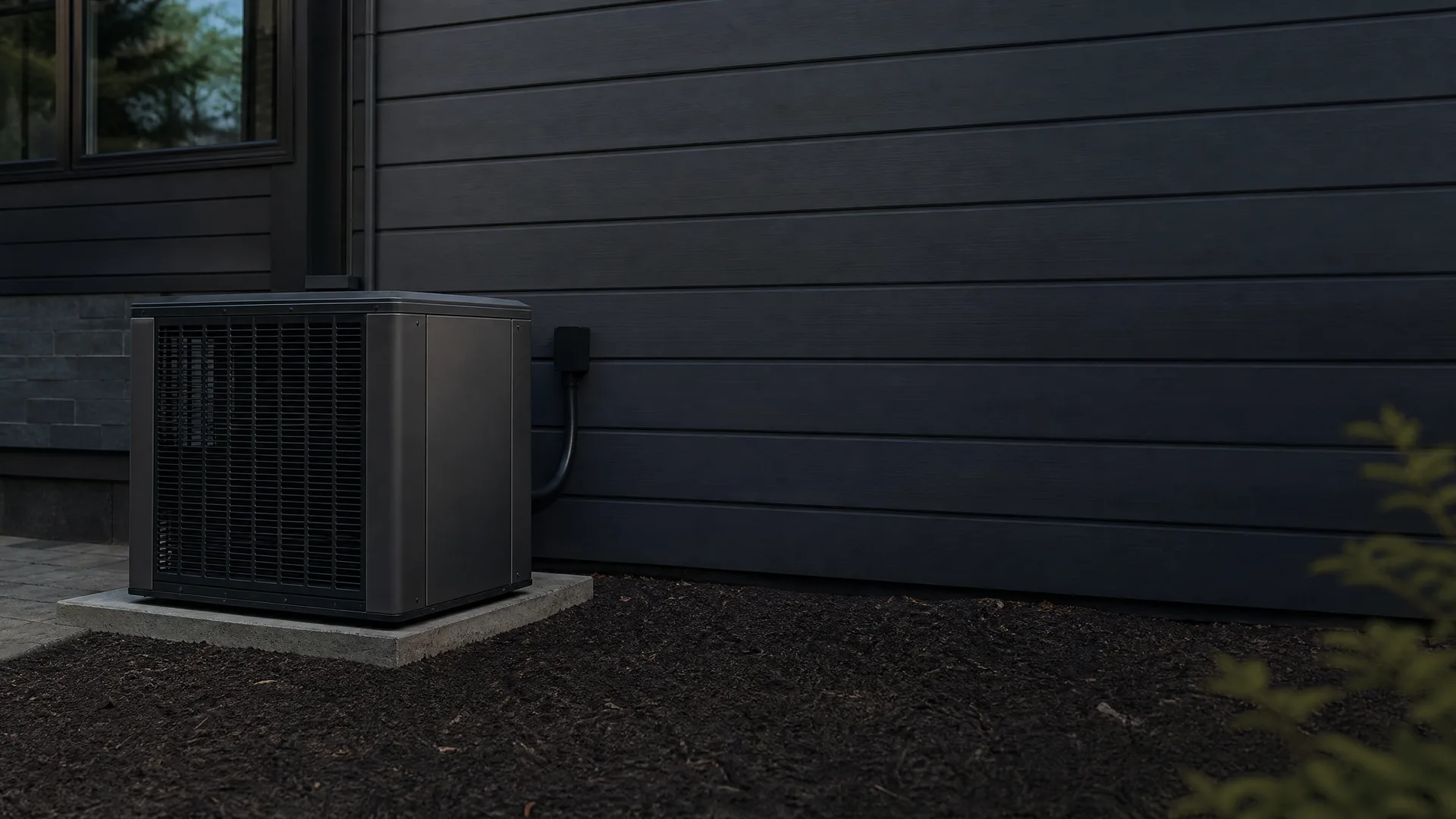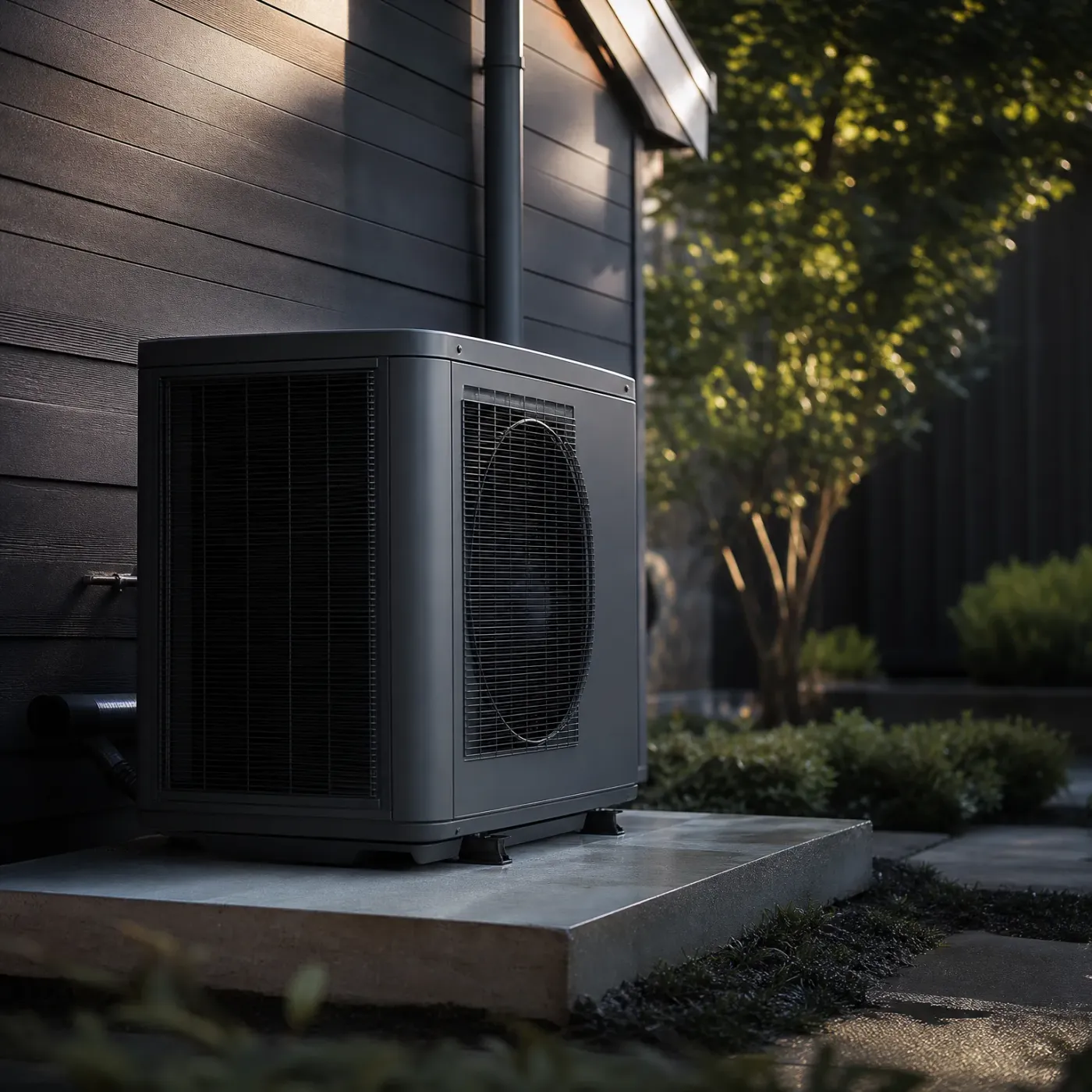





A gray outdoor condenser/heat pump unit with a side fan grille sits on a concrete pad beside a dark horizontal wood-sided house, with shrubs and a small tree nearby.

Stop chasing a heat pump pro

How long a heat pump lasts in Mason, OH

A heat pump in Mason runs both sides of the year, pulling heat out of the house all summer and pulling it back in all winter, so it logs more hours than a furnace or AC alone ever would. That wear adds up differently depending on how the unit's been sized and maintained. Below is what actually drives how long yours holds up, and when it's time to stop patching one and let a local contractor handle the replacement so you're not stuck calling around for quotes yourself.

Send my request

A heat pump in Mason lasts about 12 to 15 years. That's shorter than the 15 to 20 years you'd get from a furnace, because the heat pump works through every month of the year instead of just the cold ones. It runs the air conditioning all summer, then reverses itself and carries the heating load all winter, right through the stretches when it's cold enough outside that the unit has to work hard to pull any warmth out of the air at all. Twice the runtime wears the compressor down twice as fast. If your heat pump came with the house, the paperwork or a sticker on the unit will show its age, and that's worth checking before you're caught without heat in January. A unit past 12 years can still run fine, but parts get harder to find and each repair is a bet on how much life is left in it.

What does a Mason heat pump actually deal with all year?

  • Winter nights average 25°F

    Nights average 25°F here in December, January and February, so the unit is pulling heat out of air that cold for three straight months.

  • Heat runs October through April

    Heat runs October through April, about seven months. That's most of the year spent on the heating side, not the cooling side.

  • Cooling runs June through September

    Cooling runs June through September, another four months. Add it to the heating months and the unit barely gets a break.

NOAA nClimDiv 1991-2020

How a Heat Pump Actually Wears

  • Below about 25°F, the outdoor coil can't pull enough heat from the air, so a backup heat strip kicks in to carry the load.
  • Every defrost cycle briefly reverses the system to melt frost off the outdoor coil, then switches back to heating.
  • The reversing valve is what lets one unit cool in summer and heat in winter, and it's a part a furnace never needs.
  • That valve, plus the compressor and outdoor fan motor, all run through both seasons instead of resting half the year like an AC compressor does.
  • A unit sized right for the house cycles on and off in longer, steadier runs instead of short bursts that wear the compressor faster.
  • Refrigerant charge that's even slightly low forces the compressor to work harder to hit the same temperature, in July and in January alike.

A heat pump cools your house by moving heat out, and heats it by moving heat in, using the same loop of refrigerant and the same compressor both ways. The part that makes that possible is the reversing valve. A furnace or a standalone AC never needs one, because each of those only ever does one job. In a heat pump, that valve switches position every time the system changes between heating and cooling, and it switches again, briefly, every time the unit defrosts. On a cold night, frost builds on the outdoor coil the same way it builds on a freezer shelf. The system reverses itself for a few minutes, sends warm refrigerant out to melt that frost, then switches back to heating your house. That happens repeatedly through the winter, every winter, and the valve, the compressor and the outdoor fan motor all run through it. Below roughly 25°F, the outdoor coil can't draw enough heat from the air to keep up, so an electric heat strip takes over part of the load, and the compressor gets a break from carrying the whole house by itself. How much strain all of this puts on the unit depends on two things nobody can see from outside: whether the system was sized correctly for your house, so it runs in long, steady stretches instead of short cycles, and whether the refrigerant charge is correct, since a slightly low charge makes the compressor work harder to hit the same temperature in every season.

A man in a navy sweater reclines in a leather armchair with his eyes closed and a slight smile, beside a side table with a mug and folded newspaper, in a room with a bookshelf and a sunlit window.
A bearded man in a navy robe over a gray shirt reclines with closed eyes in a brown leather armchair, with a houseplant, folded newspaper on a wooden table, and a bookshelf behind him.
A bearded man in a navy sweater reclines with closed eyes in a leather armchair beside a table holding a folded newspaper and a green mug, with a dresser, potted plants, a lamp and framed artwork behind him.
A man in a dark green sweatshirt reclines with his eyes closed and a slight smile in a brown leather armchair, with a window, table lamp, mug and newspaper beside him.

Send one request and you're done looking

Skip collecting and comparing quotes for the new heat pump.

There's no charge for the request.

Running it as installed

A heat pump set up the way the manufacturer specs it, sized right for the square footage, with the refrigerant charge where it belongs, holds up for the full 12 to 15 years. The backup heat strips only carry the load on the coldest nights, so the compressor isn't straining to make up for a system that's too small or too big for the house. Defrost cycles run on schedule and finish clean. Nothing in the system is working harder than it has to, so the wear stays even across all twelve months instead of piling up in July and January.


Running it undersized or low on charge

A heat pump that's too small for the house, or short on refrigerant, leans on the backup heat strips more than it should, and that means the compressor is cycling harder to keep up on top of it. In Mason's cold snaps, that unit is working past what it was built for most of the winter, not just on the worst nights. Summers aren't easier either, since the same undersized system has to run longer to cool the house. That extra strain tends to shorten the 12 to 15 years down toward the low end, sometimes past it.

An older man with gray hair in a navy quarter-zip fleece reclines on a light upholstered sofa with his eyes closed, beside a potted plant and large sunlit windows.
A woman in a cream knit sweater sits with eyes closed in an armchair beside an open window showing orange and yellow autumn foliage, with a mug and books on a small side table.

Most of this shows up on your electric bill before it shows up as a breakdown. A unit low on refrigerant or sized wrong for your square footage runs longer to hit the same temperature, and in Mason that means more hours leaning on the backup strips during those 25°F nights in December and January. Those strips use a lot of power, so a July or January bill that's climbed from last year is often the first real sign, well before you hear a bad noise or feel warm air blowing in summer. A dirty filter or a coil that's caked with debris makes the compressor work harder every time the system switches between cooling and heating, which in Mason happens on both ends of the year. Skip the yearly check and a worn part, a reversing valve starting to stick, usually gets found only after it's already put extra strain on the compressor. None of this means a quick shutdown. It means the 12 to 15 years you'd otherwise get starts closing in faster, and the unit asks for a replacement before it should.

What this looks like at your house

  • A heat pump that's short on refrigerant runs longer each cycle and leans on the backup strips more often through those 25°F nights.
  • An undersized unit for the square footage never catches up on the coldest days, so it ages faster than the 12 to 15 years it's rated for.
  • A clogged filter or blocked outdoor coil makes the system work harder every time it switches between cooling and heating.
  • Skipping a yearly check means a worn part, like a failing reversing valve, gets caught after it's already strained the compressor.
  • A heat pump that short-cycles in summer or won't fully defrost in winter is often headed toward an early replacement.
  • Higher electric bills in July and January are usually the first sign the unit is working past what it should need to.
An outdoor air conditioning condenser unit with dusty coils sits on a concrete pad against light horizontal siding, with an electrical disconnect box and refrigerant lines on the wall and a shrub and mulch at left.
Before you get your heat pump installation
A gray outdoor condenser unit on a concrete pad beside a house with horizontal lap siding, connected by conduit and lines to a wall-mounted disconnect box, with a shrub and gravel bed to the left.
After you get your heat pump installation
A gray outdoor condenser unit on a concrete pad beside a light-colored lap-sided house, with a wall-mounted disconnect box, refrigerant lines, mulch bed and shrubs, and a concrete walkway in the foreground.

Running clean

The lines stay wrapped, the pad stays level, and the disconnect box stays dry against the siding. A unit kept clear of mulch and debris breathes the way it's supposed to, cycling on and off without straining to hit the temperature you set.

An outdoor air conditioning condenser unit on a concrete pad beside a house with horizontal lap siding, with a green shrub to the left and a wide concrete slab in the foreground.

Running into trouble

Set against bare concrete with nothing shading it, the same unit works harder in July's heat and January's cold alike. Dirt and debris on the coil make it labor through every cycle, which shortens how many years it has left.

Power here costs 16.16 cents per kilowatt-hour

At 16.16 cents per kilowatt-hour, every backup strip cycle on a cold night shows up on your bill. A heat pump that's sized right and holds its charge leans on those strips less, which keeps that rate from costing you more than it has to.

EIA-861 2025

A light gray outdoor heat pump unit mounted on a concrete pad beside a house with horizontal lap siding, with refrigerant lines and conduit running to a wall-mounted electrical box, gravel and a leafy shrub nearby.

Clear and maintained

Lines wrapped, pad level, coil fins open to the air. A heat pump like this cycles on and off the way it's supposed to, pulling heat in winter and out in summer without fighting its own airflow to get there.

An outdoor air conditioner condenser unit on a concrete pad beside a house with beige vinyl siding, with a gray electrical disconnect box and insulated refrigerant lines on the wall and river rock to the right.

Coil clogged with debris

Dirt packed into the fins blocks the airflow the coil needs to do its job. The unit runs longer to hit the same temperature, leans harder on the backup strips on cold nights, and wears toward the short end of 12 to 15 years.

A closed silver laptop and a white mug of dark coffee sit on a wooden table in a sunlit room, with a blurred kitchen counter, shelf and window with plants in the background.

12 to 15 years, if it's sized and maintained right

A heat pump in Mason runs longer hours than a furnace or an AC ever would, because it carries both jobs, and 12 to 15 years is what that gets you. Keep the charge correct, keep the coil clear, and the unit should hold up through its full run. Let any of that slip and the backup strips carry more of the load on those 25°F nights, and the years come off the front end instead of the back.

Where you land in that range comes down to choices made at install, not luck. If your heat pump came with the house, it's worth finding out how it was sized and whether it's been serviced since. Sorting that out usually means calling around, explaining the same thing to each contractor, and comparing quotes that don't line up. Once you send the form, that search is off your plate, and someone licensed to do this work in Warren County takes it from here.

A light-colored ceramic vase holding green leafy branches sits on a round wooden table, with a wooden-framed armchair draped in a cream throw, a tripod floor lamp, and sheer curtains blurred in the background.
A dark outdoor condenser unit on a concrete pad beside a dark horizontal-plank house wall, with a refrigerant line entering the wall and mulch landscaping in the foreground.

Finding a pro stops being your job

Skip the round of in-home estimates for a new heat pump.

New system or replacementHeat PumpWarren County, OH
Step 1 of 2

What ZIP code is the job in?