











Profile view of a bearded man wearing a black baseball cap and a dark gray t-shirt against a plain white background.

How long a heat pump lasts in Ashtabula, OH

New system or replacementHeat PumpAshtabula County, OH
Step 1 of 2

What ZIP code is the job in?

A heat pump in Ashtabula County typically lasts 12 to 15 years. Winters here are cold enough that the unit spends months running its hardest, switching into defrost over and over to clear ice off the outdoor coil, and that cycle wears on the compressor faster than it would somewhere milder. Most homes in the area heat with gas furnaces instead, and heat pumps here often work as a second system or back each other up on the mild days of fall and spring, which changes how many hours a year the unit actually runs. One that gets serviced on schedule, with the coils kept clean and the refrigerant charge checked, tends to reach the far end of that range. One that doesn't may need replacing well before it. If yours is past 12 years, it's worth knowing where it stands, since a unit that struggles through a cold snap can leave you without heat exactly when you need it most.

A man in a blue sweatshirt reclines with his eyes closed in an armchair in a living room, with a folded newspaper and ceramic mug on a side table and bookshelves and a couch behind him.
A bearded man in a navy sweater leans back in a brown leather armchair with his eyes closed and a slight smile, beside a window and a side table holding newspapers and a lamp.
A man in a dark gray sweater reclines with closed eyes and a slight smile in a brown leather armchair in a living room with bookshelves, a sofa, a lamp, large windows, and a folded newspaper on a round wooden table.
A man in a gray fleece pullover sits in a leather armchair with his eyes closed and a slight smile, beside a table with newspapers and a lamp, with a window, potted plant and bookshelves behind him.

How Winter Wears the System

  • Every defrost cycle reverses the system briefly, sending hot refrigerant to the outdoor coil to melt ice before switching back to heating.
  • A heat pump that short-cycles through defrost too often is losing ground against the cold faster than it can recover.
  • Most heat pumps in this area pair with a backup heat source that kicks in when the outdoor temperature drops too low for the heat pump alone.
  • The reversing valve is what switches the system between heating and cooling, and it only gets heavier use in a climate with real winters.
  • A compressor that spends January running near its limit wears differently than one in a mild climate that barely has to work.
  • Outdoor coils here collect more ice over a winter than they would somewhere warmer, and clearing it is what shortens the cycle between repairs.

A heat pump moves heat instead of making it, and in winter that means pulling warmth out of outdoor air that is already cold. When ice builds on the outdoor coil, the system reverses itself for a few minutes, sends hot refrigerant outside to melt it off, then switches back. That is normal. It happens more in Ashtabula County than it would somewhere milder, because the air outside is cold enough, often enough, to keep frosting the coil back up. Each reversal is handled by the reversing valve, a part that barely moves in a warm climate but gets worked hard here every winter. The compressor behind all of this is doing the heavy lifting, and on a January day when it is struggling to pull enough heat from the air, it is running closer to its limit than it would in October. That is why most systems in this area are installed with a backup heat source, usually electric resistance coils or a connection to a furnace, that takes over once the outdoor temperature drops below where the heat pump can keep up on its own. The backup saves the compressor from trying to do a job it was not built for in the coldest stretches. None of this means the system is failing. It means the parts doing the work are built for exactly this, and how well they hold up over the years depends on keeping them clear of ice and running as designed.

A gray outdoor air conditioner condenser unit on a concrete pad beside a house with horizontal lap siding and a stone veneer base, with a conduit running to a wall-mounted disconnect box and shrubs and evergreen trees to the left.
A heat pump running the way it should will cycle on, satisfy the thermostat, and shut off, with the outdoor coil clean and the lines free of heavy frost.
An outdoor condenser unit sits on a concrete pad beside a house with horizontal vinyl siding, with a gray electrical disconnect box and conduit on the wall and a shrub at left.
A heat pump in trouble will frost over even outside of a defrost cycle, run long stretches without shutting off, or blow air that's gone noticeably cooler than it should.

Is your heat pump struggling to keep up this winter

You might notice the outdoor unit coated in frost or ice even when it isn't running defrost, or the fan straining to turn under a layer of ice. Inside, the air coming from the vents feels cooler than it used to, and the system runs longer to reach the same temperature on the thermostat. Some homeowners hear a hum or click as the unit tries to start but can't. If the compressor is working harder than it should for months at a time, it wears down faster, and a heat pump that can't clear ice properly in an Ashtabula winter is at real risk of a breakdown on the coldest night of the year, right when you need it most.

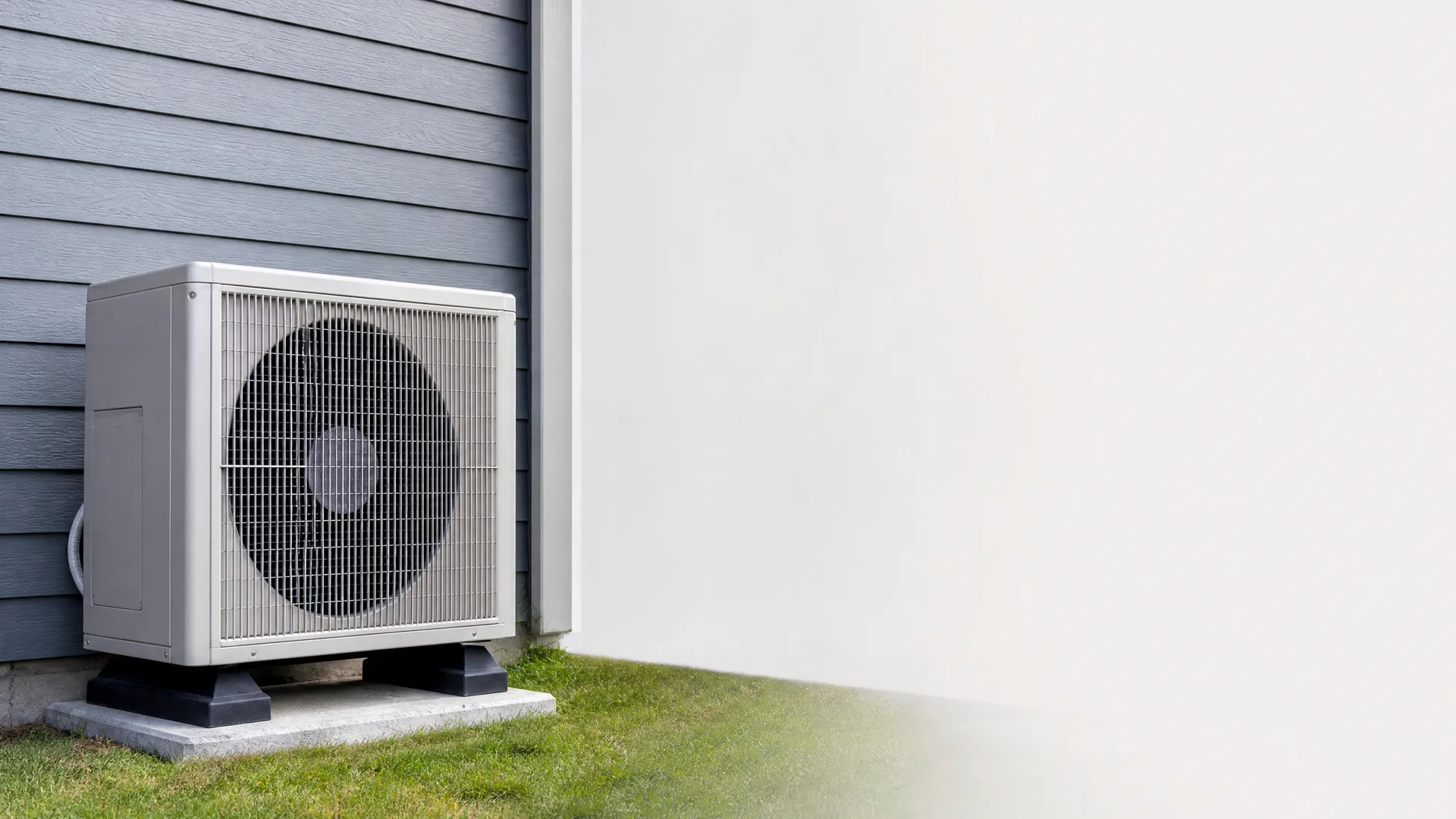
An outdoor heat pump unit on a concrete pad beside a gray horizontal-siding wall, next to a blank white wall and a strip of grass.

What backup heat costs the compressor

Most heat pumps here pair with electric resistance coils or a gas furnace for the coldest stretches. When the outdoor temperature drops far enough, the system leans on that backup heat instead of running the compressor harder. That split matters for how long the unit lasts, because the compressor is the expensive part to replace. A system that hands off to backup heat too early, or not at all, puts years of extra strain on the compressor during the months it should be getting a break.

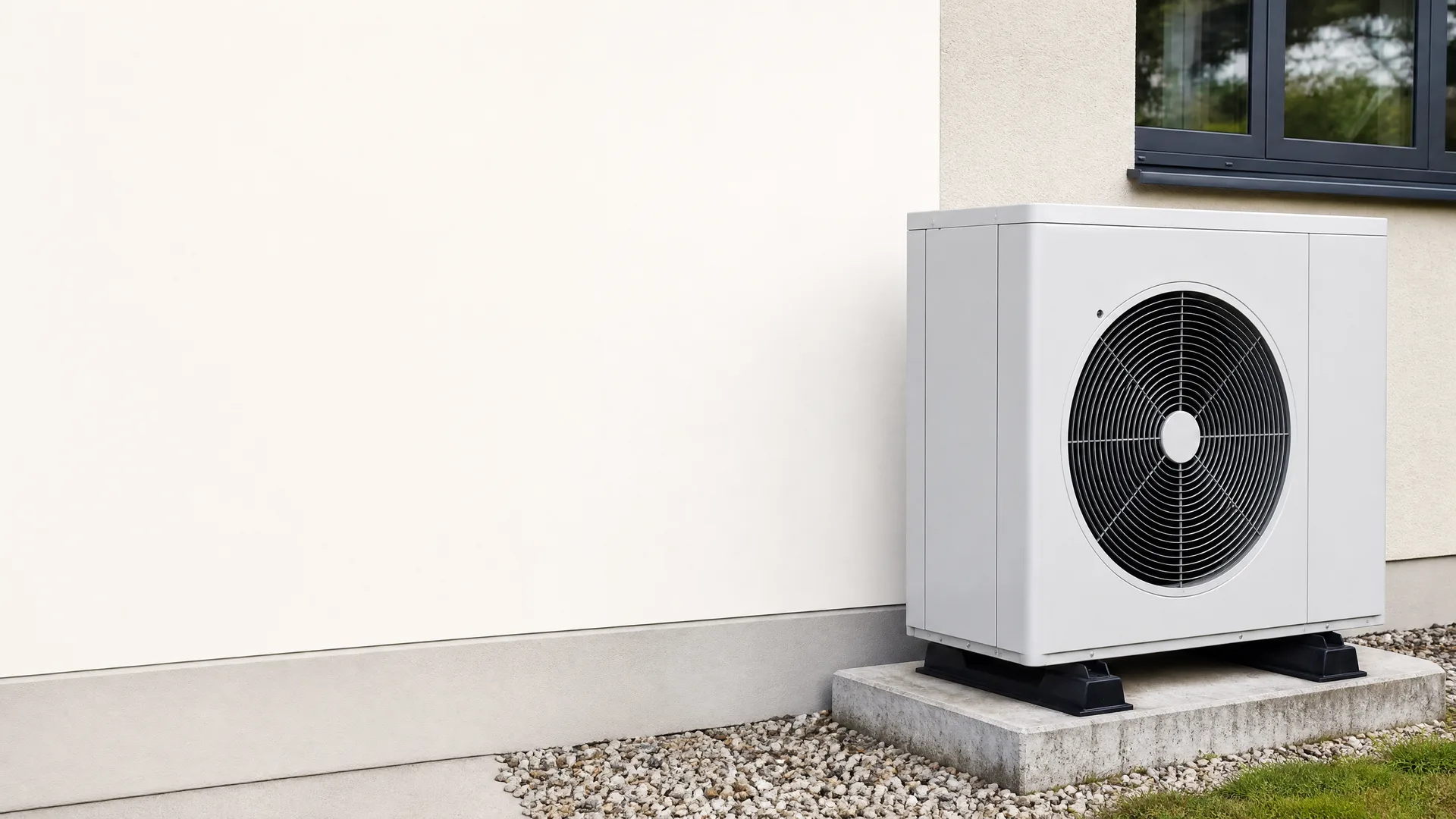
A white air-source heat pump unit with a circular fan grille sits on rubber feet atop a concrete pad beside a light-colored stucco house wall, with gravel and grass in the foreground and a dark-framed window above.

Why the outdoor unit matters most

The outdoor unit does the harder job for more of the year in a place like Ashtabula County, since it has to pull heat out of cold air all winter and reject heat into humid air all summer. Snow drifting against it, ice building up around the base, or leaves packed into the coil fins all force it to work past what it was built for. Keeping the area around it clear through the winter is one of the few things that protects the compressor without touching a single wire.

Does a heat pump last as long as a furnace and AC here?

You've got a furnace and AC setup in mind as the comparison, since that's what most of your neighbors run on gas. A heat pump works differently, and you want to know if swapping to one means giving up years of equipment life, or if it holds its own against a system split between two machines instead of one.

A heat pump runs a shorter life than a gas furnace, about the same as an AC

A gas furnace here can run 18 to 20 years, since it only works the coldest months and the burner itself doesn't wear the way a compressor does. An AC runs April through October and lasts closer to 12 to 15 years. A heat pump does both jobs in one unit, so it carries the AC's summer load and then keeps working all winter instead of a furnace taking over. That's why it lands in the same 12 to 15 year range as the AC, not the furnace. You're not losing years by choosing a heat pump over separate systems. You're putting the cooling-equipment lifespan on a machine that also heats the house, which is a different trade-off than a shorter life on its own.

  1. Thermostat calls for heat, and the reversing valve sends refrigerant through the outdoor coil.

  2. The outdoor coil pulls heat from the air, even when it's cold outside.

  3. The compressor squeezes the refrigerant, raising its temperature before it reaches the indoor coil.

  4. The indoor coil releases that heat, and the blower pushes warm air through the ducts.

An older man with gray hair in a dark blue henley sweater leans back on a beige sofa with his eyes closed, beside houseplants and bright windows.
A woman in a cream knit sweater sits with closed eyes in an armchair beside a window showing orange autumn foliage, with a mug and plate of cookies on a small side table.

Let someone else find the pro

Describe the project once instead of to every installer.

No fee to send it, and nothing to sign.

Replacing it versus keeping it going

A heat pump past 12 years can usually still be repaired. A new compressor or a replaced reversing valve will get another winter out of it, and if the unit has been running well with no history of frosting over or short-cycling, that repair can make sense. The question is whether you want to keep paying for parts on a system built with older refrigerant and lower efficiency ratings, or put that money toward a unit that will run cheaper on your power bill every month going forward, not just this winter but the next ten after it.

What a dying heat pump costs you now

An aging heat pump does not fail all at once. It runs longer to hold the same temperature, leans harder on backup heat, and costs more each month before it quits for good. If yours is already showing the signs, calling around to find a contractor, explaining the frosting or the short-cycling to each one, and comparing what they quote is its own job on top of a cold house. Sending the form here hands that search off. You describe it once, and the work of finding someone who installs heat pumps in Ashtabula County stops being something you have to do yourself.

Why does Ashtabula's winter wear out a heat pump faster?

  • Winter nights average 21°F

    Nights averaging 21°F mean the compressor runs hard for hours at a stretch, with little break to rest or recover.

  • Heat runs October through May

    Eight months of heat a year is a long season for any compressor to carry, especially one also handling frequent defrost cycles.

  • Cooling runs June through August

    Three months of cooling barely compares to the eight spent heating, so most of the wear here comes from winter, not summer.

NOAA nClimDiv 1991-2020

A gray outdoor condenser unit on a concrete pad beside a house with horizontal lap siding, with a metal disconnect box and refrigerant lines on the wall, river rock and mulch to the sides, and a green shrub at right.

Running clean

This is what a healthy outdoor unit looks like. It sits on its pad, coils clear, lines free of heavy ice, cycling on and off as the thermostat calls for it. Air moves through the coil the way it should, and the compressor gets to rest between cycles instead of grinding through them.


An outdoor air conditioner condenser unit on a concrete pad beside a house with horizontal lap siding, with refrigerant lines entering the wall and a shrub on bare soil to the left.

Coils clogged with ice

Here the coil is caked with debris and frost that defrost can't keep up with. A unit in this shape pulls less heat from the air each cycle, runs longer to make up for it, and leans harder on the compressor. Left this way through a full winter, it won't make it to 12 years.

An outdoor air conditioner condenser unit on a concrete pad beside a house with horizontal lap siding, with refrigerant lines and a gray electrical disconnect box on the wall, surrounded by bare dirt.
Before you get your heat pump installation
A gray outdoor condenser unit on a concrete pad beside a house with gray lap siding, connected by conduit and refrigerant lines to a wall-mounted disconnect box, with a green shrub and mulch bed at left.
After you get your heat pump installation

Power here costs 16.25 cents per kilowatt-hour

At just over 16 cents a kilowatt-hour, every hour the compressor and backup coils run shows up on the bill fast. Leaning on resistance heat during the coldest stretches gets expensive quickly, which is one more reason a unit that's slipping into backup heat too often is worth a second look.

EIA-861 2025

A gray outdoor air conditioner or heat pump unit on a concrete pad beside a house with horizontal lap siding, with conduit and refrigerant lines running up the wall and green shrubs and mulch at left.

Coils clear, lines clean

This unit sits close to the house with clear refrigerant lines running into the wall. The coil is free of rust and the base is clear of debris. A unit kept like this is cycling the way it should and carrying its share of an Ashtabula winter without a fight.

An outdoor air conditioner condenser unit with rust spots on its top grille sits on a concrete pad beside a house with light horizontal siding, with conduit lines and an electrical box on the wall and a mulch bed to the right.

Rust on the grille, dirt at the base

Rust on the fan grille and dirt built up around the base usually mean years of winters without much attention. The disconnect box and conduit still do their job, but a unit weathered like this is closer to the point where a breakdown costs more than a new one would.

A closed silver laptop and a light ceramic mug of dark coffee on a wooden table, with a wooden chair, kitchen counter with sink, pendant lamp, potted plant, and a window showing a sunset sky in the background.

12 to 15 years, and the winters here decide where you land in that range

A heat pump in Ashtabula County runs 12 to 15 years. Where your unit falls in that range comes down to how it's handled the defrost cycles, the backup heat, and the years of cold that lean on the compressor harder than most places see. A unit frosting over outside its defrost cycle or leaning on resistance heat too often is further along than its age alone would suggest.

If yours is getting old or already showing the signs, you don't have to spend your evenings calling around, explaining the same problem to every contractor who picks up, and sorting through quotes to figure out who actually knows heat pumps in a cold climate like this one. Send the form once and that search is off your plate.

A living room with a cream sofa and knit throw beside a window, with a wooden coffee table in the foreground holding a round woven tray, a small bowl, and a speckled vase of green leafy branches.
Elevated view over a shingled roof peak and treetops toward a wide river winding through flat farmland and woods under a clear sky.

One request and it's handed off

Skip calling around

Sending the form costs nothing.

A failing heat pump in a cold snap doesn't wait for a convenient week. Send the request and you're done hunting through listings, calling shops that don't answer, and explaining the frosted coil and the weak airflow over and over. One form, and finding someone to install the replacement stops being your job.