


What the cold here actually does to a heat pump
Your winter here is long and it bites. Heat runs eight months, October through May, and the overnight low averages 21°F across December, January and February. That number matters because a standard heat pump starts losing ground well above it. Below 40°F it puts out less heat than its rating says. Below about 35°F it often needs backup heat to make up the difference. Your average winter night sits below both marks, not close to them, below them.
Out of the roughly 245 nights your heat runs, about 135 drop to freezing or below. That is over half the heating season spent in the range where a standard heat pump is already working below its rating. Only about 6 nights a year reach 0°F, so the deep cold is rare, but the mild cold, the 32°F and below kind, is not rare at all. It is most of your winter.
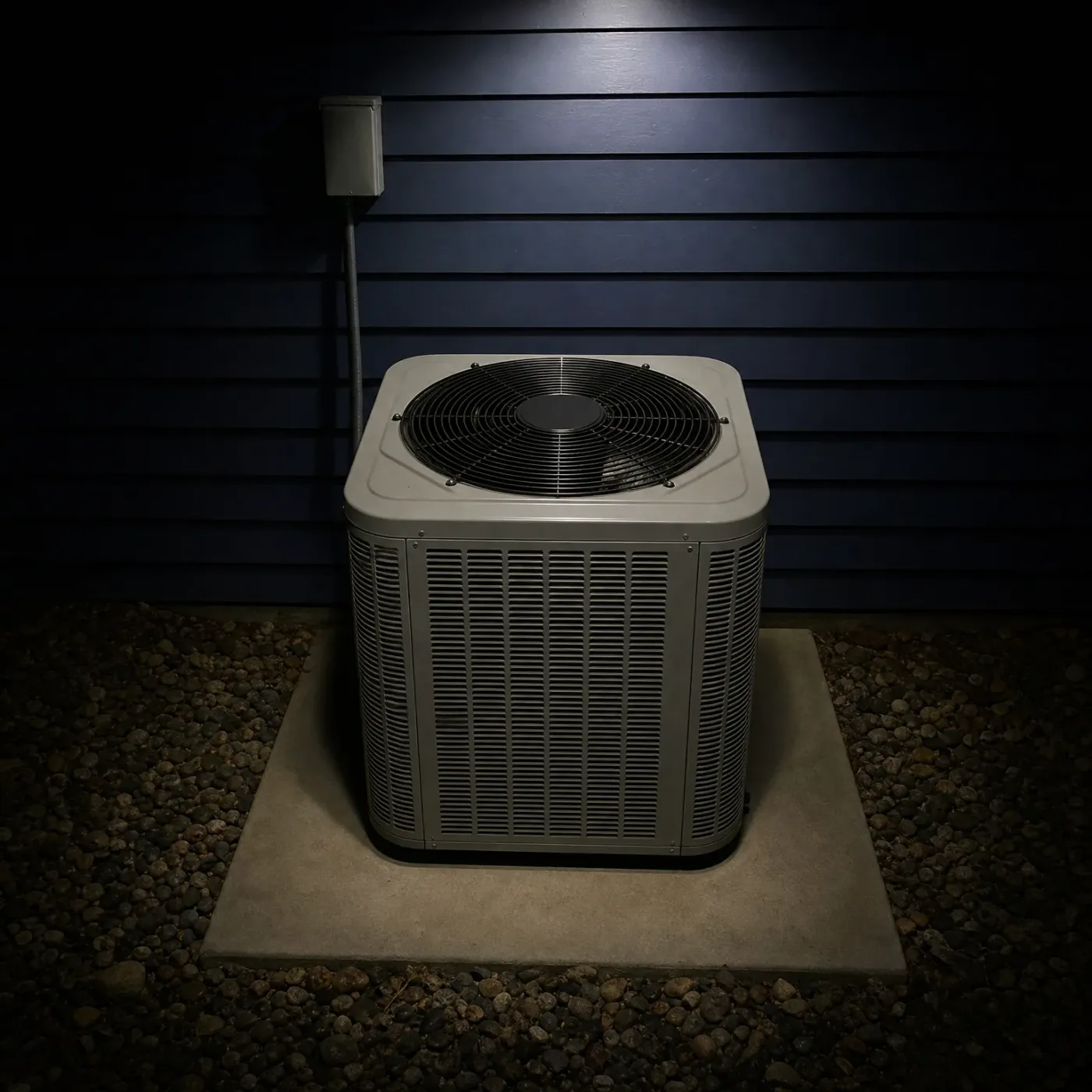
None of this means a heat pump fails here. It means a standard one, built to the federal minimum, is working at a disadvantage on most winter nights. A cold-climate heat pump is built for exactly this. To earn that label it has to deliver real heat at 5°F, not just at a mild 47°F, and hold onto most of its capacity doing it. Field tests of these units in occupied cold-climate homes found backup heat carried only a small share of the load between 0°F and 35°F, and running on backup alone was rare even above 0°F. That is the version of this machine built for your winter, not the one the running cost card above was priced on.