

Heat pump vs furnace in Columbiana County, Ohio

Start My Quote

Installers who work on both

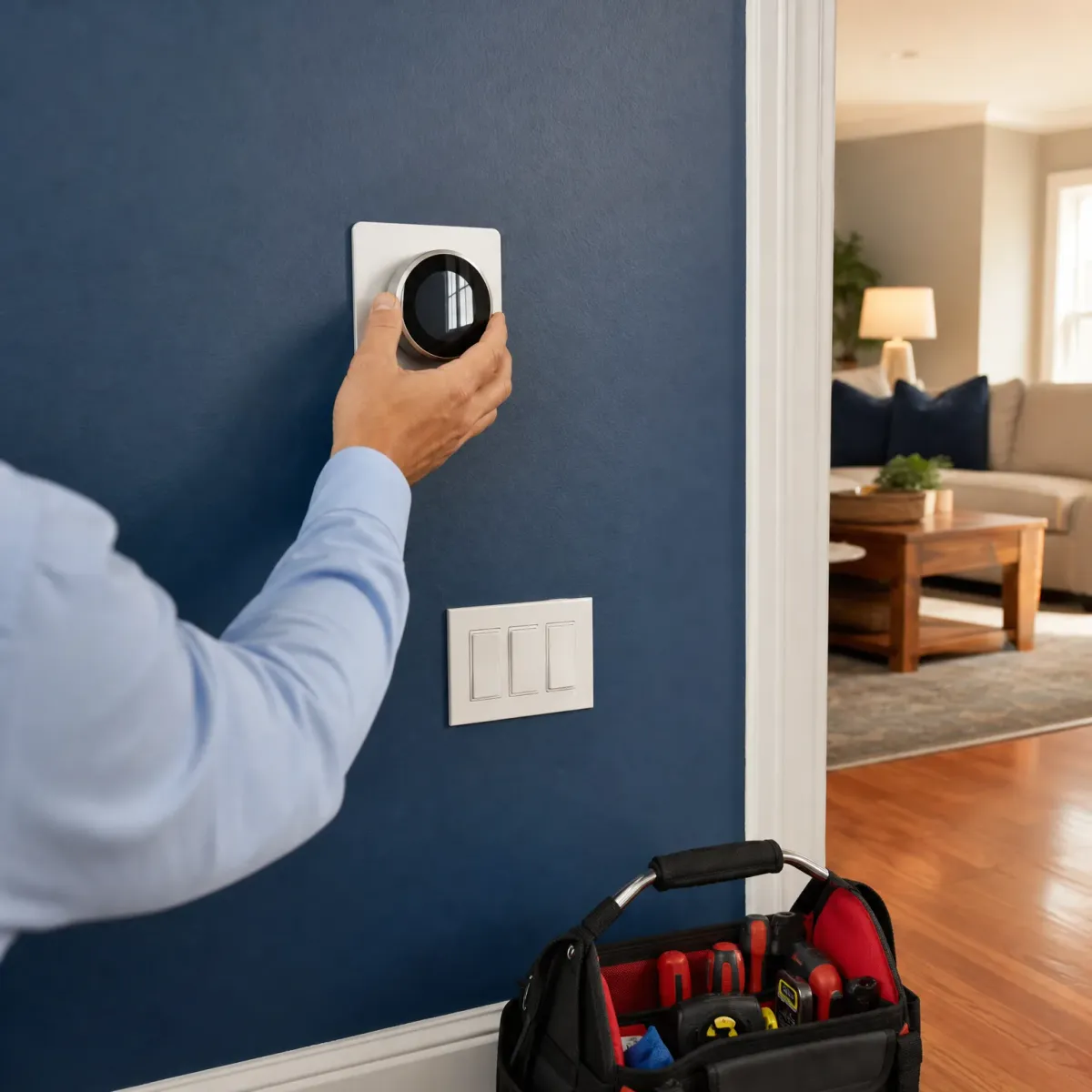
A person's arm in a light blue shirt reaches to adjust a round thermostat on a dark blue wall above a light switch plate, with a tool bag in the foreground and a living room visible through a doorway.

Tell us about the job

Takes about a minute. No obligation.

New system or replacementColumbiana County, OH
Step 1 of 3

What kind of equipment?

Which costs less to run in Columbiana County?

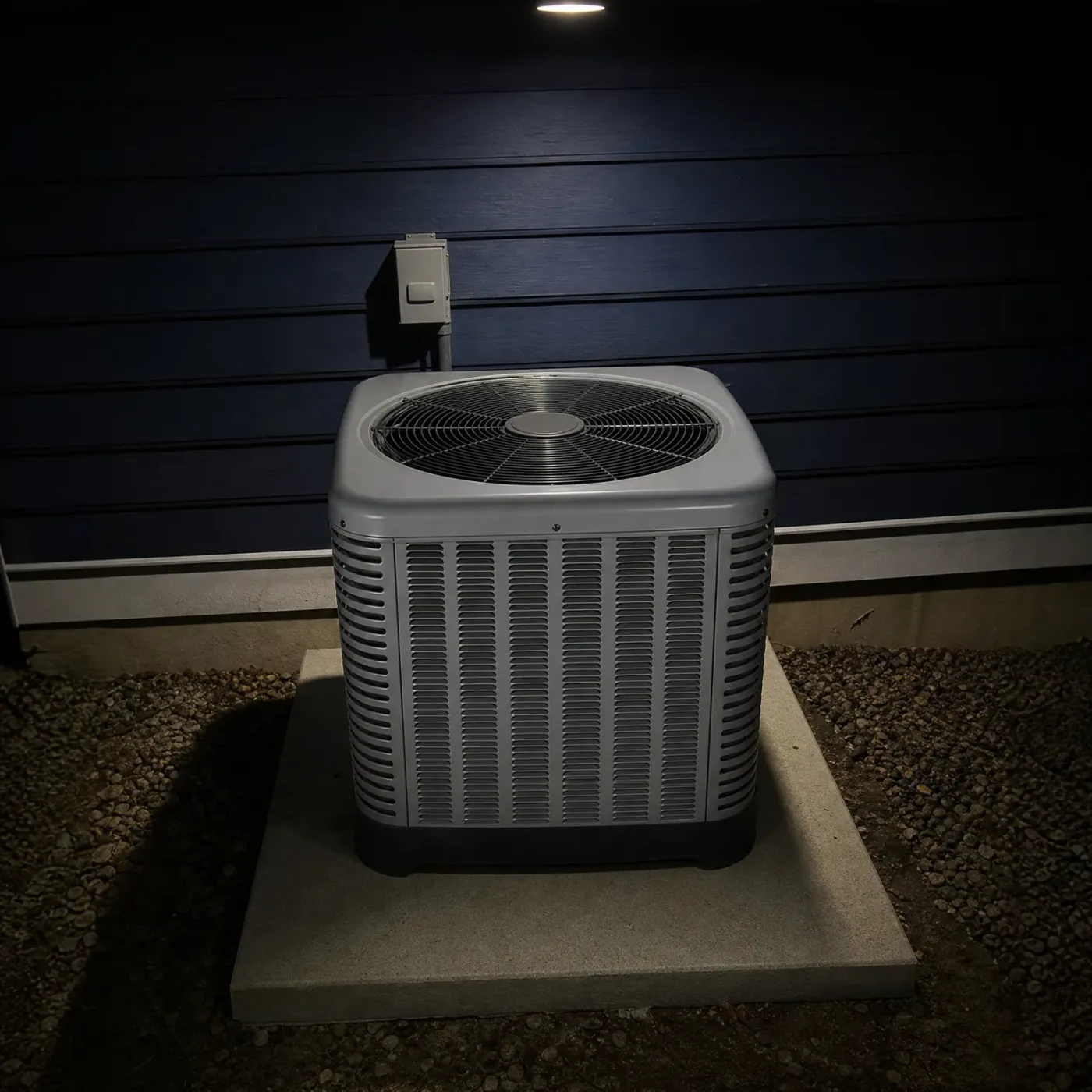
A gray outdoor condensing unit with a top-mounted fan grille sits on a concrete pad surrounded by gravel, against dark horizontal siding with a wall-mounted electrical disconnect box above it, lit at night.

Heat pump

To heat your home here$2.13per 100,000 Btu

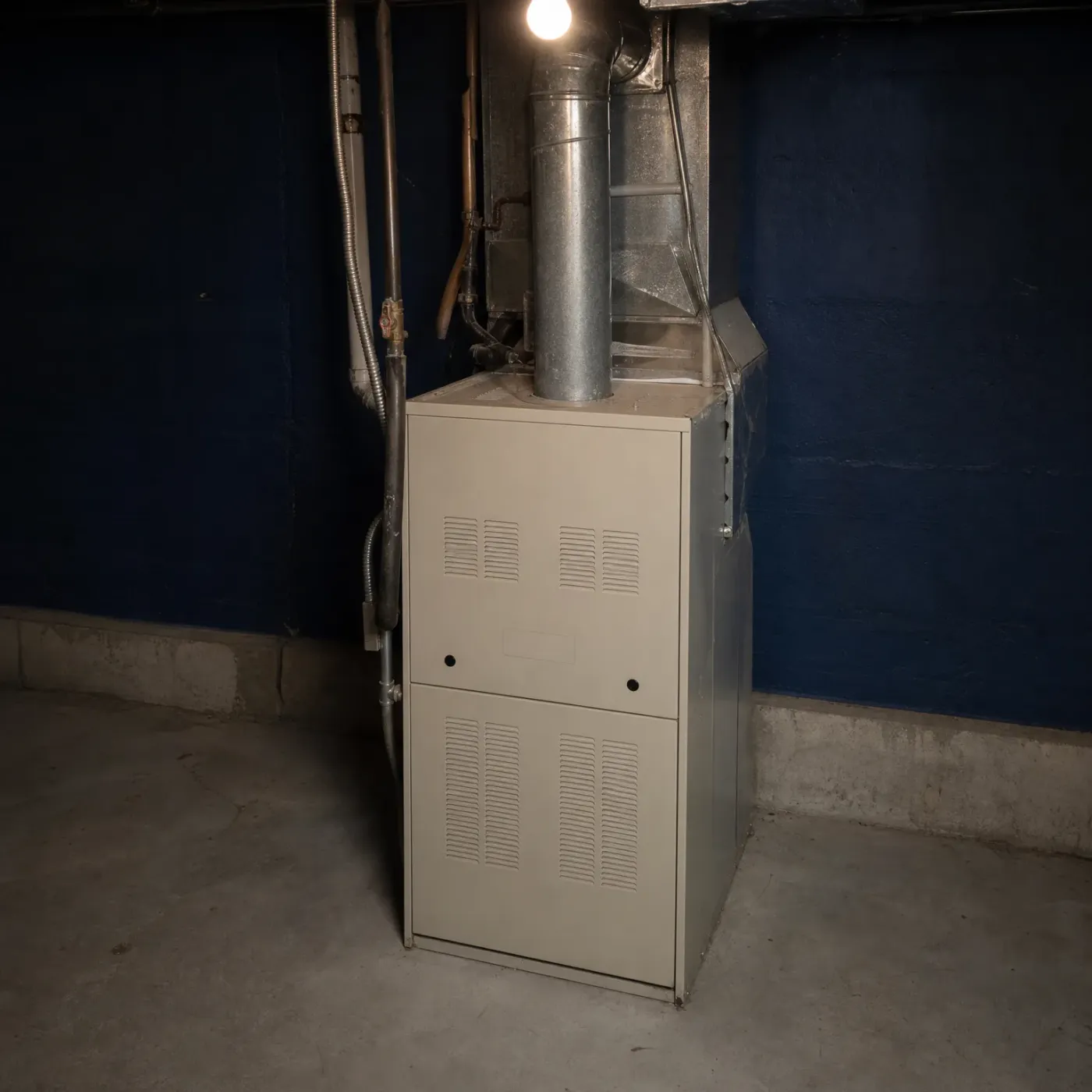
A beige furnace with louvered panels stands against a dark blue basement wall, with metal ductwork, a flue pipe, and conduit above it, lit by a bare ceiling bulb.

Furnace

To heat your home here$1.61per 100,000 Btu

At Ohio's gas and electricity prices, a gas furnace makes the same heat as a heat pump for at least 24% less.

Btu stands for British thermal unit, the standard measure of heat energy.

Where does a heat pump shine?

  • Steady, even comfort

    It eases up and down with the weather. There are fewer swings between too warm and too cool.

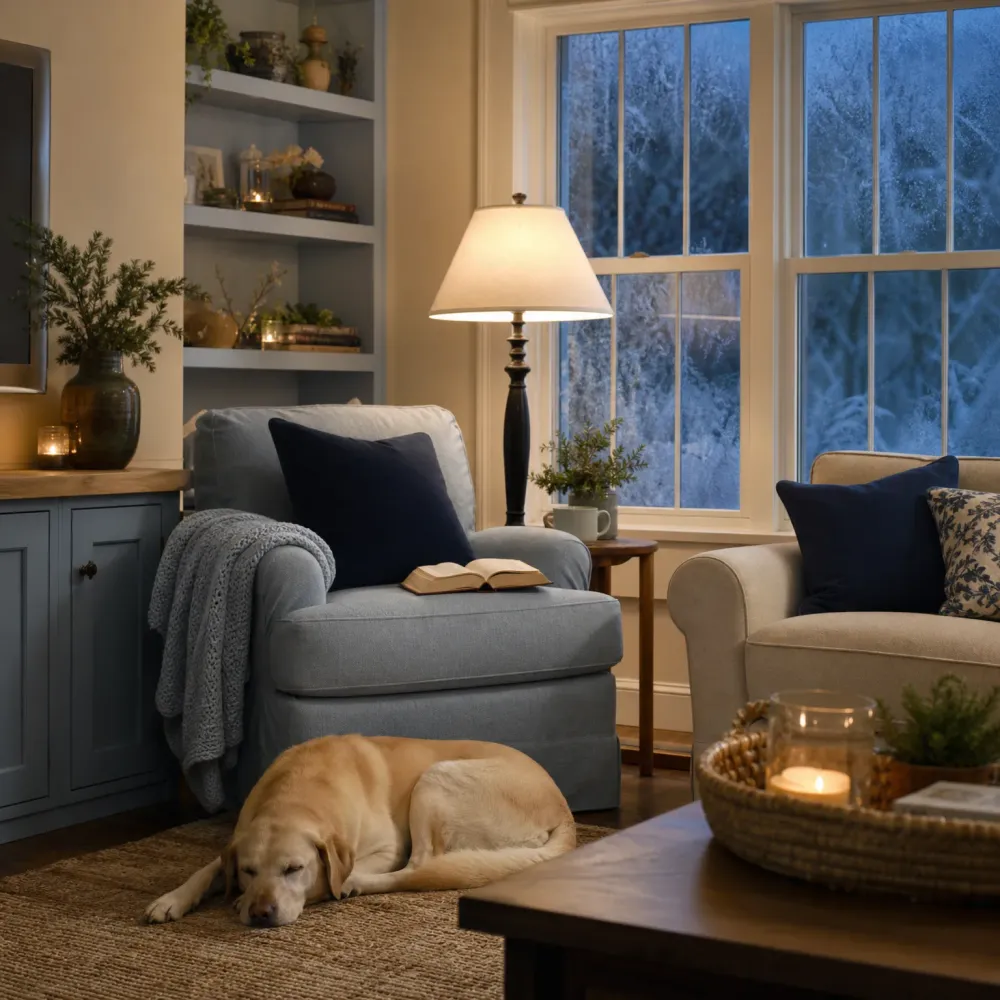
    A dimly lit living room with a lamp, a gray armchair holding an open book and navy pillow, a beige sofa, built-in shelves, and a yellow Labrador sleeping on a woven rug beside a wooden table with candles.
  • Heats and cools in one system

    One machine handles the heat in winter and the cooling in summer. There's no second system to buy or keep up.

    A living room with a white sofa and blue throw, navy built-in shelves holding pottery and books, a wooden coffee table with a bowl and green hydrangeas, and a large curtained window overlooking a garden.
  • No gas line, nothing burning in the house

    There's no gas line to the unit and no flame anywhere in it. Carbon monoxide isn't part of the picture.

    A kitchen with navy blue cabinets, white marble-look counters and backsplash, a stainless steel kettle on a black cooktop under a range hood, a potted plant, bowl of lemons, wooden utensils and cutting board, and a light blue mug on a foreground island beside a sink.

Where does a furnace shine?

  • Runs on the gas most homes here already use

    More than half the homes in Columbiana County already heat with gas, so the line is likely already run to your house. That makes a gas furnace a straightforward swap, no new fuel source to set up.

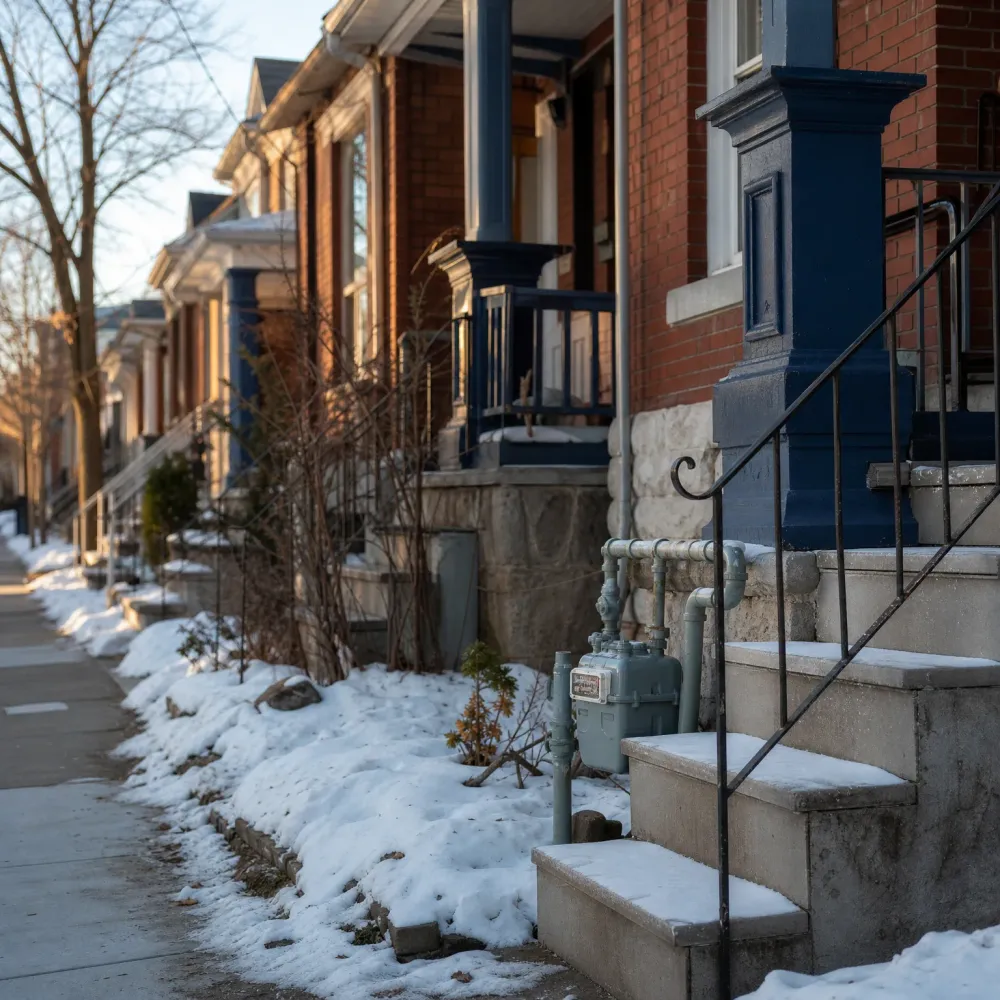
    A row of brick houses with dark blue painted porch columns and stone front steps, with a gas meter and piping beside the stairs and snow covering the ground along the sidewalk.
  • Proven, simple, easy to get serviced

    Parts are easy to find and most repairs are routine. Getting one fixed rarely means waiting on a specialist.

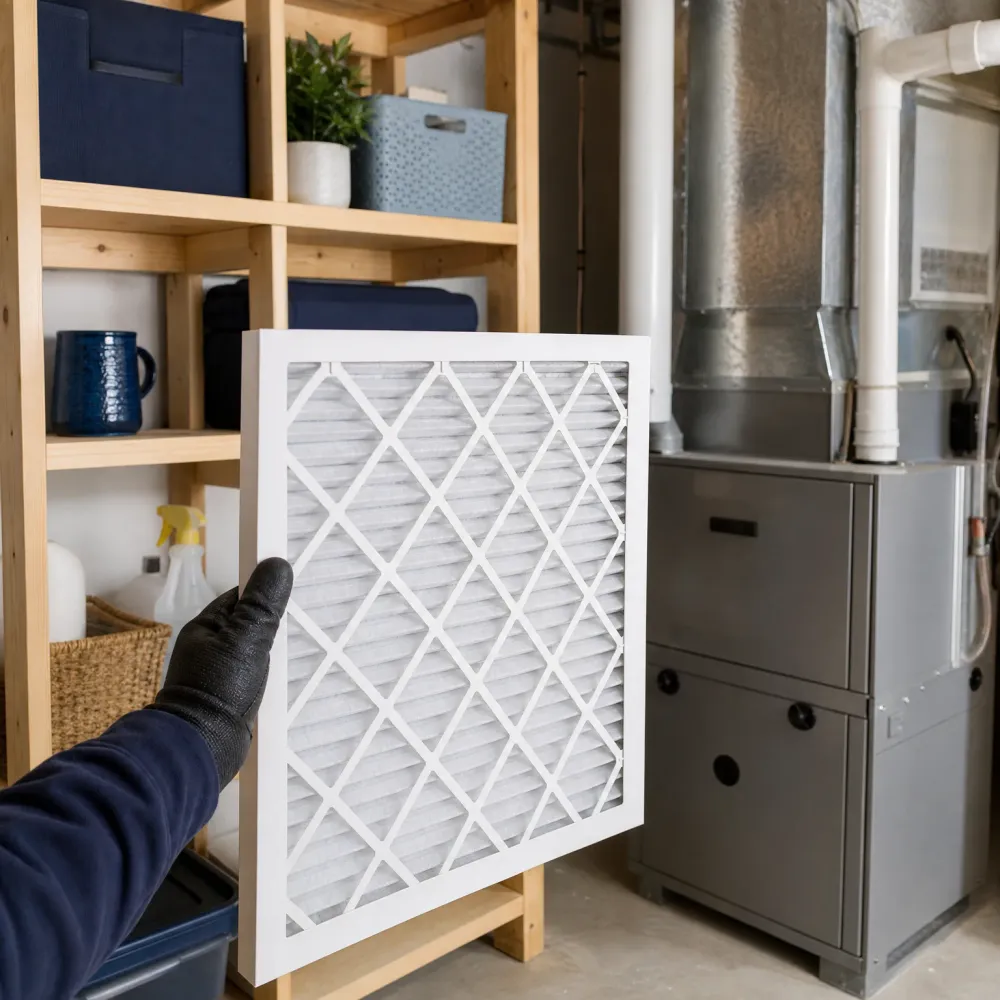
    A gloved hand holds a white pleated air filter in front of wooden storage shelves and a furnace with metal ductwork.
  • Fast, strong heat on demand

    The air coming from the vents feels genuinely hot. That's welcome on a freezing morning.

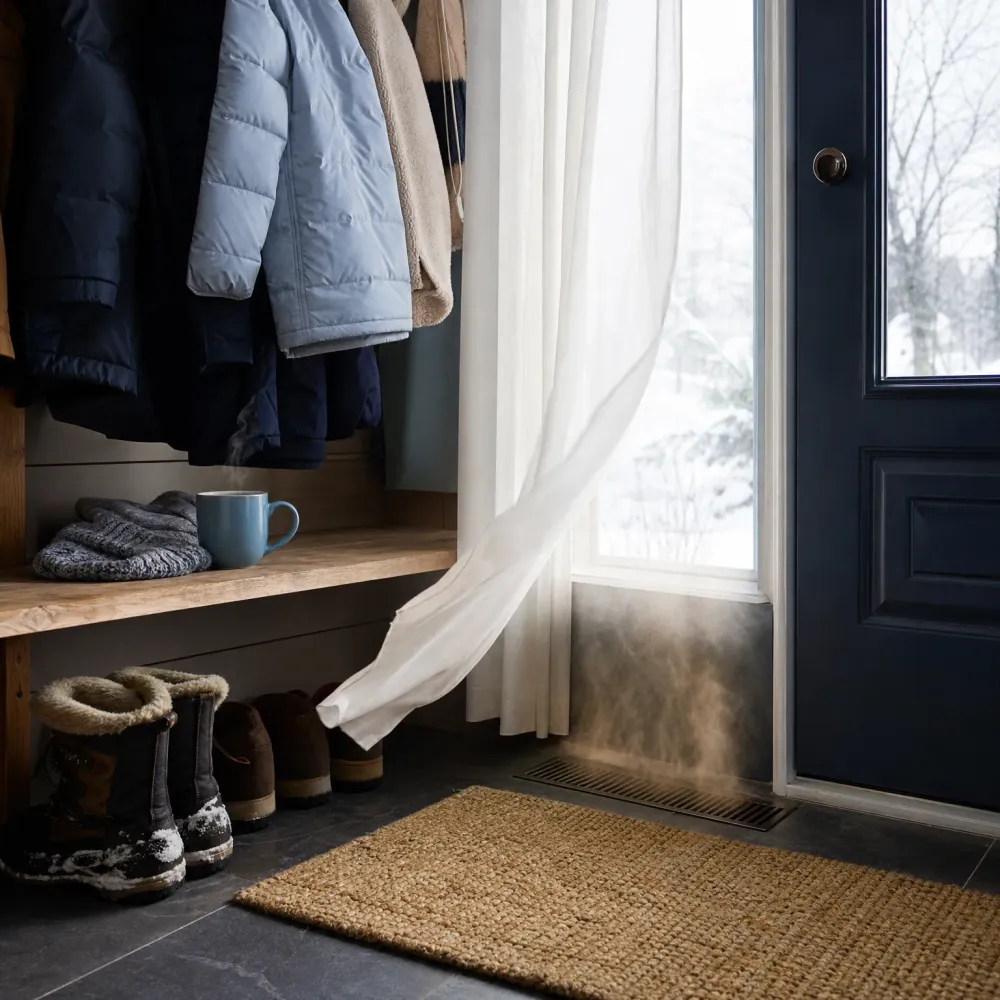
    Entryway with coats hung above a wooden bench holding mittens and a steaming mug, boots on a tile floor, a jute mat, a floor vent with visible warm air, a sheer curtain blowing by a window showing snow, and a dark blue door.

What the cold actually does to a heat pump here

Your winter nights average 22°F. A standard heat pump starts falling behind its rating below 40°F, and below about 35°F it usually needs backup heat to make up the difference. Both marks sit above your average low, not below it.

About 125 nights a year here drop to freezing or below, roughly half the nights across the eight months you run heat. Every one of those nights is already past both marks. That is not a cold snap you plan around once a winter. That is most of the season.

The cold doesn't go much further than that, though. Only about 4 nights a year reach 0°F. A heat pump built to the ENERGY STAR Cold Climate spec has to prove, in third-party testing, that it still makes at least 1.75 units of heat per unit of electricity at 5°F and holds onto most of its rated capacity at that temperature. A standard heat pump carries no such proof. Field tests of these cold climate models found backup heat covering only a small share of the heat between 0°F and 35°F, and running on backup alone was rare even above 0°F.
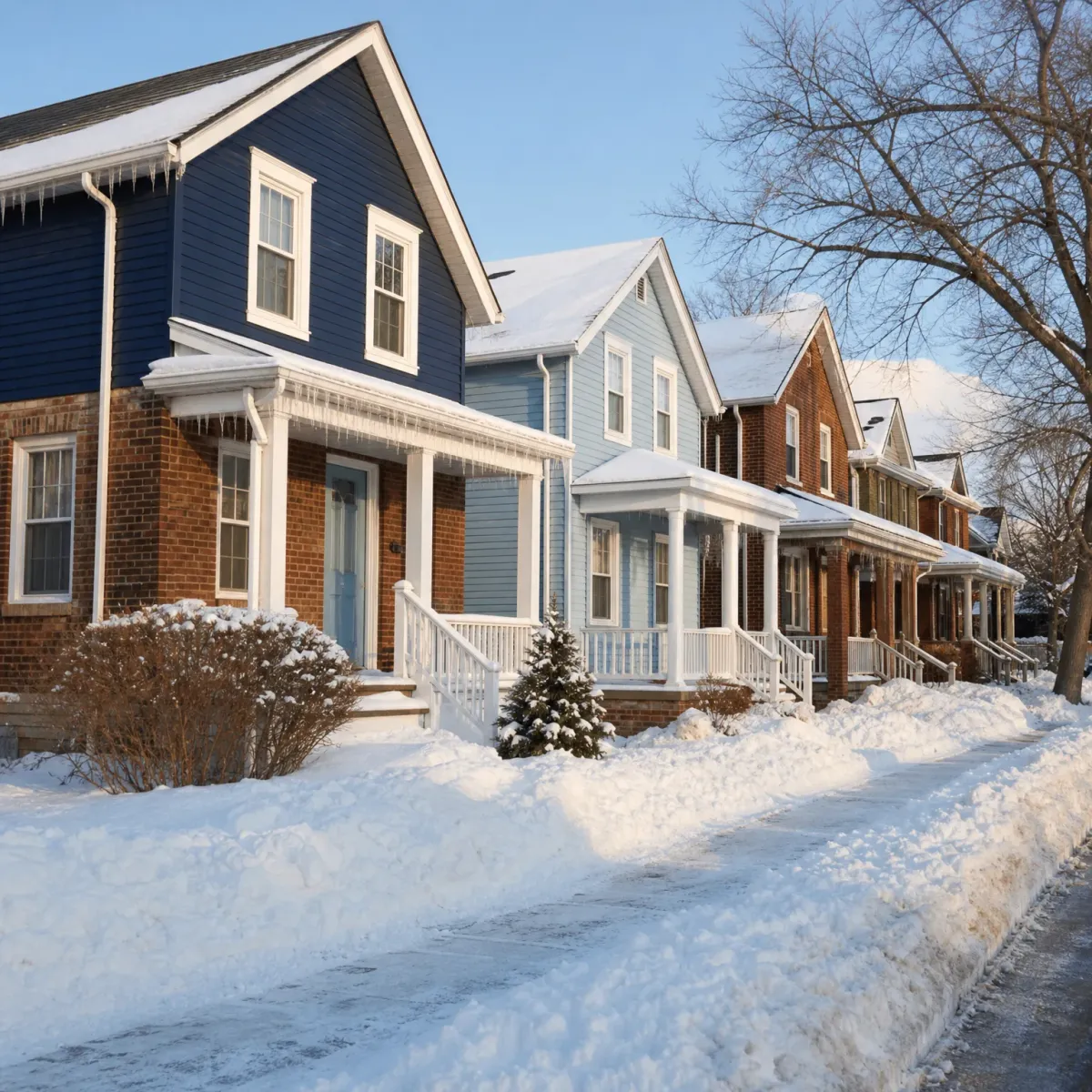
A two-story navy blue house with white trim, a light blue front door and small covered porch, surrounded by snow-covered lawn and bare trees, with a cleared concrete walkway leading to the steps.

What it costs to run, and what that means for your choice

A gas furnace is cheaper to run here. At Ohio's prices, it makes the same heat for $1.61 per 100,000 Btu against $2.13 for a heat pump built to the federal minimum, at least 24% less. Over the eight months you run heat, that gap is the plainest number in this decision.

A little over half the homes in this county already heat with gas, and gas is also the cheaper fuel to run. If your house already has a gas line, a furnace keeps you on the fuel most of your neighbors use.

A furnace only heats. For the three months you run cooling, June through August with afternoons near 81°F, it does nothing, and you need a separate air conditioner for those months. A heat pump does both jobs with one system, which counts for something even though it costs more to run through your longer, colder season. Which way that trade works out for your house is the real question here, not a number either machine can answer by itself.

Sources: NOAA nClimDiv · NOAA 1991–2020 seasonal normals · PNNL Building America guide · PNNL-37127 field study · ENERGY STAR product criteria · EIA SEDS 2024 · 10 CFR 430.32 · Census ACS 2020–2024

A row of two-story houses with brick lower walls, white porches and blue or light blue siding, behind deep snowbanks along a cleared sidewalk under a clear sky with bare trees.

Common questions about heat pumps and furnaces

  • Can a heat pump heat a house through an Ohio winter?

    Yes, but a standard heat pump works harder for less as the temperature drops. Below 40°F it puts out less than its rated capacity, and below about 35°F it typically needs backup heat. The overnight low here averages 22°F across December, January and February, below both marks, and about 125 nights a year hit freezing or colder.

  • Do I need backup heat with a heat pump here?

    Most homes here need it if they rely on a heat pump alone. The average winter night is 22°F, and about 125 nights a year fall at or below freezing, cold enough that a standard heat pump's heating efficiency and output both drop, so something else needs to carry the load on those nights.

  • Can I keep my furnace and add a heat pump?

    Yes, that pairing is called dual fuel. The heat pump carries the house on the milder nights, and the furnace takes over once it gets cold enough that the heat pump's output falls off, below about 40°F, with backup needed more often below about 35°F. Your winter low here averages 22°F and about 125 nights a year hit freezing or below, so the furnace would still have real work to do, not just sit idle.

  • Is a heat pump cheaper to run than a furnace in Columbiana County?

    No, a furnace costs less to run here. At Ohio's average prices a furnace makes the same heat for $1.61 per 100,000 Btu against $2.13 for a heat pump, and that heat pump figure assumes mild weather with no backup heat added in.