When to replace a heat pump in Salem, OH

New system or replacementHeat PumpColumbiana County, OH
Step 1 of 2

What ZIP code is the job in?

Most heat pumps in Salem last around 15 years, and the ones running harder through winters here tend to wear toward the early end of that. Once one gets old, it leans on its backup heat strip more and more to keep the house warm when the outdoor air gets cold, and that strip pulls a lot more power than the heat pump itself does. If yours is running past 12 to 15 years, icing up on the outdoor unit in winter, or short-cycling instead of holding a steady temperature, those are signs the compressor is wearing out rather than a one-time problem a repair fixes. A heat pump that needs a repair every heating season, or one where a repair would cost close to a new one, is usually cheaper to replace than to keep patching. Waiting it out through another winter risks a breakdown on the coldest day of the year, when a repair crew is hardest to get and the backup strip is running nonstop in the meantime.

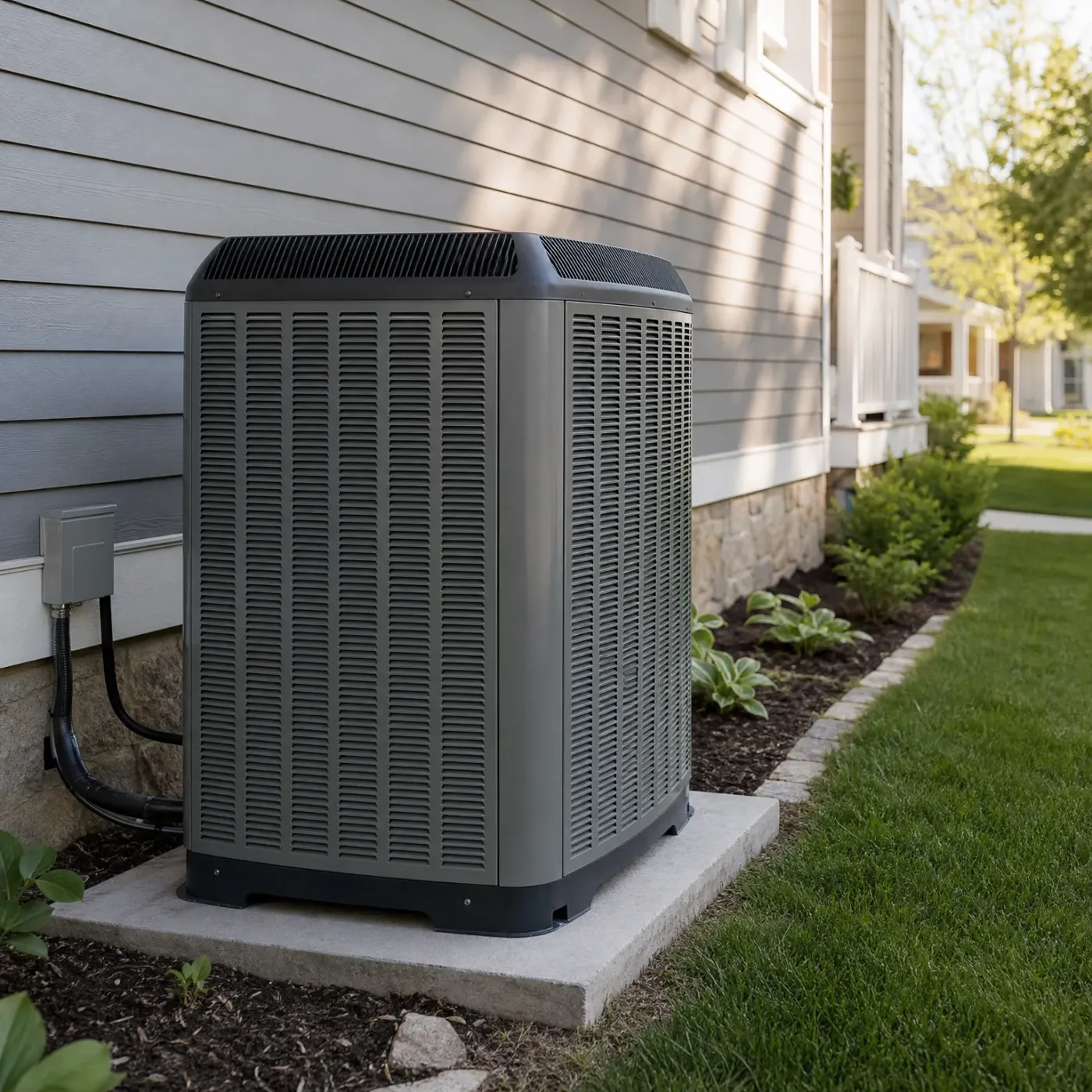
A gray outdoor heat pump unit with a large fan grille sits on a concrete pad beside a house with horizontal lap siding, next to a green shrub, mulch bed, and lawn.

Running clean

A heat pump like this one still has clear coils and good airflow around it. Keep the area around it clear and have it checked each year, and it will hold its efficiency and heat the house the way it's supposed to, even on the coldest Columbiana County mornings.

A dirty outdoor air conditioner condenser unit with debris on its coil grille, sitting on a concrete pad beside a light-colored horizontal siding wall, with bare dirt ground in front and a shrub at right.

Choked and struggling

This unit's fins are packed with dirt and leaves. Air can't move through it, so it works harder to pull heat out of the cold air and harder still to push warm air inside. That strain adds up, and it's often what pushes an aging system past the point of fixing.

Is your heat pump struggling to keep up this winter?

You'll notice it before you can name it. The air coming out of the vents feels cooler than it used to, even though the system is running. It runs longer stretches and cycles more often, and you hear the backup heat kick in more than it should, that extra hum or the breaker working harder, especially on the colder nights. Rooms farther from the unit stay chilly no matter how long it runs. Frost builds up on the outdoor unit and takes longer to clear. Your power bill climbs past what past winters cost you for the same cold. Left alone, a heat pump in this shape keeps leaning on backup heat strips to make up the difference, and that's the most expensive way to heat a house in Columbiana County.

A gray outdoor condenser unit on a concrete pad beside a white horizontal-siding house, with refrigerant lines and conduit running to a wall-mounted disconnect box, bare soil in front and a green shrub at left.

Working as it should

A heat pump like this one sits clear of the siding, with its lines and disconnect box in good shape and nothing blocking the airflow around the cabinet. It cycles on, satisfies the thermostat, and shuts off. Nothing about it asks for attention.

An outdoor air conditioning or heat pump condenser unit on a concrete pad beside a house with horizontal vinyl siding, a gray electrical disconnect box and conduit on the wall, and a concrete walkway in the foreground.

Showing its age

Dirt has built up across the coil and the cabinet has the worn look of a unit that has been through a lot of Columbiana County winters. A heat pump in this shape works harder to move the same heat, and that strain shows up on the power bill before it shows up as a breakdown.

An older man with gray hair and a beard, wearing a dark jacket dusted with snow, stands smiling in a dimly lit hallway with lamps and a living room visible behind him.
A gray-haired, bearded man in a dark snow-dusted coat stands smiling in a dimly lit entry hall with a staircase, a lit table lamp, a framed picture, and a living room visible through a doorway.
An older man with white hair and a beard, wearing a dark snow-dusted coat and scarf, stands in a warmly lit interior hallway with a framed landscape picture, a table lamp and a potted plant behind him, and a snowy view through a window at left.
A gray-haired, bearded man in a dark coat dusted with snow stands smiling in a dimly lit room with a lamp, mirror, framed art, and a sofa in the background.

A heat pump doesn't burn anything to make heat. It pulls heat from outside air and moves it inside, and that gets harder the colder it gets. Somewhere around 30 to 35 degrees, it can't keep up on its own anymore and the backup heat strips kick in to cover the difference. That's normal. What's not normal is leaning on those strips more and more each winter, because that's electric resistance heat, the most expensive kind there is. The reversing valve is what flips the system between heating and cooling. If it sticks, you can end up with one and not the other. Frost builds up on the outdoor coil in cold weather, so the system runs a defrost cycle to clear it. An aging unit runs these more often, and you'll see it on the power bill before you see it anywhere else. The compressor is the part that carries the load, and once it's wearing out, there's no patching it. The outdoor unit gets replaced.

How a heat pump actually fails

  • A heat pump moves heat instead of burning fuel, so below around 30 to 35 degrees it leans on electric backup heat strips to keep up.
  • The reversing valve is what lets the system switch between heating and cooling, and a stuck valve can leave you with heat but no cooling, or the reverse.
  • Defrost cycles clear frost off the outdoor coil in winter, and a unit that's struggling will run these more often, which shows up as higher bills.
  • The compressor is the part that wears out most, and once it starts to go, the fix is a new outdoor unit rather than a patched-up one.
  • An oversized backup strip bill through a Columbiana County winter is often the first sign the heat pump itself isn't carrying its share of the load anymore.
  • Refrigerant charge has to be exact for a heat pump to move heat efficiently in both directions, and an aging system that's low will cost more to run every month it's not fixed.
A gray outdoor condenser unit on a concrete pad beside a beige vinyl-sided house, with a wall-mounted disconnect box, flexible conduit, mulch bed, shrubs and a concrete walkway in front.
A unit like this one sits clean against the siding, with the lines and disconnect box clear and nothing blocking the grille.
An outdoor air conditioning condenser unit on a concrete pad beside a house with horizontal siding and a concrete foundation, with refrigerant lines running to a wall-mounted disconnect box and shrubs at left.
Once the grille gets this dirty, the coil behind it can't shed heat the way it needs to, and the system works harder for less warmth.

Signs the heat pump is failing

  • Defrost cycles run more often as a heat pump ages, because a worn compressor takes longer to melt frost off the outdoor coil.
  • A failing reversing valve can get stuck mid-cycle, leaving you with cool air blowing when the thermostat is set to heat.
  • Refrigerant leaks show up as ice forming on the outdoor unit even when the weather isn't cold enough to explain it.
  • An aging compressor draws more amps to do the same work, which is part of why older units cost more to run through a Columbiana County winter.
  • If the backup heat strips kick on constantly instead of only during the coldest stretches, the heat pump itself is losing its ability to carry the load.
  • A unit nearing the end of its life often short cycles, turning on and off in quick bursts instead of running a full heating cycle.

A heat pump doesn't quit all at once. It tells you first, usually through the defrost cycle. That cycle exists to clear frost off the outdoor coil, and a healthy unit runs it briefly, then gets back to heating. An older compressor takes longer to do that same job, so you'll notice the outdoor fan stopping and starting more often than it used to, especially on cold, damp days.

Watch the reversing valve too. It's the part that switches the system between heating and cooling, and when it starts to stick, you can end up with cool air coming through the vents even though the thermostat is calling for heat. That's a valve problem, not a thermostat problem.

Ice on the outdoor unit is worth paying attention to regardless of the temperature outside. Some frost in winter is normal. Heavy ice when it isn't especially cold points to a refrigerant leak, and a system low on refrigerant has to work harder to move the same amount of heat.

That extra effort shows up on the power bill, since an aging compressor pulls more current to do what it used to do on less. It also shows up as the backup heat strips running more than they should. Those strips are meant for the coldest stretches of a Columbiana County winter, not for every cycle. If they're carrying the load most of the time, the heat pump underneath them isn't keeping up anymore.
An outdoor air conditioner condenser unit on a concrete pad beside a house with horizontal lap siding, with a gray electrical disconnect box and conduit on the wall and bare dirt and mulch in the foreground.
Before you get your heat pump installation
A gray outdoor condenser unit on a concrete pad beside a house with horizontal lap siding, a conduit and disconnect box on the wall, a shrub with white flowers at right and evergreen foliage at left.
After you get your heat pump installation

Get the right pro for your heat pump

A heat pump that's leaning harder on its backup strips every cold snap is costing you more on an electric bill that's already not cheap around here, and a system stuck mid-cycle because of a worn reversing valve can leave you with no good heat on the nights you need it most. At some point a repair just buys a few more months before the next one. Deciding whether this is that point, and then finding someone who'll give you a straight answer instead of an upsell, takes time you may not have in the middle of a Columbiana County winter. Rather than calling around to different companies, explaining the same symptoms over and over, and weighing quotes that aren't really comparable, you can hand that off. One contractor who knows these systems and this climate can look at what you've got and tell you whether replacing it now makes sense, while you keep the house warm in the meantime.

What a Columbiana County winter asks of it

Salem sees real cold, not just a few hard nights. A heat pump here runs its defrost cycle often, since outdoor coils ice up whenever the air is cold and damp, and each defrost cycle briefly reverses the system and dumps cold air inside before it switches back. An older compressor takes longer to clear that frost, so you feel more of those cold blasts as the unit ages. Below around 30 to 35 degrees, the heat pump can't pull enough warmth from the outside air alone, and the backup strips carry more of the load. A unit nearing the end of its life leans on those strips earlier in the fall and later into spring, and electric heat strips cost more to run than the heat pump itself.

What replacement changes about that math

A new heat pump recovers from defrost faster and holds its output lower into the cold before it needs backup heat. That matters here specifically, since Columbiana County winters push a heat pump into backup mode for stretches most other places don't see. A tighter, newer system also means the thermostat isn't calling for backup strips every time the temperature drops into the 20s, which is where the electric bill takes the hit on a system that's falling behind. Instead of calling around to find someone who installs heat pumps suited to this climate, explaining the situation more than once, and sorting through quotes on your own, you can get matched with a contractor who handles that and let them reach out to you directly.

Power here costs 17.47 cents per kilowatt-hour

At 17.47 cents per kilowatt-hour, every bit of backup strip heat your aging heat pump pulls in shows up on the bill fast. A unit nearing the end of its life leans on those strips more each winter, and at this rate that adds up quick.

EIA-861 2025

Repairing an aging heat pump means paying again for parts on a system that's already worn, and you still end up guessing how many winters you bought. A compressor or reversing valve job on a unit past 12 or 13 years can cost close to what you'd put toward something new.

Replacing it gets you a heat pump sized and installed for this house, backed by a warranty instead of a patch. It'll hold up through Columbiana County winters without leaning on backup strip heat the way the old one did toward the end.

How cold does it really get here, and how long does your heat pump work for it?

  • Winter nights average 22°F

    Winter nights here average 22°F, and that's the range where an aging heat pump leans hardest on its backup strips.

  • Heat runs October through May

    Heat runs eight months out of the year in this county, October through May, which is most of the year on your system.

  • Cooling runs June through August

    Cooling only covers June through August here, so the bulk of the wear on your heat pump comes from the long heating stretch.

NOAA nClimDiv 1991-2020

A man in a dark blue shirt stands in an open front doorway of a stucco and wood-clad house, facing a blond woman seen from behind in the foreground on a stone walkway.

Knowing where your heat pump stands

A heat pump around 15 years old, leaning harder on its backup strips each winter, costing more on every bill, is telling you something plain. Age, rising power draw, and a harder time keeping up on the cold nights are the signs that matter, and if your system shows more than one, replacing it is the sounder move over repairing it again.

Once you know where your system stands, the next step is finding someone to look at it in person and tell you what it actually needs. That usually means calling around, explaining the same thing more than once, and sorting through quotes that don't quite match up. Answer a few questions about your heat pump and your home, and a contractor who works on systems like yours in Columbiana County will reach out to you directly, so you're not the one doing the legwork to get a straight answer.

A light gray sofa with gray and beige textured throw pillows and a cream knit blanket beside a white-framed window, with a small round side table holding a ceramic vase and potted greenery.
A gray outdoor condenser unit on a concrete pad beside a light-colored lap-siding house, with a disconnect box and refrigerant lines on the wall, mulched shrub bed and lawn nearby.

A pro who works on heat pumps

Match me with a pro

Describe the project once instead of to every installer.

No fee to send it, and nothing to sign.