



What the cold does to a heat pump here
Your winters are the whole question. Heat runs eight months a year in Licking County, October through May, and the overnight low averages 22°F across December, January and February. That number matters because a standard heat pump starts losing ground before it even gets that cold. Below 40°F it puts out less heat than its rating says. Below about 35°F it typically needs backup heat to make up the difference. Your average winter night is below both marks.
About 125 nights a year here fall to freezing or below, roughly half the nights across the whole heating season. Every one of those nights asks a standard heat pump to work below the point where it runs at full strength. Only about 5 nights a year reach 0°F, so the deep cold is rare, but the everyday cold that cuts into a heat pump's output is not rare at all. It is half your winter.
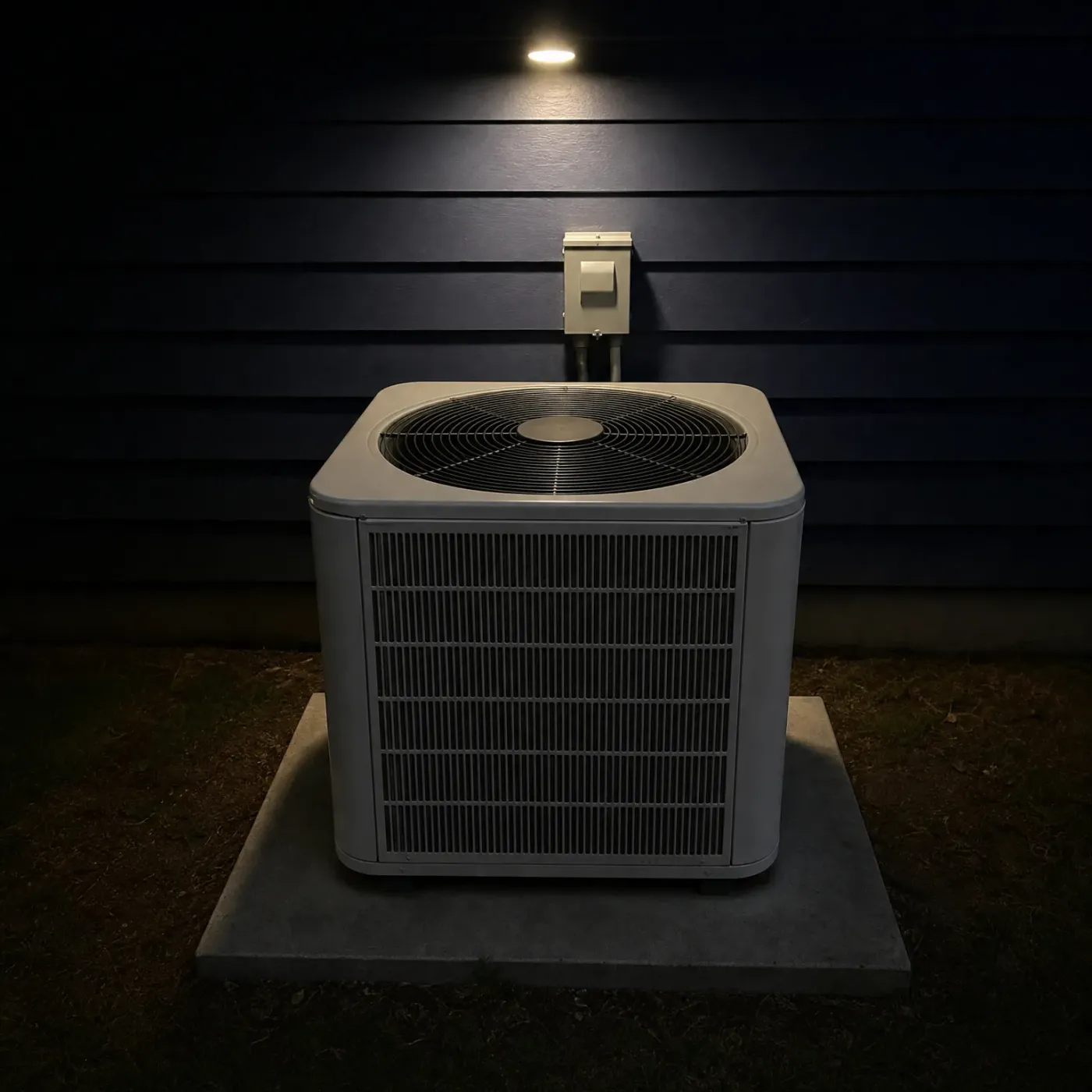
This does not rule out a heat pump. It means the heat pump has to be the right kind. A unit carrying the ENERGY STAR Cold Climate label is tested to hold at least 70 percent of its rated heat at 5°F and still produce 1.75 units of heat per unit of electricity at that temperature. In field tests of cold-climate heat pumps running through two winters in real homes, backup heat covered only a small share of the output between 0°F and 35°F, and the units almost never fell back on backup heat alone above 0°F. A furnace does not have this problem at all. It burns gas and makes full heat whether it is 30°F outside or minus 10.