
Clean and clear
The fins are open and the coil can shed the heat it just pulled from your house. Air moves through freely, so the system doesn't have to run as long to pull moisture out of a muggy afternoon.

A heat pump cools your home by moving heat out of the air, and in Lake County's humidity that air carries a lot of moisture along with it. The system has to pull that moisture out too, which takes more work than cooling dry air ever does. On the stickiest days the coil can't keep up, so the house feels cool but still damp, or the system runs longer and longer without getting ahead of the heat. A dirty coil, a low refrigerant charge, or a blower that isn't moving enough air all make this worse, because each one cuts into the system's ability to wring water out of the air it's cooling. If your heat pump has been running nonstop through a humid stretch and the house still doesn't feel right, something in the system likely needs attention rather than just more runtime.
Winter nights average 23°F
At 23°F, a heat pump has to pull heat from cold outside air, and that's the hardest job it has all year.
Heat runs October through May
Eight months of heat means your heat pump's switchover and defrost cycles get used far more than the compressor was idle for.
Cooling runs June through August
Three months of cooling in heavy humidity means short, intense runs where moisture removal is the main load on the system.
NOAA nClimDiv 1991-2020

On a mild, dry afternoon, your heat pump cools the air and pulls out moisture without much trouble. The coil stays cold enough to condense water out of the air steadily, and the blower moves that air through the house fast enough that it never feels damp. You'll notice the system cycling off now and then. That's normal. It means the load is light enough for the equipment to rest.

On a hot, sticky day off Lake Erie, the same system can cool the air to the temperature you set and still leave the house feeling damp. The coil can only pull out so much moisture per hour, and when the air outside is heavy with it, the system runs longer just to keep up. If the charge is low or the coil is dirty, that gap between temperature and comfort gets worse, and a repair is what closes it.
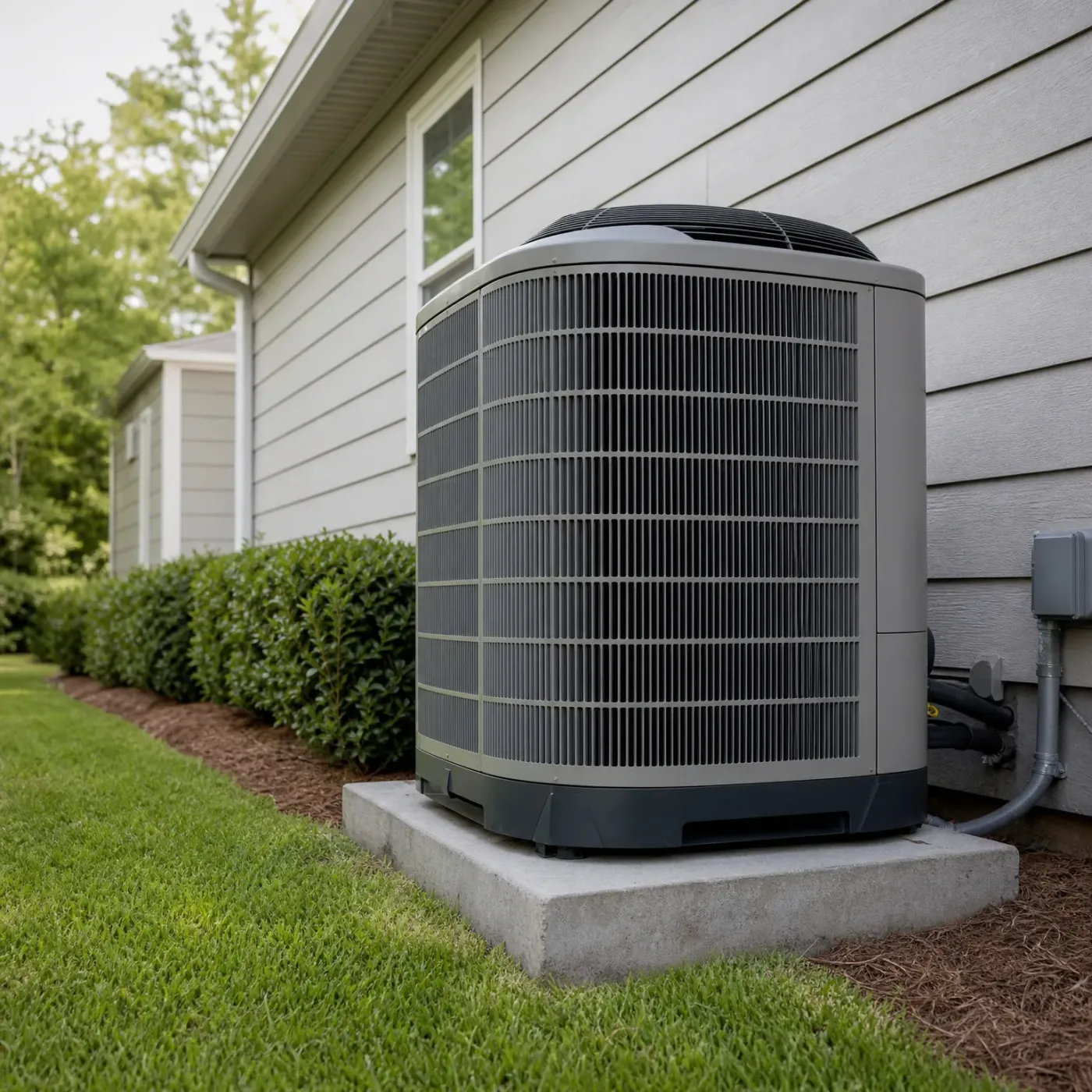
The fins are open and the coil can shed the heat it just pulled from your house. Air moves through freely, so the system doesn't have to run as long to pull moisture out of a muggy afternoon.

Dirt across the fins and base blocks airflow before it reaches the coil. The unit runs longer to do the same job, and on a humid Lake County day that extra strain shows up as a house that still feels damp.


Explain the heat pump problem once instead of to every shop in Lake County.
Your request goes to a Lake County pro who takes heat pump jobs.
Sending the form costs nothing.
You'll notice it in the rooms, not the thermostat. The number on the wall might say 72 and the house still feels sticky, the air thick enough that skin stays damp after a shower. Bedding and towels feel clammy even with the AC running. You might hear the system running long after it should have shut off, or cycling on and off every few minutes on the muggiest afternoons. Some rooms stay cooler than others. If this goes on, moisture sits in places it shouldn't, on windows, in closets, along baseboards, and that's how mold and musty smells get started. For a household trying to keep everyone comfortable, a system that runs constantly but never quite catches up is the clearest sign something needs a look.

Summer air in Lake County holds a lot of water, averaging a dew point of 60°F across June, July and August, according to NOAA climate records. Past the mid-50s, air starts to feel heavy on skin, and at 60°F your heat pump has to run longer just to wring that moisture out before the house feels dry. The coil does the work, condensing water out of the air it pulls in, and the more water in that air, the longer it has to stay running to catch up. That's why the thermostat can read 72 and the house still feels damp at the same time.
NASA POWER T2MDEW







Lake County summers ask a lot of a heat pump. The moisture in the air, the long stretches of runtime, the switch back and forth between heating and cooling modes within the same year, all of it adds up to a system working harder here than it would somewhere drier or milder. Knowing that doesn't make the damp air in your house any easier to live with when the system can't keep up.
What matters now is figuring out whether what your system is doing is normal strain or a real problem, and getting someone who can look at your equipment and tell you which. Instead of searching through contractors, calling a few, explaining the same thing about your house and your system each time, and sorting through quotes to guess who actually knows heat pumps, you can get matched with a contractor suited to what you're dealing with. They'll reach out to you directly about it.






Fill out one short form instead of calling around.
You're not committing to anything by asking.