 Get matched
Why heat pumps freeze up in cold Lake County winters
Describe your heat pump job, and a local pro who handles it gets in touch.
A little frost on the outdoor unit is normal. Your heat pump runs a defrost cycle to clear it, then goes back to work. What's not normal is ice building up on the coil, the lines caked solid, or the unit running and running without putting out warm air. In a Lake County winter, once the outdoor temperature drops into the teens and stays there, a heat pump that's low on refrigerant or has a failing defrost control won't catch up. Ice wins.
That's a repair call, not something to wait out. A heat pump that can't shed ice is also struggling to heat your house, and the outdoor unit can take damage the longer it runs iced over.
Finding someone to look at it is its own chore. You'd normally be searching for HVAC contractors near you, calling a few, explaining the same problem each time, then waiting on quotes to compare. This page skips that part. Answer a few questions about your system and what it's doing, and you'll be matched with a contractor who works on heat pumps in Lake County winters and knows what that ice is usually telling you.
No promise here about what they'll find once they're out at your unit. Could be a low charge, a bad sensor, a defrost board that's stopped switching over. But you won't be the one tracking down who to ask. The contractor matched to you will reach out, and you take it from there.
A heat pump freezes up when it pulls moisture out of cold air faster than its defrost cycle can clear it. Lake County winters give it plenty of chances. The outdoor coil runs colder than the air around it, so moisture in that air lands on the coil as frost. A healthy system senses this, reverses itself for a few minutes, melts the frost, and goes back to heating. When that cycle can't keep up, usually because the system is low on refrigerant, the defrost control has failed, or a fan motor isn't moving air the way it should, ice builds instead of clearing. Once ice covers the coil, the unit can't pull heat from the air at all, and it may run constantly while the house stays cold. That's the point where it needs a repair, not another cycle.


Winter nights average 23°F
At 23°F, the outdoor coil is working in air that's holding what little moisture it can, and your heat pump has to shed frost on top of keeping the house warm. A unit struggling at that temperature night after night needs its defrost cycle checked, not just watched.
NOAA nClimDiv 1991-2020




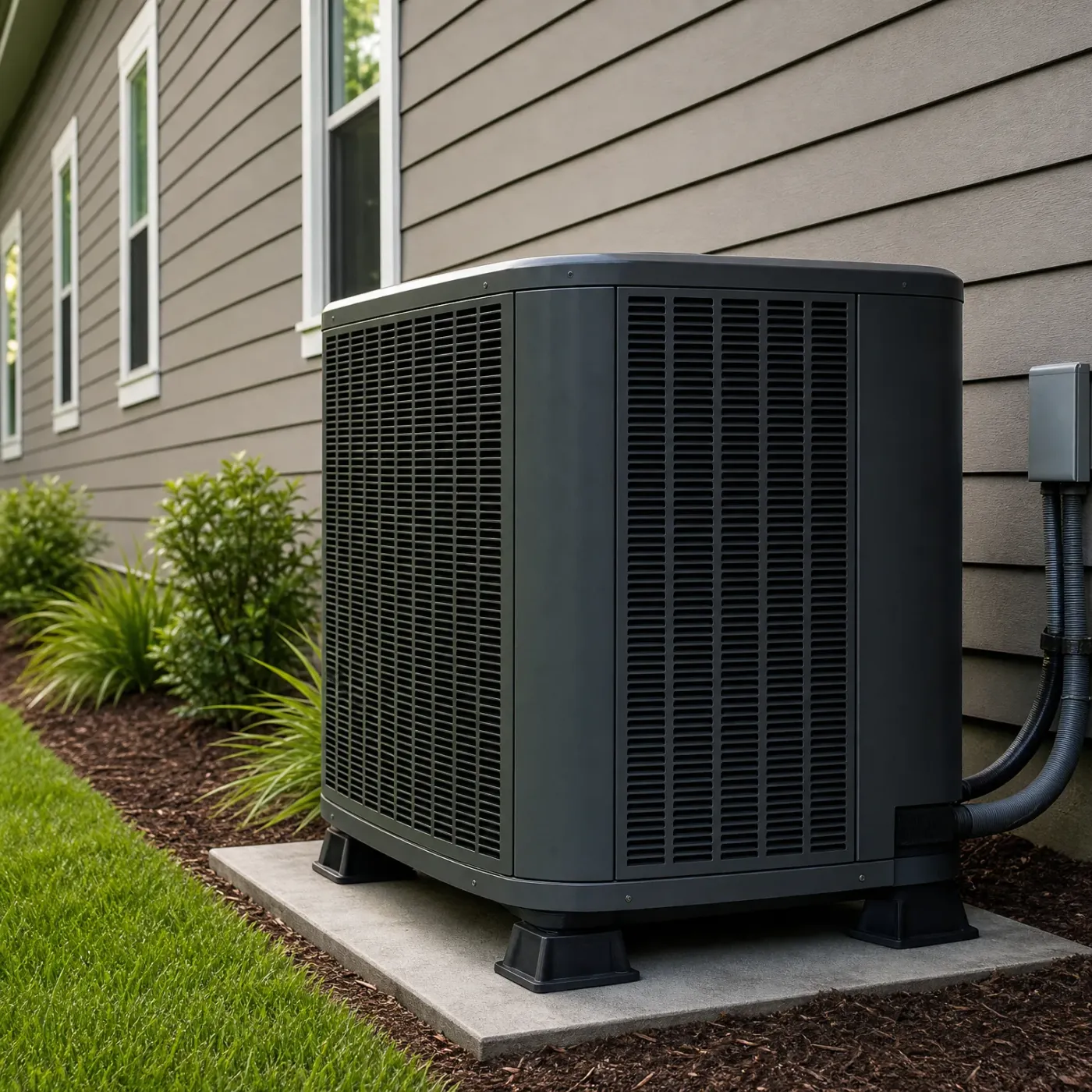
Get matched with a heat pump pro in Lake County
Answer a few questions instead of calling shop after shop.
Get matched with a pro who works on heat pumps in Lake County.
Sending the form costs nothing.
Normal Defrost or a Failing Cycle
Normal defrost
- The unit runs for a few minutes, you might see steam rising off the outdoor coil, then it's back to heating.
- Frost clears evenly across the coil, not just in one spot or along one edge.
- This happens on its own schedule through a cold night and you'd never notice unless you walked outside.
- The reversing valve, the defrost board and the outdoor fan all do their part and shut it down on time.
Failing cycle
- The defrost cycle kicks on but the ice doesn't clear, or it clears in one section and stays thick everywhere else.
- A stuck reversing valve or a bad defrost sensor can keep the system from ever switching into defrost mode.
- The outdoor fan keeps running during what should be a defrost cycle, which blows cold air right back onto the coil.
- You'll hear the unit cycling on and off more than usual, working harder without the ice going anywhere.
- Warm air stops coming out of the vents even though the system sounds like it's running fine.
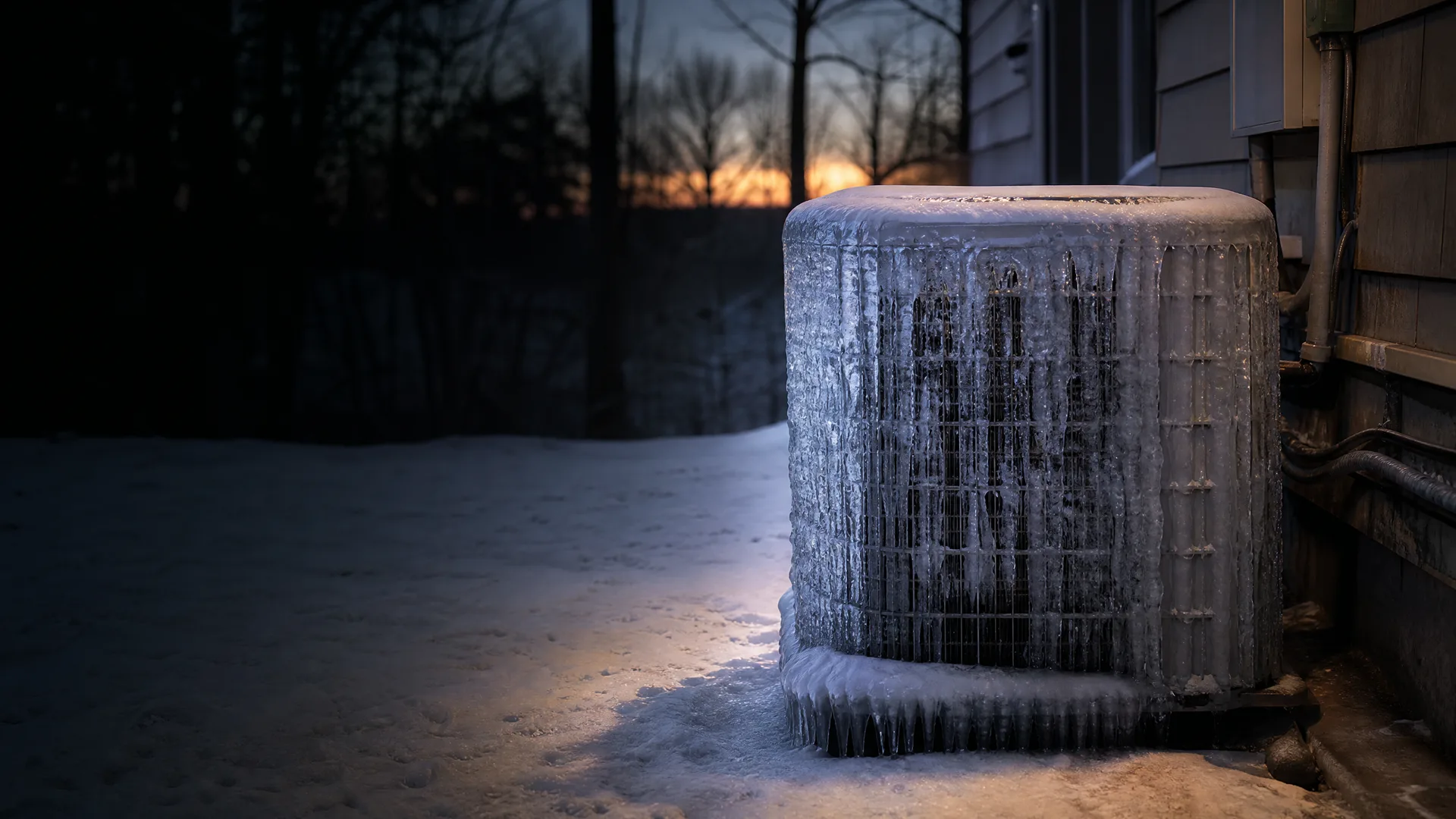
You go out for the paper a little after six and the side yard is still dark. The outdoor unit is sitting there with ice gripping the whole cabinet, not just a frost skin, actual ice, thick over the coil and down the refrigerant lines. It's 23 degrees and climbing slow. The fan isn't turning. You crouch down and the thing is just humming, pulling current, going nowhere, like it gave up sometime after midnight and nobody told it to stop trying. Inside, the air coming out of the vents is cooler than it should be for a Tuesday morning in January. The dog won't go near the unit. You stand there in your coat for a minute, breath showing, looking at the ice and thinking about the thermostat reading two degrees under where you left it.

Where that leaves you
Frost that clears on its own is the unit doing its job. Ice that stays, builds, or keeps coming back after defrost means something in that cycle isn't working the way it should, and Lake County's cold gives it every chance to show. The outdoor unit can't tell you which part failed. It just stops keeping up.
Finding out means getting someone out to look at the defrost board, the sensor, or the reversing valve before another cold night does more damage. That's the part that takes the time: calling around, explaining what the unit's doing, waiting on quotes from people who may or may not work on heat pumps. Answer a few questions about what you're seeing and you'll be matched with a contractor who handles heat pumps in this area, and they'll reach out to you directly. No more calls to make yourself.


A local pro for your heat pump repair
Describe your heat pump job once, to one pro.