
Heat pump frozen over in Chardon, OH
Send the request today and stop worrying about who to call.
Hand it offWhy is my heat pump frozen over?
A frozen outdoor unit is normal for a heat pump in cold weather, up to a point. You've probably seen a thin layer of frost before and it cleared on its own. But when the whole cabinet is coated in ice and the unit still isn't keeping the house warm, that's a different problem, and one worth looking at before it gets worse.
A thick coat of ice means the defrost cycle isn't working right
A heat pump pulls heat out of the outdoor air, and in Chardon's cold winters that means the outdoor coil runs cold enough to collect frost. A working unit clears that frost on its own a few times an hour, switching briefly into cooling mode and running the fan to melt it off. When the defrost board, a sensor, or the reversing valve fails, that cycle stops happening, and ice builds up layer on layer instead of melting away. Once the coil is fully iced over, the unit can't pull heat from the air at all, and you'll likely feel cool air at the vents or notice the system running nonstop without warming the house.




Why does a Chardon winter work your heat pump so hard?
Winter nights average 21°F
Overnight lows here average 21°F in December, January and February. At that temperature a heat pump defrosts often, and a struggling defrost cycle is usually how the ice problem starts.
Heat runs October through May
Heat runs October through May in Geauga County. That's eight months of the outdoor unit cycling in cold air, which is eight months of chances for frost to build up faster than it melts off.
Cooling runs June through August
Cooling only runs June through August here. The other eight months, your outdoor unit is doing the harder job, and that's when a frozen coil is worth a second look.
NOAA nClimDiv 1991-2020
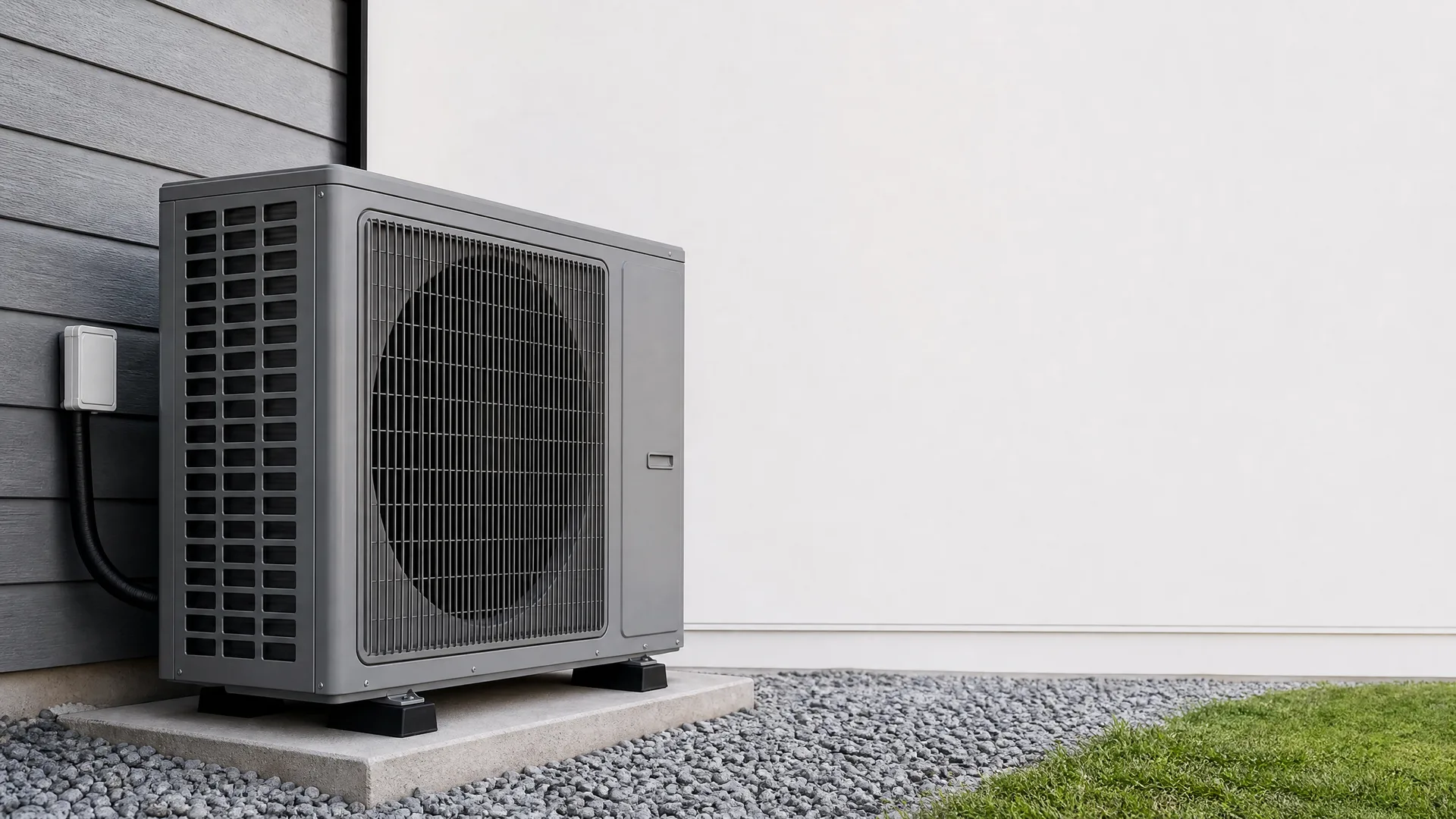
Normal frost clears on its own
A light coat of frost on the coil during a defrost cycle is nothing to worry about. The unit runs its defrost, the frost melts, and within a half hour or so the cabinet looks clear again. You might see this a few times on a cold night and never think twice about it. If that's what you're looking at right now, a thin white layer that comes and goes, the unit is doing what it's built to do.
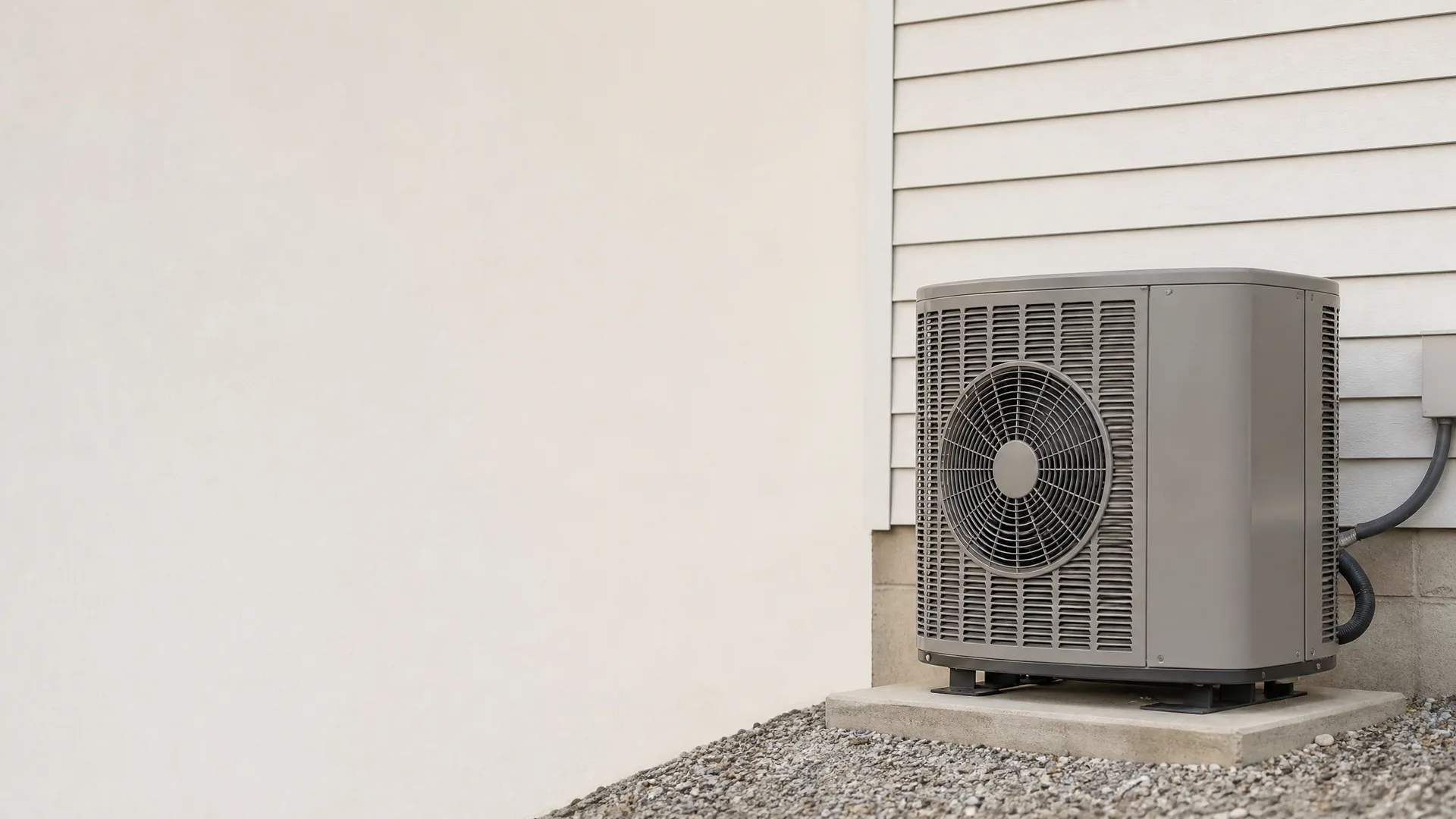
Solid ice means defrost failed
When the cabinet is coated in ice, the fan is packed solid, or ice has built up around the base of the unit, the defrost cycle isn't keeping up or isn't running at all. This won't clear on its own, and running the system this way can damage the compressor. A bad defrost control board, a failed sensor, or a fan motor that's stopped turning are common reasons. This is the point where it needs a technician, not more time.
Normal Defrost or a Failing One
Defrost cycle working
- The frost sits mainly on the coil and clears within a half hour or so without anyone touching the unit.
- You can hear or feel a shift when the unit switches into defrost, then back to normal heating.
- Steam or water coming off the unit during a thaw is the defrost doing its job, not a sign of trouble.
- The fan still turns and the unit still puts out warm air at the registers while this happens.
- This might happen a few times on a cold night and the cabinet looks clear again by morning.
Defrost cycle failing
- Ice covers the whole cabinet, not just the coil, and it's still there hours later.
- The outdoor fan is iced in place and won't turn, or you can see it straining against the ice.
- The unit keeps running but the air at your registers has gone cold or lukewarm.
- Ice has built up around the base of the unit or spread to the refrigerant lines running to the house.
- The same spot keeps icing over even after it looked clear earlier that day.


It's off your list after this

Explain the heat pump problem once instead of to every shop in Geauga County.
There's no charge for the request.
How a defrost cycle works
- A reversing valve switches the unit into defrost by running it backward, briefly heating the outdoor coil instead of the indoor air.
- A sensor on the outdoor coil tells the control board when frost has built up enough to trigger a defrost cycle.
- While defrosting, the outdoor fan usually stops so heat isn't pulled away from the coil before the ice melts.
- A stuck reversing valve can trap the unit in heating mode, so frost keeps building with no defrost to clear it.
- Low refrigerant charge drops the coil temperature below freezing even in mild weather, so ice forms faster than normal defrost cycles can keep up with.
- A failed defrost sensor or timer can mean the board never gets the signal to start the cycle at all.
A heat pump makes heat by moving it from the cold outdoor air into your house, and that process chills the outdoor coil enough to grow frost on it, same as a freezer. The system is built to handle this. A sensor on the coil watches for frost buildup, and once it hits a certain point, the control board flips the reversing valve and runs the unit backward for a few minutes. That sends warm refrigerant through the outdoor coil instead of the indoor air, which is why the house may feel a little cool during a defrost cycle. The outdoor fan shuts off during this part so the heat stays on the coil instead of blowing away. Once the frost melts, the valve switches back and the unit goes back to heating your home.
The ice problem starts when some part of that sequence fails. If the reversing valve sticks, the unit never gets the signal to switch into defrost, so frost keeps piling up with nothing to stop it. The same thing happens if the defrost sensor or the timer on the board fails. Low refrigerant charge causes a different version of the same problem: the coil runs colder than it should, so ice forms faster than the normal defrost cycle is built to clear. In every case, the unit keeps running and keeps icing over, because the part that's supposed to catch the problem is the part that broke.
Power here costs 16.23 cents per kilowatt-hour
A heat pump stuck in a defrost loop runs its backup heat strip to keep the house warm while it fights the ice, and at 16.23 cents per kilowatt-hour that backup heat is the most expensive way to warm your home. The longer the unit stays frozen, the more that meter spins.
EIA-861 2025
A heat pump that stays frozen past a defrost cycle or two is not going to fix itself before February ends, and every day it runs that way it leans harder on backup heat strips at 16.23 cents a kilowatt-hour. The ice is the symptom. Something underneath it, a low charge, a bad sensor, a reversing valve that won't switch back, is the actual problem, and that needs someone to look at the unit, not another hour of waiting. Finding that someone is usually its own chore: searching review sites, calling a few companies to see who answers, explaining the frost and the noises and the backup heat kicking on to each one, then sitting with quotes trying to guess who's right. None of that gets your coil clear. Send the form on this page and that search is done. You're not left sorting contractors on your own in the cold. You're handed to someone who already knows what a Geauga County winter does to a frozen unit, and the only thing left on your list is answering the phone.
Hand off the search today
Skip searching for a heat pump pro and answer a few questions instead.