
Heat pump running all the time in Chardon, OH
Why does my heat pump run all the time in Chardon?
Your heat pump keeps running, barely cycling off, and you're wondering if that's normal or if something's wrong. In Chardon, with winter temperatures dropping well below freezing for months at a stretch, a heat pump working hard isn't unusual on its own. But there's a difference between a system that runs long because it's cold out and one that runs long because it's struggling.
It's likely running long because of the cold, but it should still be heating the house
A heat pump pulls heat from outside air, and the colder that air gets, the harder it has to work to pull enough of it. Below freezing, which is common here from December through February, longer run times are normal. The problem shows up when the house still feels cool even with the unit running nearly nonstop, or when you notice the backup heat kicking on a lot. That usually points to low refrigerant, a failing compressor, or a defrost cycle that isn't clearing frost off the outdoor coil. A heat pump that runs constantly and still keeps you warm is doing its job. One that runs constantly and can't keep up needs a technician who services heat pumps in Geauga County winters and knows what tends to give out first.
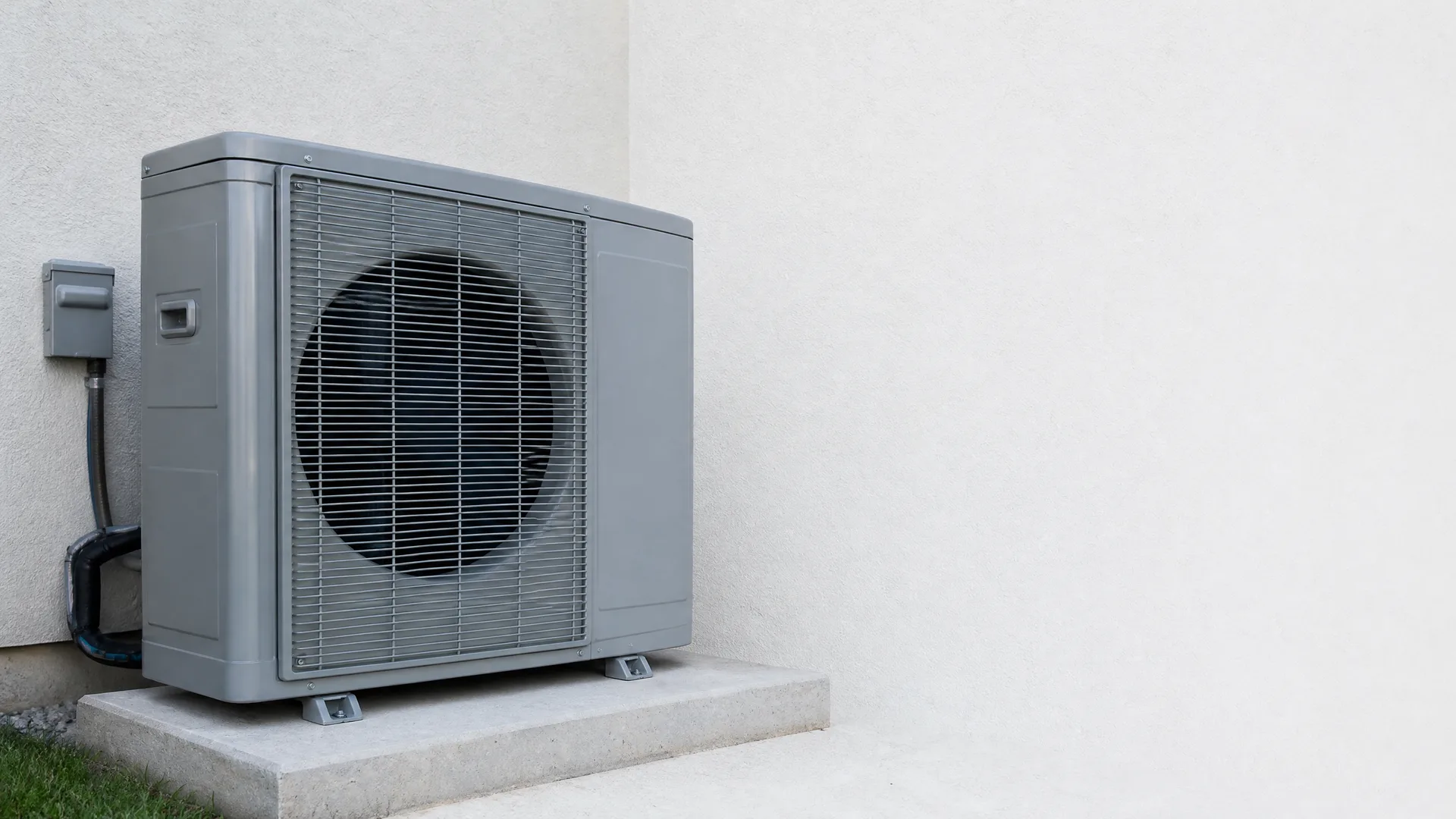
Why cold air changes the math
A heat pump pulls warmth out of the outside air and moves it inside. When that air drops into the 20s and teens, there's less warmth to pull, so the unit has to move more air across the coil to collect the same heat. Below freezing, it will often run near constant just to hold the house at temperature. That's the equipment working as designed, not failing.
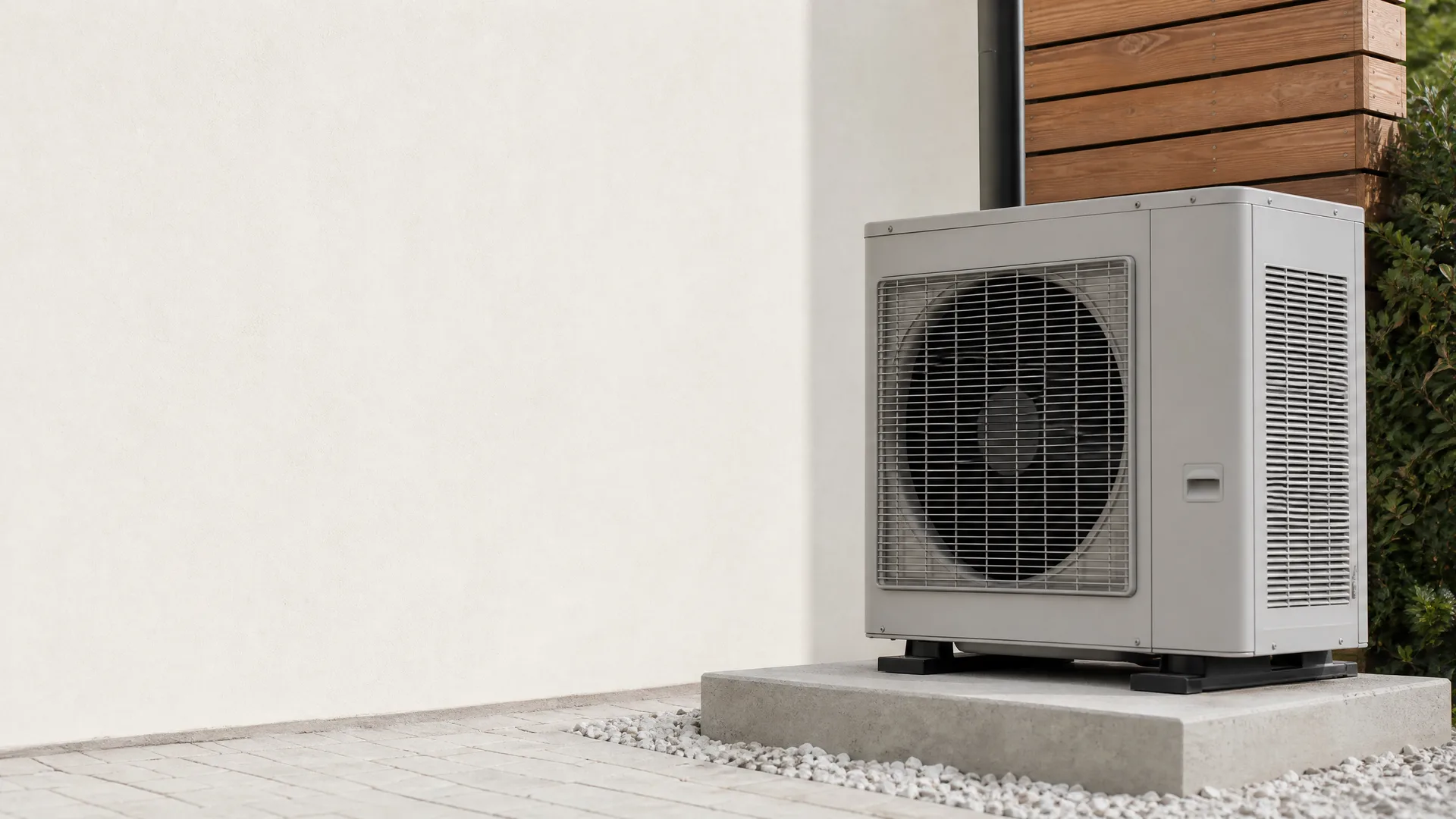
What your defrost cycle does
When frost builds on the outdoor coil, the system reverses itself for a few minutes to melt it off, then switches back to heating. You might notice steam rising off the outdoor unit or a short pause in warm air at the vents. That's part of normal operation in cold weather. If the coil stays frosted over after a defrost cycle finishes, or ice builds up on the ground around the unit, that's worth having looked at.
Power here costs 16.23 cents per kilowatt-hour
At 16.23 cents per kilowatt-hour, a heat pump that runs nearly nonstop costs real money to keep up. Most of that draw is the outdoor unit and its fan working harder in the cold, not a problem on its own, but if the run time feels wrong for the weather, a tech can check whether it's keeping up or struggling.
EIA-861 2025
What's Actually Making It Run
- Long run times alone aren't a fault; the defrost cycle briefly reverses the system and runs the outdoor fan to melt coil frost.
- A clogged outdoor coil, covered in ice or debris, forces the unit to run longer to pull the same heat from the air.
- Low refrigerant charge makes the compressor run continuously because each pass across the coil collects less heat than it should.
- A failing reversing valve can leave the system stuck between heating and defrost, so it never settles into a normal cycle.
- Below about 30 to 35 degrees, many systems lean on electric backup heat strips, which can mask whether the heat pump itself is struggling.
- A thermostat set too far above the outdoor temperature asks the system for more heat than it can deliver efficiently, so it just keeps running.
A heat pump cycling on and off a few times an hour is normal. One running almost continuously through a cold stretch can still be normal, or it can be telling you something. The difference is in what's happening at the outdoor unit. Every heat pump defrosts itself periodically in cold weather, reversing briefly to send warm refrigerant through the outdoor coil and melt off frost, with the fan running the whole time. That looks and sounds like the system working hard, and it is, but it's not a fault. What isn't normal is ice building up faster than the defrost cycle can clear it, or leaves and debris packed against the coil fins, either of which makes the unit pull much harder to collect the same heat. Inside the system, a slow refrigerant leak has the same effect for a different reason: each pass across the coil picks up less heat, so the compressor just keeps running to make up the difference. A reversing valve that's starting to fail can get the system stuck between modes entirely, never settling into a clean cycle. Backup heat strips complicate the picture further. They kick in automatically once outdoor temperatures drop into the low 30s, and they can keep a house warm even while the heat pump itself is underperforming, which hides the real problem for weeks. And a thermostat pushed several degrees above what the outdoor air can support will keep any heat pump running past the point where it's actually gaining ground.






Let someone else find the pro

A licensed pro who works in Geauga County gets your request.
You only hire the pro if you want to.
What a long run shows up as
You notice it first in the vents, air moving almost constantly instead of starting and stopping through the day. The thermostat might still hold the temperature you set, so nothing feels broken, it just never seems to rest. Check the breaker panel or the outdoor unit and you may find it running at hours it used to sit quiet, late at night or in the early morning when it's coldest. None of that proves a problem by itself. But if the house still feels cooler than the thermostat says, or one room stays cold while the rest is fine, that's the system telling you it's behind, not just working through a cold stretch.
What it puts at risk if it's a fault
A heat pump straining to keep up pulls more power the whole time it runs, and that shows up on the bill before it shows up anywhere else. If the cause is a dirty coil or a refrigerant leak, the strain doesn't stay even. Parts that run harder than they're built for wear faster, and a compressor pushed like that for weeks can fail outright rather than just lose efficiency. If backup heat is kicking in to cover the gap, that's electric resistance heat, more expensive to run than the heat pump itself. A technician who checks it now is cheaper than one called out after it quits.
How cold, how long does Chardon ask of a heat pump each year
Winter nights average 21°F
Winter nights here average 21°F across December, January and February, which is well below freezing, right where a heat pump has to work hardest to pull warmth from the air.
Heat runs October through May
Heat runs October through May here, eight months out of twelve, so long run times aren't a one-week problem, they're most of the year's work for the unit.
Cooling runs June through August
Cooling only runs June through August, three months, so the long stretches you notice are almost always the heating side of the system, not the AC side.
NOAA nClimDiv 1991-2020
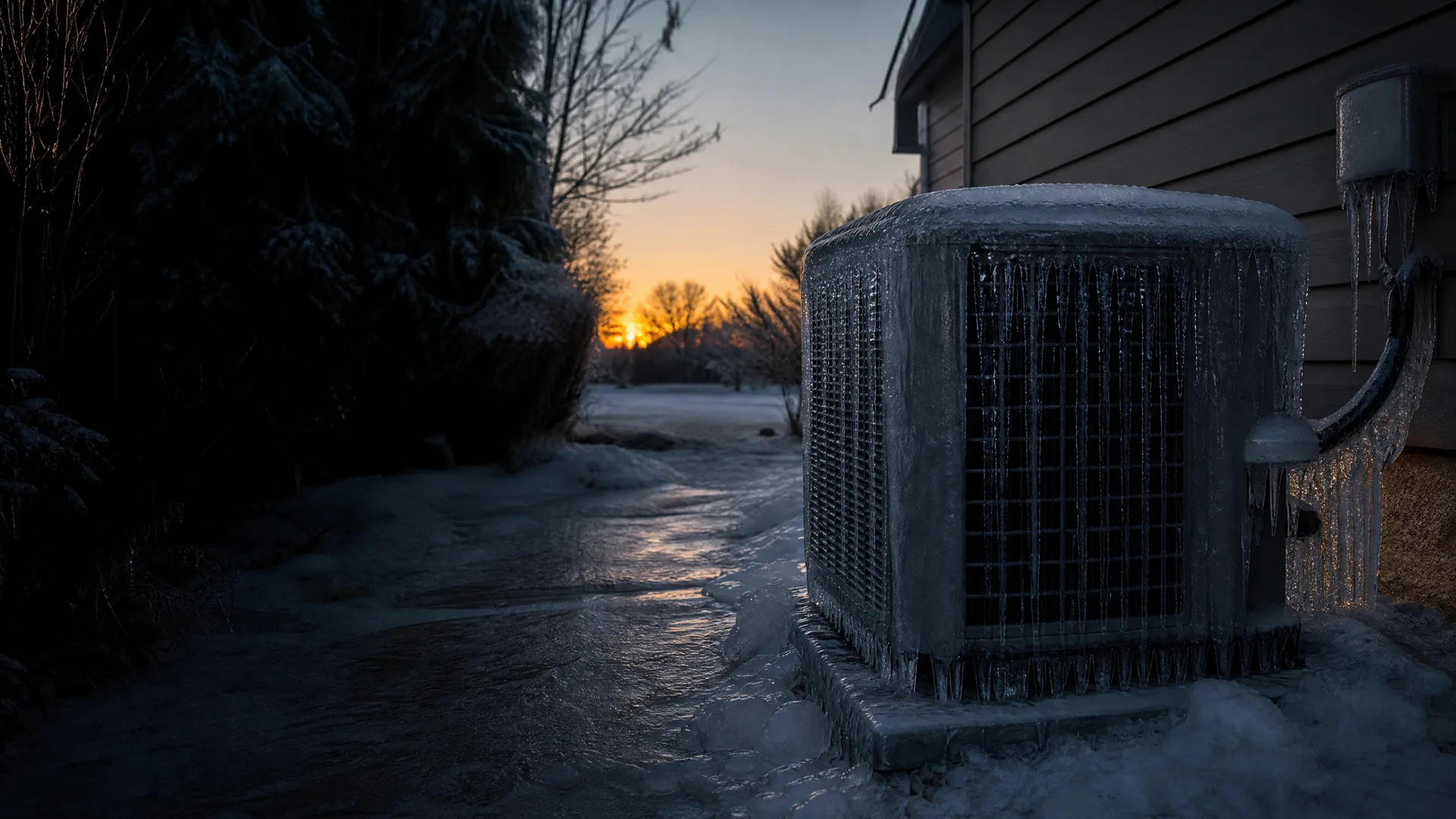
Six in the morning, still dark, and you go out for the paper before the plow comes through. The side yard is quiet except for the low hum of the outdoor unit. Frost coats the grass, but the unit itself is worse off, a shell of ice built up thick over the coil and the top panel, with icicles hanging off the corner where water has run and refrozen overnight. The fan isn't moving. You crouch down and can see the fins are packed solid, no gaps left for air to pass through. Inside, the house still feels warm enough, but standing here at 21 degrees, you know this isn't the usual frost a defrost cycle clears on its own.
A heat pump that runs long hours through a Chardon winter is doing what the cold asks of it. The line to watch is whether it still catches up, cycling off at some point, or just grinds on no matter the hour. Ice built up on the coil, a dirty filter choking airflow, refrigerant low from a slow leak, these are the things that turn ordinary hard work into a system that can't keep up. None of them are things to guess about from inside the house. A technician who services heat pumps in Geauga County every winter has seen what frost, age and clogged coils do to these units out here, and knows which of those causes fits what yours is doing. Once you send the request, it goes to one local contractor, not a handful competing for your callback, so you deal with one name and one visit instead of a stack of quotes. You already know your system's been running too long. What's left is finding out why.

One request and it's handed off
Asking costs nothing, and the choice to hire stays yours.
A heat pump that never catches up is already telling you something is wrong. Waiting through another cold snap only adds hours to a system that's struggling. A local contractor who works on these units all winter can tell you in one visit whether it's ice, airflow, or refrigerant.