

What winter here does to a heat pump
Your furnace or heat pump in Greene County runs eight months a year, October through May, so most of what you spend on comfort here is spent on heat, not air conditioning. That makes the heating side of this choice the one that matters most.
A standard heat pump starts losing ground before the real cold even arrives. Below 40°F it puts out less heat than its rating says, and below about 35°F it usually needs backup heat to make up the difference. Greene County's average overnight low across December, January and February is 24°F. That is below both marks, not close to them. And on the roughly 105 nights a year here that drop to freezing or below, a standard heat pump is working below both marks every single time.
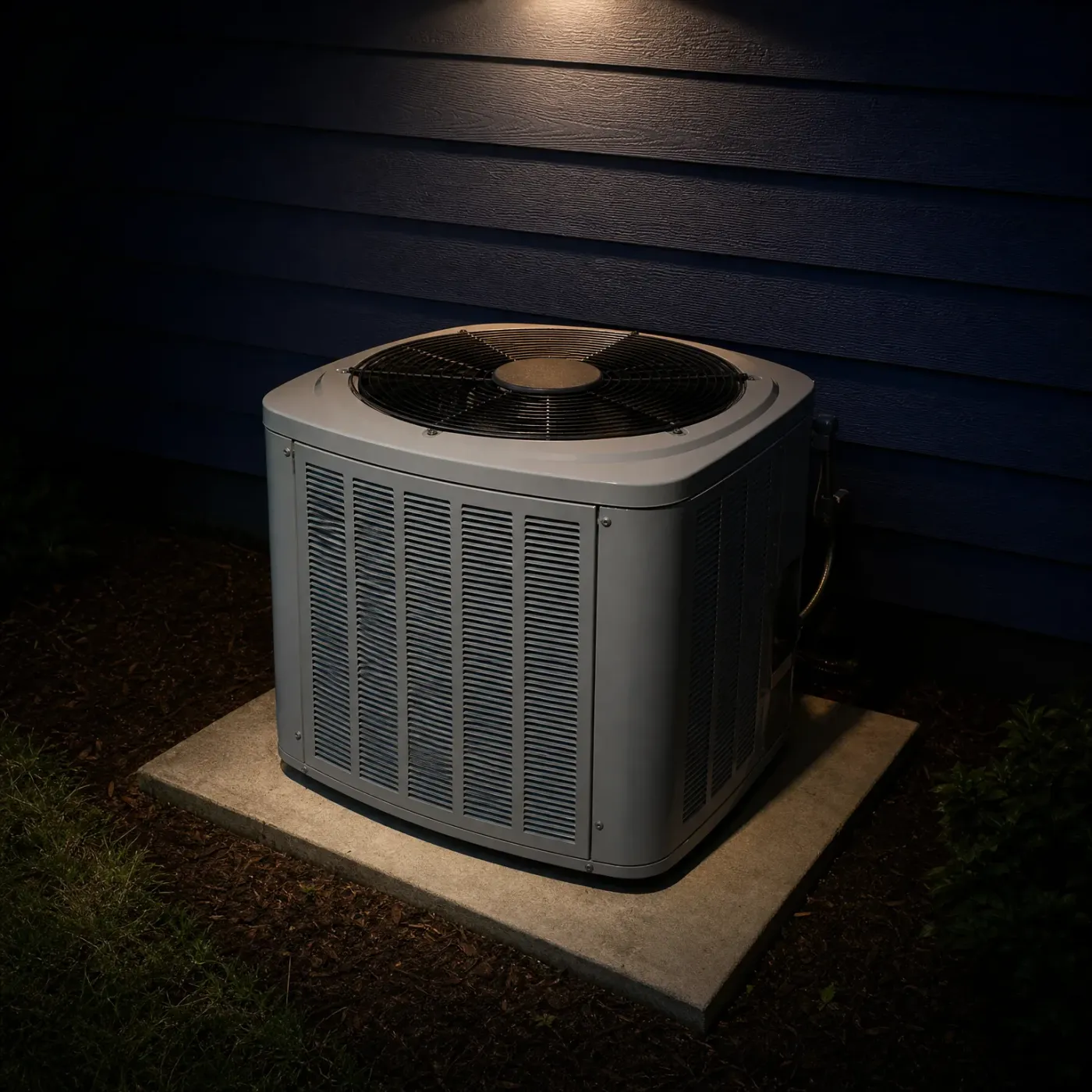
That doesn't mean a heat pump can't heat your house. It means a standard one is leaning on backup heat for a large share of the season, and backup heat on a heat pump is electric resistance heat, the most expensive way to make warmth there is. If you go with a heat pump here, the one to ask about is one built to the ENERGY STAR Cold Climate standard. That standard requires the unit to still produce at least 1.75 units of heat per unit of electricity at 5°F, and to hold onto at least 70 percent of its 47°F heating capacity at that temperature, checked by outside testing rather than the manufacturer's own numbers. A field test of prototype cold-climate heat pumps over two winters backs this up in practice: backup heat covered only a small share of the heat needed between 0°F and 35°F, and the units running on backup heat alone was rare even above 0°F. Greene County only sees about 3 nights a year at 0°F or below, so a cold-climate heat pump is built for colder nights than this county mostly delivers.