

Steam, not solid ice
If the frost clears within an hour and you see steam rising as it melts off, the defrost cycle is doing its job. No call needed yet, just keep watching it through the day.
Describe your heat pump job, and a local pro who handles it gets in touch.
Get matchedYou went outside and found the outdoor unit coated in ice, maybe even the coil completely covered. It's alarming to see, especially if the system is still running or has stopped blowing warm air. You want to know if this is normal for a cold snap or if something is actually wrong with the unit before you decide what to do next.
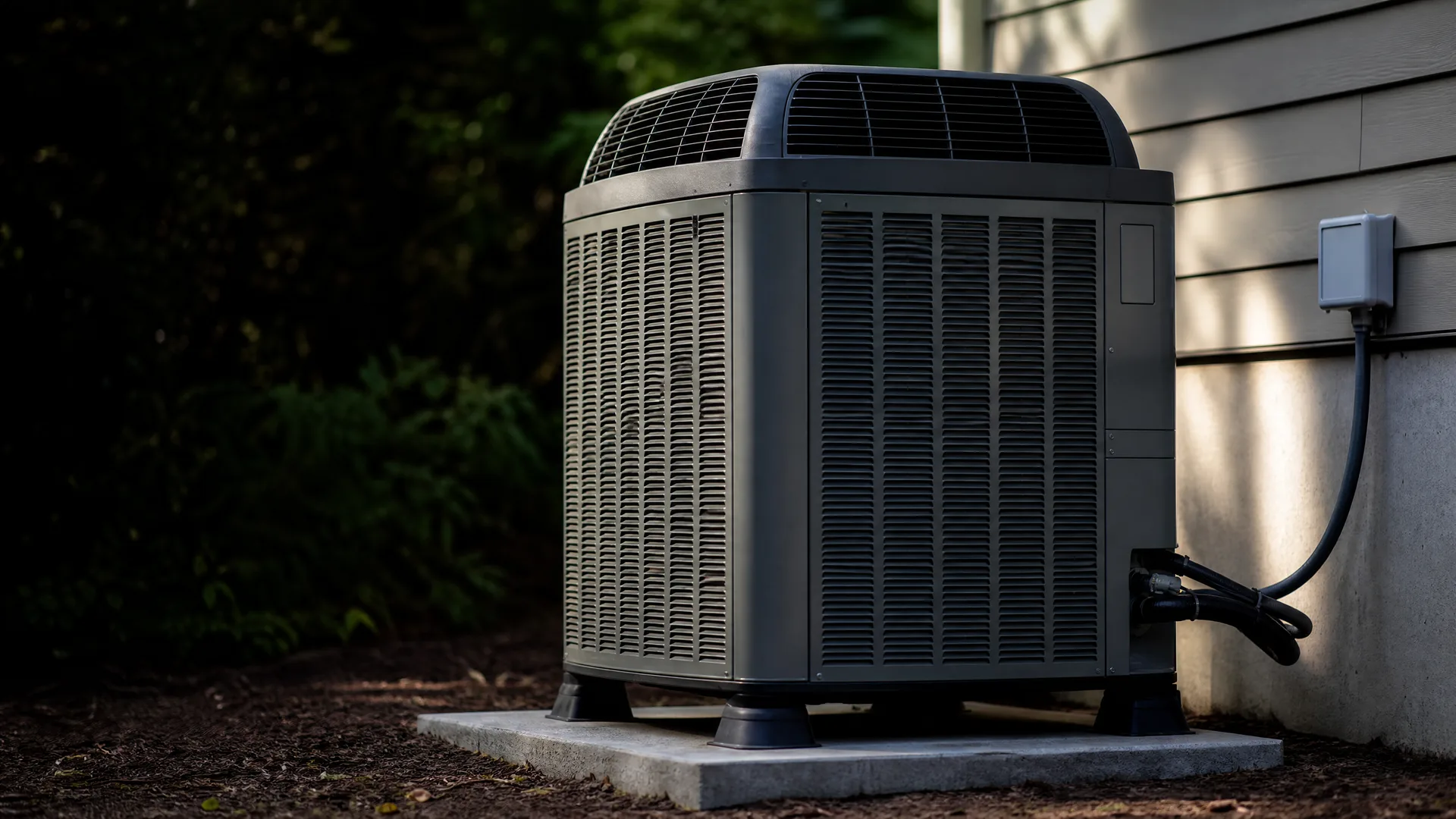
Every heat pump frosts up some in cold weather and clears itself through a built in defrost cycle, usually a few times a day. That's normal and nothing to worry about. A heavy, solid layer of ice that doesn't melt off on its own is different. It usually points to a problem with the defrost control board, a stuck reversing valve, a fan motor that's slowed down or failed, or low refrigerant charge. Any of these stop the unit from shedding ice the way it's built to. Cold nights in Greene County push the system through more defrost cycles than mild ones, so a fault that's minor in October can leave the coil solid by January.
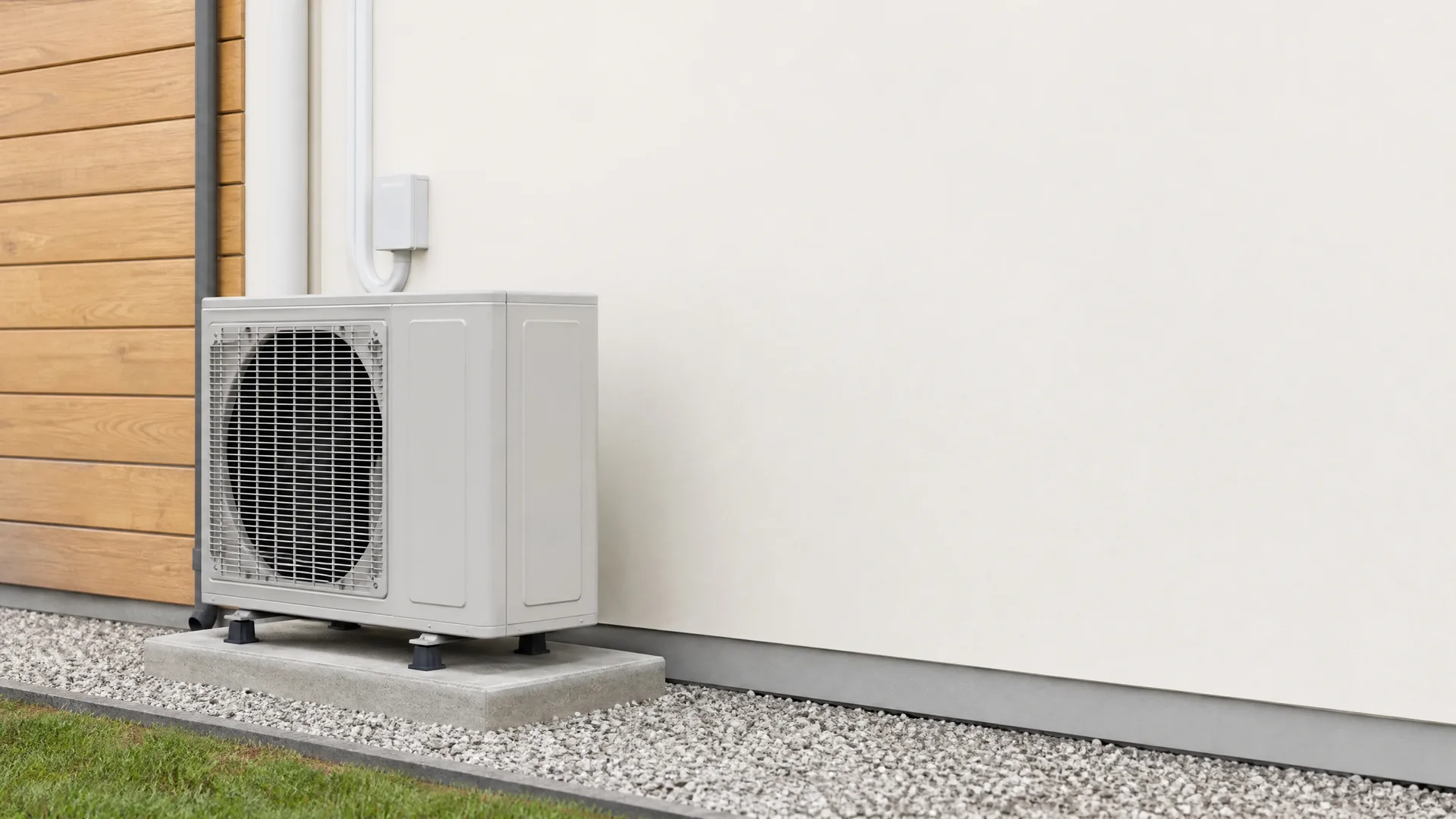
A heat pump pulls heat out of outdoor air even when that air is near freezing, and in doing so the coil itself drops colder than the air around it. Moisture in the air lands on the coil and turns to frost. During a Beavercreek winter, with damp air and stretches of cold settling in, that frost builds faster than it can clear. Some frost is normal. A coil fully coated in ice, especially one that stays coated after the unit has run a while, is not.
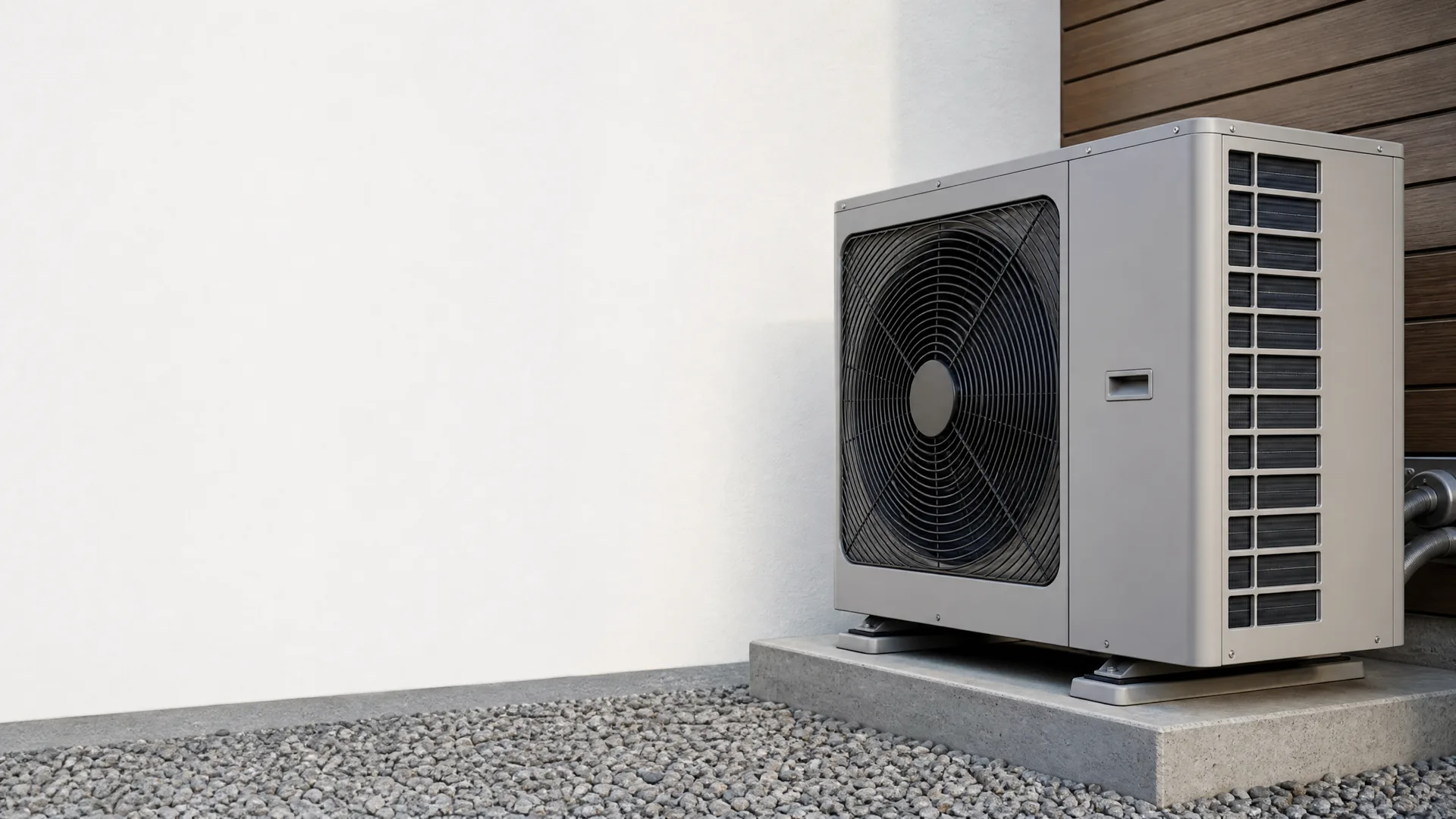
Your heat pump has a defrost cycle built in. It periodically reverses itself, sends warm refrigerant through the outdoor coil, and melts the ice off before switching back to heating your home. You may notice the outdoor fan stop and steam rise off the unit during this. That's normal. If the coil stays iced over after a defrost cycle should have run, something in that process, the sensor, the control board, or the reversing valve, isn't doing its job.
Look at how far the ice has spread. A thin white coating on the coil is normal during a defrost cycle. A thick shell of ice, or ice that has built up on the fan, the pipes, or the ground around the unit, is not. Check if the outdoor fan is spinning. If the coil is iced but the fan is not turning, or the system is running nonstop without ever shutting off to defrost, the unit cannot clear itself. Left alone, the ice keeps the coil from doing its job, the system struggles to keep the house warm, and it ends up running harder for longer with little heat to show for it.
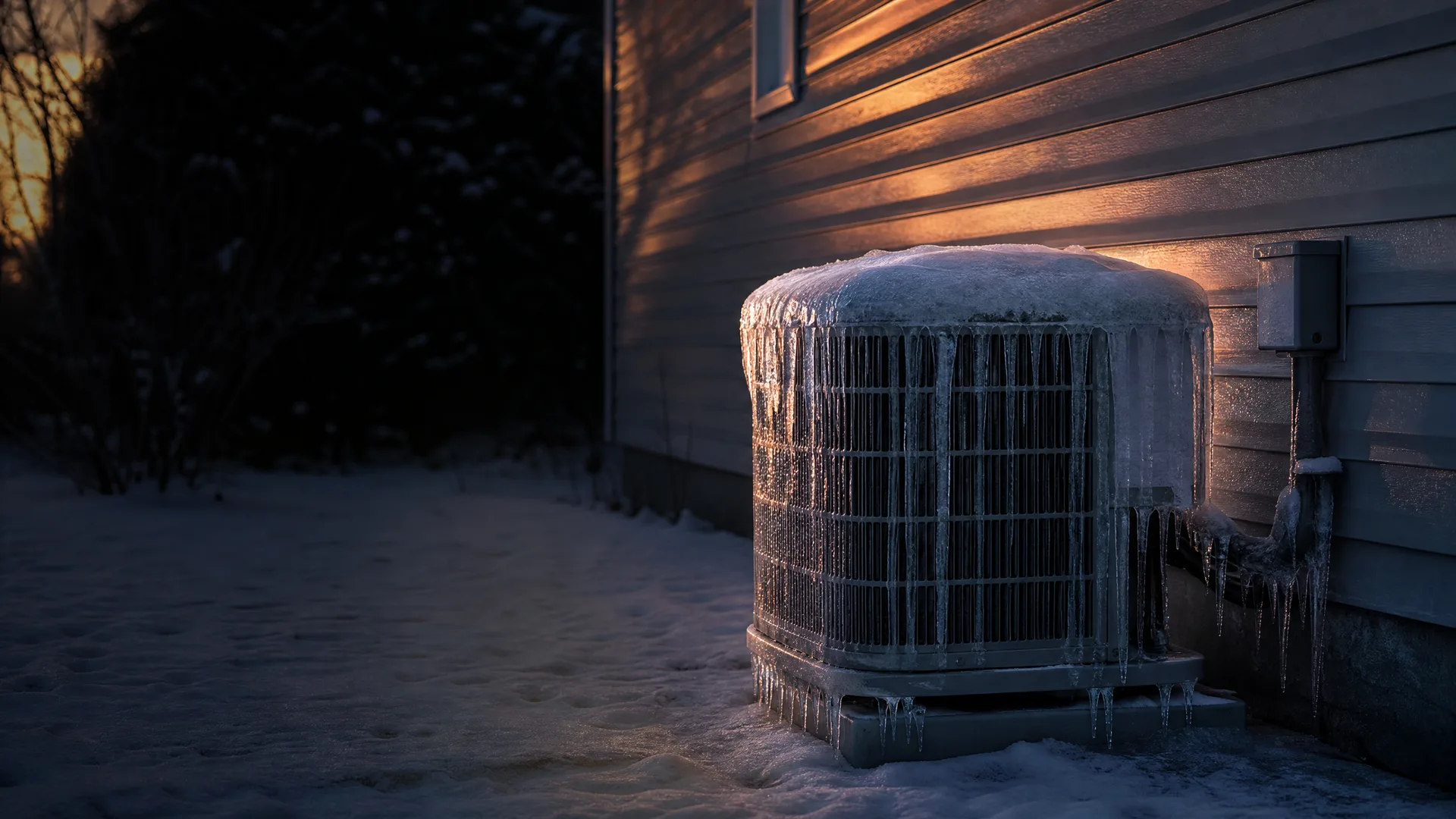
You pull the curtain back before coffee and see it through the side yard window: the outdoor unit wearing a thick shell of ice, gray in the dawn light, frost climbing up past the fan housing. It's one of those January mornings in Greene County where the air itself feels solid, somewhere in the teens, and your breath hangs in front of you when you step outside in your coat over pajamas to look closer. The unit is silent. No hum, no fan turning. You crouch down and see ice packed solid between the coil fins, a thin skin of it spreading onto the concrete pad underneath. You go back inside, and the house is colder than it should be. Someone needs to see this today, and you're done being the one who has to find them.
Send the request today and stop worrying about who to call.
There's no charge for the request.
A heat pump that defrosts on its own normally will click into defrost every so often, run for a few minutes, and go back to heating. You might see steam coming off the unit. That part is working as designed.
A heat pump that stays iced over, cycles on and off without clearing, or has stopped putting out warm air needs a contractor to look at it. Left alone through a cold snap, it can freeze solid and stop working.




If the frost clears within an hour and you see steam rising as it melts off, the defrost cycle is doing its job. No call needed yet, just keep watching it through the day.
If the coil's still coated hours later, or ice has spread to the fan or the ground below, the system needs a contractor to look at it before it strains the compressor.
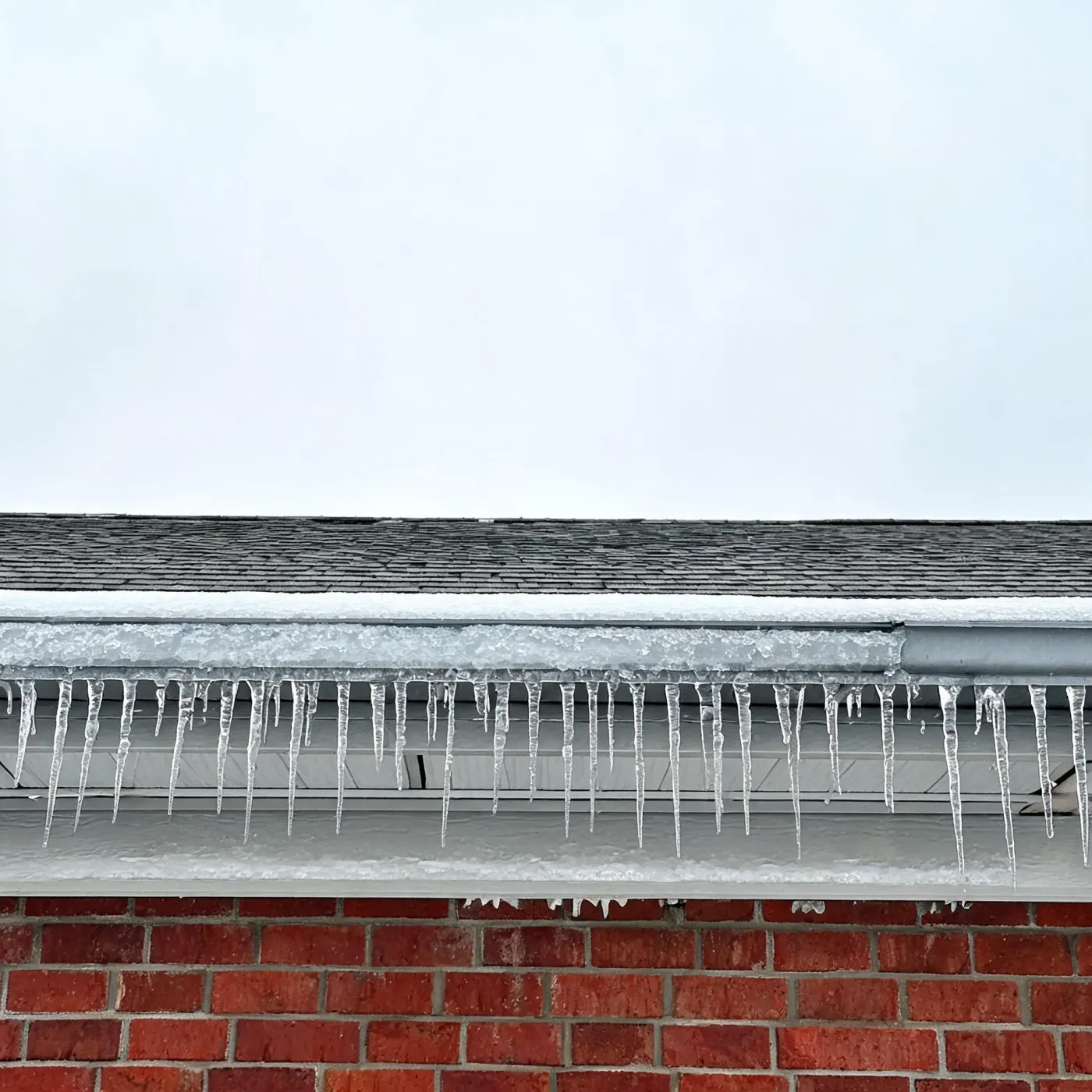
Overnight lows in Greene County average 24°F across December, January and February, according to NOAA climate data. That's cold enough that your heat pump is pulling heat from air that's already near freezing, so the coil runs colder still and frost forms fast. On nights like this, expect the defrost cycle to kick in more often, not less, just to keep the coil clear. If you're seeing ice build past what a normal defrost clears in an hour, these are the nights it tends to start.
NOAA nClimDiv 1991-2020


A working defrost cycle runs on a timer and a sensor, not on how cold it is outside. A thermostat clipped to the outdoor coil reads its temperature, and once enough frost has built up, the system reverses the refrigerant flow so the outdoor coil briefly acts like the indoor coil, running hot instead of cold. The outdoor fan shuts off so it isn't blowing cold air across the coil while this happens, and that's the few minutes of quiet you might notice. Heat actually pulled from inside your house is what melts the ice, which is why you may feel a brief waft of cool air from your vents during the cycle. Once the coil sensor reads clear, or a set number of minutes passes, the system reverses back and goes on heating normally. If that reversing valve has failed, or the sensor is reading wrong, the system never gets the signal to start that cycle at all, and frost just keeps building with nothing to stop it.
At 24°F, your heat pump is already working against odds most nights all winter. Frost is going to form on the coil whether the unit is healthy or not. The question is whether yours clears it on its own or needs someone to look at it.
NOAA nClimDiv 1991-2020
Outdoor coil pulls heat from the air and frost starts to form.
A sensor on the coil tracks how much frost has built up.
Once frost passes the set point, the reversing valve switches the cycle.
The outdoor coil runs hot for a few minutes to melt the ice.

You've got the facts now. A thin coat that melts into steam within the hour is a normal defrost cycle doing its job on a cold Greene County night. A thick shell that's still there hours later, especially with the unit cycling but not warming the house, means the defrost cycle has stopped working and the ice is only going to build from there.
If that's what you're looking at, you don't have to figure out which part failed or find the right contractor yourself. Send in what you're seeing, and a contractor who works on heat pumps in your area will get in touch to take it from there. That part stops being your problem to solve.

A local pro for your heat pump repair