

A gray forced-air furnace with sheet-metal ductwork stands in an unfinished basement with exposed wooden joists, concrete walls, and a hanging incandescent bulb.

Furnace Repair in Youngstown, OH

Tell us about the job

Takes about a minute. No obligation.

RepairFurnace or heatingMahoning County, OH
Step 1 of 2

What ZIP code is the job in?

September is worth a look before you need the furnace at all. Homes here start running heat in October and keep it going through May, eight months straight, and a part that was already worn tends to give out in those first weeks when it's asked to work again. A weak igniter or a failing flame sensor can sit quiet all summer and then fail the first cold night it's called on. If your furnace struggled at the end of last season, that same problem is still there waiting. Getting it looked at before October means a repair now instead of a cold house when you need it most.

8 months
October through May, your furnace is on duty
21°F
the average winter night it heats against
78%
of homes here heat with gas, so most furnaces here burn gas
7 winter storms
in ten years, the nights a failure hurts most
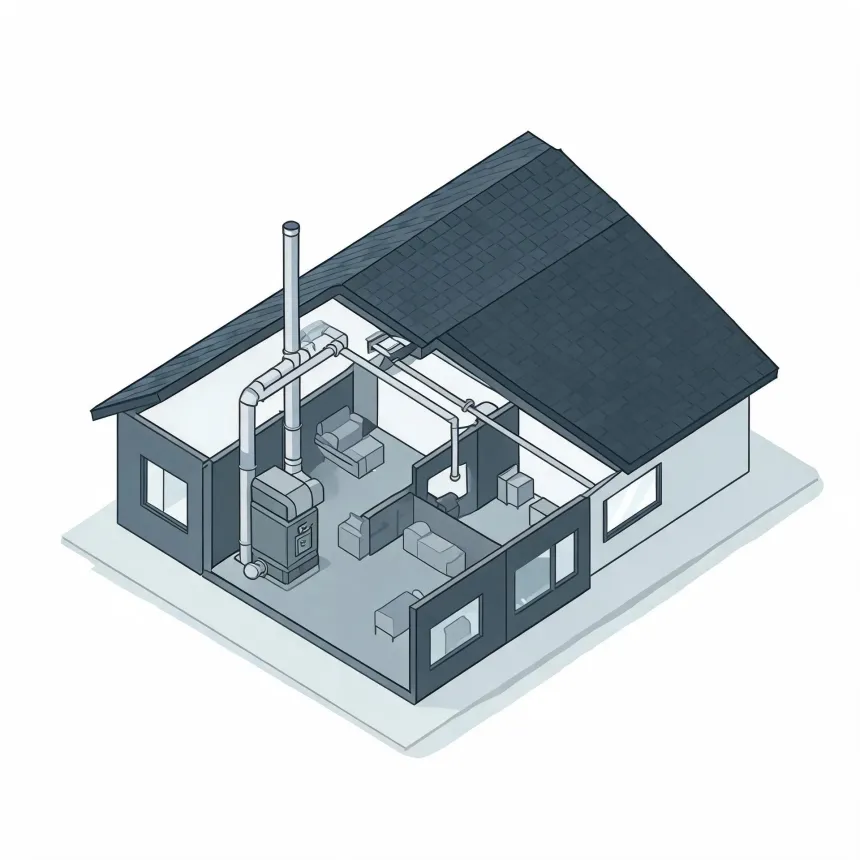
Isometric cutaway illustration of a single-story house showing interior rooms with furniture, a furnace unit connected to ducting and vertical flue pipes running through the roof.
Your furnace works hardest from November through March.

NOAA nClimDiv, 1991–2020 normals

Furnaces in Mahoning County run about eight months a year, October through May.

Eight months of heat means an igniter or flame sensor with no real break before it has to work again.

Mahoning County has had 81 damaging wind events in the past decade, 22 hail events, and a tornado. None of that is what takes down a furnace, though. Wind and hail go after the roof and siding. A furnace fails from the inside, when an igniter wears out or a flame sensor gets coated enough that it stops reading a flame. The weather that does matter here is winter storms, seven of them in the past decade, because of what they do to the power. A furnace with no electricity won't fire, no matter how good its parts are. So if the heat's out during a storm, check the power first before worrying about the furnace itself.

It's probably the usual problem, with the usual fix

A furnace failure in Youngstown is almost always just a worn part. Nothing mysterious about it. That's the good news, because a worn part gets found and replaced. Natural gas in Ohio ran $12.89 per million Btu last year. So a furnace running longer than it should, because of a clogged sensor or a dirty filter, is burning that gas for nothing. Find the real cause and fix it, and the furnace goes back to doing its job the rest of the winter.

Find a contractor
A man in a cap, long-sleeve shirt and work pants climbs porch steps toward a dark blue front door, carrying a worn canvas tool bag, with a small potted evergreen beside the entry.
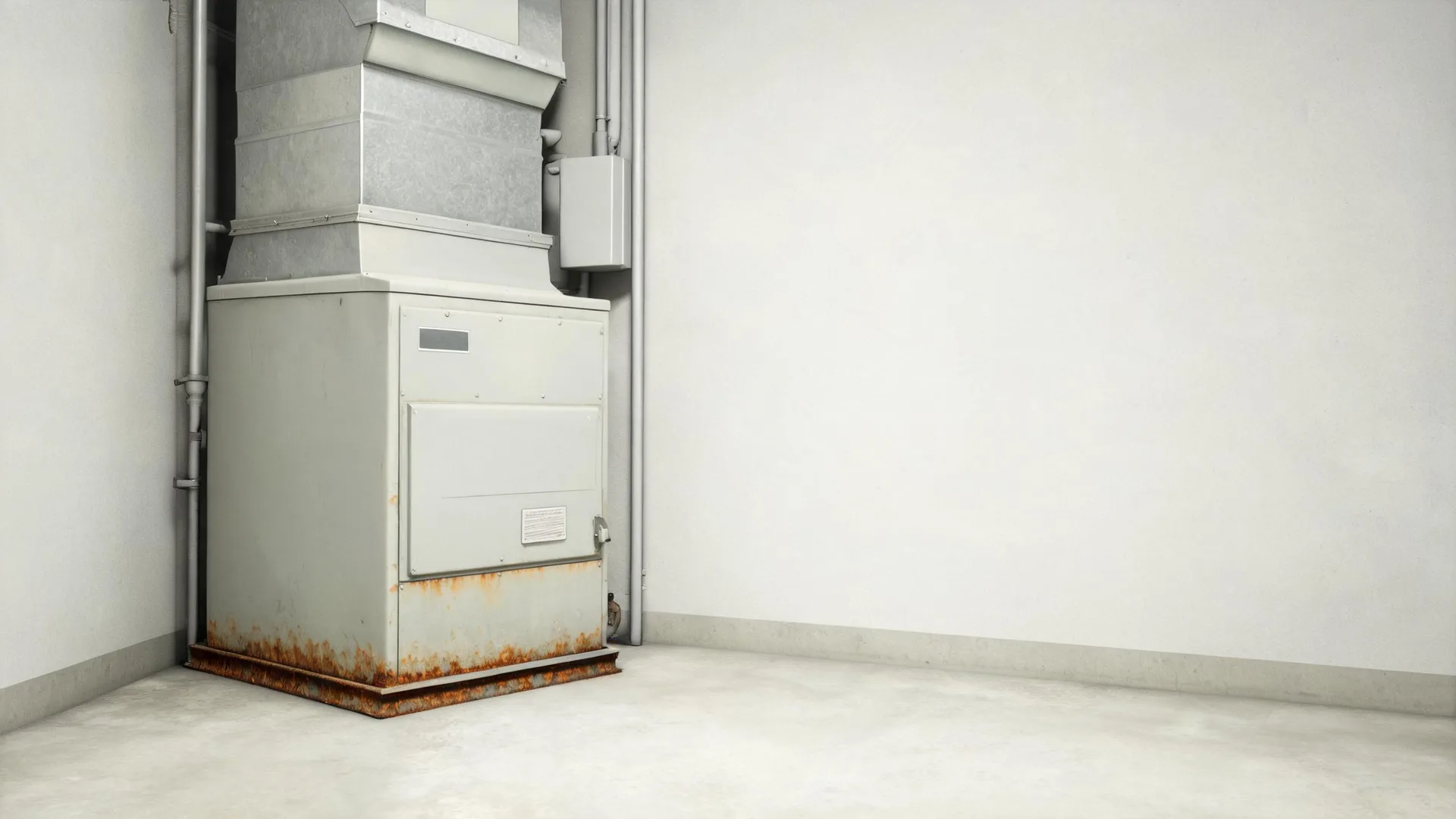
A gray residential gas furnace installed in an unfinished basement, surrounded by ductwork, a metal flue pipe, and a gas supply line.

What you can rule out yourself

Start with the thermostat. Blank screen means dead batteries or a tripped breaker. Set it a few degrees above room temperature and listen for the furnace to kick on. Next check the breaker panel and the gas valve near the furnace. The valve should line up with the pipe, not sit crossways. Then pull the filter out. If no light comes through it, the furnace isn't getting the airflow it needs, and it may shut itself off to protect the heat exchanger. Last, look at the furnace for a blinking light behind the small window on the control board. That blink is a code. The manual on the inside of the furnace door or panel explains what it means. None of this means opening the cabinet or touching gas lines. If the furnace still won't run after all that, the problem is inside, and that's not a homeowner job.

A short cycle turns into a cracked heat exchanger

A furnace that shuts off early and fires again and again is overheating somewhere it shouldn't. The metal expands and contracts every time that happens. That's how a hairline crack starts in the heat exchanger. Left alone, that crack means the furnace needs replacing, not repairing.

A limp flame sensor takes the igniter down with it

A flame sensor coated with residue reads the flame weakly. It shuts the gas off out of caution. Then the igniter has to spark again and again trying to catch a fire it can't hold. An igniter is built for a couple tries a cycle. That kind of repeat duty wears it out fast. One bad part just took out a second one.

An unfinished basement featuring exposed ceiling joists, a metal HVAC unit with round ductwork, a hanging light bulb, and scattered boxes and debris along the left wall.

A new furnace would cut about $170 a year off heating for a typical Mahoning County home.

  • A new high-efficiency furnace$700 a year
  • An older furnace$870 a year

Estimates for a typical Mahoning County home, compared with an older unit built to the previous federal minimum, from EIA household energy data, Ohio fuel prices and NOAA climate normals. Your home will differ.

Repair makes sense when one part has failed and the heat exchanger is sound.

Replacement makes sense when the heat exchanger is cracked or the furnace keeps needing parts.

Age matters, but it's not the only thing to look at. An old furnace with a cracked heat exchanger coming isn't worth repairing, even before the crack shows up. Past that, the real question is whether the broken part is a one-off or a symptom of something bigger. An igniter or a flame sensor just wears out on its own schedule. Swap it and the furnace runs fine again. A blower motor that seized up because the bearings wore out is the same thing, a part doing what parts do. But a furnace that cracked its heat exchanger from short cycling, or one that keeps coming back with the same problem no matter what gets replaced, is telling you the repairs aren't holding. At that point, another repair just buys a little time. It doesn't fix the furnace.