Three illuminated two-story brick houses on a tree-lined residential street photographed at twilight, with warm window light and landscape uplighting visible against a deep blue evening sky.

Furnace Installation in Youngstown, OH

Tell us about the job

Takes about a minute. No obligation.

New system or replacementFurnace or heatingMahoning County, OH
Step 1 of 2

What ZIP code is the job in?

Gas is the common fuel in Mahoning County

Utility gas heats 77.7% of occupied homes in Mahoning County. That's more than every other fuel combined. Electricity heats 15.7%. Bottled or LP gas and fuel oil each account for a small share. A gas furnace is what most homes here already run on.

Replacing gas with gas is the simplest path

When a home already heats with utility gas, putting in another gas furnace means matching what's already there. Switch to a different fuel, and the new system has to work with a setup it wasn't built around.

8 months
October through May, your furnace is on duty
21°F
the average winter night it heats against
78%
of homes here heat with gas, so most furnaces here burn gas
80% AFUE
the federal minimum any new unit must meet
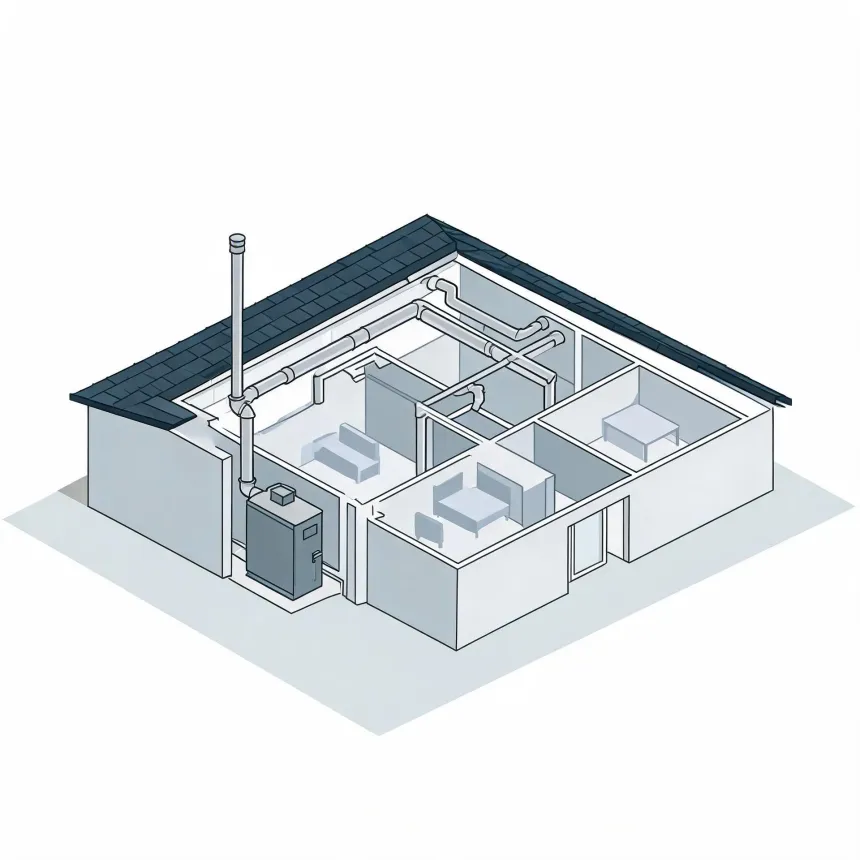
Isometric line illustration of a cutaway single-story house showing interior rooms with furniture, ceiling ductwork, and an exterior furnace unit with a tall flue pipe.
Your furnace works hardest from November through March.

NOAA nClimDiv, 1991–2020 normals

Furnace season in Youngstown starts in October.

Put the new one in during September. The old one never has to make it through a ninth month.

Half the homes here were built by 1963, and a new furnace has to work with a house that old

Half the homes here were built by 1963
Climate zone 5A
Heat runs October through May
A standard furnace fits a Youngstown homeNatural gas in Ohio cost $12.89 per million Btu in 2024. A standard furnace, sized right, runs fine on that.

A furnace in Mahoning County doesn't need to be oversized to handle winter. Homes here run heat about eight months a year, from October through May, so the furnace gets long use. Overnight lows average 21°F through December, January and February. That's steady cold, not extreme cold, and a furnace sized right for the house carries it the same way it carries October or May. Going bigger doesn't add warmth. It just means a furnace that short cycles and wears its parts out sooner. The standard size, matched to the house, is the right call here.

Your new furnace has to meet 80 percent AFUE, and a tax credit is there if you act now

Any furnace installed in Mahoning County has to hit at least 80 percent AFUE. That's the rule for zone 5A. On top of that, a tax credit is available for a household that installs a qualifying furnace. That credit is there now, but the standard changes at the end of 2028.

Find a contractor
A gray high-efficiency gas furnace installed in an unfinished basement, surrounded by gas lines, a condensate drain, and sheet-metal ductwork.

Sized to the house you have, not the one on paper

A furnace has to be sized to the house, not picked off a chart. Half the homes in Mahoning County were built in 1963 or earlier. On a house that old, sizing it right means looking at the place as it stands now, not guessing off square footage. A load calculation is what gives the right furnace size. That's the only way to know before the install instead of after.

A load calculation, not a square footage chart

Sizing a furnace takes a Manual J calculation. That weighs the windows, the insulation, the ceiling height, and how much air the house loses, room by room. Square footage alone leaves too much out. A number off a chart doesn't know what the walls are made of or how old the windows are.

Oversized wears out faster, undersized never catches up

A furnace too big for the house heats the air fast, shuts off, then starts again a few minutes later. That short cycling wears out the igniter and the blower motor faster than a full, steady run would. A furnace too small never catches up. It runs long and hard on the coldest days and still leaves the house short. The right size runs long enough to heat evenly, then shuts off before it strains anything.

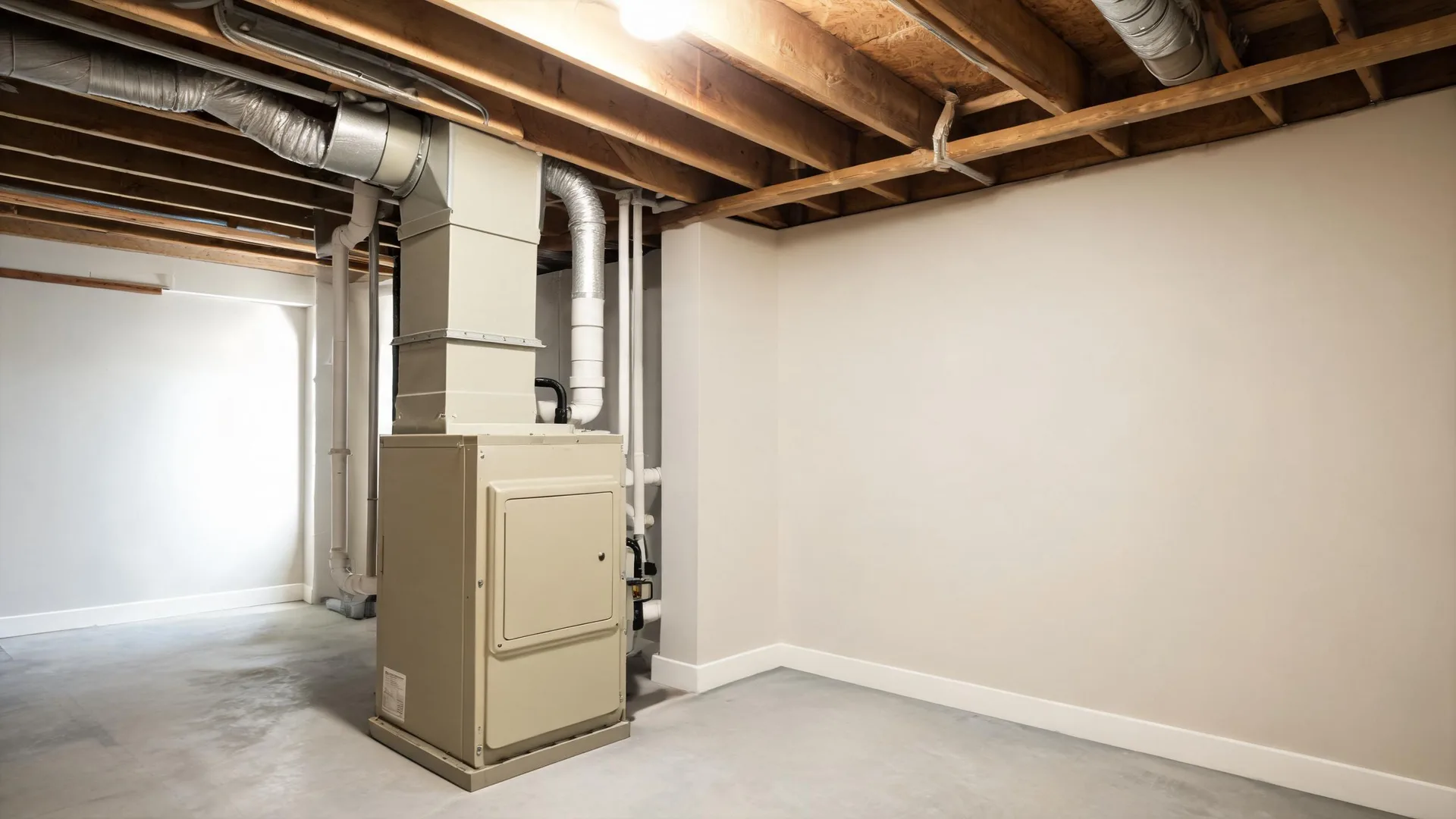
An unfinished basement featuring concrete block walls, exposed floor joists, and a metal forced-air furnace with ductwork near a central pillar.

A high-efficiency gas furnace would save about $140 a year to run in Mahoning County compared with a gas furnace.

  • A high-efficiency gas furnace$700 a year
  • A gas furnace$840 a year

Estimates for a typical Mahoning County home, from EIA household energy data, Ohio fuel prices and NOAA climate normals. Your home will differ.

The old furnace comes out first, and that part goes fast. Most of the day goes into putting in the new one. It gets set level, the gas line gets hooked up, and that connection gets checked for a tight seal. If the old venting doesn't match what the new unit needs, new venting gets run. The furnace gets wired into the thermostat and the blower circuit. The ductwork gets checked where it meets the unit too, since the return and supply have to fit the new furnace, not the old one. Once it's running, the gas pressure gets checked, and the furnace gets watched through a full cycle, start to shutoff to restart, to make sure it's firing clean on its own. A furnace that passes all that on day one runs right for years, not just the first winter.