A quiet suburban street at twilight featuring two-story brick homes with illuminated windows and large trees lining the sidewalk.

Heat Pump Repair in Youngstown, OH

Tell us about the job

Takes about a minute. No obligation.

RepairHeat PumpMahoning County, OH
Step 1 of 2

What ZIP code is the job in?

October is when heat pumps show what's wrong

Heat pumps switch over to heating mode in October. That's when a weak part finally gets asked to do real work. A capacitor or contactor that limped through summer cooling often won't make it through the first cold snap.


A September call beats an October breakdown

If a heat pump is already acting up in September, get it checked before the switchover, not after. A repair done while it's still mild means no waiting on a fix with the house going cold.

8 months
October through May, your system heats
3 months
June through August, it cools
21°F
the average winter night it heats against
81°F
the average summer afternoon it cools against
Isometric illustration of a cutaway single-family house showing interior ductwork and an air handler, with an outdoor condenser unit connected by lines along the exterior wall.
Your system heats October through May and cools June through August.

NOAA nClimDiv, 1991–2020 normals

Youngstown winters aren't brutal on a heat pump. Overnight lows average 21°F through December, January and February.

A heat pump here breaks down because a part wore out or a service got skipped, not because the cold pushed it past its limit. So fixing the actual problem is almost always the right call.

At 15.99 cents a kilowatt-hour, a struggling heat pump costs money all winter long

Power costs 15.99 cents a kWh statewide
81 damaging wind events from 2015 to 2024
22 hail events from 2015 to 2024

Mahoning County sees its share of rough weather. Damaging wind, hail, even a tornado on record. That's weather the house deals with. It doesn't reach into a heat pump's refrigerant lines or compressor. What matters for the heat pump is the power going out. A heat pump sitting dead during a cold snap can mean frozen pipes before anything else goes wrong. Most heat pumps start back up on their own once power returns. If yours doesn't, call someone. Don't wait it out.

Half the homes here were built in 1963 or earlier, and that changes the question

Half the homes in Mahoning County were built in 1963 or earlier. A heat pump doesn't last forever. If the one in the house is original, it's probably already past its years or close to it. Before paying for a repair, ask the contractor how much life is left in the unit. That answer decides whether this is a fix or just a delay on a replacement.

Find a contractor
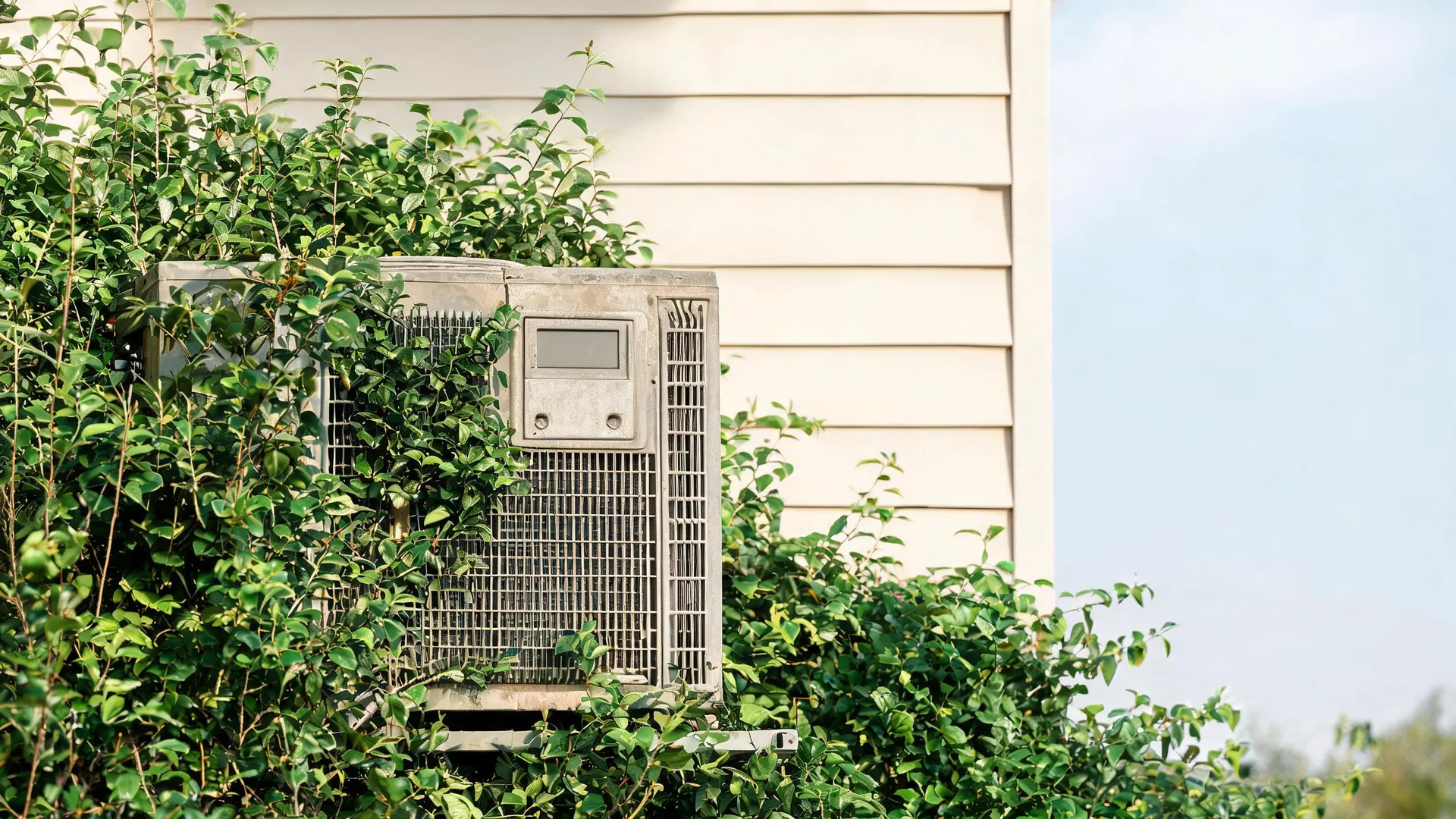
A gray heat pump outdoor unit mounted on a concrete pad next to a residential house with lap siding and stone accents.

The failures here are parts wearing out, one at a time

A heat pump fails one part at a time. Cycling is what wears each part down. Every start asks the capacitor to hold a charge long enough to get the compressor moving. Every start asks the contactor's points to make clean contact. Do that enough times over enough years and one part gives out before the rest. Maybe it's a capacitor that's lost its charge. Maybe a contactor with pitted points, or a start relay gone sticky. That's one part failing, not the whole system failing. Refrigerant lines and the metering device wear on a slower clock. A small leak or a sticking valve shows up first as weaker heat, not as a dead unit. Catch it at that stage. Don't wait until the compressor's been running hot on a bad charge for a season.

Check the thermostat and the breaker first

Set the thermostat below room temperature and listen for the outdoor unit to kick on. Check the breaker panel for anything tripped. Look for a power switch near the indoor air handler that may have gotten bumped off. These take a minute and rule out the simplest explanation before anyone comes out.

Look at the outdoor unit and the filter

Walk outside and check whether the outdoor coil is caked in ice or buried in leaves and debris. Pull the filter and hold it up to light. A blocked filter or an iced-over coil can make a heat pump blow warm air instead of hot. Either one is something you can see for yourself before deciding how urgent the call is.

A heat pump that's struggling doesn't just stop. It keeps trying. A compressor working against low refrigerant runs hotter than it should, every cycle, until it burns out. A blower motor pulling against a clogged filter draws more current than it's built for, and that wears the motor down fast. Ice on the outdoor coil blocks airflow, so the unit runs longer to make the same heat, and that just builds more ice. None of this fixes itself by waiting. The part that's struggling now is usually the same part that fails later, just in worse shape by then.

A diagnostic visit starts with the same checks already made at home, the thermostat and the breaker. But the contractor confirms the call is actually reaching the outdoor unit, and that the right mode is engaged. From there it's gauges on the refrigerant lines to check the charge. A clamp meter on the compressor and blower motor shows what current they're actually pulling. Then a close look at the contactor and capacitor for pitting or swelling. Pressures that don't match what the system calls for point to a leak or a failing metering device. Current draw too high on the blower usually traces back to a motor working harder than it should. That often leads back to the filter. By the time the visit ends, the contractor can name the part that's failing. Not a guess. The gauges and the meter already said which one it is.