



A quiet residential street at dusk lined with illuminated two-story brick houses and mature trees.

Furnace Repair in Newark, OH

Tell us about the job

Takes about a minute. No obligation.

RepairFurnace or heatingLicking County, OH
Step 1 of 2

What ZIP code is the job in?

Licking County sees real weather. Between 2015 and 2024, the county recorded 180 severe weather events, including 133 cases of damaging wind and 33 hail events. Six tornadoes touched down in that same stretch. Hail dents coils and bends fins on an outdoor unit, and wind-driven debris can crack a cabinet or jam a fan, sometimes without stopping it from running. Statewide, 18% of Ohio households went at least a full day without power in 2024. For a furnace that needs electricity to run its blower and ignition, that kind of outage means no heat until the power is back, not just a flicker on the thermostat.

8 months
October through May, your furnace is on duty
22°F
the average winter night it heats against
65%
of homes here heat with gas, so most furnaces here burn gas
8 winter storms
in ten years, the nights a failure hurts most
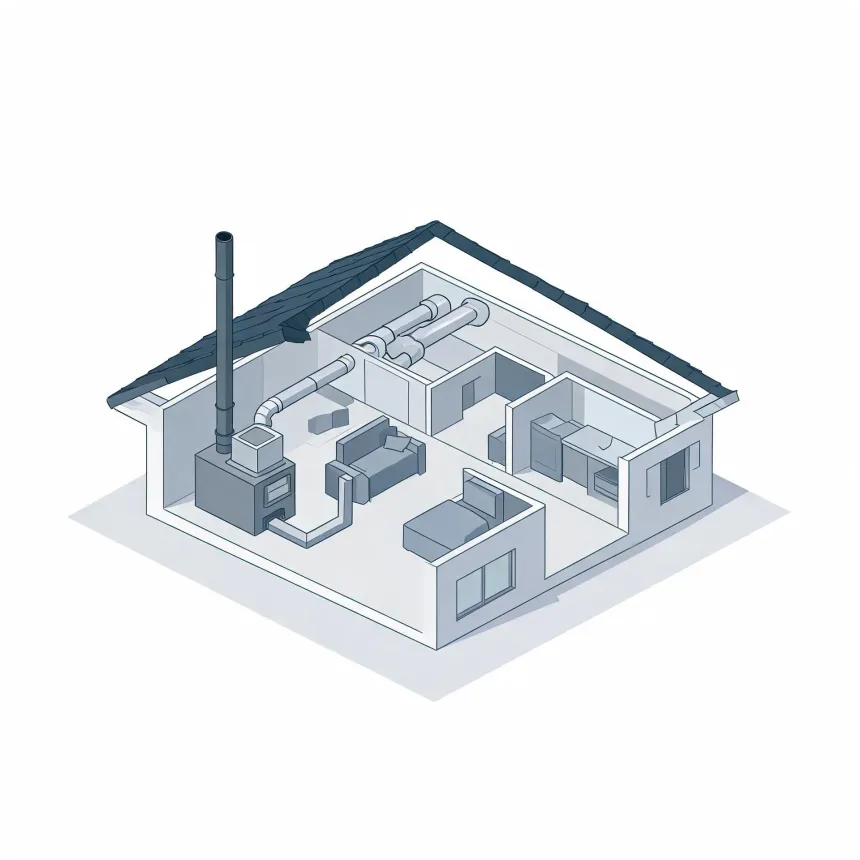
Isometric line illustration of a cutaway single-story house showing interior rooms with furniture, a furnace unit with a tall flue pipe, and connected ductwork running under the pitched roof.
Your furnace works hardest from November through March.

NOAA nClimDiv, 1991–2020 normals

Half the homes in Licking County were built in 1980 or later.

A furnace in one of these newer homes usually still has years left, so a repair call makes sense before replacement does.

October asks a lot of a furnace that hasn't run since spring

Heat runs October through May
Climate zone 5A
Winter nights average 22°F

A newer furnace still breaks down. Igniters fail, blower motors wear out, flame sensors get dirty enough to shut the whole thing off. None of that means the furnace is done. If your house was built in 1980 or later, the furnace probably hasn't put in the years that would make replacement the better call. A repair tech can tell you in one visit whether what's wrong is a worn part or something bigger. Get it looked at before you assume the worst.

Storm damage doesn't always show up until the furnace needs to work

If your furnace sits near an outdoor unit that took hail or wind debris, a dented cabinet or bent fin does not always stop it from running right away. Have it checked now, before the next cold stretch asks more of it.

Find a contractor
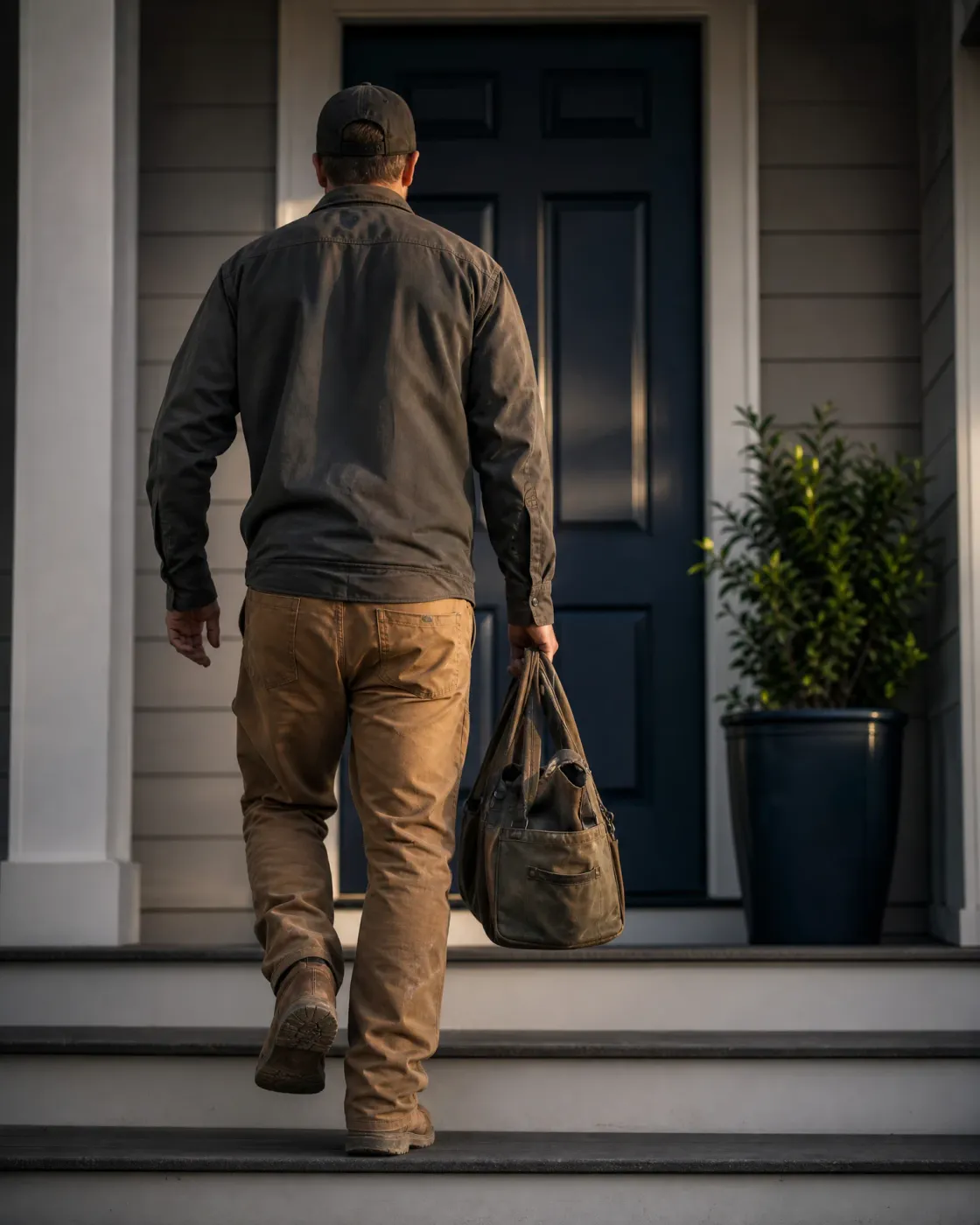
A man in a cap, dark jacket and tan work pants carries a canvas tool bag up concrete steps toward a dark blue front door, with a potted shrub beside the entry.
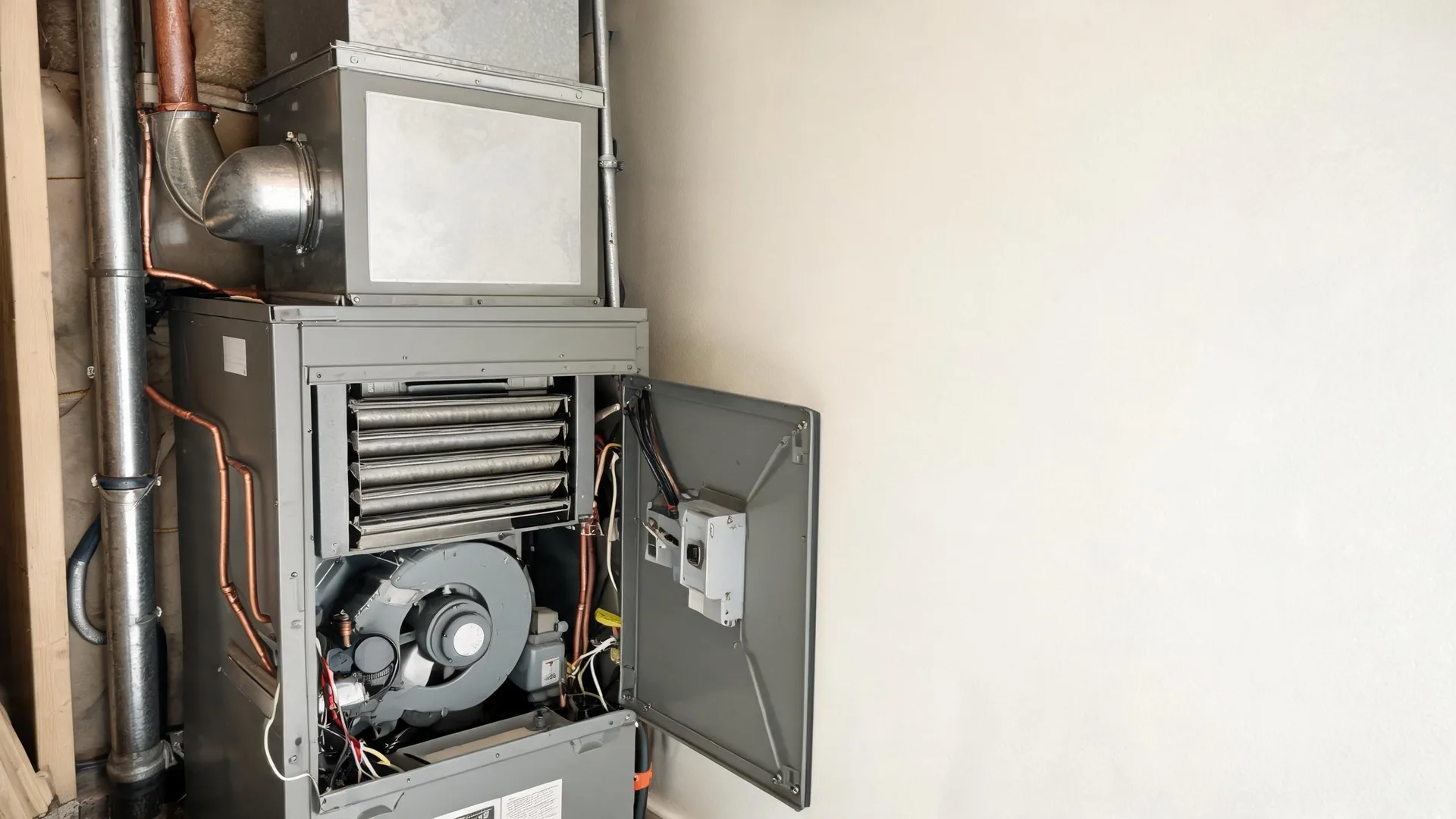
A gray residential gas furnace installed in an unfinished basement, surrounded by ductwork, a metal flue pipe, and a gas supply line.

A furnace that's struggling now won't fix itself by running longer

A furnace that's struggling doesn't fail all at once. A cracked heat exchanger can keep heating a house for weeks while it leaks exhaust into the air stream. A blower motor with a bad bearing will keep spinning until the bearing seizes, and that strain can take the motor windings with it. A flame sensor coated in residue will still light the burner some mornings and not others, right up until it stops for good. Letting a known problem ride because the furnace is still putting out heat usually means a bigger repair later, sometimes a part that could have been cleaned or replaced for the cost of the smaller job it started as.

Most failures start small and electrical

A furnace rarely quits from one big break. The igniter cracks or weakens until it can't light the burner. The flame sensor collects a film that keeps it from telling the control board a flame is there. A limit switch trips from restricted airflow and shuts the system down before anything gets damaged. Each of these is a small part doing exactly what it's supposed to do once it wears out or gets dirty.

Airflow problems cause the damage that follows

A clogged filter is behind more repair calls than almost anything else, not because the filter itself matters much, but because it starves the system of air. The blower works harder, the heat exchanger runs hotter than it should, and parts built to handle normal airflow wear out faster under that strain. Keeping air moving freely through the system is what keeps the rest of it from failing early.

An unfinished basement featuring concrete block walls, exposed floor joists, and a metal forced-air furnace with ductwork near a central pillar.

A new furnace would cut about $160 a year off heating for a typical Licking County home.

  • A new high-efficiency furnace$650 a year
  • An older furnace$810 a year

Estimates for a typical Licking County home, compared with an older unit built to the previous federal minimum, from EIA household energy data, Ohio fuel prices and NOAA climate normals. Your home will differ.

Repair makes sense when one part has failed and the heat exchanger is sound.

Replacement makes sense when the heat exchanger is cracked or the furnace keeps needing parts.

A diagnostic visit starts before the panel comes off. A tech will ask what the furnace is doing, or not doing, and when it started, because a furnace that won't light and a furnace that lights and then shuts off point to different parts. From there it's a sequence: check the thermostat call, check power to the control board, check for stored fault codes if the board keeps them, then watch the ignition sequence happen in person. A gas furnace gets tested for proper flame, not just the presence of one, since a weak or uneven flame points to a dirty burner or a gas pressure problem rather than a dead part. Airflow gets checked too, since a return or supply problem will make a perfectly good furnace act like it's failing. By the end the tech should be able to point to the one part that's actually causing the symptom, not just the part that happens to be worn.