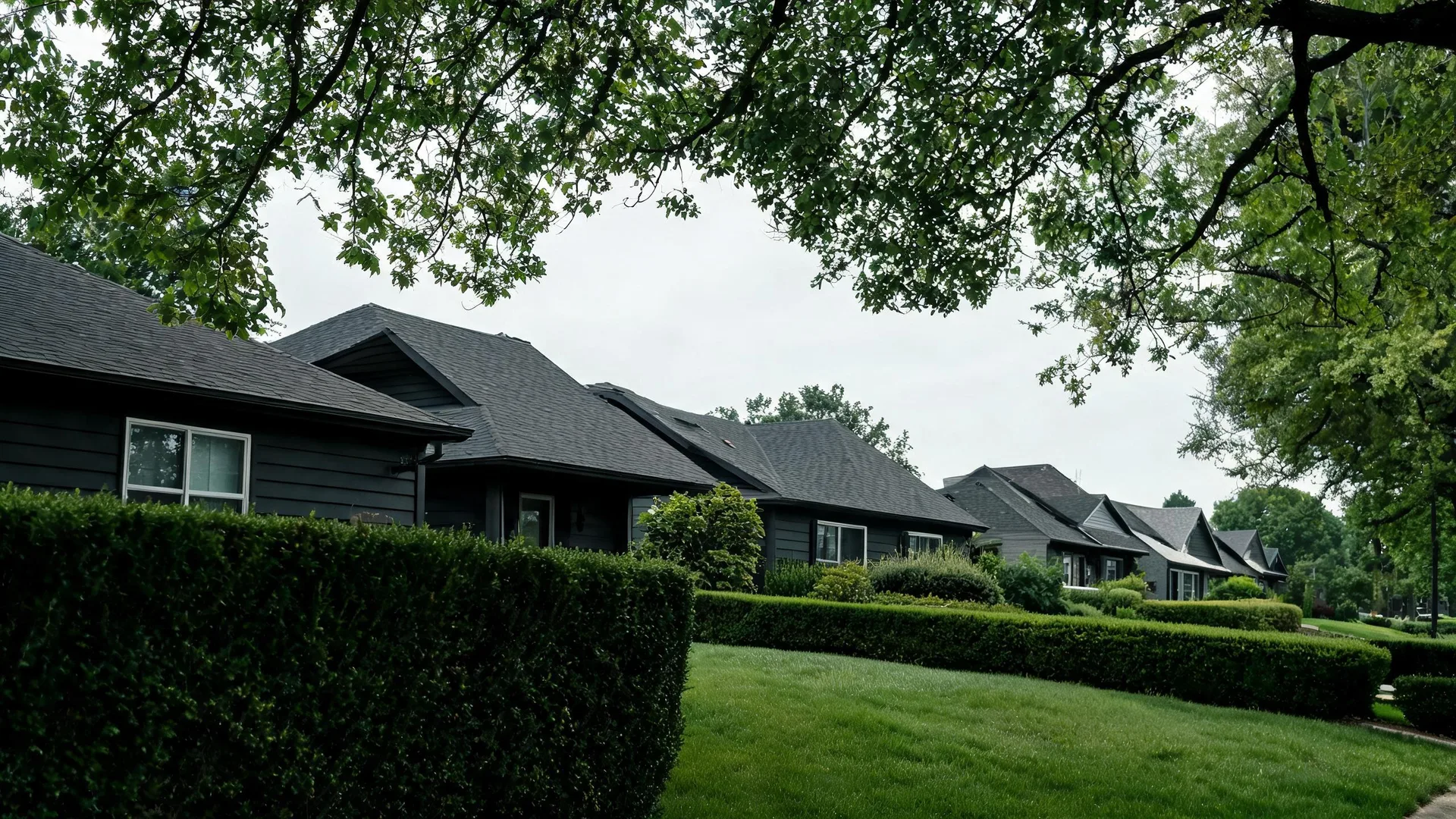



A row of dark-sided single-story houses with gray shingled roofs behind trimmed hedges and a mown lawn, framed by overhanging tree branches under an overcast sky.

Furnace Maintenance in Newark, OH

Tell us about the job

Takes about a minute. No obligation.

Tune-up, service, or cleaningFurnace or heatingLicking County, OH
Step 1 of 2

What ZIP code is the job in?

Licking County saw 180 severe weather events between 2015 and 2024. Damaging wind caused 133 of those, and hail hit 33 times. Six tornadoes touched down in that same stretch, along with 8 winter storms bringing heavy snow or ice. That kind of weather is hard on a furnace, especially anything mounted outside or exposed to falling branches and ice buildup. Statewide, 18% of Ohio households lost power for a day or more in 2024. A furnace that hasn't been checked in a while may have debris in places you can't see from the yard, or damage sitting unnoticed until the first cold snap asks more of it.

Half the homes in Licking County were built in 1980 or later.

A furnace that age still has years ahead of it, and a yearly check is what gets it there.

Heat starts in October. Have it checked in September.

Heat runs October through May
Winter nights average 22°F
Climate zone 5A

Most homes in Licking County heat with gas, about two out of three. A gas furnace burns fuel to make heat, so it needs a yearly check that a filter swap doesn't cover. That means looking at the burner, the venting and the safety controls that shut the system down if something goes wrong. Flue gas has to leave the house through a vent pipe, and anything blocking or corroding that path is a problem a homeowner won't spot from the basement stairs. A tune-up checks the parts that keep combustion safe, not just the parts that move air.

Get it checked before the next storm finds the problem for you

Winter storms and falling branches get blamed after the fact, once a furnace won't start on the coldest morning. A yearly check catches the damage and the debris before that morning comes.

Find a contractor
A man in a navy T-shirt, tan work pants and cap, seen from behind, carries a worn canvas tool bag up wooden porch steps toward a dark blue front door.
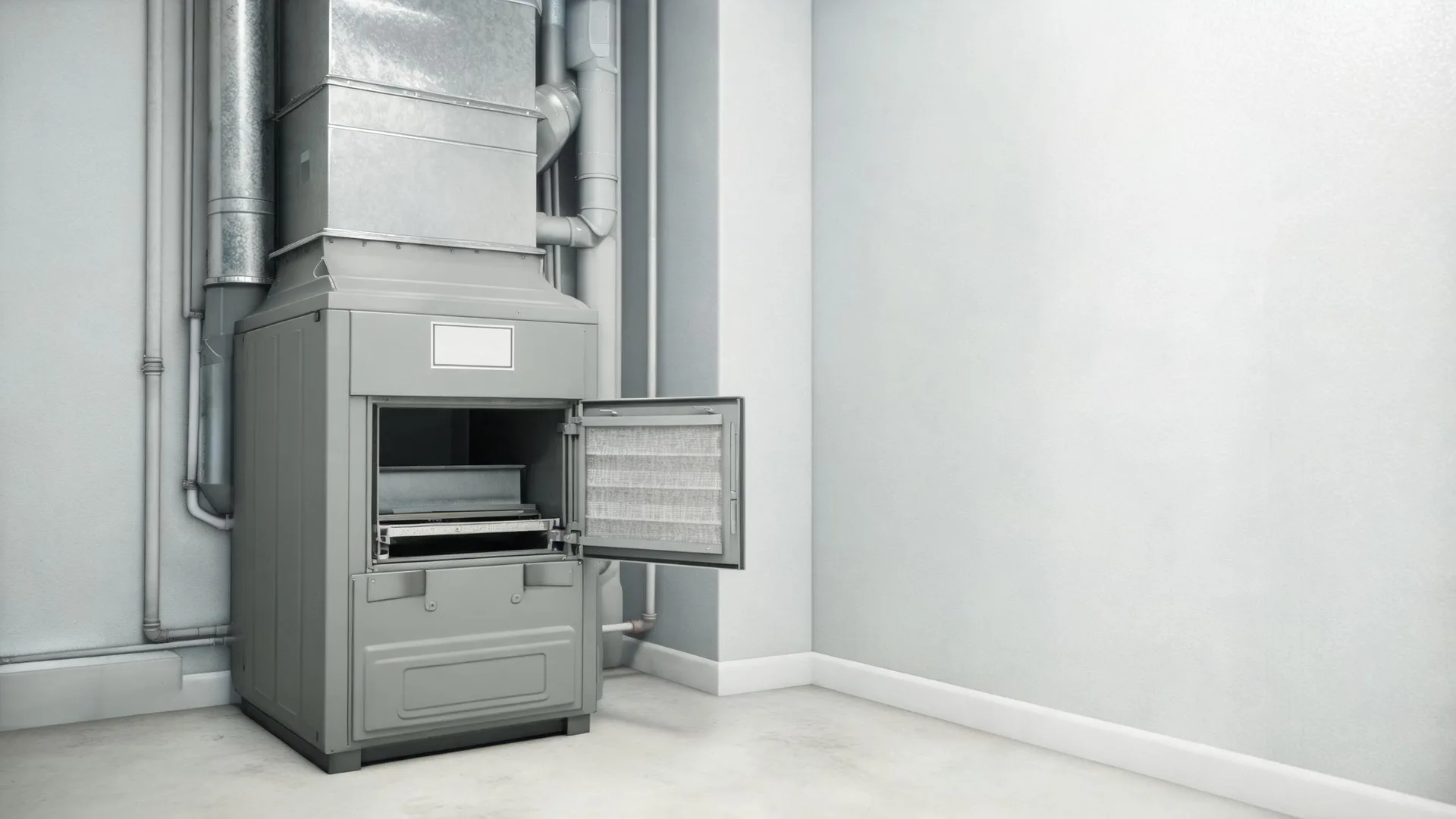
A gray residential gas furnace installed in an unfinished basement, surrounded by ductwork, a metal flue pipe, and a gas supply line.

A Furnace Doesn't Rest Between Cold Mornings

A furnace doesn't have a drain or outdoor coils to worry about, that's the air conditioner's job, but the filter still runs the whole season on its own. It sits in the return air path pulling dust and lint out of the air before that air crosses the heat exchanger and the blower wheel. A clogged filter starves the system of airflow, and a gas furnace run short on airflow can overheat its heat exchanger, which trips the limit switch and shuts the burner down. Some furnaces have a secondary heat exchanger that drains condensate as it runs. If that drain line clogs, water backs up and the furnace locks out rather than run with it. None of this announces itself ahead of time. A furnace either has the airflow and drainage it needs, or it shuts itself off the first cold morning it's asked to work hard.

Dirt builds up where you can't see it

The burner and the flame sensor sit inside the cabinet, out of sight all year. Dust settles on the burner and the sensor grows a film that keeps it from reading the flame right. A furnace running dirty burners can still make heat, so nothing seems wrong until the sensor finally misreads and shuts the system down.
A small problem turns into a cold house

A furnace left unchecked doesn't fail all at once. The igniter weakens, the blower motor strains, the pressure switch drifts out of range, and each one still works until the morning it doesn't. By then it's not a tune-up anymore. It's a repair call on the coldest day of the stretch, waiting on a part instead of a visit.

A tune-up gets inside parts a homeowner never opens. The heat exchanger is the one that matters most, and it's sealed inside the cabinet where no one looks. A crack in it can leak combustion gas into the air the blower pushes through the house, with no smell and no sound to give it away. Checking it means pulling panels and looking with a light and a mirror, not glancing at the furnace from across the basement. The same visit checks gas pressure at the manifold, since a flame burning too hot or too cool wears the burner and the exchanger faster than normal use would. None of this shows up by looking at the outside of the cabinet. It shows up when someone opens it up and checks.

A tune-up follows a list, the same one every visit. The burners get pulled and cleaned, since soot and dust change how they burn even when the flame still looks fine. The flame sensor gets cleaned or swapped if it's worn, because a sensor reading poorly will shut the furnace down on a guess rather than a fact. The igniter gets checked under power, since it can glow and still fail to light the burners reliably. Belts are rare on a furnace blower, but the motor bearings and the blower wheel get checked for wear and for dust buildup that throws the wheel off balance. The flue and vent connections get inspected for rust or gaps, because a vent pipe that leaks is sending exhaust somewhere it shouldn't go. Gas pressure gets tested and set at the manifold, and the wiring and safety controls get run through a test to make sure the furnace actually shuts off when it's supposed to. None of it takes long, but skipping any one piece leaves a failure point nobody's looked at.