A row of illuminated two-story brick houses with front porches and mature trees photographed at twilight.

Furnace Installation in Newark, OH

Tell us about the job

Takes about a minute. No obligation.

New system or replacementFurnace or heatingLicking County, OH
Step 1 of 2

What ZIP code is the job in?

Storms come through on a regular basis

Licking County logged 180 severe weather events between 2015 and 2024, including 133 damaging wind events, 33 hail events, 6 tornadoes and 8 winter storms. A furnace installed here is going to face that weather sooner or later.

Power doesn't always hold through it

18% of Ohio households went at least 24 hours without power in 2024. A furnace needs electricity to run even on gas, so the system you choose and how it's installed both matter when the power goes out in the middle of winter.

8 months
October through May, your furnace is on duty
22°F
the average winter night it heats against
65%
of homes here heat with gas, so most furnaces here burn gas
80% AFUE
the federal minimum any new unit must meet
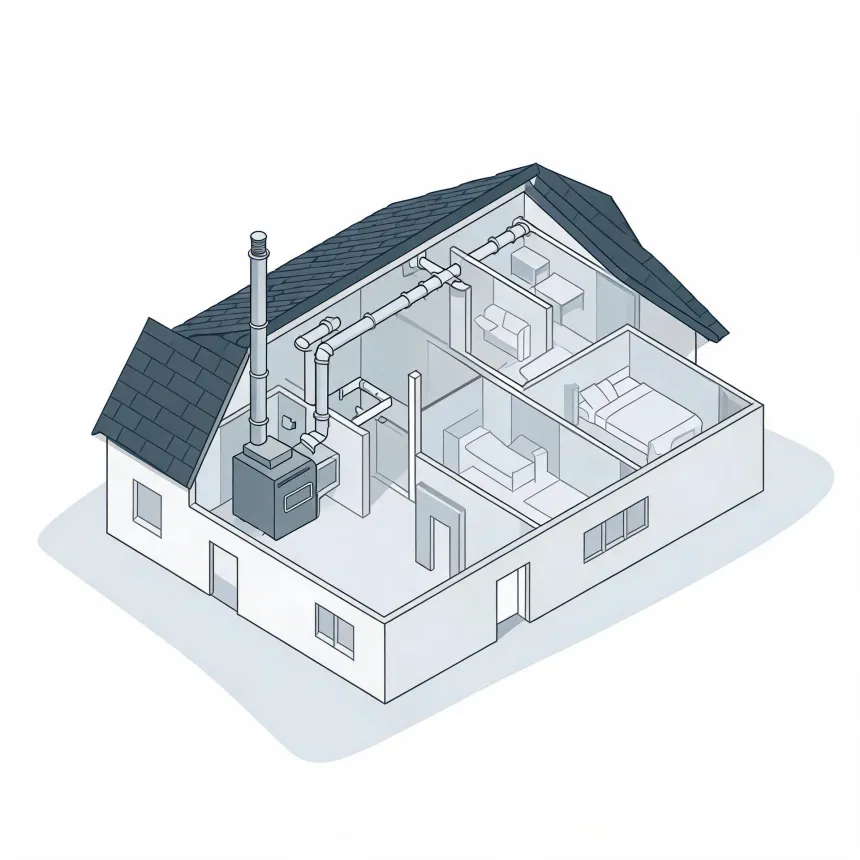
Isometric line illustration of a cutaway house showing interior rooms with furniture and a furnace with ducting and a flue pipe extending through the roof.
Your furnace works hardest from November through March.

NOAA nClimDiv, 1991–2020 normals

The old furnace gets disconnected before the new one goes in.

The gas line gets capped or rerouted, and the vent or flue gets checked so the new furnace isn't tied into a setup built for a different unit.

Eight months of heat on a furnace put in before October

Heat runs October through May
Climate zone 5A
Winter nights average 22°F
Most furnaces here run on gasGas heats 65.4% of homes in Licking County, so most installs here replace a gas furnace with another one.

Licking County sits in climate zone 5A, a designation that puts heating as the bigger demand on a furnace here, more than cooling. That zone carries a minimum efficiency rating for any new gas furnace going in. Right now a furnace has to turn at least 80 percent of the gas it burns into heat over the winter. That floor goes up to 95 percent for furnaces manufactured on or after December 18, 2028. A furnace installed before that date can still meet the system at 80 percent, but one put in after has to clear the higher bar.

Plan for the outage before the furnace goes in

A gas furnace still needs power to run. When you're picking the system and the install, ask where the outdoor unit sits and how the furnace holds up when the power drops mid-winter. That's a decision made at install, not after.

Find a contractor
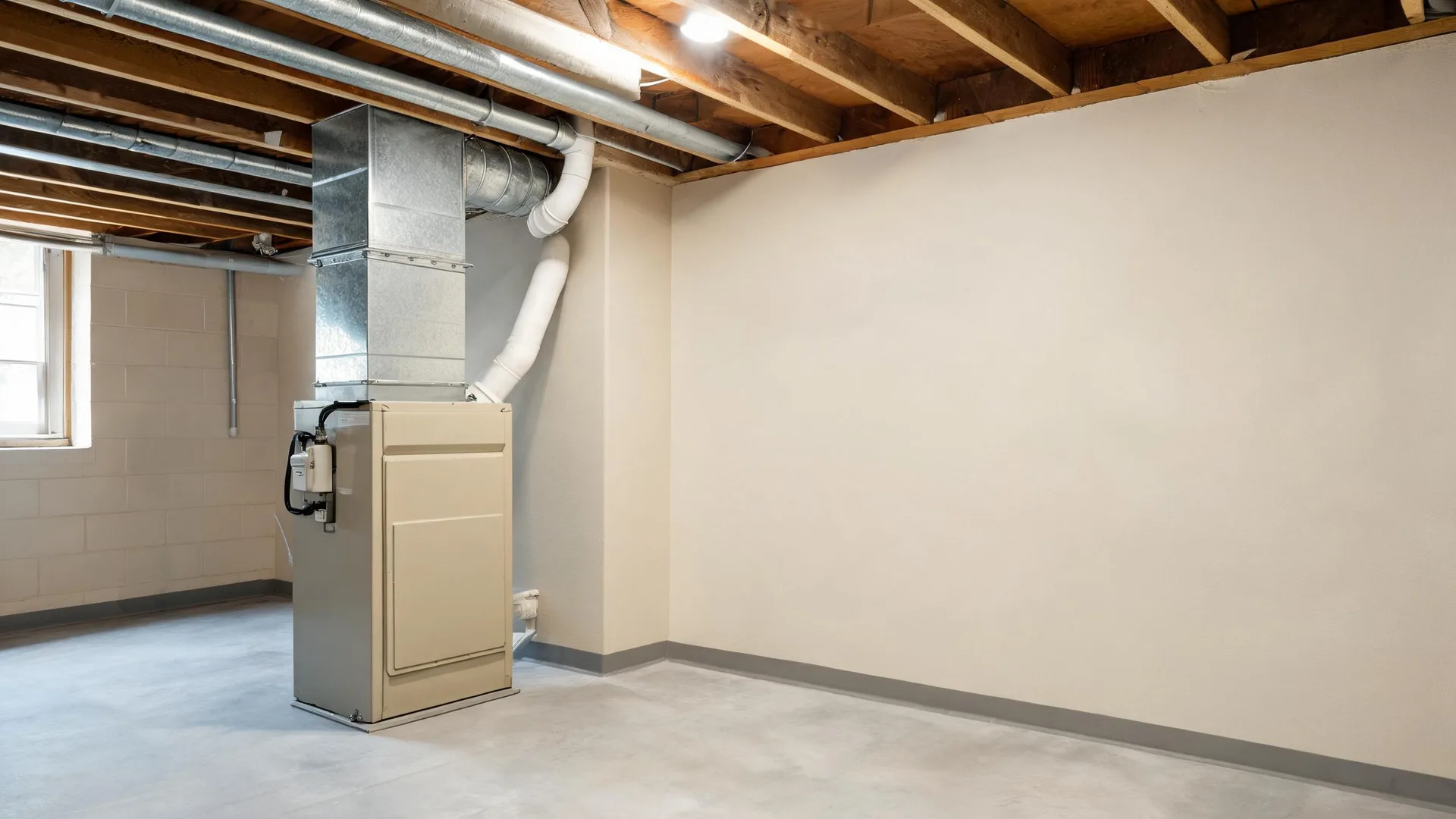
A gas furnace with attached ductwork, gas piping, and condensate lines installed in a concrete-block basement.

The label tells you what every year of winter will cost to heat your home

That percentage on the label is the AFUE rating, and it tells you how much of the fuel burned turns into heat you actually get, with the rest going out the flue. A higher rating does the same job burning less gas to get there. Over years of daily cycles, that difference shows up on every single bill, not just a few. The rating also tells you something about what's inside the cabinet. A furnace at the higher end usually has a second heat exchanger to pull more heat out of the exhaust before it leaves, along with a different kind of blower motor that can run at more than one speed. Those added parts mean more to maintain, but also a furnace built to hold up to being run morning and night for years without losing ground on efficiency.

Ask what happens when the power blinks

A furnace with a weak run on standby power can lock out when the power dips instead of riding through it. Ask what the control board and igniter need to restart on their own, without someone resetting a switch in the basement.

Get the size backed by a load calculation

A furnace sized by the square footage of the house alone can be wrong in either direction. One that's too big short cycles and wears out its parts faster. One that's too small runs constantly and still can't keep up on the coldest nights. Ask for the calculation, not a guess based on the old unit.

An unfinished basement featuring a grey forced-air furnace with metal ductwork, concrete block walls, exposed wooden joists, and a single hanging bare bulb.

A high-efficiency gas furnace would save about $140 a year to run in Licking County compared with a gas furnace.

  • A high-efficiency gas furnace$650 a year
  • A gas furnace$790 a year

Estimates for a typical Licking County home, from EIA household energy data, Ohio fuel prices and NOAA climate normals. Your home will differ.

Installation starts with pulling the old furnace out and setting the new one on its pad or stand, squared up to the existing ductwork and flue. The supply and return plenums get cut and resealed to fit the new cabinet, since no two furnaces are built to exactly the same dimensions. Gas line gets connected and pressure tested before anything is fired up. Electrical runs to the control board, the inducer motor and the blower, and each one gets checked for the right draw once power is on. Then comes the startup sequence: the igniter glows, the gas valve opens, the burners light, and the technician watches the flame pattern to see it's even and the right color. Static pressure gets measured in the ductwork, because a furnace breathing against too much resistance will run hot and short cycle no matter how well it was sized. The last step is checking the temperature rise across the heat exchanger against what the manufacturer specifies, which confirms the airflow and the gas input are matched to each other.