




Why heat pumps struggle in sticky Cuyahoga County summers

RepairHeat PumpCuyahoga County, OH
Step 1 of 2

What ZIP code is the job in?

Why does my heat pump struggle in the summer here?

Cuyahoga County summers run humid, and a heat pump owner who feels the house staying damp or sticky even with the system running wants to know if something is wrong or if this is normal for the equipment.

It's working harder to pull moisture out of the air than a furnace-and-AC setup would

A heat pump cools the same way central air does, by running refrigerant through a coil and pulling heat and moisture out of the air passing over it. When the air outside is heavy with moisture, the system has to move more of it before the house feels dry, and that takes longer run times. If the refrigerant charge is low or the coil is dirty, that moisture removal slows down further, and you end up with a house that feels cool on the thermostat but still damp. A unit that's sized right and charged correctly should still keep up through a humid stretch, so a house that stays sticky points to something worth having checked.

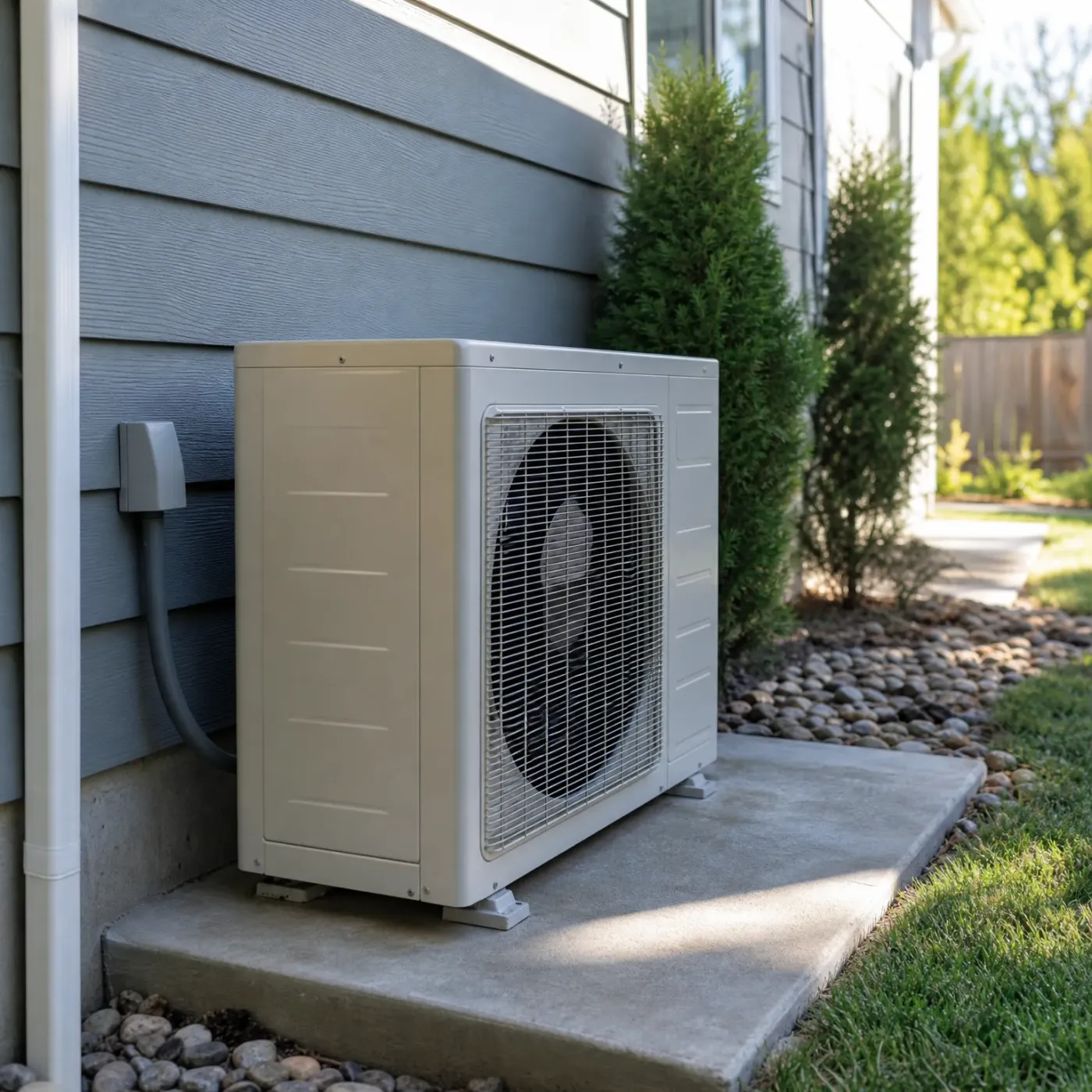
A gray outdoor heat pump unit on a concrete pad beside a house with gray horizontal siding, with conduit and an electrical box on the wall and a shrub at left.

How a heat pump pulls out moisture

A heat pump cools the same way a central air conditioner does. Air moves across a cold coil, moisture collects on that coil, and the system drains it away. If the coil never gets cold enough, or the air moves across it too fast, less water comes off. The house stays cool on the thermostat but still feels damp, because cooling the air and drying it are two different jobs.

An outdoor air-source heat pump unit with a dark grille stands on a concrete pad beside a white wall and wood-clad facade, surrounded by gravel.

Why short cycles leave moisture behind

A heat pump sized to cool the house fast will often shut off before it has run long enough to pull much water out of the air. It satisfies the thermostat, then stops. Over a humid Cuyahoga County evening that means the system turns on and off many times without ever drying the air the way a longer, steadier run would. A low refrigerant charge or a failing part can cause the same short cycling.

A smiling man in a denim shirt and white t-shirt stands in an open dark doorway of a stucco house, facing a woman with long brown hair and a green jacket seen from behind in the foreground.

The house tells you before the thermostat does

You notice it on the couch before you notice it on the display. The air feels heavy. Sheets feel damp. A door that usually swings free sticks a little. The thermostat might read 72 and the room still feels like it needs another ten degrees of work. That gap between what the number says and what your skin says is the moisture a struggling heat pump isn't pulling out.

It also shows up on the bill before it shows up as a breakdown. A heat pump working harder to hit the same temperature runs longer to do it, and power in Cuyahoga County isn't cheap to begin with. If this has been going on for a while, calling around for someone who can actually look at your system, explain what they find, and quote it straight is its own chore on top of a sticky house. Getting matched with a contractor who takes on your specific situation and reaches out to you skips that part, so you're not the one doing the legwork.

A gray upholstered sofa with a matching cushion sits beside a potted plant and a wooden table holding a small green plant in a stone pot, near a curtained window.
A gray outdoor condenser unit on a concrete pad beside a light-colored horizontal-siding house, with a disconnect box and refrigerant line on the wall, ornamental grasses and a shrub in mulch nearby, and a concrete patio in the foreground.

Running the way it should

The coil pulls heat and moisture out of the air at the same rate, the pad stays dry around it, and the line set runs steady to the disconnect. The house holds close to its setpoint, and the air doesn't feel heavy even when the afternoon outside does.


An outdoor condenser unit sits on a concrete pad beside a house with horizontal vinyl siding, with a gray electrical disconnect box and conduit on the wall and a shrub at left.

Struggling in the heat

The unit runs long stretches without the house catching up. The coil may be icing or barely cooling at all, so less moisture comes off it than a muggy Cuyahoga County afternoon puts into the air. The lines and disconnect look the same from outside. What's different is happening inside the cabinet.

Power here costs 16.27 cents per kilowatt-hour

At 16.27 cents per kilowatt-hour, a heat pump that runs long hours to fight humidity shows up on your bill fast. When it struggles to wring moisture out of the air, it runs longer to hit the same temperature, and every one of those extra hours gets billed at that rate.

EIA-861 2025

A woman in a cream sweater with her hair in a bun laughs while seated at a stone counter holding a glass of red wine, in a dimly lit interior with a sofa, houseplants and a large window at night.
A woman with long dark hair in a cream knit sweater laughs while looking off to the side, seated in front of a dimly lit kitchen with an island, stools, open shelving and a potted plant, with a glass of red wine in the foreground.
A smiling woman with long dark wavy hair in a light knit sweater sits at a marble counter with a glass of red wine, with a dimly lit living room and kitchen in the background.
A smiling woman with long wavy brown hair in a beige sweater sits at a white marble counter with a glass of red wine, with a living room, dining table and kitchen cabinets behind her.

Find a heat pump repair pro in Cuyahoga County

A heat pump that won't pull the moisture down is still running, still cooling, and still costing you on the power bill while the house feels wrong. That's a hard thing to diagnose from the couch. It could be a coil that isn't getting cold enough, a system sized for a furnace-and-AC load that never accounted for how much moisture Cuyahoga County summers carry, or airflow moving too fast across the coil to let water collect. Figuring out which one means someone checking charge, checking airflow, checking the coil itself, and most homeowners don't have the time to call around three or four contractors, describe the sticky rooms and the high bill to each one, and sit with different quotes trying to guess who's right. Hand off the finding-help part now, while the problem is still just discomfort and a higher bill, not a system that's given out from running long hours all summer.

A low charge might still cool the house to 72 while barely touching the humidity, so the system looks fine on the thermostat and still leaves the air heavy.

A properly charged heat pump with good airflow pulls moisture out steadily, which is why two systems set to the same temperature can leave very different air behind.

Why does a heat pump here have so much humidity to fight?

  • Winter nights average 23°F

    Winter nights average 23°F, so the heat pump spends cold months moving heat instead of moisture, and gets no practice at the job summer asks of it.

  • Heat runs October through May

    Heat runs October through May here, eight months out of twelve, leaving a short stretch for the same system to switch roles and pull damp air down to comfortable.

  • Cooling runs June through August

    Cooling runs June through August, just three months, so any weak charge or airflow problem shows up fast instead of spreading out unnoticed.

NOAA nClimDiv 1991-2020

Where This Leaves You

  • The thermostat reading 72 doesn't mean the system is working the way it should.

The damp feeling you notice on the couch or in the sheets isn't something you're imagining, and it isn't necessarily normal for a heat pump either. It usually comes down to one of a few things: a refrigerant charge that's lower than it should be, a coil that's dirty enough to block moisture collection, or airflow moving too fast across the coil to let that moisture drain off. Each shows up the same way at the thermostat, a house that feels heavy even as the temperature holds at 72, which is exactly why it's hard to diagnose from the couch.

What gets you an answer is someone who can check the charge, inspect the coil, and measure the airflow, then tell you which of those is actually the problem in your house. That's different from guessing, and different from letting the system run longer and longer while the bill climbs with it.

Finding that person is usually the slow part. Searching for contractors, calling a few, explaining the same symptoms each time, then sitting with quotes that are hard to compare because nobody looked at the same thing. None of that gets your air any drier. It just delays the part where someone actually looks at the system.

A beige outdoor heat pump or air conditioner condenser unit on a concrete pad beside a gray horizontal-siding house, with a disconnect box and conduit on the wall, shrubs, river rock and lawn nearby.

The right pro for this job

Request a pro

Fill out one short form instead of calling around.

You're not committing to anything by asking.