A dark gray furnace with two access panels stands in a basement, connected to galvanized sheet-metal ductwork and PVC pipes, with exposed wood framing and a bare bulb light in the background.

A pro who works on furnaces

Signs your furnace won't last an Ohio winter

An Ohio winter will find every weak spot in a furnace, from a flame that won't stay lit to rooms that never get warm to a gas bill that jumps for no reason you can see. This page walks through what those signs actually mean. If what you find below sounds like your furnace, you can get matched with a contractor who'll look at your system and reach out to you directly.

Connect with a pro

A furnace that won't make it through an Ohio winter usually tells you before it quits outright. Short cycling, a burner flame that's yellow instead of blue, a blower that runs but barely pushes warm air, or rooms that stay cold no matter how high the thermostat goes all point to a furnace struggling to keep up. These happen because the parts that manage heat, like the heat exchanger, the igniter, or the gas valve, wear down and stop doing their job evenly. Ohio winters push a furnace hard for months at a time, so a weak spot that was manageable in November can fail by January. A furnace running harder than it should also drives up a gas bill that was already going to be high. None of these signs mean the furnace is done, but they mean it's worth having someone look before the next cold snap finds the weak spot for you.

A bearded man in a blue and brown plaid flannel shirt stands indoors looking out a window at snow-covered trees, with a ceramic mug on the windowsill.
A smiling man with dark curly hair in a navy t-shirt sits on a gray couch indoors, with a large-leafed plant and a window in the background.

How a Furnace Actually Fires

  • A furnace that ignites, runs for a minute or two, then shuts off is short cycling, usually from a cracked heat exchanger or a dirty flame sensor.
  • A blue flame burns clean; a yellow or flickering flame means the burner isn't getting enough air and may be producing carbon monoxide.
  • The heat exchanger passes heat from the burner into the air your blower circulates, and once it cracks, the furnace has to be replaced, not patched.
  • A blower that runs constantly without the burner cycling with it often points to a failing limit switch, which is meant to protect the heat exchanger from overheating.
  • Furnaces fire through an ignition sequence: the inducer motor starts, the igniter or pilot lights the burner, and the flame sensor confirms it before the blower kicks on.
  • If any step in that sequence stalls, the furnace locks out rather than keep trying, which is why a unit that won't start at all is often safer than one that limps along.

A furnace doesn't just flip on. The inducer motor starts first, clearing the heat exchanger of exhaust gas before anything lights. Then the igniter glows hot enough to light the burner, or on an older unit, a standing pilot does the same job. The flame sensor, a thin metal rod sitting right in the flame, checks that the fire actually caught. Only after it confirms that does the blower kick on and push warm air into the house. Each step depends on the one before it. A furnace that short cycles is usually stalling partway through this sequence, often because a dirty flame sensor can't tell the control board the flame is real, so the board shuts the gas back off rather than risk it. A cracked heat exchanger causes the same kind of shutdown, but for a different reason: a limit switch senses the heat isn't moving where it should and cuts the burner to keep the exchanger from overheating further. That switch is doing its job correctly when it does this. The flame color tells you something too. Blue means the burner is getting the air it needs to burn clean. Yellow means it isn't, and that incomplete burn can put carbon monoxide into the air your blower is circulating through the house. None of these are separate problems. They're different points in the same chain, and where the chain breaks tells you what's actually failing.

A gray high-efficiency furnace with white PVC vent pipes stands beside sheet-metal ductwork and a water heater in an unfinished basement with concrete walls and wood framing.
A high-efficiency furnace like this one vents through PVC pipe and holds a steady flame without hunting or surging.
A beige gas furnace with a metal flue pipe stands in a basement against concrete block walls, beside sheet-metal ductwork, copper and white plastic pipes, and a water heater at right.
An older furnace on galvanized ductwork like this one is the kind that struggles once the temperature outside drops into the teens.
  1. Burner ignites and ramps up to full flame within seconds.

  2. Flame sensor confirms the fire and keeps gas flowing.

  3. Blower pushes heated air through the ductwork into each room.

  4. Thermostat reaches set temperature and signals the burner to shut off.

What is your furnace doing right now that worries you

You might notice the burner clicking on and off every few minutes instead of running a normal stretch. You might hear a boom at startup, or notice the blower sounds like it's working harder than it used to. Some rooms never get warm even with the thermostat turned up, so you end up running space heaters or closing vents to compensate. The gas bill climbs faster than the weather seems to justify. Maybe there's a burnt smell the first few times it runs, or a flame you can see is more orange than blue. None of these mean the furnace is done, but a furnace that's struggling in November usually isn't getting easier to live with by January, and a cracked heat exchanger or a blocked vent can put carbon monoxide into the house.

A beige high-efficiency furnace in an unfinished basement, with white PVC vent pipes, a yellow gas line, metal ductwork, and exposed wood framing on a concrete floor.

Running the way it should

This furnace vents through PVC pipe and ties into sheet-metal ductwork with a steady connection at every joint. The flame holds without surging, and the gas line and wiring are secured and out of the way. Nothing here is fighting to keep up.

An older beige furnace with two louvered vent panels stands on a concrete basement floor, connected to galvanized ductwork and a metal flue pipe, with gas piping and flexible conduit on the wall behind.

Showing its age

Black iron gas pipe and flexible conduit feed this older unit, and the louvered panels are the kind that rust through after years on a concrete floor. The galvanized flue climbs into ductwork that has carried warm air for a long time. When it gets below freezing outside, this is the furnace that struggles.

Winter nights average 23°F statewide

On a 23°F night, a furnace that short cycles or runs a weak flame has to work through hours of cold before sunrise. A furnace in good shape holds a steady burn until the house is warm. One that can't is working against the night, not with it.

NOAA nClimDiv 1991-2020 county normals weighted by homes

A gray high-efficiency furnace in a basement, connected to sheet-metal ductwork on the left and white PVC vent pipes above, with black gas and drain piping and an exposed wood-stud wall with OSB sheathing on the right.

Built for the stretch

This furnace vents through white PVC pipe and ties into clean sheet-metal ductwork, with black gas lines run tight along the wall. The flame holds steady once it lights. A setup like this handles a January cold snap without drama.

An older gas furnace with two louvered front panels stands on a concrete basement floor beside galvanized sheet-metal ductwork, pipes, and a weathered concrete wall.

Wearing down

Louvered metal panels and copper lines sit on a concrete floor showing moisture staining along the walls. Ductwork this size depends on a strong, steady burn to heat the house. Once the furnace behind it starts slipping, the signs show up here first.

A gray sheet-metal furnace with flue pipe and adjacent ductwork stands against a stone basement wall on a concrete floor, with white PVC and metal pipes running nearby.
Before you get your furnace repair
A gray high-efficiency furnace with white PVC vent pipes stands against a concrete basement wall beside sheet-metal ductwork, a small condensate pump on the floor, and exposed wood framing at left.
After you get your furnace repair

Get your furnace to the right pro

Get the furnace repair search off your mind today.

There's no charge for the request.

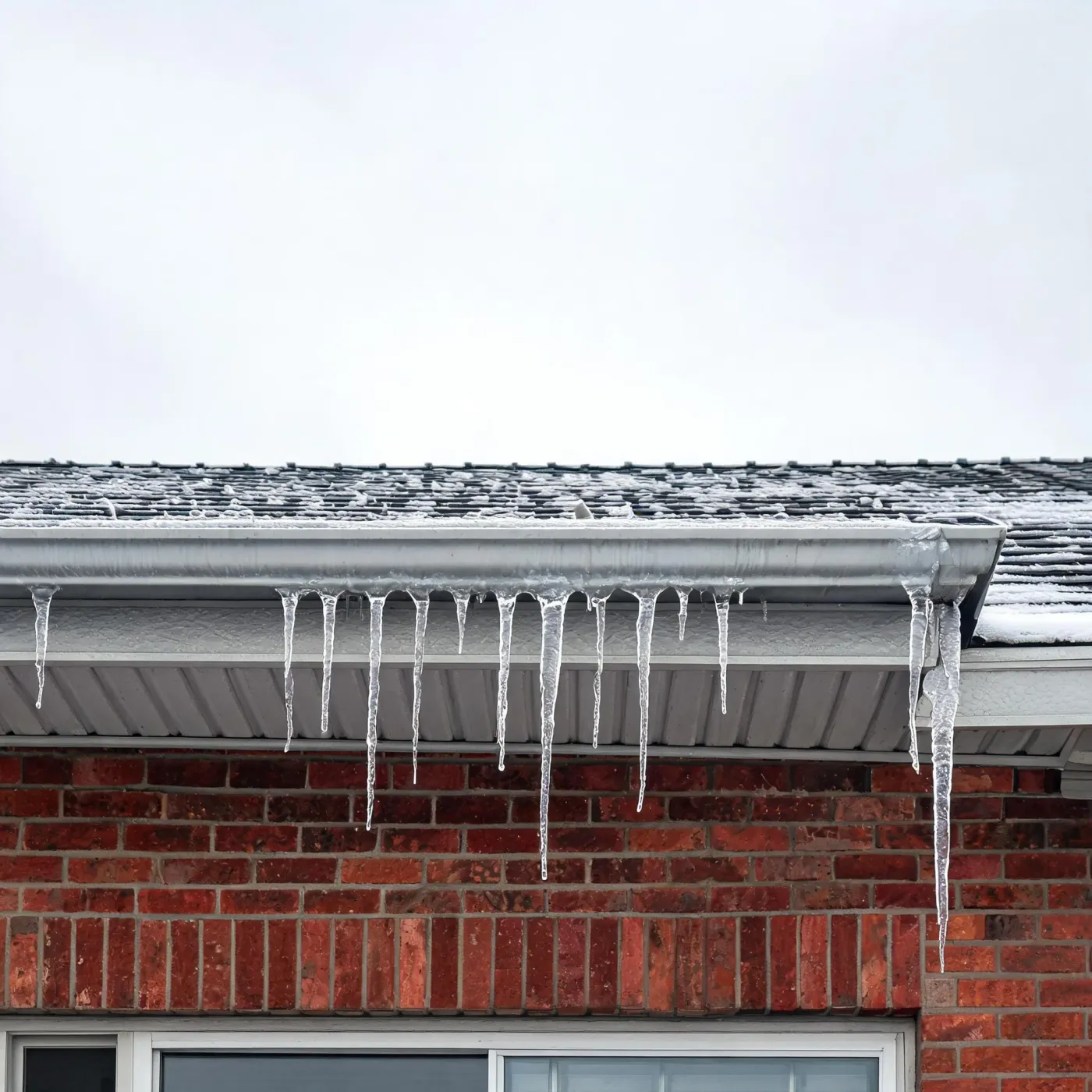
Icicles hang from a metal gutter along the eave of a red brick house with a snow-dusted shingle roof under an overcast white sky.

A furnace doesn't get a break overnight. Statewide, winter nights average 23°F, and that's the stretch when a weak furnace has the most hours to fail. The burner has to hold its flame for hours straight, not just cycle on for a few minutes and shut off again. If the heat exchanger is cracked or the flame sensor is fouled, that's when you'll notice it, around 2 or 3 in the morning, with the house losing ground and the thermostat climbing nowhere. A furnace that's running right doesn't care what time it is. One that isn't will tell you by morning.

NOAA nClimDiv 1991-2020 county normals weighted by homes

Why does my furnace keep shutting off and restarting?

You've noticed it happening more as the weather's turned cold. The burner lights, runs for a minute or two, then clicks off, waits, and starts up again, instead of running until the house actually warms up. It's not keeping the thermostat satisfied, and you're wondering if it's something minor or the start of a bigger problem heading into the worst of an Ohio winter.

It's called short cycling, and it's usually the flame sensor or a cracked heat exchanger

A furnace that fires, runs briefly, then shuts off is short cycling. Most often the flame sensor has a layer of buildup on it and can't confirm the burner is lit, so the control board cuts gas as a safety measure. The other cause is a cracked heat exchanger, which trips a safety switch the same way. Either one leaves the burner running in short bursts instead of a full heating cycle, which means the house never gets a steady stretch of warm air. On a night in the low 20s, that pattern adds up fast. The furnace is working, just not long enough at a time to keep up.

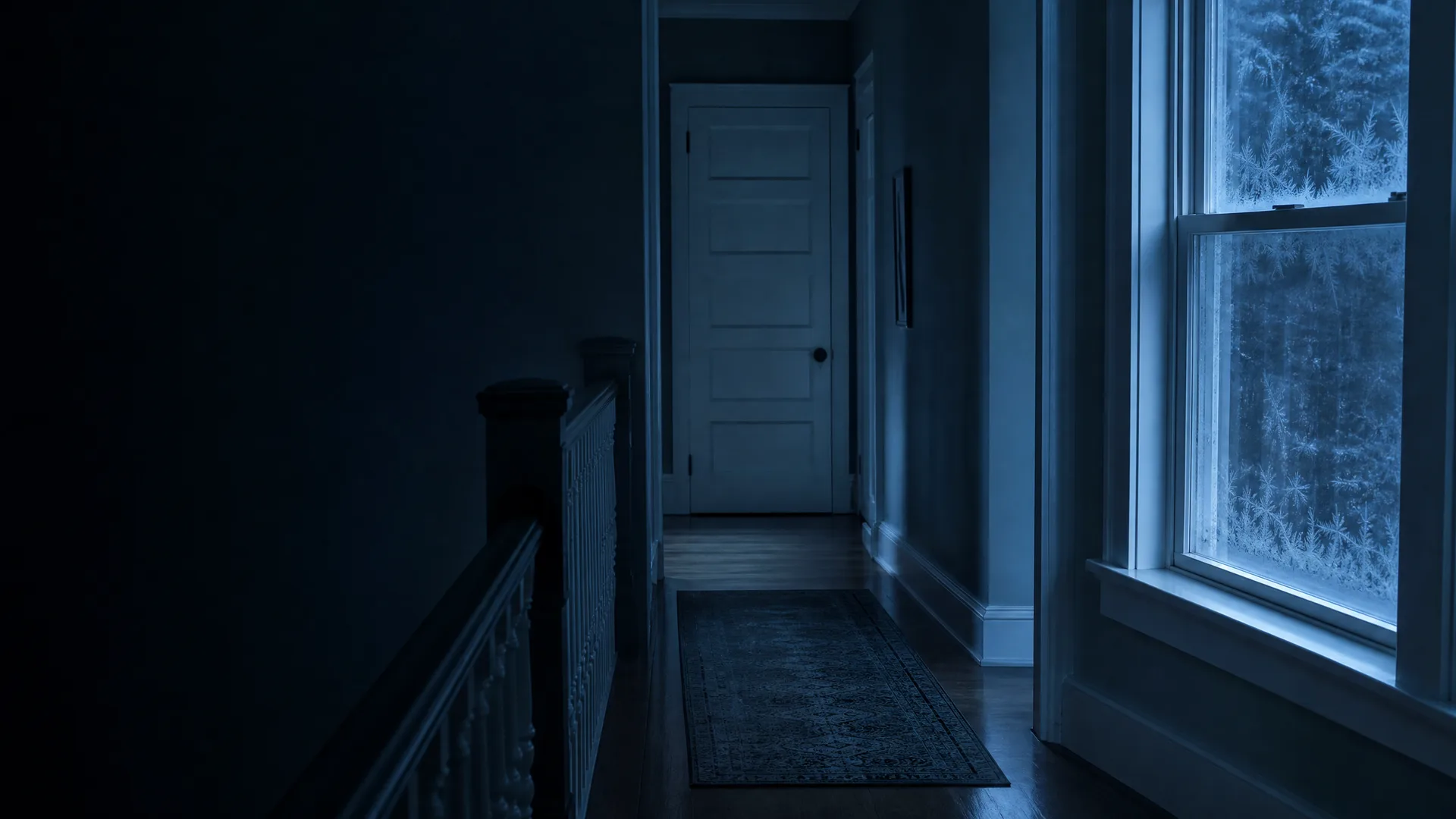
Dimly lit interior hallway at night with a closed white paneled door at the end, a long runner rug on a wood floor, a stair railing at left, and a frost-covered window admitting blue light at right.

It's two in the morning and the house is quiet except for the cold. You're standing in the upstairs hallway because something woke you, maybe the draft under your sock feet, and the vent by the bathroom door isn't pushing anything. No hum from downstairs. No warm air rising to meet you. The window at the end of the hall has frost crawling up from the sill, and the glass throws back a thin blue light from the streetlamp outside. You hold your hand over the vent grate and feel nothing moving. Outside it's in the teens. Somewhere below, the furnace has already stopped trying.


A woman stands in the open front doorway of a single-story house with stone and wood siding while a man in a dark polo shirt and cap walks toward it along a concrete path.

Here's where that leaves you

A furnace that short cycles, burns yellow, or leaves rooms cold is telling you something now, while you still have the choice of fixing it on your own schedule instead of a 2 a.m. one. None of what's above means the furnace is done. It means something specific is wrong, and a furnace repair technician can tell you which part and what it takes to fix it.

From here, finding the right person for the job isn't something you have to sort out alone. Send the details through and a contractor who works on furnaces in your area will reach out to you directly, already knowing what you've described. You go back to a warm house, not a search for one more name to call.

Interior corner with sheer white curtains at a window, a brown upholstered sofa in the foreground, and a wooden multi-drawer cabinet holding a round ceramic vase with leafy branches.
A woman in a cream cowl-neck sweater sits by a window with snow outside, in a dimly lit living room with a sofa, lit lamp, mirror, candles and a fireplace.
A woman in a gray turtleneck sweater sits beside a large window looking out at snow-covered evergreen trees, in a dimly lit living room with a lit fireplace, lamps, couch and houseplant.
A woman in a cream turtleneck sweater stands beside a large window with snow-covered ground and bare trees outside, in a dimly lit living room with lamps, a sofa and framed art.
A woman in a grey cowl-neck sweater stands indoors near a window, looking out at falling snow, with a lamp, framed picture and couch in the warmly lit room behind her.

Furnace Repair

The right pro for this job

Once you send the form, finding a pro is off your list.

A black smartphone standing upright against a plain light gray background, its screen filled with solid green.
RepairFurnace or heatingOhio
Step 1 of 2

What ZIP code is the job in?