


Why your furnace won't turn on in an Ohio winter

Send the request and finding a pro stops being your problem.

RepairFurnace or heatingOhio
Step 1 of 2

What ZIP code is the job in?

Why won't my furnace turn on?

Cold hits and the furnace just sits there, no heat, maybe not even a sound from it. In an Ohio winter that gets serious fast, and most houses here run on gas, so when the furnace goes quiet you need to know whether it's something small or something that needs a trained eye before the house gets too cold.

Usually it's the thermostat, the power, the gas, or the igniter

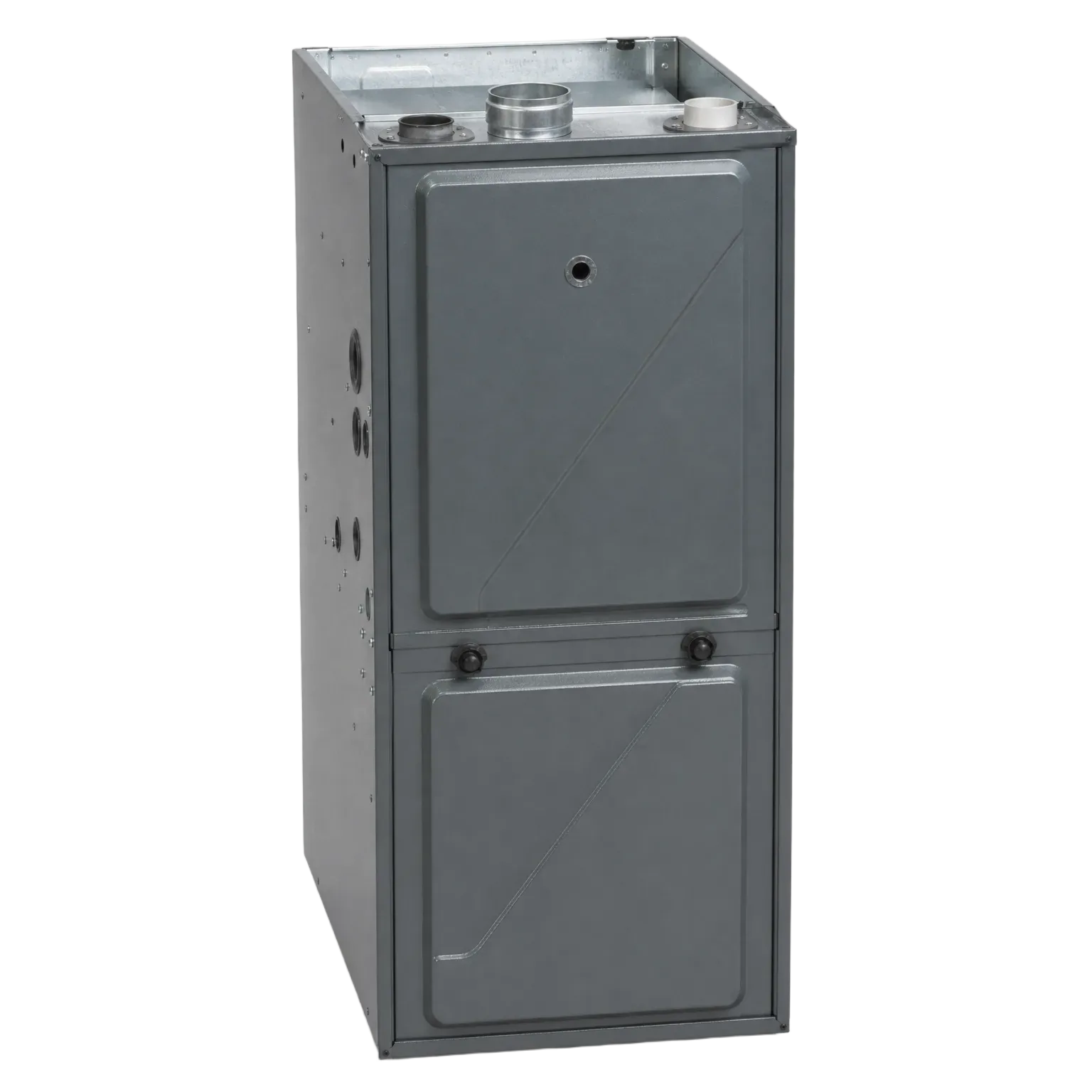
A furnace that won't start is almost always failing at one of a few points. The thermostat might be set wrong or dead on batteries. A tripped breaker or a flipped switch near the furnace cuts power to it entirely. If the gas valve got shut off, the burners have nothing to light. And a bad igniter, the part that actually lights the gas, is one of the most common reasons a furnace runs through its startup cycle and then quits. With gas heat in most Ohio homes and power rates high here, a furnace that short-cycles or won't fire at all needs a real diagnosis, not guesswork, before the house loses heat on a cold night.

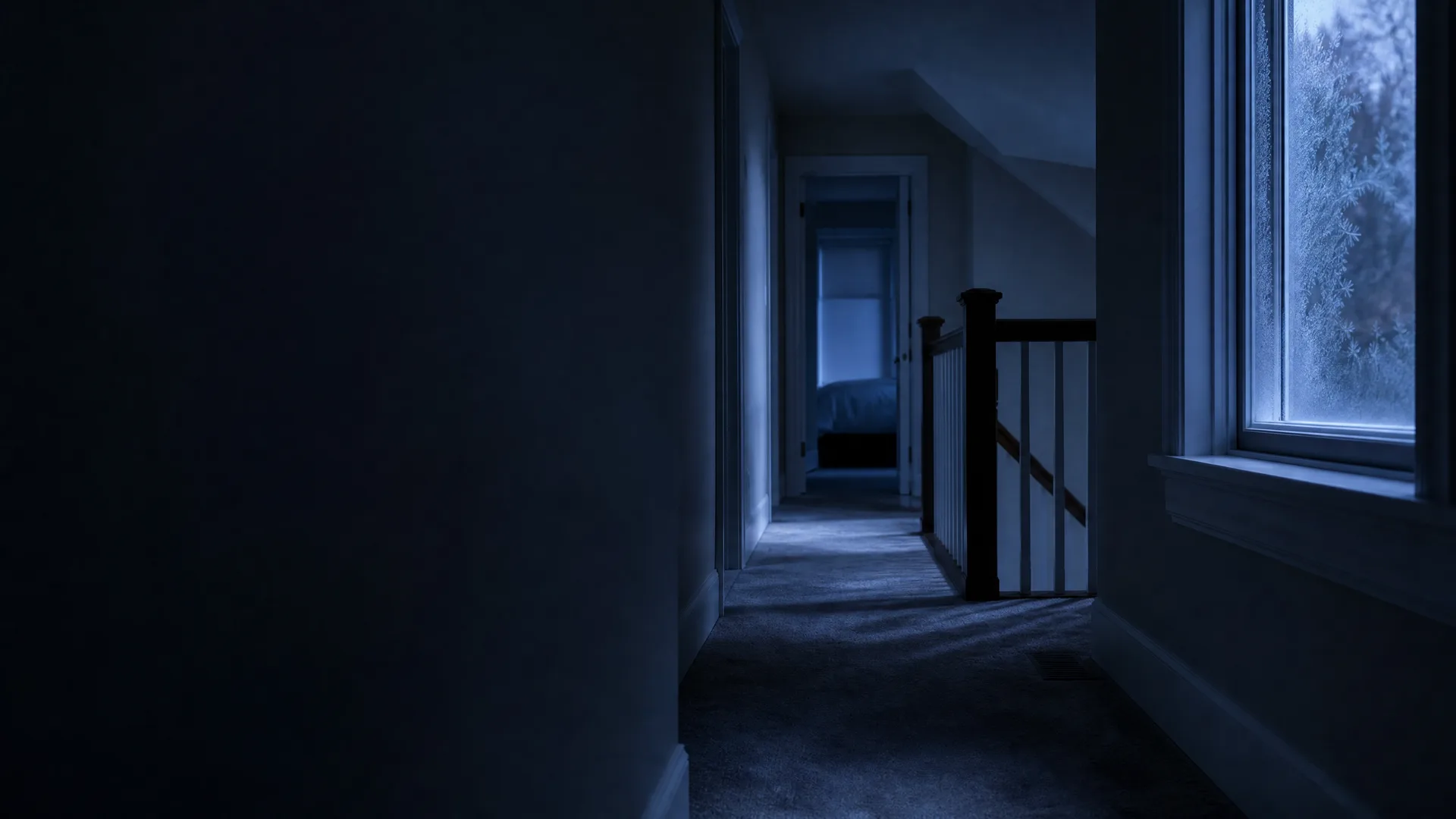
A dim carpeted upstairs hallway at night, with a stair railing on the right, a frosted window letting in blue light, and an open doorway to a bedroom at the end.

You wake up at two in the morning because the house feels wrong. The vents in the hallway aren't breathing. You stand there in the dark and hold your hand over the grate and feel nothing coming up. The window at the end of the hall has frost crawling in from the corners, and the glass throws back a thin blue light from the streetlamp outside. Nobody else is up. The thermostat is somewhere downstairs, out of sight, and you already know what it will say before you look. Ohio in January doesn't wait for morning. You stand in the cold hallway and listen for the furnace to kick on, and it doesn't.

A gray high-efficiency furnace in a basement, connected to sheet-metal ductwork on the left and white PVC vent pipes above, with black gas and drain piping and an exposed wood-stud wall with OSB sheathing on the right.
This furnace is firing on demand, moving warm air through the ducts with nothing to interrupt it.
An older gas furnace with two louvered front panels stands on a concrete basement floor beside galvanized sheet-metal ductwork, pipes, and a weathered concrete wall.
This furnace shows corrosion and moisture damage around it, the kind of wear that leads to a no-start call.
  1. Thermostat calls for heat and signals the control board

  2. Control board checks the pressure switch and limit switch first

  3. Inducer motor starts and pulls air through the heat exchanger

  4. Pressure switch confirms draft before the igniter is allowed power

What would you actually notice right now

Touch the vents and feel nothing moving, not even cool air. The thermostat might show the temperature climbing down a degree at a time while the display still says it's calling for heat. Some furnaces click a few times trying to light, then quit. Others stay dead silent, no fan, no hum, nothing. You might notice the house holding a chill no blanket fixes, or the rooms farthest from the furnace going cold first. If this drags on, pipes against outside walls are the ones that freeze, and that's a repair that costs a lot more than the furnace itself.

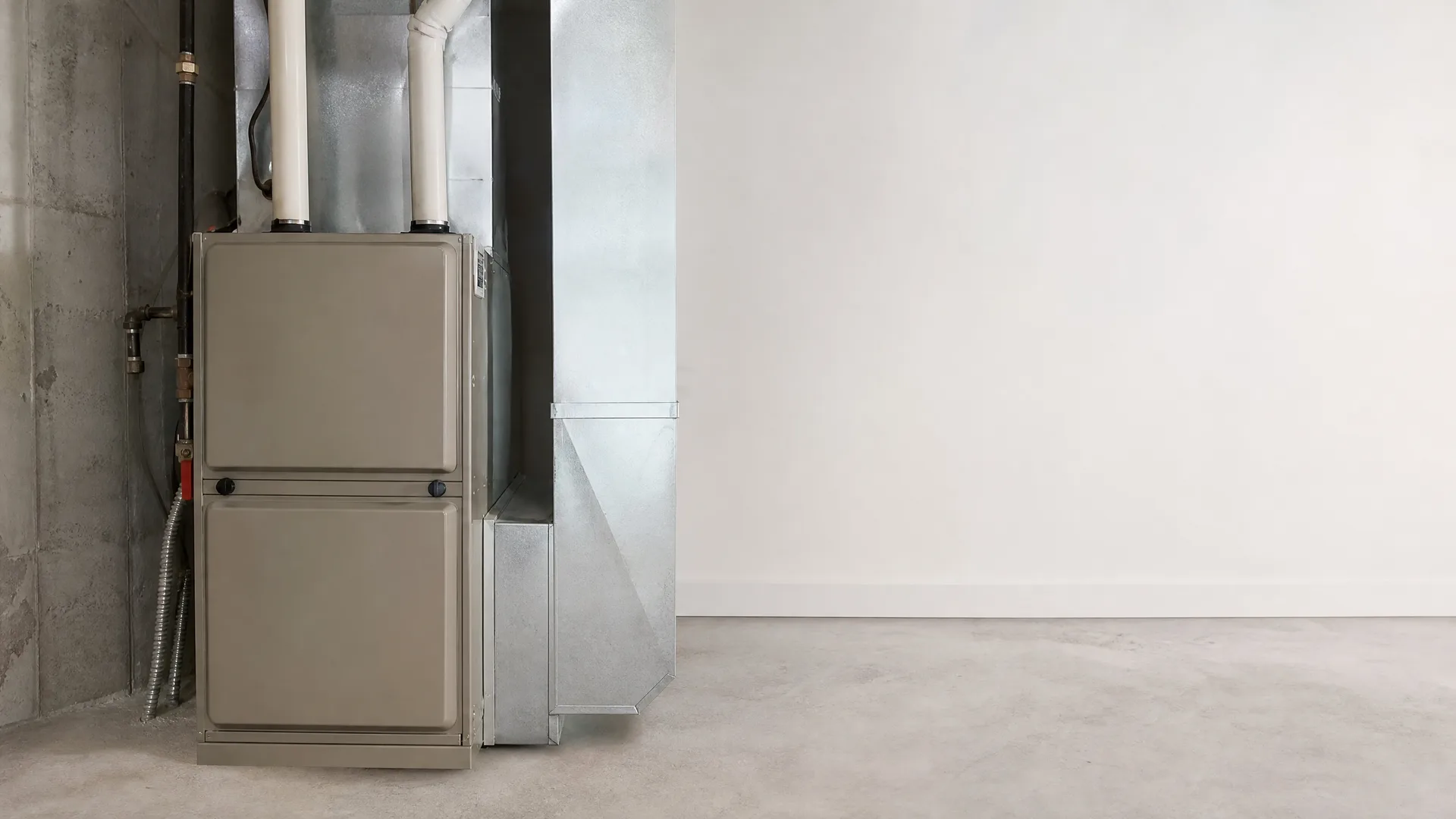
A beige high-efficiency furnace with two white PVC pipes stands beside sheet-metal ductwork and a concrete wall in an empty basement with a bare light-colored wall and concrete floor.

The pressure switch stops a lot of calls

That switch checks that the inducer motor is actually pulling air through the vent pipe before the igniter gets power. If the pipe is blocked by ice or the motor is weak, the switch stays open and the furnace won't go any further. It isn't being cautious for no reason. Without draft, exhaust has nowhere to go, so the board is built to stop right there.

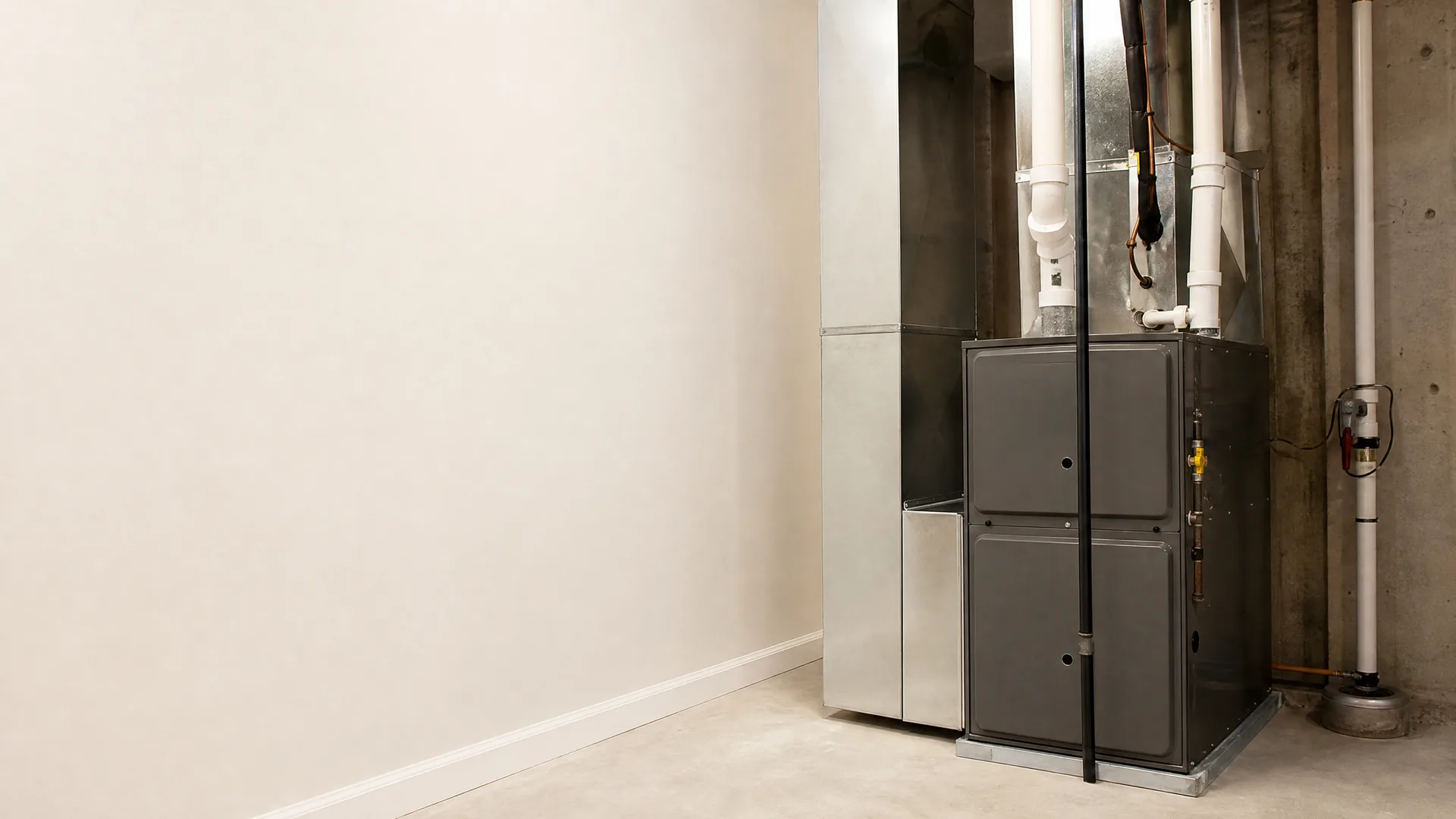
A gray furnace with sheet-metal ductwork and white PVC vent pipes stands in the corner of a finished basement room with a blank beige wall and concrete floor.

Cold makes weak parts fail first

A furnace that limped along in October can quit outright once it's running for hours at a stretch in January. An igniter with a hairline crack, a flame sensor coated in a little buildup, a capacitor that's lost some of its charge, all of them get found out by a long cold snap, not a mild one. That's why a lot of these calls land on the coldest week of the year instead of the first cool morning.

Check It Yourself or Call Now

Call for repair now

  • The furnace won't start on its own and every hour without heat matters when it's below freezing outside.
  • A licensed local contractor can test the pressure switch, igniter and control board and find which one is stopping the cycle.
  • Someone who works on furnaces all winter in this area has likely seen the same failure in another house on your street.
  • You send one request and hear back from one contractor, not a handful of companies competing for the job.
  • Pipes can freeze in a house with no heat, so a furnace that won't fire is worth treating as urgent, not something to watch for a few days.

Try it yourself first

  • Check that the thermostat is set to heat and the temperature is above the current room temperature before assuming the furnace is broken.
  • Look at the furnace switch, which resembles a light switch near the unit, and confirm it hasn't been bumped off.
  • Check the breaker panel, since a tripped breaker will shut the furnace down with no warning and no sound.
  • Look outside at the vent pipe for a furnace that uses one, since ice or snow blocking it can stop the inducer motor from satisfying the pressure switch.
  • If the furnace still won't fire after these checks, the cause is inside the unit and needs a contractor to open it up and test it.
A gray high-efficiency furnace with white PVC vent pipes stands against a concrete basement wall beside sheet-metal ductwork, a small condensate pump on the floor, and exposed wood framing at left.

A furnace cycling the way it should

This is a newer high-efficiency furnace, the kind that vents through PVC pipe instead of a metal flue. Warm air moves through the ductwork above it without any hesitation. The condensate pump at the base is doing its job, clearing the water this type of furnace produces as it runs.


A gray sheet-metal furnace with flue pipe and adjacent ductwork stands against a stone basement wall on a concrete floor, with white PVC and metal pipes running nearby.

A furnace that's stopped answering the thermostat

An older furnace like this one sits in a stone and block basement, gas lines and flex tubing running into it. When a furnace this age won't fire, a cracked heat exchanger, a failed igniter or a stuck gas valve are all things a contractor checks before anything gets turned back on.

A metal furnace with louvered panels stands against a concrete basement wall, connected to sheet-metal ductwork and a round flue pipe, with wooden framing posts and a pipe nearby.
Before you get your furnace repair
A gray gas furnace stands on a concrete basement floor, connected to sheet-metal ductwork, white PVC vent pipes, and a yellow gas line, with plastic sheeting covering the walls.
After you get your furnace repair

Hand off the search today

The pro who reaches out is licensed in Ohio.

No fee to send it, and nothing to sign.

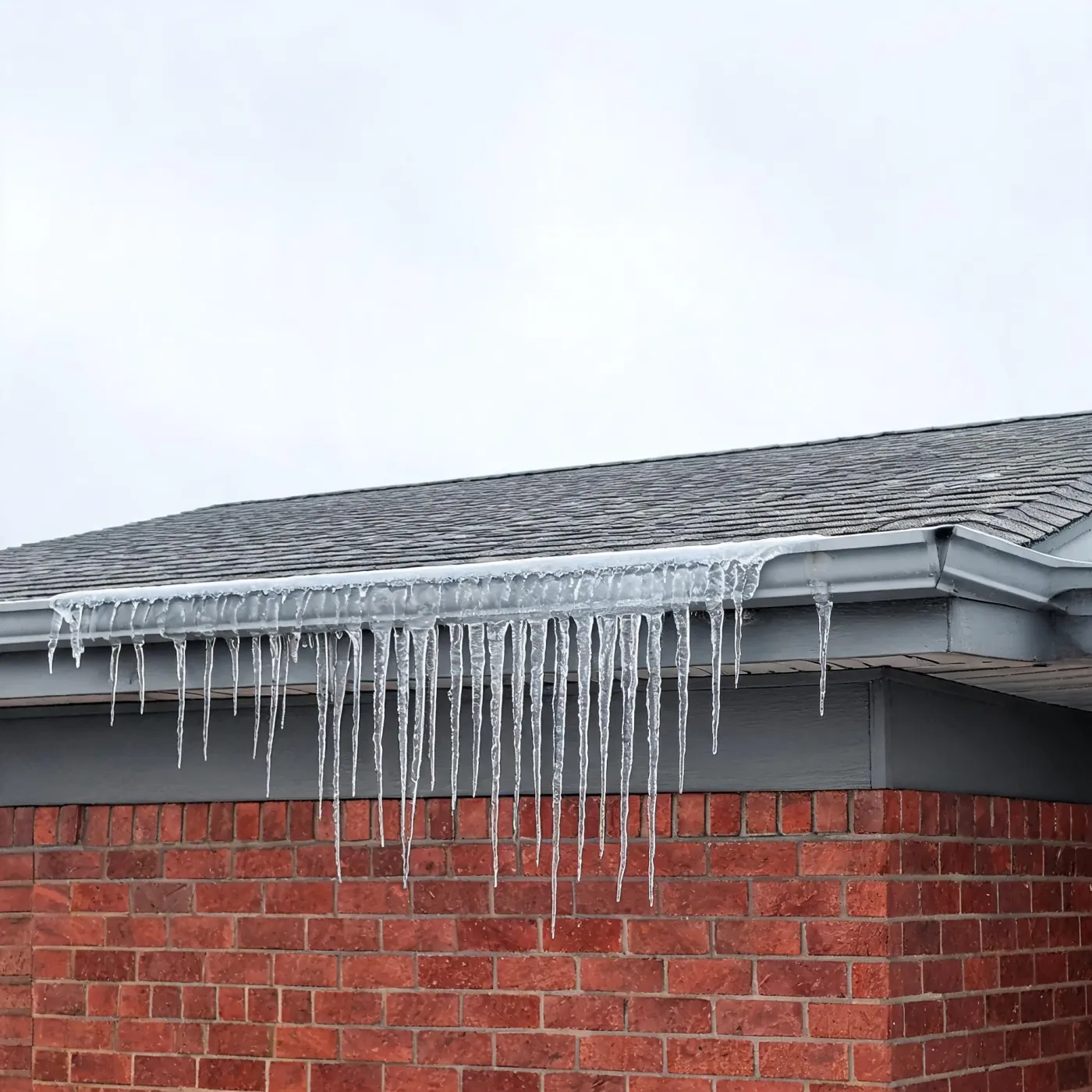
Icicles hanging from a gutter along the edge of a shingled roof above a red brick wall and gray siding, under an overcast sky.

Statewide, winter nights average 23°F, and that's the stretch where a furnace earns its keep. Below freezing, a furnace that used to cycle on and off a few times an hour starts running longer, more often, pulling more gas and more power each time it fires. If the pressure switch or igniter is already weak, this is when it gives out, because the furnace is working harder and more often to keep up. A house that held steady at two or three degrees of drift in October can lose ground fast on a night like this, and it won't recover on its own. Source: NOAA climate normals.

NOAA nClimDiv 1991-2020 county normals weighted by homes

A man with greying hair in a dark green sweater sits on a light sofa in a sunlit living room, looking off to the side, with a large window, table lamp, framed art and white built-in shelves behind him.
A gray-haired man in a dark navy sweater sits on a light sofa in a living room, looking toward a sunlit window with a houseplant and wooden cabinet behind him.
A gray-haired man in a dark green ribbed sweater sits on a light sofa in a living room, looking toward a sunlit curtained window with a potted plant and lamp nearby.
A middle-aged man with gray hair and a beard, wearing a dark green sweater, sits on a light sofa in a sunlit living room with large windows, a potted plant, and a dining area in the background.

Wait it out

You keep checking the thermostat and resetting the breaker, hoping it starts on its own. Meanwhile the house keeps losing heat and pipes sit closer to freezing with every hour.

Send my request

Get it looked at

A licensed local contractor who works on furnaces all winter finds the failed part and gets the heat running again, without three different companies calling you back.

Send my request
A woman with shoulder-length dark brown hair in a cream knit cardigan sits in an upholstered armchair beside a window, looking off to the side, with a white bookshelf and potted plant blurred behind her.
A woman with her hair in a bun sits wrapped in a beige knitted blanket on a couch, holding a sleeping child against her chest in a warmly lit room with a lamp and houseplant in the background.

What stops the cycle, exactly

  • A flame sensor coated in a thin layer of carbon will tell the control board no flame is present, even when there is one.
  • The control board shuts the gas valve within seconds of a false no-flame signal, so the burners never get a real chance to stay lit.
  • A cracked heat exchanger will trip the limit switch on purpose, because the board is built to stop a furnace that could leak exhaust indoors.
  • Low battery voltage in a wireless thermostat can send a weak or incomplete signal that never reaches the control board at all.
  • A draft inducer that spins but doesn't reach full speed will hold the pressure switch open and stop the cycle before ignition.
  • Most control boards store a fault code as a series of LED flashes, which tells a technician where the cycle broke down before any panel comes off.

A furnace that won't start almost always failed at a specific checkpoint, not everywhere at once. The flame sensor is a small rod sitting right in the burner flame, and its job is to prove to the control board that gas is actually burning. Carbon builds up on it over time, the same way soot builds up on a candle jar, and once that coating gets thick enough the sensor can't read the flame anymore. The board doesn't wait around to find out why. It cuts gas to the valve within seconds, because a furnace that thinks it has an open gas valve with no flame is not something it's built to tolerate. A cracked heat exchanger trips a different safeguard, the limit switch, and that one is doing exactly what it should: stopping a furnace from pushing exhaust into the ductwork. The inducer motor has its own failure mode. It can spin without ever reaching the speed the pressure switch needs to see, and until that switch closes, the igniter never gets power. None of this is random. Most control boards count out the failure in LED flashes, a pattern repeated a few times in a row, and that pattern tells a technician which part of the sequence broke down before a single panel comes off the furnace.

Winter nights average 23°F statewide

At 23°F a dead furnace doesn't give you much time. Your house loses heat fast once the air stops moving, and pipes along outside walls are the first to feel it. That's the temperature range your furnace is built to run in all night, every night, this time of year.

NOAA nClimDiv 1991-2020 county normals weighted by homes

A furnace that won't start is almost always one part stopping the whole sequence: the pressure switch, the igniter, the flame sensor, the control board. Finding which one takes testing, not guessing, and that's what a licensed contractor does on the first visit. The kind who works on furnaces all winter in Ohio has seen this exact no-start call more times than almost anything else, because the parts that fail here fail from the same cold that's sitting outside your house right now. Send the request and one local contractor gets matched to your furnace, not several companies competing for the callback. You're not left checking the thermostat every twenty minutes or looking up part numbers at two in the morning. Someone who knows this equipment takes it from here. The house gets its heat back, and you get to stop thinking about the furnace at all.

Corner of a room with a white window at left, a white fireplace mantel with dark stone surround at right holding a weathered clay vase of leafy branches, and a cream upholstered sofa with a knit throw and tan pillow in the foreground.
A cushioned window seat with a brown lumbar pillow beside a white-framed window overlooking green trees, next to built-in cream cabinetry with shelves holding ceramic vessels and a wooden bowl.
An entryway with a dark wood console table holding a stone vase of olive branches and a shallow wooden bowl, a woven basket on the lower shelf, a framed landscape print on the wall, and a glass-paned wood door at left.
A wooden vanity cabinet with dark knobs and a beige stone countertop holding a round terracotta vase with leafy branches, beside a wood-framed mirror and a white sink.
Sunlit room corner with wide-plank oak flooring, white baseboard molding and beige walls, a window at left showing green trees, and a dark cabinet at right topped by a stone vase holding a leafy branch.

Let someone else find the pro

Your request stays with one local pro.

Find a licensed pro

You're not committing to anything by asking.