


What winter here does to a heat pump
Your furnace, or a heat pump standing in for one, has to work from October through May here. That is eight months of the year, longer than any other season you're buying for. The overnight low averages 22°F across December, January and February, and that number matters more than any average for the whole year, because 22°F is below the two marks that change how a heat pump behaves.
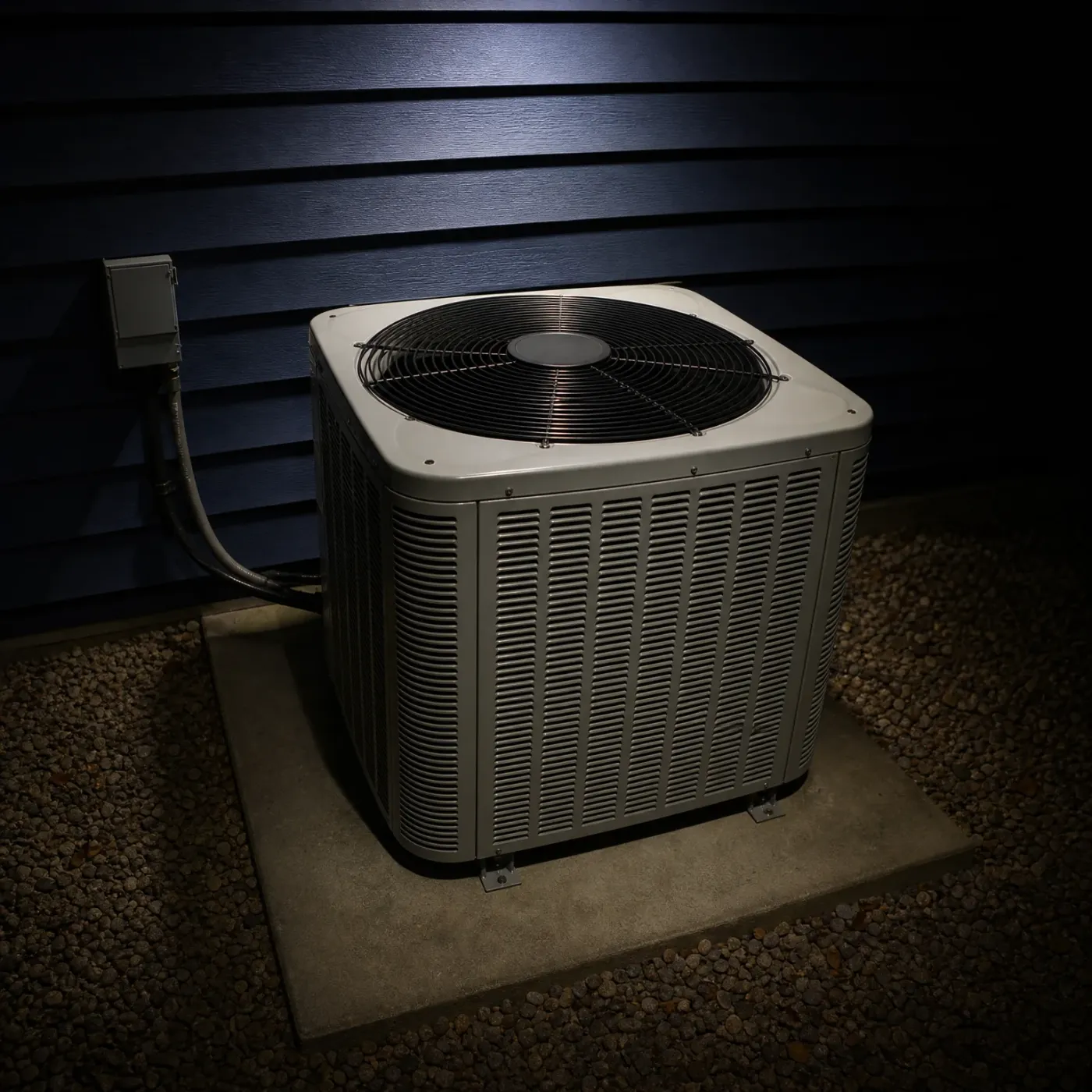
A standard heat pump starts losing heat output once it drops below 40°F outside. Below about 35°F, most need backup heat to keep up. Your winter average of 22°F sits under both marks, and so does every one of the roughly 125 nights a year here that fall to freezing or below. That is about half the nights across the eight months the heat runs. A heat pump in Lucas County isn't dipping below its best range occasionally. It's working below it most of the winter.
The nights that reach 0°F or below are rarer, about 6 a year, a small slice of the 125 freezing nights. A cold-climate heat pump, the kind certified to hold at least 70 percent of its capacity and a 1.75 efficiency ratio at 5°F, is built for nights like those. Field tests of prototype cold-climate units found backup heat covered only a small share of the output between 0°F and 35°F, and running on backup alone was rare above 0°F. A standard heat pump, the kind built to the federal minimum, doesn't carry that certification, and on your coldest nights it will lean on backup heat to make up the difference.