




Why heat pumps freeze up in cold Hamilton County winters

Let a pro reach out

A heat pump caked in ice in January is a hard thing to look at when you're not sure if it's normal or a sign something's wrong. In Hamilton County, with temperatures dropping the way they do, some frost is expected. A unit that stays frozen through a defrost cycle, or keeps blowing cold air, usually isn't. Either way you're the one stuck figuring out what's happening and who can actually come look at it. That usually means searching through contractor listings, calling a few, explaining the ice, the noise, the cold air, then doing it again with the next one, then sitting with quotes trying to judge who's worth trusting with a system you rely on all winter. Send the form here and that part is off your plate. You won't be the one tracking down a contractor or repeating the same story three times over the phone. That work moves off your list the moment you hit submit, and someone qualified to look at your system takes it from there.

Why does my heat pump keep freezing up in winter?

You've seen frost build up on the outdoor unit before, and the defrost cycle usually clears it. But when Hamilton County hits a hard cold snap and the ice doesn't go away, it's natural to wonder whether this is just how heat pumps behave here or whether something has actually gone wrong with yours.

Some frost is normal. Ice that doesn't melt between cycles isn't.

A heat pump pulls heat out of outdoor air that's already cold, and in the process the coil gets even colder than the air around it. Below freezing, moisture in the air lands on that coil as frost. The unit is built to handle this. It runs a defrost cycle every so often, reversing itself briefly to melt the ice off before going back to heating your house. When Hamilton County drops into the teens or lower for days at a stretch, that cycle has more work to do and less time between rounds to do it. If the ice keeps building anyway, something in the system, the defrost control, a sensor, the reversing valve, isn't doing its job, and the unit needs a look before it loses the ability to heat your house at all.

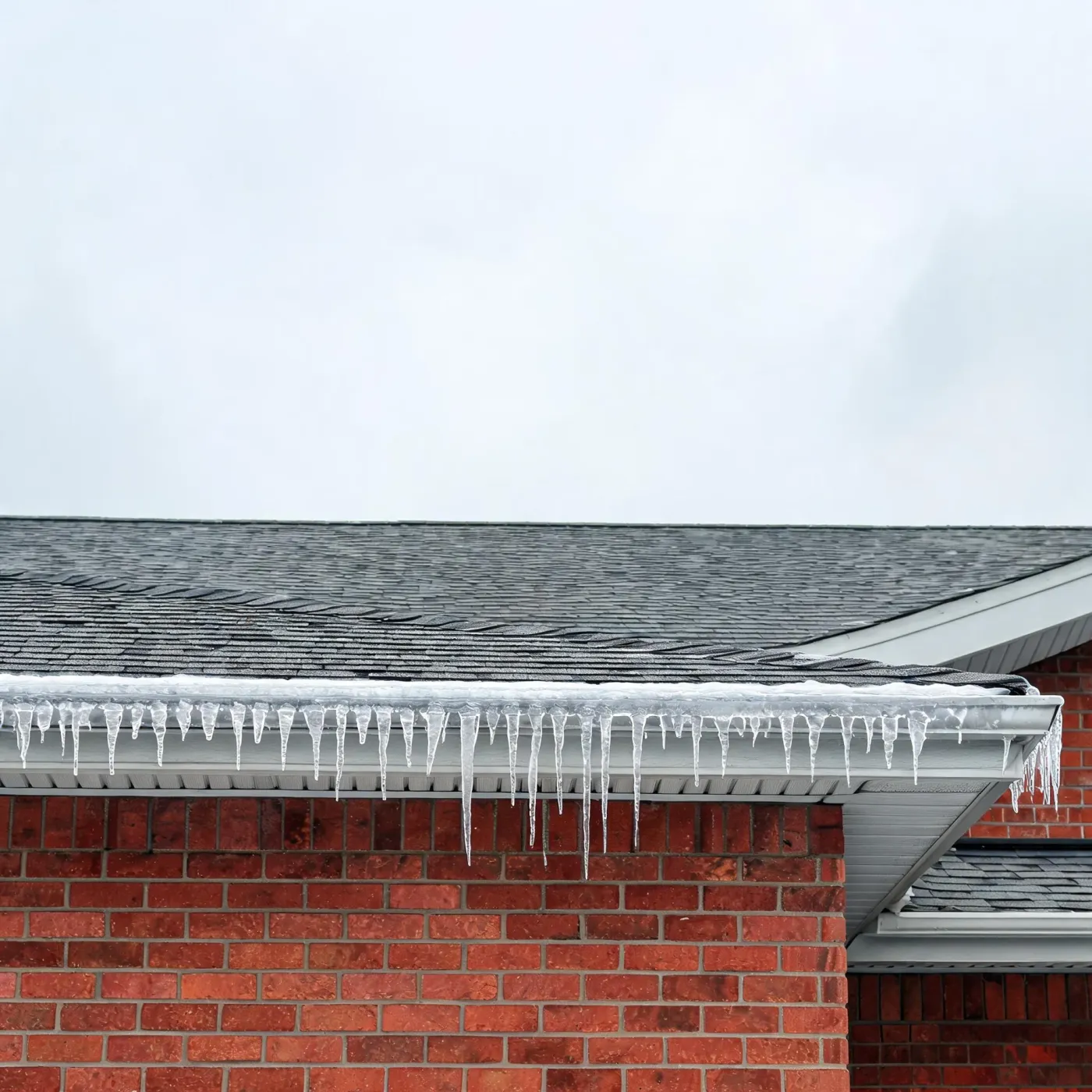
Icicles hanging from a white gutter along the edge of a gray shingled roof on a red brick house, under an overcast sky.

Weather.gov puts the average overnight low here at 25°F across December, January and February. That's below freezing for most of the night, three months straight. Your heat pump is built to run its defrost cycle through that, melting off the frost it collects, then going back to heating. The trouble starts when a night sits at 25°F or colder for hours without a break, because that's long enough for ice to build faster than a normal defrost cycle can clear it. You'll see it as a thick, solid layer on the coil, not the light frost that burns off in twenty minutes. If the unit is still iced over well after sunrise, something in that cycle isn't doing its job.

NOAA nClimDiv 1991-2020

Is the ice on your unit normal or a problem

Go look at the outdoor unit. A thin white coating on the coil is nothing. A thick layer of ice building up the cabinet, or ice on the ground underneath from water that's run off and refrozen, means the defrost cycle isn't keeping up. Listen for it too. A heat pump working normally cycles between heating and a brief defrost, and you might hear it switch over. One that never seems to run defrost, or runs loud and labored all the time, is struggling. If the ice keeps building through the night and into the day, the unit is pulling less heat into your house, your gas furnace or backup heat is picking up more of the load than it should, and your bill reflects it. Left alone, a frozen unit can damage the compressor.

A woman in a dark gray sweater reclines on a light sofa with eyes closed and a slight smile, under a textured gray blanket with an open book resting on her lap, with a lit table lamp and plant in the background.
A bearded man in a dark navy sweater over a collared shirt smiles and looks off to the side while seated at a dinner table with a glass of red wine, a lit candle, and a plate of food in the foreground of a dimly lit room.

Winter nights average 25°F

At 25°F, your heat pump is pulling heat out of air that's already cold, which takes longer and runs the coil colder than it would on a mild night. That's more hours of frost forming for every defrost cycle to clear before morning.

NOAA nClimDiv 1991-2020

How the defrost cycle works

  • The reversing valve flips the system into cooling mode for a few minutes to send hot gas through the outdoor coil.
  • The outdoor fan shuts off during defrost so heat stays on the coil instead of blowing away into the yard.
  • A sensor on the coil tells the control board when enough ice has built up to start the cycle.
  • Supplemental heat, usually electric resistance strips, kicks on inside so cold air doesn't blow through your vents during defrost.
  • The board ends the cycle once the coil sensor reads a set temperature, usually somewhere around 60 to 70°F.
  • A full cycle normally runs 5 to 15 minutes before the system switches back to heating your house.

The defrost cycle is the system working as designed, not a backup plan. When the control board decides the coil has enough frost on it, it reverses the refrigerant flow through the reversing valve, turning the outdoor unit into what is briefly an air conditioner. Hot refrigerant gas runs through the coil instead of cold, and that heat melts the ice from the inside out. The outdoor fan stops moving air during this part, because moving cold air across the coil would fight the heat trying to build up there. Inside your house, the indoor air handler keeps running, and since the system is in cooling mode outside, something has to cover for it so you are not getting cold air pushed through the ducts. That is what the electric heat strips are for. They switch on for the length of the defrost cycle, then shut off again once the system goes back to heating. A coil sensor or thermistor tracks the coil's temperature and tells the board when the ice is gone, usually somewhere in the 60s, and the whole thing reverses back. On a cold, humid night in Hamilton County this might happen several times, each one lasting long enough to clear what built up since the last cycle. When it does not clear, something in that chain, the sensor, the valve, the board itself, has stopped doing its part.

An outdoor air conditioner condenser unit on a concrete pad beside a house with horizontal lap siding, with a gray electrical disconnect box and conduit on the wall and bare dirt and mulch in the foreground.
Before you get your heat pump repair
A gray outdoor condenser unit on a concrete pad beside a light-colored lap-sided house, with a wall-mounted disconnect box and conduit, dark mulch, and a green shrub to the right.
After you get your heat pump repair

Finding a pro stops being your job

Describe what your heat pump is doing once, in one form.

There's no charge for the request.

Before you get your heat pump repair

The ice keeps coming back, and you're checking the outdoor unit every cold morning before work to see how bad it is. You're weighing whether to call someone or wait it out another week, and in the meantime you're looking up contractors, calling to see who can even come out, and explaining the same frost pattern to each one. Meanwhile the heat pump is struggling to pull warmth out of cold air through a coil that won't fully clear, so it's running longer and pulling more power to do it, on top of what gas heat is already costing you this winter.


After you get your heat pump repair

Once the form is in, finding someone to look at the defrost cycle isn't your job anymore. A contractor who knows what a stuck reversing valve or a bad defrost sensor looks like takes it from there. You stop checking the unit every morning wondering if today's the day it doesn't clear. Whatever part of the defrost cycle has been failing, a thermostat, a sensor, a valve that won't switch back, gets found and fixed by someone who's seen it before. The ice stops being something you have to manage yourself.

A smiling bearded man in a dark green hooded jacket and blue t-shirt sits on a couch in a living room with shelves, a potted plant, and a bowl of popcorn on a wooden table.
A smiling man in a green long-sleeved shirt sits on a beige sofa in a living room, with a bowl of popcorn in the foreground, a large potted plant and shelving behind him.
A smiling man in a dark blue T-shirt sits on a couch in a dimly lit living room with a bowl of popcorn and a remote on a wooden table, a lit floor lamp and bookshelves behind him, and windows showing greenery.
A smiling bearded man in a dark green long-sleeved shirt sits on a leather couch in a living room, with a bowl of popcorn and a remote control on a wooden table in the foreground.
A dark gray outdoor condenser unit on a concrete pad beside a house with beige horizontal siding, with a gray electrical disconnect box and conduit on the wall, mulch beds, a hosta plant, a shrub, and mowed lawn in front.

Running clean

This is what a healthy unit looks like outside, sitting on its pad with clear grilles and a clean top panel. Frost may show up on the coil on a cold night, but it clears when the defrost cycle runs and the cabinet stays free of buildup.

A weathered outdoor condenser unit on a concrete pad beside a house with light horizontal siding, surrounded by bare dirt and a shrub.

Choked and frozen

Grilles and the top panel caked in dirt and grime block airflow across the coil, and a unit working that hard to breathe runs colder than it should. That makes frost worse and gives the defrost cycle more ice to clear before it catches up.

A wooden table in the foreground holds a closed laptop and a ceramic mug of coffee, with a spindle-back wooden chair behind it, a beige wall with paneled wainscoting, a window at left, and a kitchen counter with a cutting board, bowl of fruit and greenery at right.

A frozen coil can't pull heat out of the air

When ice covers the outdoor coil, the system can't do its job. You'll notice the air coming out of your vents feels cooler than it should, or the heat pump runs and runs without the house catching up. Some homes here have a furnace backing up the heat pump, and that backup heat will carry more of the load than it's supposed to, which shows up on your bill. If yours doesn't have that backup, a coil that stays iced over means a cold house on a cold night, not just a cosmetic problem on a unit in the yard.

Left alone, it gets worse before it gets better. Ice that never fully clears between defrost cycles builds on itself, and a heat pump forcing its way through a frozen coil is straining a compressor that isn't built to work that hard. That's the difference between calling someone now and finding out later what a cracked line or a seized compressor costs to put right. You don't have to spend your evening searching contractor listings, calling around to find out who's free, and repeating the same explanation to three different people before you get a quote you can compare. Send this one, and that legwork is off your plate.

Interior corner of a dining room with a round wooden table, a ceramic vase holding olive branches, a dark spindle-back chair near a curtained window, and a sideboard with a lamp against beige walls.
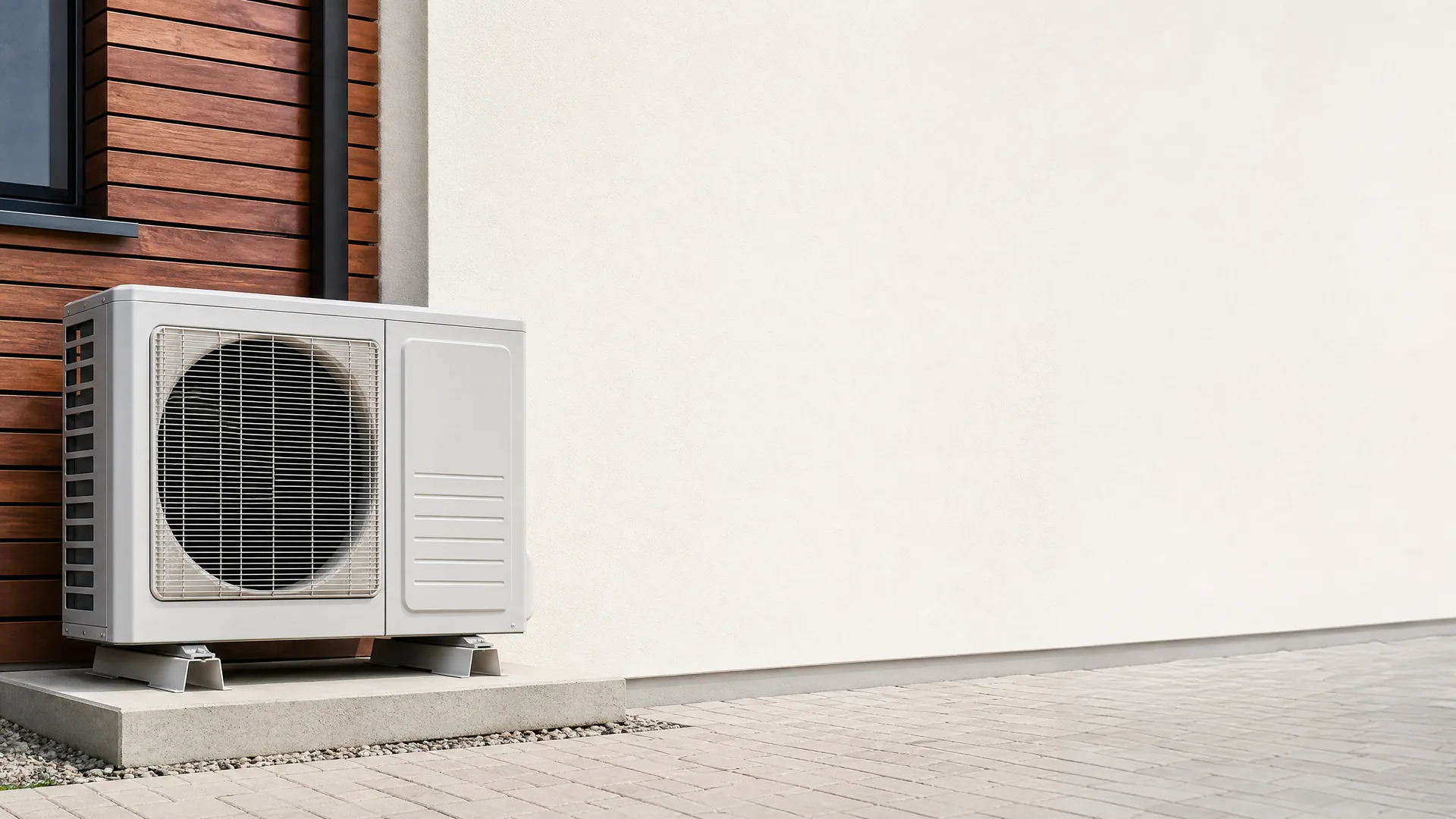
A white outdoor heat pump unit on a concrete pad beside a house with wood-slat siding and a large plain light-colored stucco wall, with paving stones in the foreground.

When it's a defrost problem

If the defrost cycle isn't clearing the ice, something in that process has failed. A stuck reversing valve, a bad defrost sensor, or a control board that isn't timing the cycle right will all leave frost to keep building instead of melting off. The outdoor fan may keep running when it should shut off, which blows the heat away from the coil instead of letting it melt the ice. None of this clears on its own.

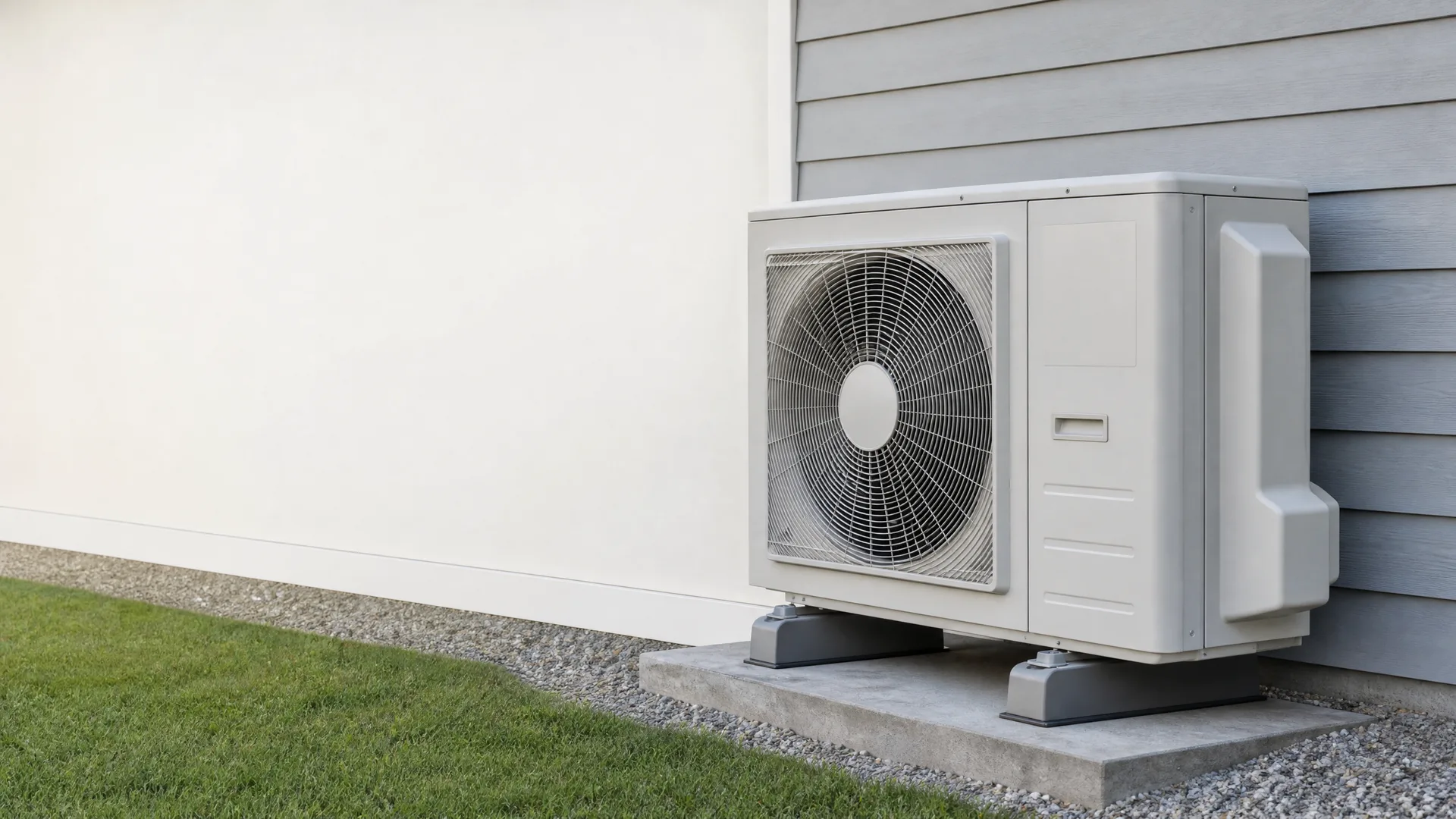
A white outdoor heat pump unit on rubber feet sits on a concrete pad beside a gray-sided house wall, next to a smooth light wall, gravel strip and lawn.

When it's a refrigerant problem

A low refrigerant charge runs the coil colder than it's supposed to get, so frost forms faster than a normal defrost cycle can keep up with, even if the cycle itself is working fine. A system low on charge from a leak will keep icing over no matter how many times it defrosts, because the coil temperature driving the problem never gets fixed. This one won't show up by watching the unit. It takes a gauge.

A heat pump that ices over and clears on its own through the night is doing what it's built to do. One that stays frozen into the afternoon, or keeps backup heat running nonstop, has a part that isn't doing its job: a reversing valve, a defrost sensor, a control board timing the cycle wrong. That takes someone checking the unit, not another morning of watching it. You could spend your evening searching contractor sites, calling around to see who answers, and explaining the same frost and the same runtime to each one before you even get a quote to compare. Send this instead, and that search is no longer yours to run. You'll still need the part fixed and the cycle checked, but you won't be the one tracking down who can do it.

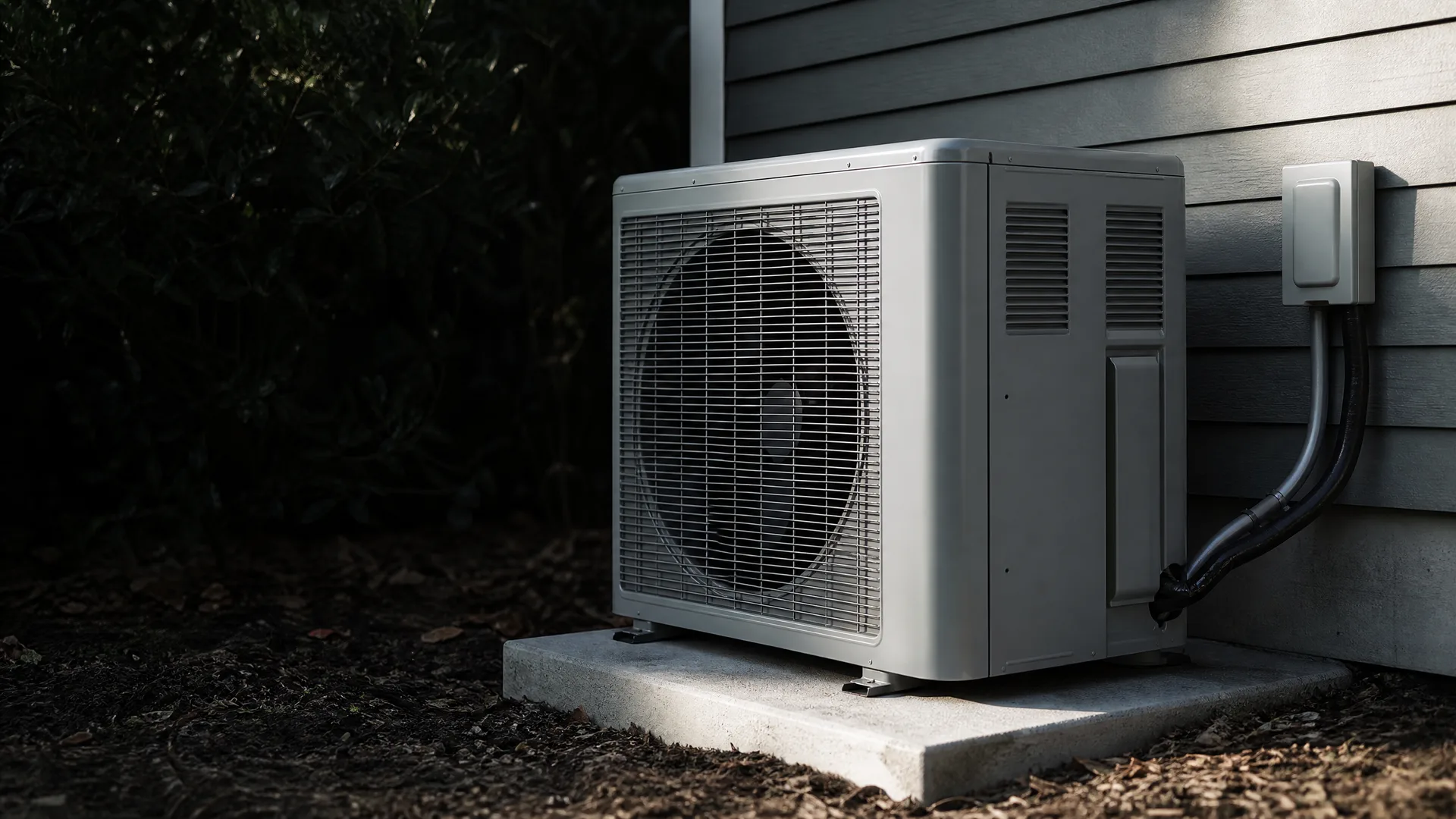
An outdoor air conditioning or heat pump condenser unit on a concrete pad beside a gray horizontal-sided house, with a disconnect box and conduit on the wall and dark shrubbery to the left.

Let someone else find the pro

RepairHeat PumpHamilton County, OH
Step 1 of 2

What ZIP code is the job in?