Eight months of heat
A furnace in Geauga County runs from October through May. That's most of the year asking the same ignition system, blower and burners to cycle on and off, day after day.
Takes about a minute. No obligation.
A furnace in Geauga County runs from October through May. That's most of the year asking the same ignition system, blower and burners to cycle on and off, day after day.
A furnace that runs this many months a year puts more hours on its igniter, blower motor and burners than one that only runs a few months. That schedule is usually why something is failing now instead of later.

NOAA nClimDiv, 1991–2020 normals
An old furnace can fail in one part while the rest of the machine is still sound.
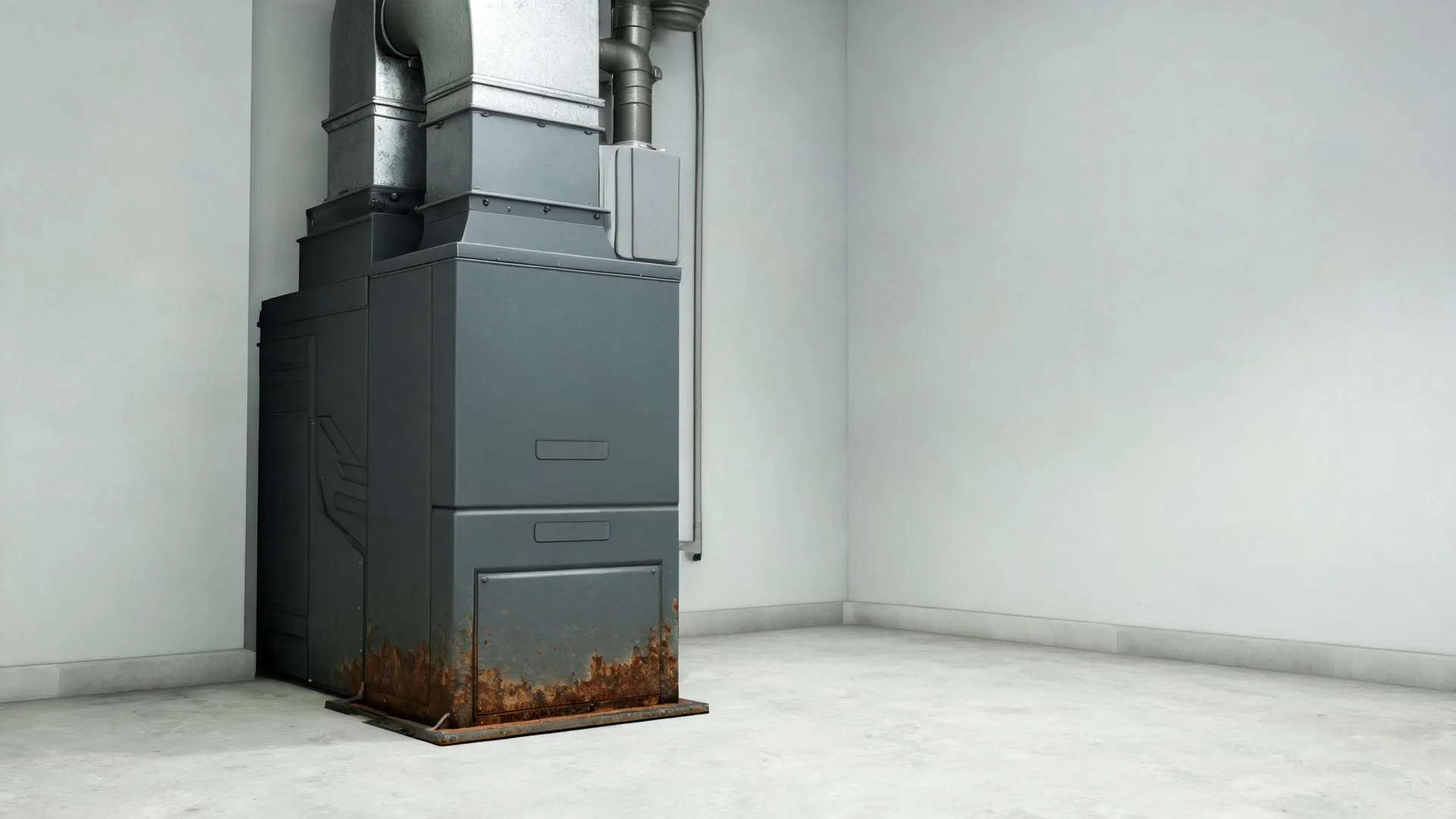
Fixing the cracked heat exchanger instead of the whole unit only makes sense if the blower, ignition and ductwork still have years left in them.



Before any call, check the thermostat batteries and make sure it's set to heat, not just on. Look at the air filter. A filter clogged with dust chokes airflow, and that alone can make a furnace shut off mid cycle or blow cool air. Go to the breaker panel and check that the furnace circuit hasn't tripped. If the furnace has a standing pilot, see whether the pilot light is actually lit. If it's an electronic ignition model, listen for the sequence: the inducer motor humming, then a click, then the burners catching. If you hear the inducer but no flame, that points to the igniter or the flame sensor, not the gas supply. Check that the gas valve leading to the furnace is turned on, since it can get bumped during other work nearby. None of this fixes a cracked heat exchanger or a failed control board, but it rules out the simple stuff first.
A furnace that runs eight months a year gets diagnosed, not guessed at. Whatever's failing now had that many months to wear down to this point, and a tech who knows what to check will find it faster than a filter swap and a wait to see what happens.
Find a contractorA furnace that keeps running with a bad part usually makes that part worse, not just itself. A cracked heat exchanger flexes more with every cycle, and what starts as a hairline crack spreads with heat. A failing igniter draws more current each time it fires, so the cycles that still work are borrowing time from the ones that won't. A dirty flame sensor gets a little more coated every time the burners run, until the signal it sends is too weak to keep the gas valve open. Even a clogged filter does this: the blower pulls harder to move air through it, and that strain lands on the motor and bearings, not the filter itself. Shutting the system down when something's off doesn't fix it, but it stops that part from digging its own hole deeper.
A furnace short cycling turns on and off before a room ever warms up, usually from a dirty flame sensor or airflow trouble. One that runs and runs without reaching temperature is losing the fight to heat the air it's pulling in. A burner flame that should burn blue but shows yellow or orange means it isn't burning clean, and that's not a wait and see sign. A furnace that smells like gas, even faintly, means stop and get it looked at, not reset the thermostat and hope.
A bang at startup usually means gas is building up before it catches, instead of lighting right away. A grinding or squealing sound points to the blower motor or its bearings working harder than they should. Rattling can be as simple as a loose panel, but it can also be a part starting to come loose inside. Any new sound a furnace didn't used to make is worth mentioning to whoever comes out, even if it only happens once in a while.
Estimates for a typical Geauga County home, compared with an older unit built to the previous federal minimum, from EIA household energy data, Ohio fuel prices and NOAA climate normals. Your home will differ.
Repair makes sense when one part has failed and the heat exchanger is sound.
Replacement makes sense when the heat exchanger is cracked or the furnace keeps needing parts.
A diagnostic visit starts before any panel comes off. A tech checks the thermostat call, the return air, the filter, then moves to the furnace itself and pulls the panel to watch it run through a full cycle. On an electronic ignition system that means watching the sequence in order: inducer motor, igniter glow or spark, flame sensing, burners staying lit. A multimeter checks the igniter's resistance and the flame sensor's microamp signal, since both can look fine and still be failing. If the furnace is short cycling or tripping out, the tech checks the limit switch and the flue for a draft problem before touching anything electrical. A cracked heat exchanger gets checked with a camera or a combustion analyzer, not a guess, because that part decides whether the furnace gets fixed or replaced. The visit ends with the tech telling you what's worn, what's failing, and what's still good, so the repair matches what's actually wrong.